By the fourth Sunday, Mara had started measuring her engagement by the family table.
At first, the dinners had seemed harmless.
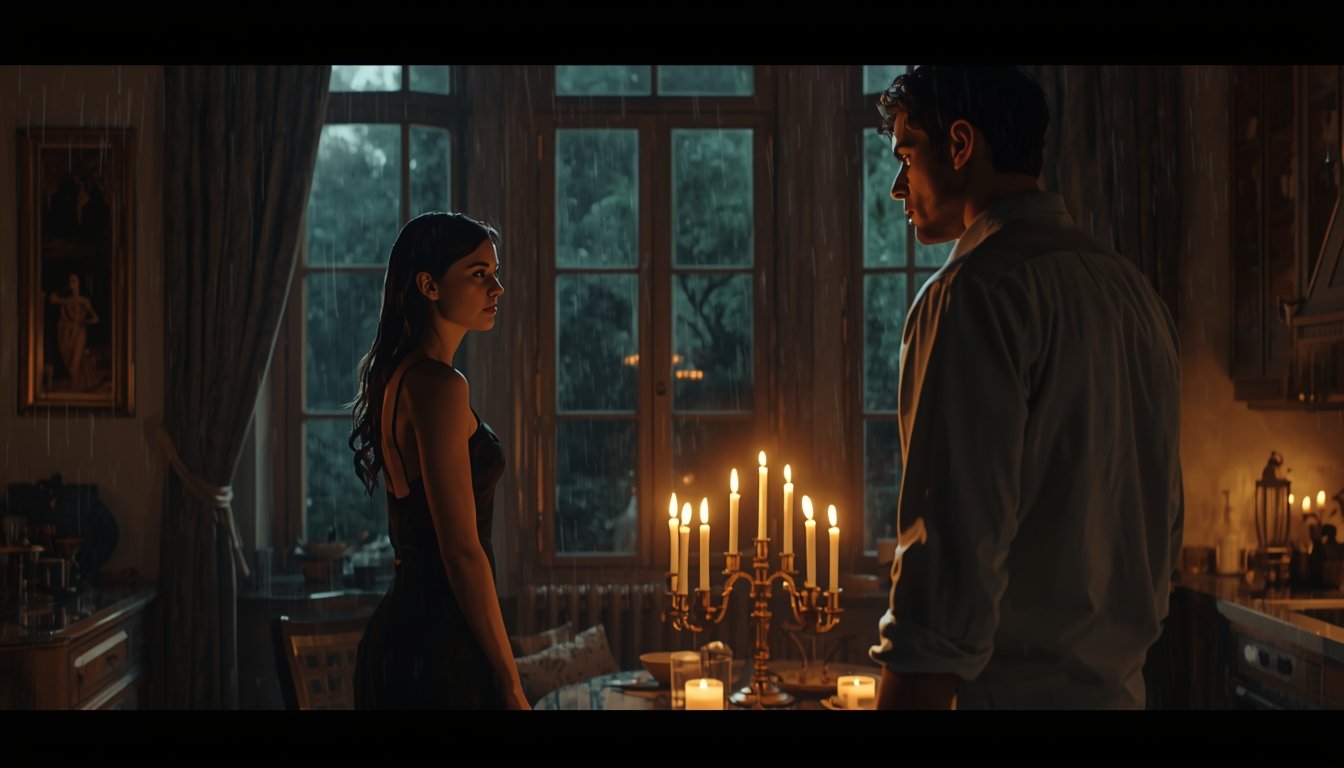
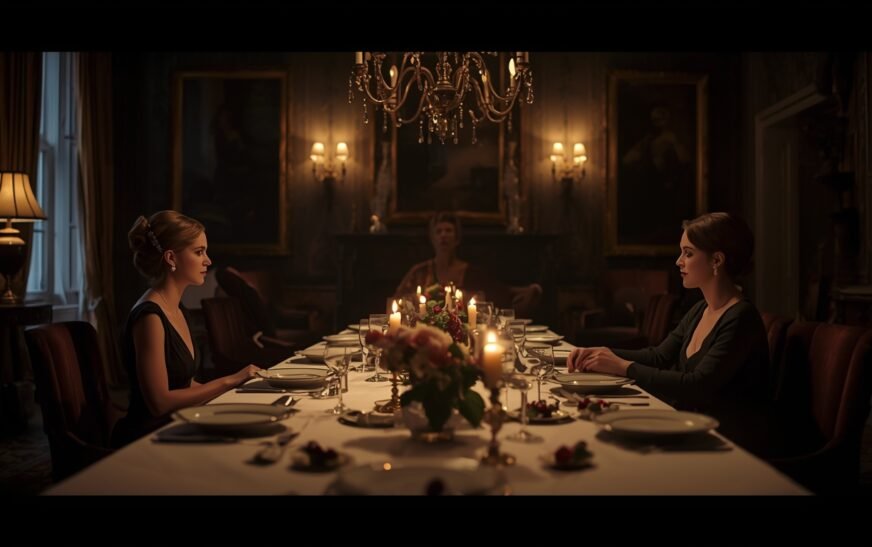
Julian called them tradition. His mother called them continuity. Therefore, Mara smiled, carried wine through the hall of the Bellrose house, and told herself that love often arrived with extra chairs. The dining room was beautiful in a controlled, inherited way: dark wood, pale candles, polished silver, and curtains heavy enough to make evening feel permanent.
However, the room changed once people sat down.
Julian became attentive in the public sense. He poured water before anyone asked. Passing behind her, he touched the back of Mara’s chair with mild possession. Across from them, Julian’s younger sister watched all of it with a stillness Mara did not understand at first.
Her name was Eva.
“You’ll get used to us,” Julian said on the first night, smiling as if the matter were already settled.
Mara had smiled back. “That sounds less comforting than you think.”
Eva laughed then, softly and without permission. Somehow that had been the first honest sound in the room.
What Tradition Required
The Bellrose family believed in rituals the way other families believed in weather. They did not question them because questioning would imply choice. Each Sunday at seven, dinner was served. Each course arrived in proper order. Each story about the family had a designated teller, and each silence belonged to someone with more power than the others.
Meanwhile, Mara was expected to blend into the pattern gracefully.
She tried. After all, Julian was kind in ways that looked excellent from a distance. Flowers arrived at her office. Minor anniversaries never escaped him. He spoke of their future flat as though planning were proof of devotion. Even so, his affection often felt like a room already furnished before she had entered it.
By contrast, Eva had no interest in making Mara comfortable by force. She asked precise questions and then waited through the answer. She never praised Mara in the sugary way Julian’s mother did. Instead, she noticed things.
“You always fold your napkin twice before the first course,” she said during the second dinner.
Mara looked up. “Do I?”
“Yes.”
“That’s unsettling.”
Eva tilted her glass slightly. “Only if you planned to remain unreadable.”
Later that night, while scrolling stories in the Dark Romance and Forbidden Love archives on her phone, Mara found herself irritated by how easily fiction named tension. Real life was less decorative. Instead, it involved roast chicken, inherited silver, and a woman across the table who seemed to understand her too quickly.
The Shape of Julian’s House
By the fifth week, Mara knew the Bellrose house almost well enough to dislike it properly.
The front hall always smelled faintly of beeswax and rain. The library remained closed unless Julian’s father was home. Upstairs, guest rooms sat in a disciplined row, each one tasteful enough to seem temporary. Even the garden looked instructed, with clipped hedges and stone paths that encouraged straight decisions.
Still, the house became harder to endure because Eva moved through it differently.
She opened windows after dinner when the room grew dense with expectation. Empty glasses went back to the kitchen in her hands whether help was wanted or not. Sometimes, while Julian explained investment plans to his father, Eva stood by the terrace doors and looked outside as though the hedges personally offended her.
One Sunday, Mara joined her there.
“Do you always escape at this exact point?” Mara asked.
“Usually.”
“That feels practiced.”
Eva glanced toward the dining room. “So does pretending those dinners are about food.”
The line should have sounded bitter. Instead, it sounded tired.
For a moment, rain brushed the glass in fine diagonal lines. Then Mara said, “Why do you stay?”
Eva gave the smallest shrug. “Because leaving permanently would be interpreted as a speech.”
That answer reached Mara more deeply than it should have.
The Family Table at Seven
The next Sunday, Julian arrived late from the city and barely apologized.
His mother forgave him before he spoke. His father used the delay to discuss market news. Meanwhile, Mara and Eva ended up alone in the dining room setting down plates while the others lingered in the hall.
“You don’t have to help,” Mara said.
Eva placed a serving spoon beside the dish with exact care. “Neither do you.”
“I’m trying to be impressive.”
“That seems exhausting.”
Mara smiled despite herself. “You say kind things in an unexpectedly hostile tone.”
“Only to people I don’t want to lie to.”
Then Julian came in carrying the easy warmth he wore for rooms that already loved him. The moment closed at once. Nevertheless, it remained with Mara through the meal, visible in the slight delay before Eva answered anyone else, in the way her gaze lifted only when Mara spoke, and in the quiet refusal of the evening to settle back into harmlessness.
During dessert, Julian described a venue he wanted them to visit for the wedding reception.
“It has a long private room,” he said. “Elegant, not showy.”
His mother approved immediately. His father asked about parking. Across the family table, Eva lowered her spoon and said, “How romantic. A room designed for controlled exits.”
Julian laughed. “You make everything sound criminal.”
“Only the organized parts.”
The remark passed as sibling friction. However, Mara felt the truth inside it like a pulse.
What Eva Knew About Promises
Two days later, Mara saw Eva by accident.
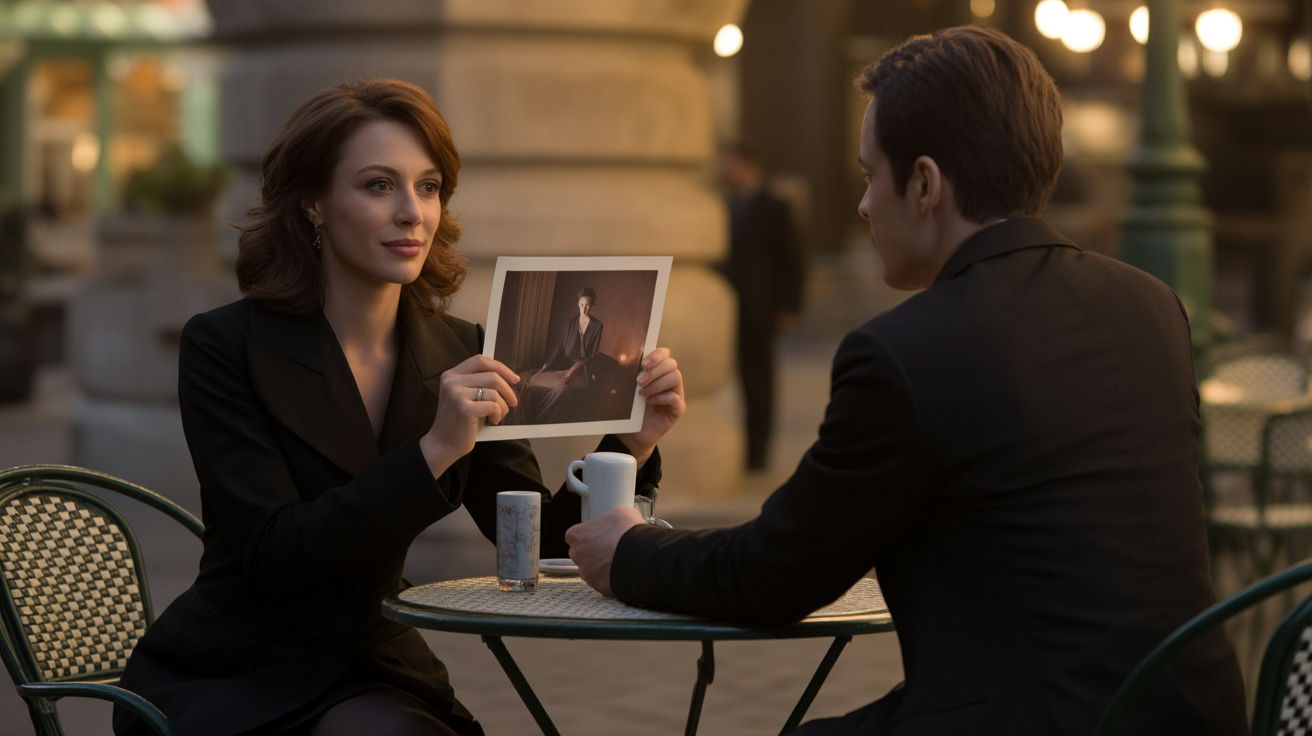
The florist near Mara’s office had mixed up a delivery, and when she stepped back onto the pavement with the corrected bouquet, Eva was standing across the street in a charcoal coat, one hand tucked into her pocket as if she had always intended to be there.
“Do you haunt unrelated districts now?” Mara asked when the light changed.
Eva looked faintly amused. “I had a meeting nearby.”
“Of course you did.”
Rain threatened but never quite committed. People moved around them with office-hour impatience. For once, there was no dining room, no family audience, and no polished expectation pressing language into shape.
“Can I ask you something rude?” Eva said.
“You appear incapable of asking any other kind.”
“Do you want to marry my brother, or have you simply not found a graceful time to refuse?”
The city noise seemed to step back.
Mara could have lied. Instead, perhaps because Eva had made dishonesty feel coarse, she said, “That is a worse question when it’s accurate.”
Eva’s face did not change much. Even so, relief moved through it, swift and almost hidden.
“I thought so,” she said.
“That should probably insult me.”
“It was not intended to.”
Then, after a pause, Eva added, “Julian likes decisions that make a room admire him.”
Mara looked down at the flowers in her hand. “And you?”
“I prefer decisions I can live with after everyone leaves.”
Why Restraint Became Dangerous
Nothing happened after that conversation.
That was the problem.
No confession followed. No reckless message arrived at midnight. Eva did not become careless, and Mara did not become brave. Instead, restraint began doing the slow, elegant damage that impulsiveness usually gets blamed for.
At the next dinner, Julian held Mara’s chair while Eva discussed a gallery opening with his aunt. Later, Julian kissed Mara’s temple in the hall while Eva looked for a misplaced lighter near the kitchen door. Each gesture remained perfectly ordinary. Yet by then, ordinary had become almost unbearable.
Meanwhile, Mara found herself reading pieces tagged quiet attraction, family pressure, and unspoken desire as though searchable language could make the situation smaller. It did not. Instead, the words made her recognize how long she had already been standing inside it.
At work, she missed a meeting time. On Thursday, she rewrote the same email three times. By Saturday night, she was dreading Sunday with a seriousness usually reserved for grief.
The Drive After Dinner
It rained the following Sunday, and Julian insisted on driving Mara back to her flat after dessert.
However, his mother produced an old photograph album at coffee, and the evening stretched. Then Julian’s phone rang with some work emergency he treated as both tragedy and proof of importance. As a result, Eva offered the lift instead.
“I’m going into the city anyway,” she said.
Julian barely looked up from the screen. “Perfect.”
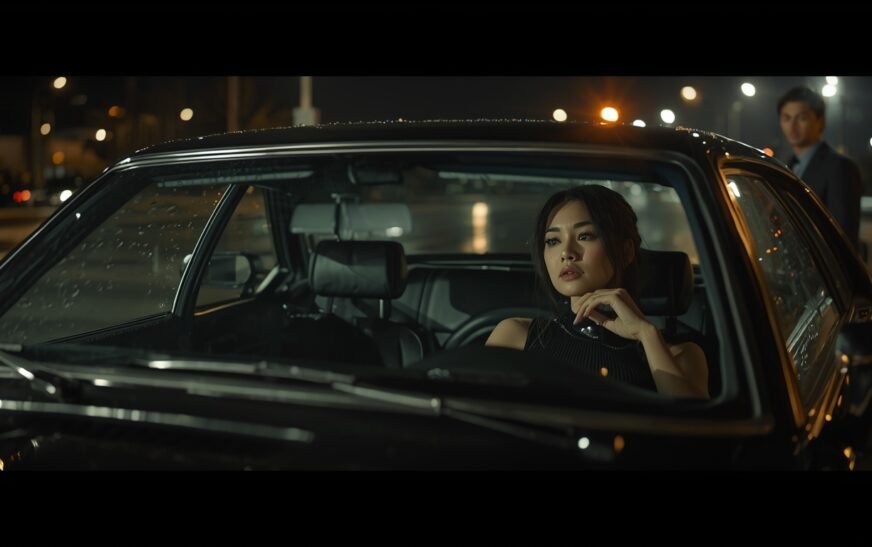
The car smelled faintly of cedar and wet wool. Outside, the roads shone under streetlamps, and the wipers worked with calm authority. For several minutes neither woman spoke.
Finally, Mara said, “You asked me an unforgivable question on Tuesday.”
Eva kept her eyes on the road. “I know.”
“You were right.”
The words stayed between them, warmer than the heater and much less safe.
Eva’s grip shifted slightly on the wheel. “That is not good news.”
“No.”
“For him or for you?”
Mara gave a small, tired laugh. “That would be simpler if there were only two people in the sentence.”
For a moment, Eva said nothing. Then, very quietly, she asked, “Am I in it?”
The city passed in silver fragments beyond the glass.
“Yes,” Mara said.
Eva exhaled once, as though she had been holding that breath for weeks. Nevertheless, she did not reach across the console. She did not turn the car around. Instead, she drove on with greater care, which somehow made the confession feel more intimate than touch would have.
What the House Had Already Seen
After that, Sunday became impossible.
Mara considered inventing flu, deadlines, a family emergency, anything. Yet excuses would only delay the question already growing inside her life. Therefore, she went again to Bellrose house, wore the blue dress Julian liked, and sat once more at the family table beneath candlelight that flattered everyone except the truth.
Julian was in excellent spirits. He had booked the venue. He had spoken to a jeweler about redesigning Mara’s grandmother’s bracelet as a wedding gift. His mother approved of lilies for the ceremony. His father approved of guest numbers under one hundred.
Across from Mara, Eva spoke less than usual.
That silence drew attention faster than speech might have. Julian noticed first.
“You’re very quiet tonight,” he said to his sister.
“I’m preserving the family supply of charm,” Eva replied.
His mother sighed. Mara lowered her gaze to her plate. Meanwhile, Julian studied them both with the faintest narrowing of his eyes, as though some rearrangement in the room had finally come into focus.
After the main course, he asked Mara to help him bring in the wine from the sideboard.
It was not a request. It was an extraction.
The Question in the Pantry
The pantry light was too bright and far too honest.
Julian closed the door halfway behind them and turned with a bottle in one hand. “What is going on?”
Mara kept her voice level. “That depends on what you think you’ve seen.”
“I think my sister looks at you as if she’s waiting for a verdict.”
There it was.
The sentence should have shocked her. Instead, it felt late.
“Julian,” she said carefully, “I should have spoken sooner.”
His expression altered, not into grief but into offense. “You’re unhappy.”
“Yes.”
“Because of her?”
Mara did not answer quickly enough.
He laughed once under his breath. “Unbelievable.”
“No,” she said. “Only unfortunate.”
“You were going to marry me.”
“I was trying to become the version of myself that could.”
The bottle touched the shelf with a harder sound than necessary. For the first time since she had known him, Julian looked ungenerous.
“Does she know?” he asked.
Mara thought of the drive, the rain, and the careful hands on the wheel. “Enough.”
When Dinner Ended
The conversation did not explode. That was almost worse.
Julian returned to the dining room carrying the wine with perfect posture. Mara followed a step behind. No announcement came. No scene shattered the silver and candles. Instead, dinner ended under a new strain everyone felt and no one named.
Eva did not look at Mara again until coats were being collected in the hall.
“You should go,” she said quietly while Julian’s mother searched for a scarf.
“Are you dismissing me?” Mara asked.
“I’m trying to spare the walls a better memory.”
Even then, Eva’s restraint remained almost unbearable.
After the Family Table Broke
Outside, the air smelled of wet stone and clipped hedges. Mara descended the front steps alone. Behind her, voices moved through the house in controlled currents. Somewhere inside, Julian was beginning what would no doubt become an excellent account of the evening, orderly enough to make himself look injured and noble in equal measure.
Her phone remained silent all the way home.
Later, she opened the Drama, Breakup & Betrayal, and Romance archives without reading a word. The labels seemed both accurate and vulgar. Nothing about the night felt genre-sized.
What Eva Chose in the Morning
Eva arrived at ten the next morning with no flowers, no speech, and no talent for false comfort.
Mara opened the door in yesterday’s sweater.
“That was fast,” she said.
“Julian left me four voicemails before eight.”
“How flattering.”
Eva’s mouth almost curved. Then the expression vanished. “I told him I wouldn’t mediate.”
Mara stepped aside, and Eva entered the flat with the same quiet attention she gave every room, as if exits mattered as much as doors.
What Honesty Would Cost
For a moment, neither of them sat.
Then Mara said, “You don’t owe him loyalty at my expense.”
“No,” Eva replied. “But I do owe both of you honesty.”
Rain touched the windows in a pattern softer than the night before. The kitchen smelled of stale coffee and sleep.
“This cannot become a secret arrangement,” Eva said. “Not because I’m noble. Simply because secrecy would rot it.”
Mara looked at her properly then, at the tiredness under her eyes, at the care in her posture, and at the fact that she had come anyway.
“And if honesty ruins everything?” Mara asked.
Eva answered without hesitation. “Then at least it ruins the right version.”
That was when Mara crossed the room.
Not dramatically. Not beautifully. She only stopped close enough to see her own doubt reflected in Eva’s gaze and the steadier thing beneath it. The distance between them felt charged, careful, adult.
“I don’t know what happens next,” Mara said.
“Neither do I.”
“That’s inconvenient.”
“Deeply.”
For the first time since the Sunday dinners began, Mara laughed without caution.
Outside, the city looked ordinary again. Nevertheless, the old order had already failed. The family table would still exist next Sunday, polished and waiting, but it no longer held the authority it once claimed. Some rooms lose power the moment truth stands up from them and leaves.