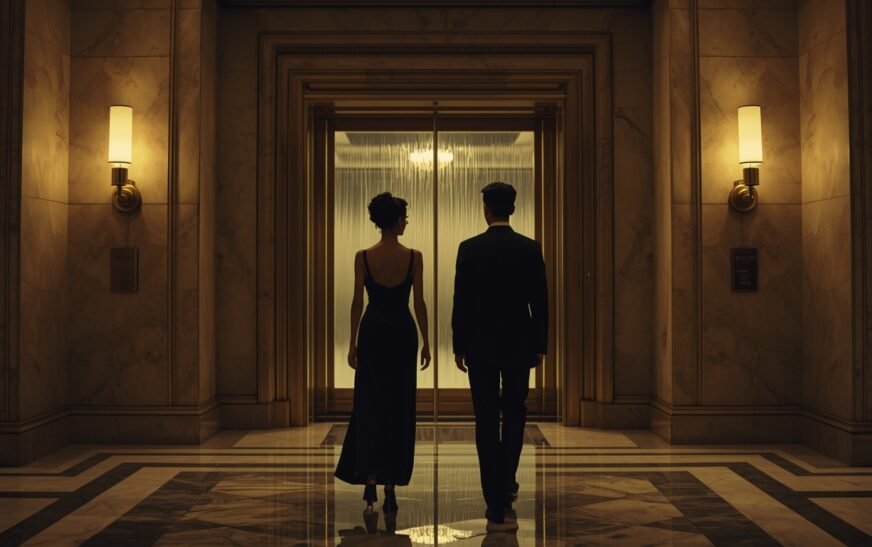
By the sixth evening, Iris had started measuring her workday by the lobby minute.
It always began at 8:57.
That was when she stepped out of the marketing firm on the twelfth floor, crossed the polished lobby of Halden House, and pretended not to notice the man from the legal offices arriving from the opposite corridor with the same careful timing. At first, the overlap had seemed accidental. However, repetition gave the minute a shape neither of them could dismiss gracefully.
He never rushed for the lift. She never checked her phone. Meanwhile, the security guard at the front desk looked on with the tolerant expression of a man who had already decided the whole thing was a pattern.
“Evening,” the guard said on the third night.
“You make that sound suspicious,” Iris replied.
“Only observant.”
The man beside the brass directory lowered his head as if hiding a smile. Later, Iris would decide that was the first genuinely dangerous moment. Attraction often announces itself through touch. By contrast, this one arrived through timing and restraint.
Why She Stayed Late
Iris did not usually believe in meaningful office rituals.
For most of her thirties, work had been practical rather than romantic. Campaign decks, client revisions, polite crises, and the endless performance of sounding fresh about ideas people should have approved two weeks earlier. Recently, though, the firm had taken on a luxury property account full of impossible deadlines and people who used the word urgent like a threat. Therefore, late evenings had become normal.
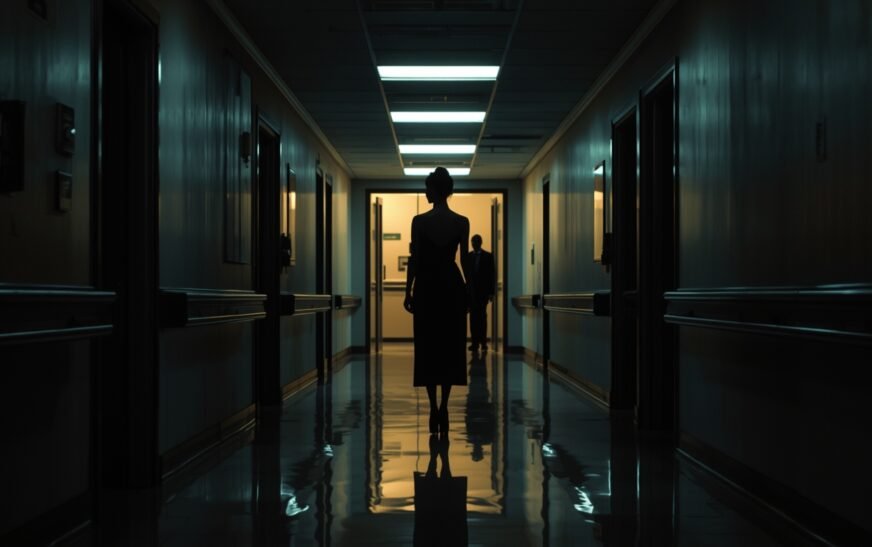
Halden House changed after eight. Daytime noise drained from the corridors. The café kiosk shuttered itself. The reception lights softened to a gold that made the marble look kinder than it was. Above the city, the glass walls reflected offices back into themselves until every floor seemed occupied by quieter doubles.
At first, Iris liked the solitude. Then the lobby minute started.
She first noticed him because he did not belong to the exhausted rhythm of the building. He was too composed for that. Dark suit, dark overcoat, tie loosened only enough to imply fatigue rather than surrender. On the directory board his firm occupied the ninth floor: Wren & Vale Solicitors. For three evenings straight, he appeared just before nine, nodded once, and took the lift down with her in patient silence.
Later, while pretending to read in the Romance and Flirty Stories archives, Iris found herself irritated by how cleanly fiction handled repeated meetings. Real life was less decorative. Real life involved polished stone, tired mascara, and a man who might simply be billing very well.
The Man by the Directory
His name arrived because the lift stalled for four seconds between floors.
Nothing dramatic happened. No alarm sounded. The car only paused with a small mechanical sigh somewhere between twelve and ten. Even so, four silent seconds can expose the structure of a room.
“That feels symbolic,” Iris said.
The man beside her glanced at the panel. “Of what?”
“Corporate despair.”
He looked at her then, properly for the first time. “That seems too broad. I’d narrow it to property law.”
Against her better judgment, Iris laughed.
The lift resumed its descent, and the moment could have ended there. Instead, when the doors opened into the lobby, he said, “Rowan, by the way.”
“Iris.”
He nodded once, as though names were serious items that deserved careful storage. Then he left through the revolving doors into rain and traffic, carrying his umbrella unopened for half a block before remembering the weather.
That detail stayed with her all night.
How Routine Became Flirtation
After that, the minute changed.
Not openly. Nothing so convenient. Rowan did not begin waiting under her office door, and Iris did not reinvent herself as a woman who flirted in lifts after long workdays. Still, the atmosphere sharpened. Each evening, one of them arrived first and the other arrived just after. Then came the nod, the small exchange, and the descent.
“You survived again,” Iris said one Tuesday.
“That seems optimistic,” Rowan answered.
“Lawyers dislike optimism?”
“Only when it has witnesses.”
On another night, he asked whether marketing people truly enjoyed the word synergy or merely used it to frighten civilians. Iris told him the term was mostly a hostage situation. That made him laugh softly, which transformed him more than a brighter smile would have.
Meanwhile, the security guard began looking away with strategic politeness whenever they reached the desk together. Once he even held back the closing lift doors for them without being asked.
“I resent being observed in a narrative,” Iris murmured as the doors shut.
Rowan’s expression remained calm. “And yet here you are, punctual.”
That line followed her home through wet streets and into a late dinner she barely tasted.
The Lobby Minute at Night
Rain made the building more intimate.
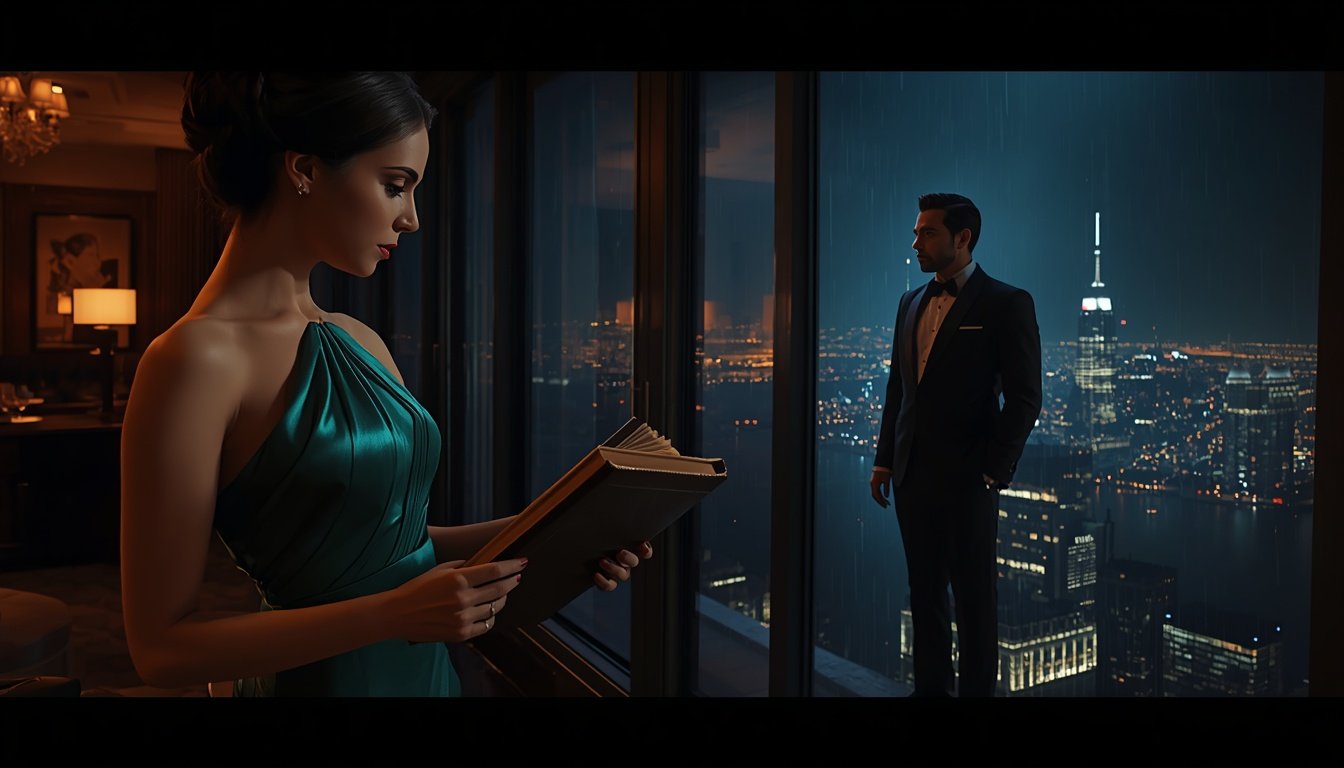
By November, most evenings ended with water veiling the front windows and headlights smearing themselves across the stone outside. Under those conditions, Halden House seemed less like an office block and more like a place built to contain elegant fatigue. The brass directory glowed softly. The revolving doors turned with ceremonial slowness. Somewhere above, a cleaner’s trolley crossed one corridor every night at 8:52 with nearly supernatural punctuality.
On one especially wet Thursday, Iris arrived in the lobby to find Rowan already there, standing near the potted fig tree with his coat folded over one arm.
“You’re early,” she said.
“That sounds accusatory.”
“Only interested.”
For the first time, he did not answer immediately. Instead, he looked at her in a way that made the marble lobby seem briefly less public than it was.
“I had hoped you might be,” he said.
The lift arrived with a soft chime that rescued them both from whatever that sentence might have become. Nevertheless, the air inside the car felt altered on the way down. Some flirtations grow through wit. This one, more dangerously, grew through precision.
Later, while eating toast over her kitchen counter, Iris wandered through Dating and then Drama, as though genre could explain why one measured line in an office lobby had unsettled her more than entire dinner dates in better lighting.
What He Did Not Ask
Rowan never asked for her number.
He never suggested a drink in the casual, disposable way men often did when they hoped indifference would protect them from refusal. He did not invent fake urgency or ask where she lived or perform charm with professional smoothness. Instead, he kept showing up at 8:57 with the same serious attention, as if the lobby minute itself were the thing he did not want to mishandle.
That restraint should have reassured her. In some ways, it did.
However, it also made the connection harder to dismiss. Carelessness can be categorized. Deliberateness demands thought.
At lunch one day, Iris mentioned him to her friend Neve in the cautious tone usually reserved for expensive mistakes.
“So he hasn’t asked you out,” Neve said.
“No.”
“And you still think about him.”
Iris stirred her coffee. “That sounds unflattering when you say it like that.”
Neve shrugged. “Maybe he’s decent. Decent men move slower because they know timing is part of the offer.”
Iris disliked how much comfort that gave her.
The Evening He Missed
Then, without warning, Rowan was absent.
At 8:57, the lobby held only Iris, the guard, and the weak reflection of a florist’s sign across the street. At first, she blamed a meeting. By 8:59, annoyance had become personal enough to embarrass her.
“Not tonight,” the guard said as she reached the desk.
She kept her expression neutral. “Apparently the building remains operational.”
“Tragic,” he replied.
The next evening Rowan was absent again.
That second absence changed the shape of the lobby more than it should have. The lift seemed merely efficient. The polished stone looked cold rather than suggestive. Even the minute itself felt stripped of pressure, reduced to what it had once been: the final sixty seconds of a workday.
On the third evening, she found a folded note beside the sign-out ledger.
For Iris, if she glares at the lobby long enough to frighten it. Family emergency. Nothing dramatic now, but I disliked vanishing without manners. — R.
She read the line twice before looking up.
The guard pretended to be fascinated by a monitor he had plainly seen before.
“You are intolerable,” Iris told him.
“I am discreet,” he said. “Eventually.”
What the Note Changed
Rowan returned two nights later.
He looked more tired than usual and slightly less arranged, which made him seem younger and more dangerous at once. Iris had planned to be cool. Instead, the first thing she said was, “Is everything all right?”
His face altered with quiet surprise. “Improving. Thank you.”
They entered the lift together.
“You left a note,” she said.
“I thought absence deserved context.”
“That is alarmingly civilized.”
“You sound suspicious.”
“I am. It’s a useful skill.”
For a moment, something warmer moved beneath his composure. Then he said, “My father had a fall. He’ll recover. Still, the week became less orderly than planned.”
“I’m sorry.”
“So am I. Mostly because it confirmed he is impossible to advise.”
The line was dry enough to save the moment from pity. Even so, Iris heard the strain under it. When the doors opened, neither of them moved immediately.
“There’s a coffee place across the square,” Rowan said at last. “It remains open offensively late. Would it be unreasonable to ask whether you might go there with me now?”
The invitation was so carefully built that refusal would have felt almost theatrical.
“Now?” Iris repeated.
“Before I over-improve the sentence.”
That, more than anything, made her smile. “All right.”
Across the Square
The square outside Halden House was little more than paving, planters, and rain-polished light. However, that night it felt like neutral territory after weeks of contained proximity. They crossed without hurrying, past the florist, past the shuttered kiosk, and into a narrow coffee shop that smelled of cinnamon, steam, and furniture that had survived better decades.
No revelation waited there. In some ways, that made the hour better.
Rowan told her he handled estates and disputes for clients who believed signatures were weapons. Iris told him luxury property marketing was only respectable manipulation in better shoes. He admitted he had started timing his departure because he liked the minute before the lift doors opened. She admitted she had changed a meeting twice to preserve the same overlap.
“That is incriminating,” he said.
“Deeply,” she agreed.
They laughed then, and the sound removed the last of the office building from them.
Meanwhile, the rain outside softened to a fine silver drift. Time moved without urgency. No one in the café appeared interested in policing the hour. By contrast, Iris felt acutely aware of it, because some beginnings arrive not with spectacle but with the terrible clarity of being exactly on time.
After the Minute Opened
When they stepped back onto the square, the city had gone quieter.
Halden House stood across from them with its upper floors darkened one by one, the lobby still glowing faintly at street level. The building looked less mysterious now, though not less important. Some places lose enchantment once named. Others merely become accurate.
“So what happens to the lobby minute now?” Iris asked.
Rowan considered that seriously, which was one of the things she had already begun to like too much. “I assume it remains in service,” he said. “Though perhaps with expanded use.”
“That sounds suspiciously like legal drafting.”
“Occupational injury.”
She looked toward the revolving doors. “And if one of us starts leaving on time like a sane person?”
“Then I suppose,” he said, “we’ll have to build a different minute somewhere else.”
The answer was restrained enough to be trusted.
They did not kiss in the square. They did not make anything louder than it needed to be. Instead, Rowan touched her elbow briefly before they parted, a gesture so light it might have meant nothing to anyone watching. Yet by the time Iris reached the corner, she already knew the evening had shifted some internal architecture she had mistaken for permanence.
Later, at home, she searched subtle chemistry, meaningful glances, and unspoken connection. For once, the tags did not feel like categories meant for other women. They looked, instead, like a record of something that had begun in public and somehow still felt private.
The next evening at 8:57, she reached the lobby and found Rowan by the brass directory, waiting with the composure of a man who had finally decided not to pretend coincidence could survive another week. The lobby minute had not ended after all. It had only learned how to tell the truth.