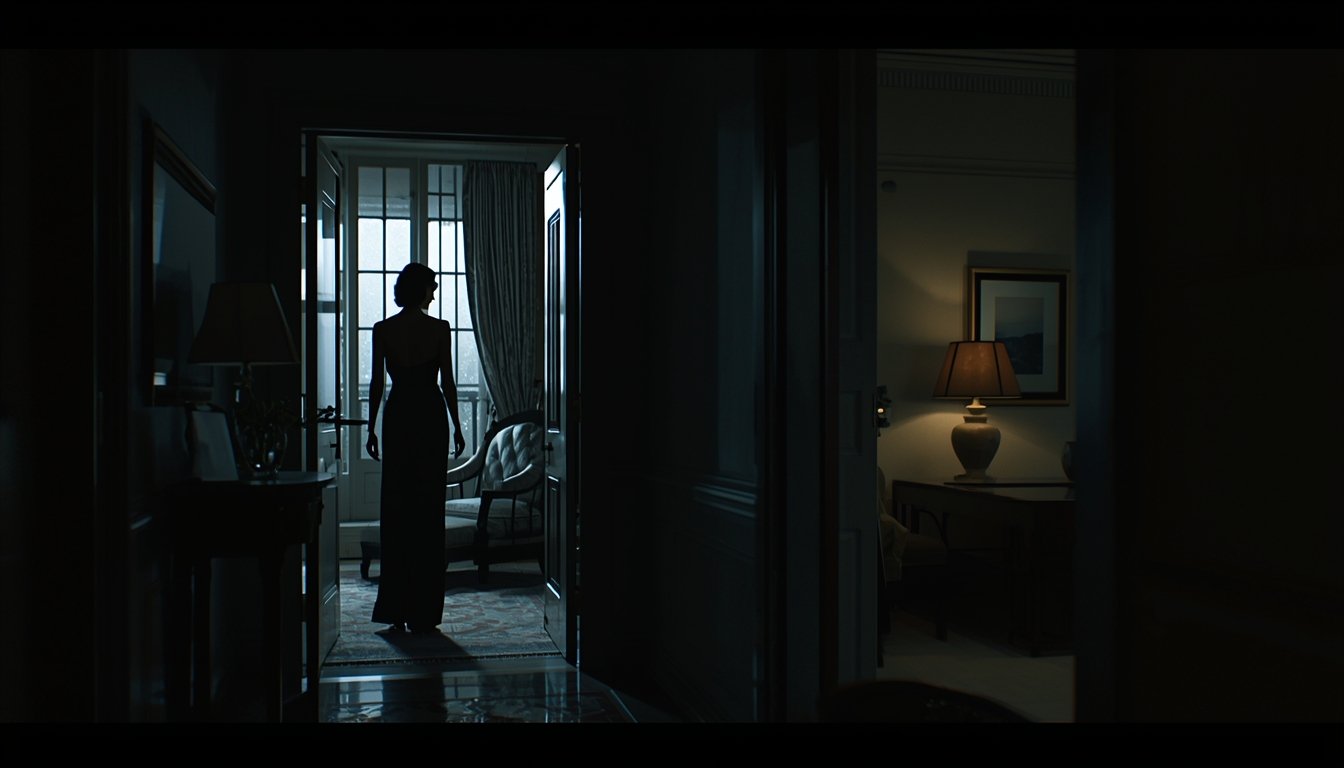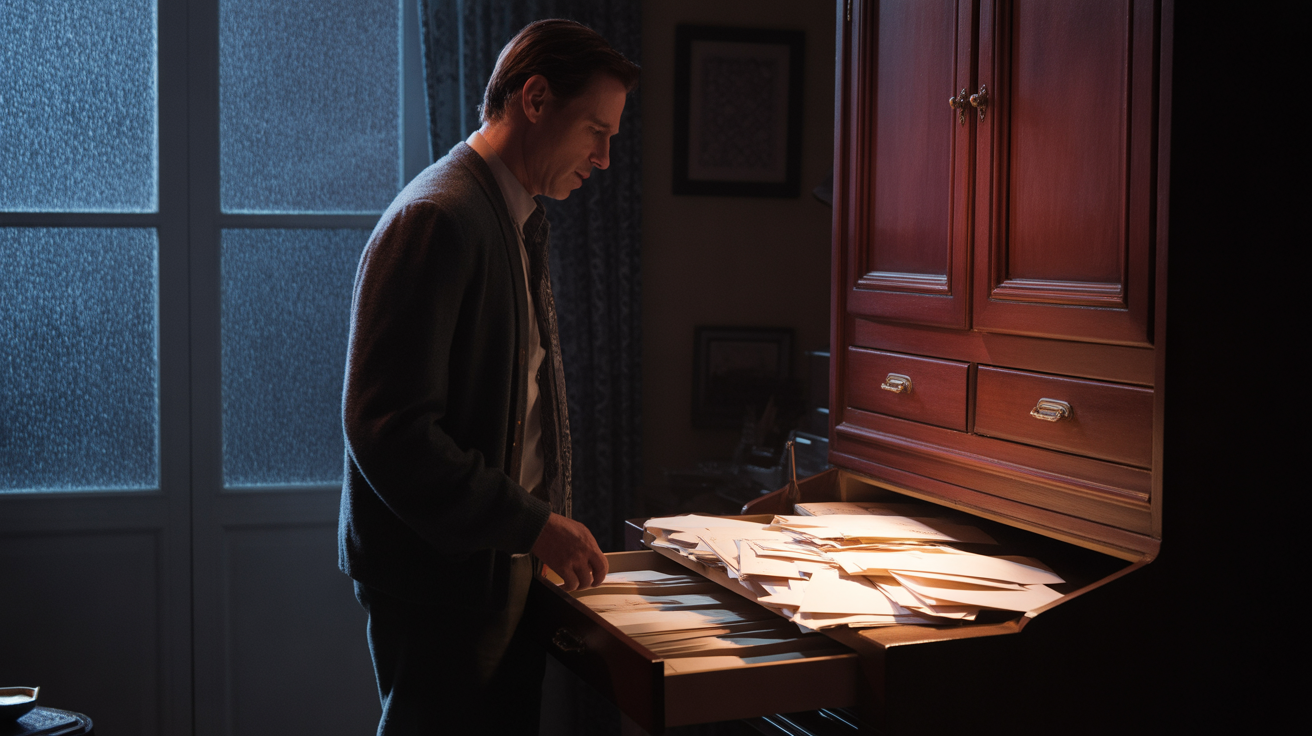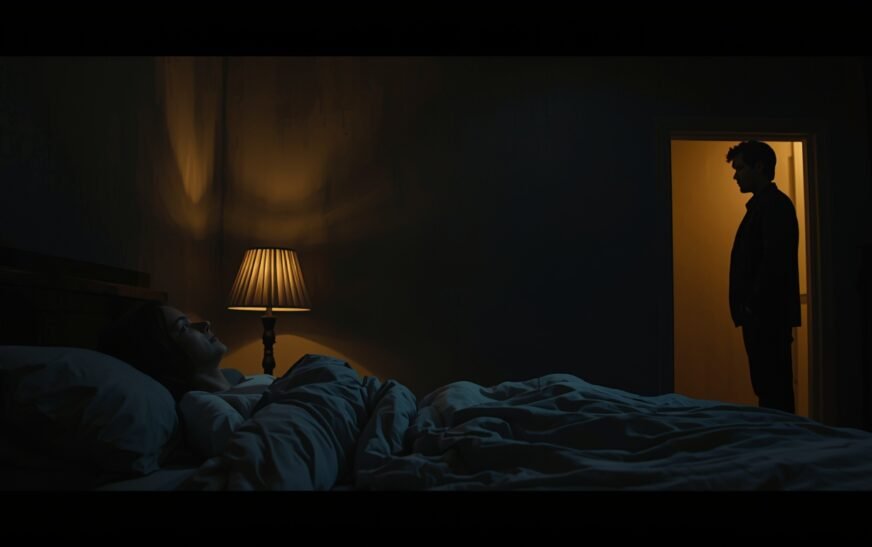
The unsaid goodnight began three weeks ago on a Tuesday. Lena noticed because she always noticed the small things. For seven years of marriage, Marcus had ended every evening with the same two words. “Goodnight, Lena.” Sometimes he added a kiss to her forehead. Sometimes he simply spoke them into the dark as he turned off his lamp. But the words were always there. A small ritual that closed the day. A thread that connected them even when everything else frayed. Then one Tuesday, he said nothing at all. Marriage secrets rarely announce themselves with shouting. More often, they arrive as a missing word at the end of an ordinary day.
She waited through the silence. His lamp clicked off. The mattress shifted as he turned onto his side, facing away from her. And nothing followed. No goodnight. No kiss. Just the sound of his breathing slowing into sleep. Consequently, Lena lay awake for a long time, staring at the ceiling, counting the ways a single missing word could feel like a door closing. She did not ask about it the next morning. After all, bringing it up would require admitting she had noticed. And noticing felt like exposing a wound she was not ready to name.
The First Night Without Goodnight
The unsaid goodnight repeated on Wednesday. Then Thursday. By Friday, it had become a pattern. Marcus still came to bed at the same time. He still read for fifteen minutes with his reading glasses perched on his nose. He still turned off his lamp and settled onto his side. But the words had vanished. Meanwhile, Lena lay beside him, holding her breath, waiting for something that no longer came. The absence of those two small words expanded to fill the entire room. Emotional absence did not need to shout. It only needed to stop speaking.
The Weight of the Unsaid
During the second week, she began to catalog other disappearances. He no longer asked about her day when he came home. He no longer touched her shoulder when he passed behind her chair. He no longer said her name at all unless absolutely necessary. The unsaid goodnight was not an isolated silence. Instead, it was the loudest note in a symphony of withdrawal she had been ignoring for months. Consequently, she started to wonder when he had begun leaving. Not physically. But in all the ways that mattered.
She considered confronting him. The words formed in her mind a hundred times. Why did you stop saying goodnight? But the question felt absurd. It was just a word. Two syllables. A habit, not a promise. And yet, the unsaid goodnight had become a symbol of everything else that was disappearing between them. Therefore, she said nothing. She waited. And the silence grew roots. Routine disruption had a way of revealing what was already broken. The goodnight had not held them together. It had only hidden the cracks.
The Night She Almost Asked
On the fourteenth night, she almost broke. He turned off his lamp. The familiar rustle of sheets followed. Opening her mouth to say the words herself—Goodnight, Marcus—she hesitated. Perhaps that would prompt his response. Perhaps she could restore the ritual by sheer force of will. But the words caught in her throat. Because she realized she was afraid of what would happen if he still said nothing. The silence after her goodnight would be worse than the silence before it. So she closed her mouth. And the unsaid goodnight remained suspended between them like a held breath.
She began to watch him during the day. Searching for clues in the ordinary movements of their shared life. He still drank his coffee black. He still read the news on his phone at breakfast. He still kissed her cheek before leaving for work. But the kiss was perfunctory now. A muscle memory rather than a choice. Moreover, his eyes no longer met hers. They slid past her, settling on something in the middle distance. As if she had become a piece of furniture he no longer noticed. Quiet withdrawal was not a single act. It was a thousand small omissions.
The Breaking Point
The third week ended on a Sunday. They had spent the day in parallel silence. She read a book in the living room. He worked in his study. They ate dinner without conversation. When bedtime arrived, she stood in the bathroom longer than necessary, brushing her hair, avoiding the moment she would have to lie down beside a man who no longer said goodnight. Finally, she walked into the bedroom. He was already in bed, his lamp still on, his book open in his lap. Looking up as she entered, he seemed to register her presence for the first time in weeks. Something in his expression shifted. A flicker of awareness. As if he had just remembered she existed.
“Lena.” His voice was rough. Unused. “Can we talk?”
She sat on the edge of the bed. Her heart hammered. “About what?”
“About why I stopped.” He closed his book. His hands rested on the cover. “I didn’t think you noticed.”
“I noticed everything, Marcus.” Her voice came out steadier than she felt. “I noticed the first night. I’ve been counting every single one since.”
Exhaling slowly, he finally met her eyes. “I stopped because I was angry. And I didn’t know how to say it. So I just… stopped saying everything.”
The Truth Beneath the Silence
The unsaid goodnight had been a punishment. Not for her, he explained, but for himself. He had been passed over for a promotion he had been promised. He had watched a younger colleague take the role he had worked toward for years. And instead of telling her about the shame and the failure and the fear, he had simply gone quiet. He had stopped saying goodnight because he felt he did not deserve her response. He had stopped speaking because he did not know how to ask for comfort.
Lena listened without interrupting. The unsaid goodnight was not about her. It had never been about her. But it had wounded her anyway. Because silence in a marriage is never neutral. It always means something. And she had spent three weeks inventing meanings far worse than the truth. Unspoken distance did not require betrayal. It required only a man who had forgotten how to ask for help.
“You could have told me,” she said. “I would have listened.”
“I know.” His voice broke. “I know. I just forgot how.”
Reaching across the space between them, she took his hand. His fingers were cold. They curled around hers. Neither spoke for a long moment. Then, quietly, he said the words she had been waiting for. “Goodnight, Lena.”
Squeezing his hand in return, she replied, “Goodnight, Marcus.”
The Return of the Ritual
The unsaid goodnight did not disappear overnight. Some nights, he still forgot. Some nights, she said it first. But the ritual slowly returned. And with it, the other small things. A question about her day. A hand on her shoulder. His eyes meeting hers across the dinner table. The silence had not been a wall. It had been a door he had closed by accident. And together, they learned to open it again.
One evening, weeks later, he turned off his lamp and said, “I’m sorry I stopped.” Turning toward him in the dark, she answered softly. “I’m sorry I didn’t ask why.” The unsaid goodnight had taught her something. Silence in a marriage is not something to endure. It is something to name. Because naming it is the first step toward ending it. Behavioral shift did not require grand gestures. Sometimes it required only the courage to say what had gone missing.
Drama in a marriage rarely arrives as a single explosive event. It accumulates in small absences. And sometimes, if both people are willing, it recedes the same way it came. Quietly. Slowly. One goodnight at a time. Psychological distance can be bridged. But only if someone is brave enough to speak first.