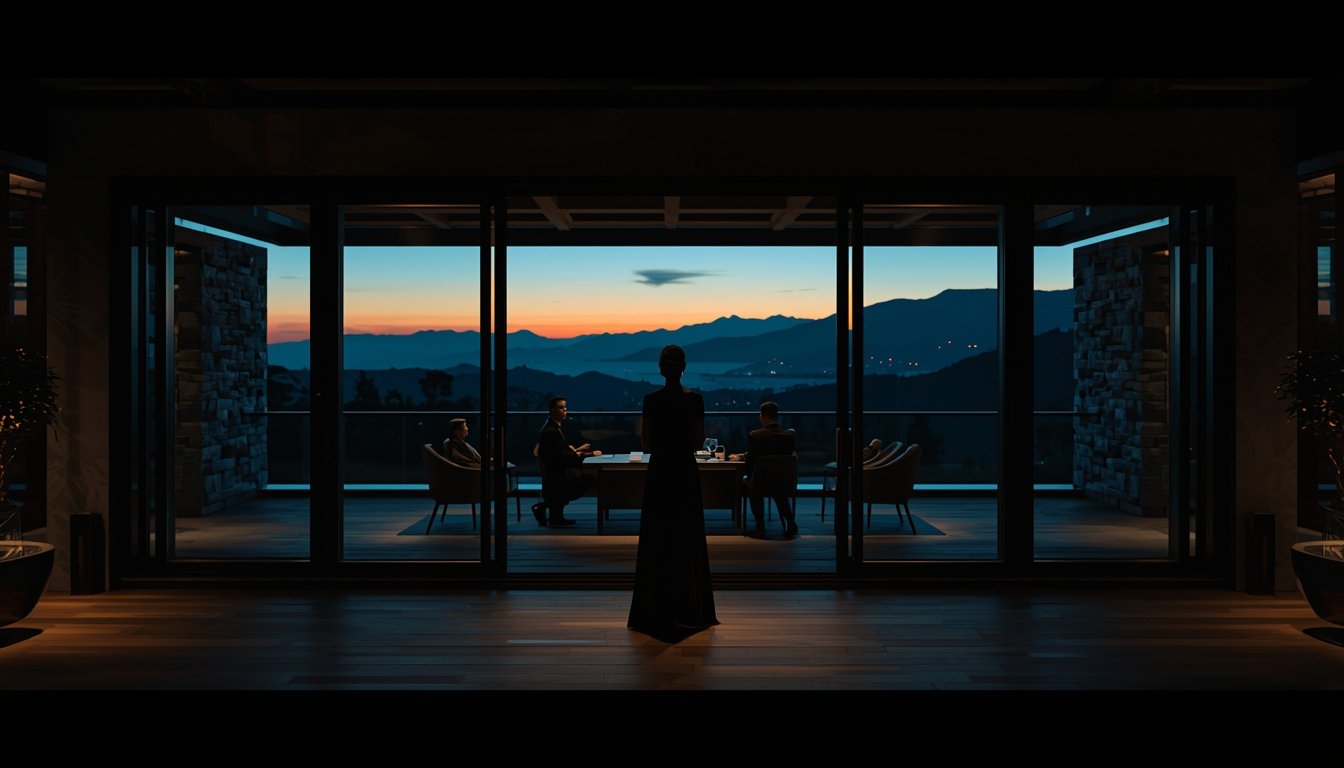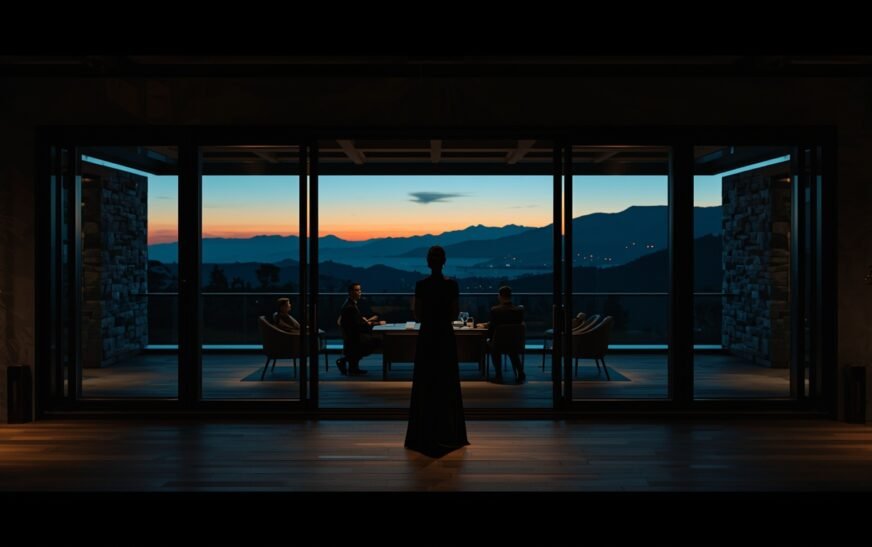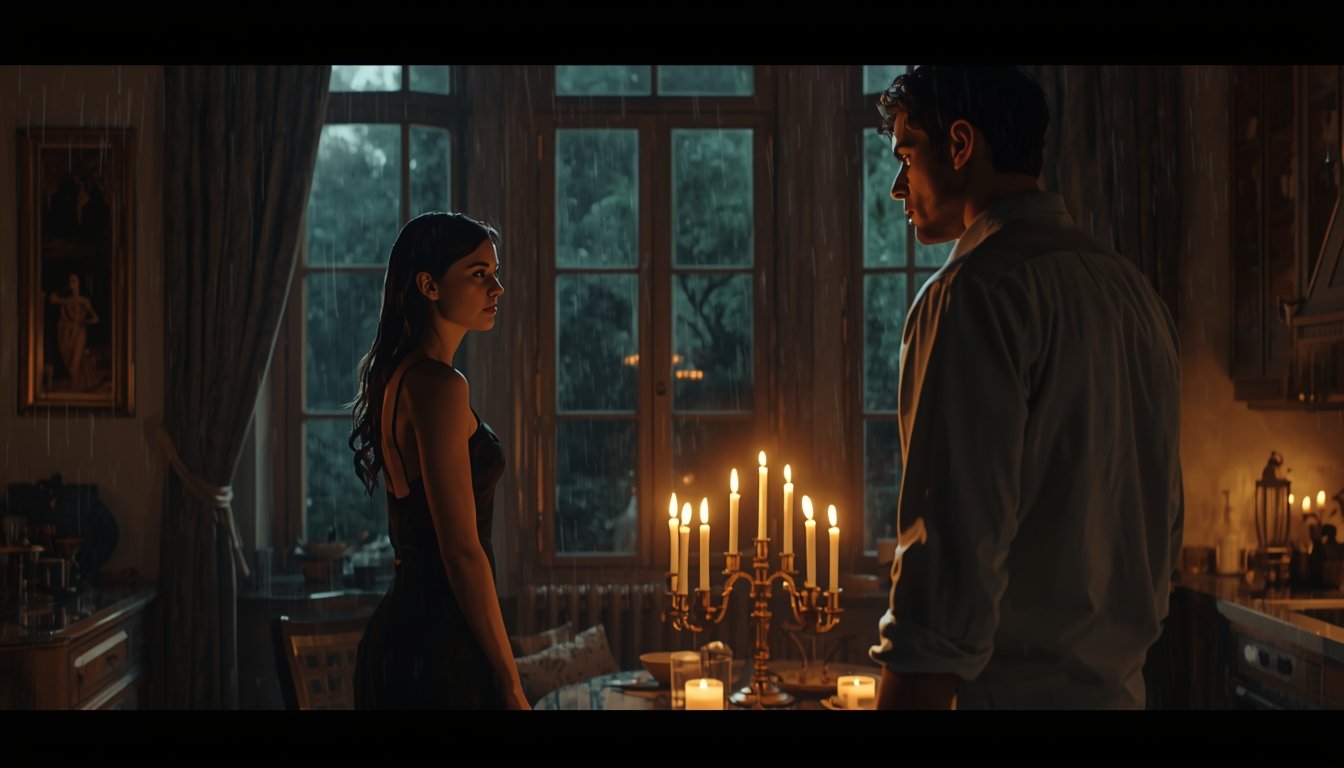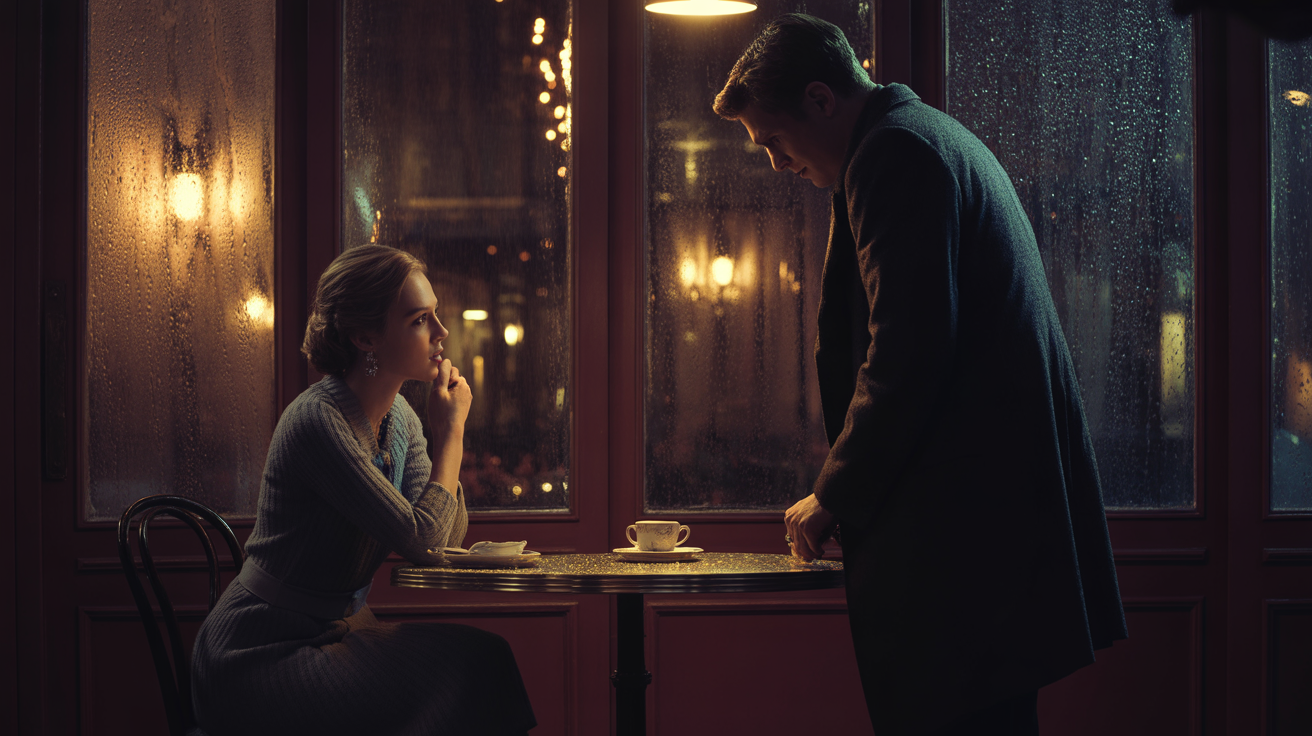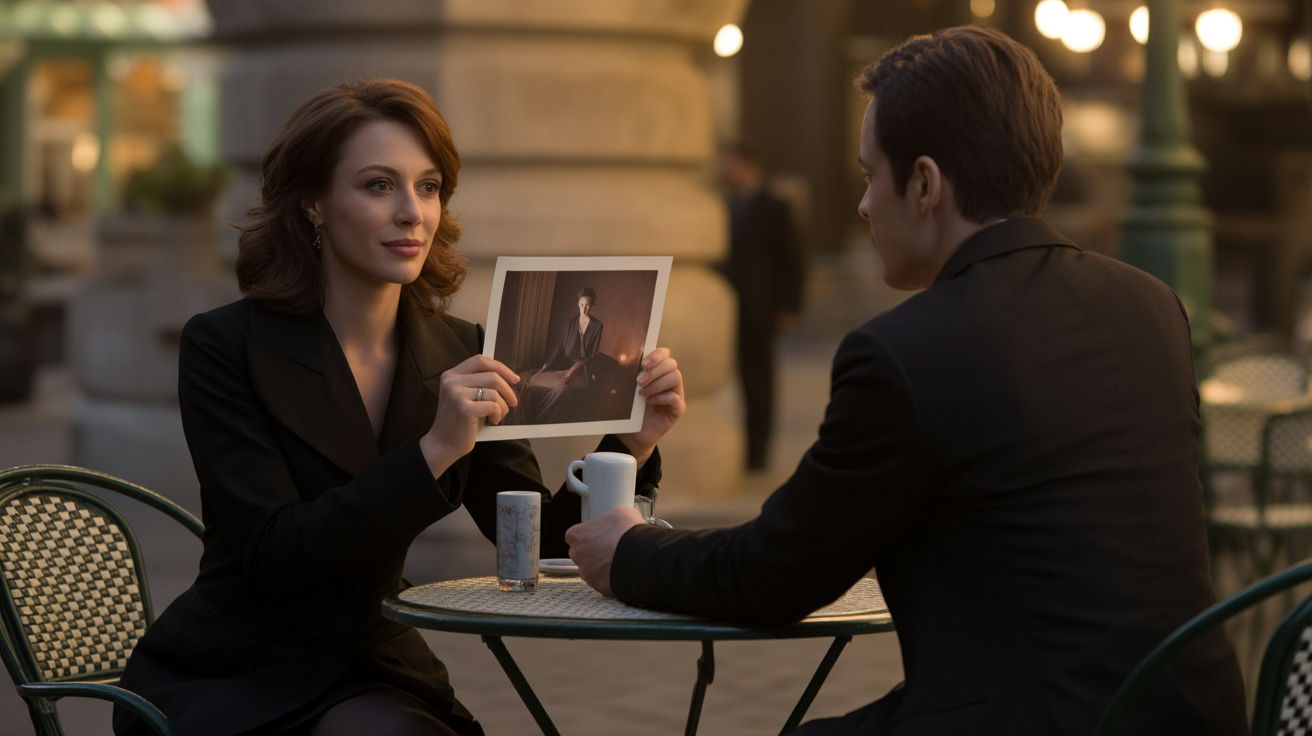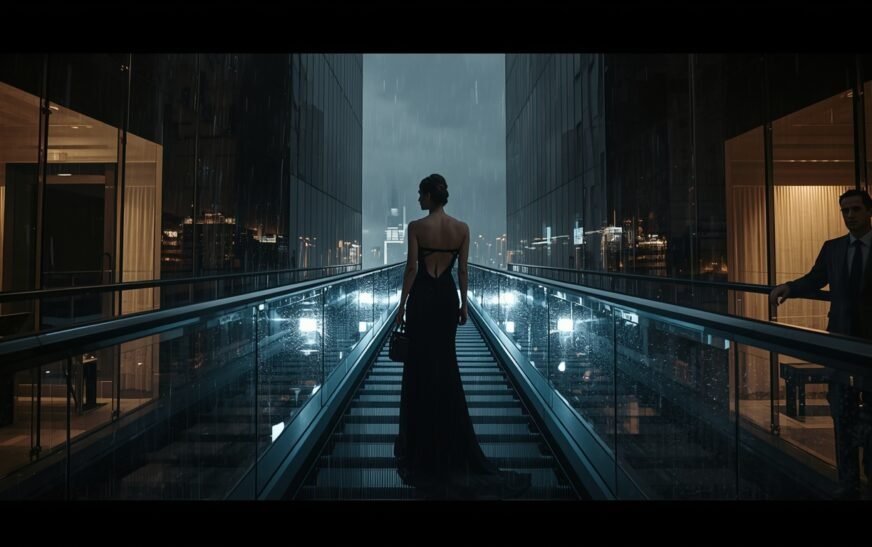
Helena stepped onto the glass bridge at 11:28 p.m., mostly because the ballroom had become unbearable and partly because the hotel map in the lift promised a quieter route between towers. The Ardent Crown had been built above the river in two sheets of black glass joined at the twenty-second floor by a suspended passage for premium guests and private events. Downstairs, her husband was still inside the awards dinner, collecting congratulations with the polished endurance of a man who liked admiration more than pleasure. Helena had smiled through speeches, champagne, and the kind of table conversation that turned wives into tasteful background detail. However, once Damien disappeared toward a cluster of board members and did not look back, she chose movement over waiting and followed the corridor signs toward Tower East. Instead, the glass bridge offered her a darker kind of interruption.
Rain needled softly against the panels. Below, the city stretched in wet amber lines, its traffic reduced to silent threads of light. The bridge itself was narrow and almost indecently elegant, with smoked glass walls, low brass lamps, and a black floor that reflected each step a second late. Helena was halfway across when she realized someone else was standing near the far end, one hand in his pocket, looking out over the river as if height had simplified nothing.
He turned at the sound of her heels.
“I was beginning to think this bridge had stopped belonging to the hotel,” he said.
At first, she almost apologized and went back. Then again, the night had already asked too much performance of her. Therefore, she stayed where she was and said, “That would improve the property considerably.”
Why she had come to the awards weekend
Damien called it important visibility.
He used the phrase in the car from the station that afternoon, one hand answering emails while the other rested lightly on Helena’s wrist in a gesture designed to look affectionate from any passing angle. The weekend mattered, apparently. The firm was closing a merger. Senior partners were restless. Spouses signaled stability. Helena had not argued because arguments with Damien no longer resembled disagreement. They resembled corrections made by someone who believed tone mattered more than content.
At first, she married him for reasons that once felt sensible. He was brilliant, admired, and attentive in the way successful men often are during the years when attention still serves desire. Recently, however, his regard had become curatorial. He chose restaurants, weekends, dresses, and opinions with the same precise calm he used to select wine he did not intend to drink much of.
Earlier that evening, while fastening a cuff link in the suite mirror, Damien had looked at her reflection and said, “Try to enjoy tonight. You can seem colder than you mean when you’re bored.”
She had smiled because the line was too practiced to fight before cocktails.
Now, standing inside a bridge of rain-dark glass with a stranger at the other end, she thought of that sentence again and felt boredom suddenly seem like the most innocent version of what was wrong.
The man in Tower East
He moved toward her only enough to be polite.
That distance helped.
He was not young, though not old either. Dark suit, white shirt open slightly at the collar, conference badge turned backward on its clip as if he had grown tired of being named correctly by midnight. His face had the composed fatigue of someone who had spent the day being useful in rooms full of men who confused certainty with merit.
“Julian Mercer,” he said.
“Helena Vale.”
Recognition passed across his expression with discreet speed.
“Damien Vale’s wife.”
The fact annoyed her instantly, though not because it was wrong.
“That is one administrative version of me,” she said.
A quieter smile touched his mouth. “Then I’ll revise. Helena, currently escaping hospitality.”
She almost laughed. Instead, she leaned one shoulder lightly against the glass and watched a ferry move under the bridge line below them.
“And you?” she asked.
“Escaping triumph,” he said. “It was becoming repetitive.”
The answer held no obvious flirtation. That made it more dangerous, not less.
What Damien had said about Julian
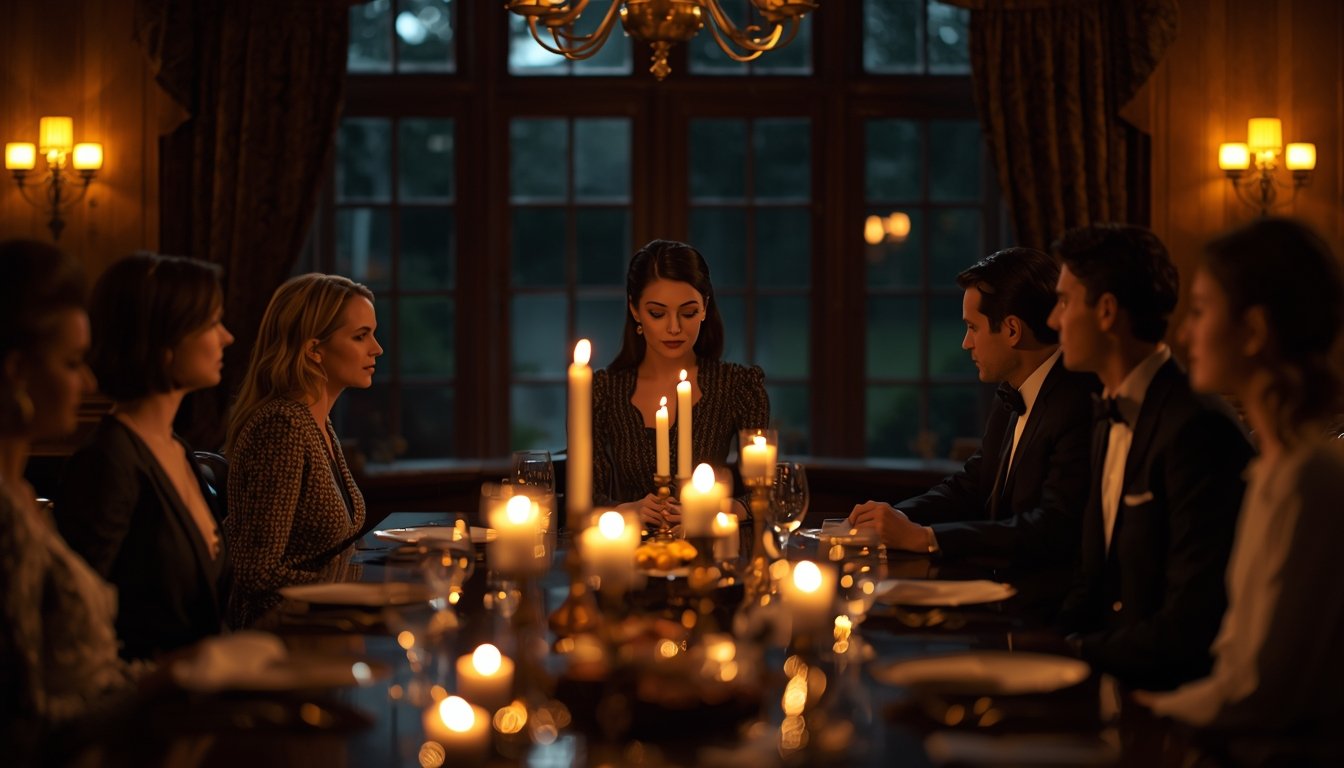
At dinner, Damien had mentioned Julian once with the careful indifference of a man naming someone he had not managed to rank properly.
“Mercer’s advising the private equity side,” he had said while scanning the room for more important faces. “Sharp, though occasionally inconvenient.”
The word stayed with Helena now. Inconvenient men often turned out to be merely unsponsored ones, the kind who spoke before aligning their thoughts with whoever paid most confidently.
Julian looked back toward Tower West, where the ballroom light glowed through several floors of tinted glass.
“Your husband is having an excellent evening,” he said.
“He usually does in rooms where winning can be photographed.”
Julian glanced at her, then away again. “That sounds expensive to live with.”
“Only in the emotional sense.”
The rain sharpened briefly, silvering the walls around them. Meanwhile, the bridge held its own silence with unnerving grace. Because he did not rush to interpret her remark, Helena felt the first shift of relief. She had forgotten how different conversation could feel when a sentence was allowed to remain itself.
The city under the bridge
At first, they spoke in the usual safe materials. Work. Travel. Hotels that believed darkness was a luxury. The indecency of tiny desserts on oversized plates. Yet below the easy surface ran something much less manageable.
Julian had spent the week advising on the same merger Damien had been celebrating all evening, though from the other side of the deal. He said this without vanity. Therefore, his competence felt less like performance and more like weather: present, impossible to flatter, slightly dangerous if ignored.
“Do you always leave events halfway through?” Helena asked.
“Only when rooms become too certain of themselves.”
“That sounds difficult in finance.”
“It is.”
The simple honesty of the answer made her look at him fully for the first time.
Outside the bridge, rain blurred the office towers into softened black columns. Below, the river carried white reflections in broken lengths. Inside, her own reflection floated faintly beside his in the glass—close in image, measured in fact.
“I used to think certainty was attractive,” she said.
“And now?”
She considered. “Now it mostly sounds like someone arriving too early at their own conclusion.”
This time, he laughed properly. The sound was low, brief, and surprisingly warm in the controlled air of the bridge.
What he did not do
Julian did not crowd the moment. He did not lean closer, lower his voice theatrically, or ask the kind of questions men often use when they want intimacy at borrowed speed. Instead, he waited.
That patience unsettled Helena more than charm would have.
Because she was used to men who occupied silence before it revealed them. Damien did this with competence. Board members did it with anecdote. Friends did it with reassurance. Julian, however, left silence intact as if trusting it to produce something truer than performance.
“You make people nervous,” she said.
“That’s an interesting accusation.”
“Not accusation. Observation.”
“And why do I make people nervous?”
She let the question rest for a moment. “Because you don’t seem interested in helping them enjoy themselves incorrectly.”
The answer seemed to reach him more deeply than anything else she had said.
“That may be the nicest thing anyone has said to me this quarter,” he replied.
Helena looked down at her wedding ring, suddenly too polished beneath the brass light.
Then again, the danger here was not the ring. It was the growing clarity that a stranger could recognize her more accurately in fifteen minutes than her husband had managed in months.
The stop she could still make
She could have left then.
Tower West was only a short walk behind her. The ballroom still existed. Damien still existed. There would be another round of congratulations, another drive to the suite, another elegant exhaustion arranged to resemble marriage. By contrast, the bridge was becoming dangerous in a quieter way.
Nothing improper had happened.
Nothing improper needed to.
“I should go back,” Helena said.
Julian nodded at once. “Probably.”
She hated him a little for giving the correct answer so quickly.
“That sounded disciplined,” she said.
“It was.”
“And the undisciplined version?”
He looked past her toward the wet glow of Tower West. “That this is the first unedited conversation I’ve had all evening.”
The sentence did not move between them so much as settle around them. Helena felt it in her throat, her hands, the controlled stillness of her body inside a dress chosen for someone else’s event.
Because attraction can often be survived as timing. Recognition cannot. Recognition rewrites.
When Damien called
Her phone lit in her clutch before she could answer anything at all.
Damien.
The name appeared against the dark screen with the familiar authority of a life already arranged.
Julian stepped back slightly. “You should take it.”
Again, the right answer. Again, intolerable for that reason.
Helena answered. “Hello?”
Damien’s voice arrived smooth and faintly distracted by other people. “Where did you disappear to?”
Not are you all right. Not do you want me to come find you. Disappear.
Helena looked through the rain-streaked glass at the river below.
“I found the bridge,” she said.
He laughed lightly. “Of course you did. We’re heading up soon. Can you be in the suite in ten?”
Can you be. As if her existence were a placement issue to be resolved efficiently.
“Yes,” she said.
He disconnected without another question.
The silence afterward felt cleaner than the call.
After the glass bridge
Helena slid the phone back into her clutch. Julian had turned toward the window again, granting her the dignity of not being watched through the decision.
“Ten minutes,” she said.
“Then I won’t waste one of them.”
The line should have sounded polished. Instead, it sounded almost severe.
Readers drawn to dark romance, the ache inside forbidden love, the fracture of emotional drama, the distance within marriage secrets, and the quiet pressure of secrets and suspense will recognize the danger of a night that offers no scandal, only a devastating improvement in clarity.
Meanwhile, the deeper current lived in hotel nights, married distance, quiet attraction, private conversations, restrained desire, dangerous timing, and rain on glass that never need a touch to become unforgettable.
She picked up her clutch. Julian moved aside before she asked him to, which made the moment feel unbearably adult.
At the threshold, Helena paused and looked once more through the length of the glass bridge, with its black floor, rain-lit walls, and the city hanging below like a map of other lives.
“You were right,” she said.
He looked at her. “About what?”
“This was the first unedited room in the building.”
Then she walked back toward Tower West, toward Damien, toward the brighter and more public version of the night. Yet while the corridor lights found her dress and the ballroom hum slowly returned through the walls, Helena understood the true shape of what had happened. The glass bridge had not created anything between her and Julian.
It had only removed the last respectable way to misread her life.