The Locked Conservatory at Hollowmere Hall
Iris noticed the scent before she noticed the silence.
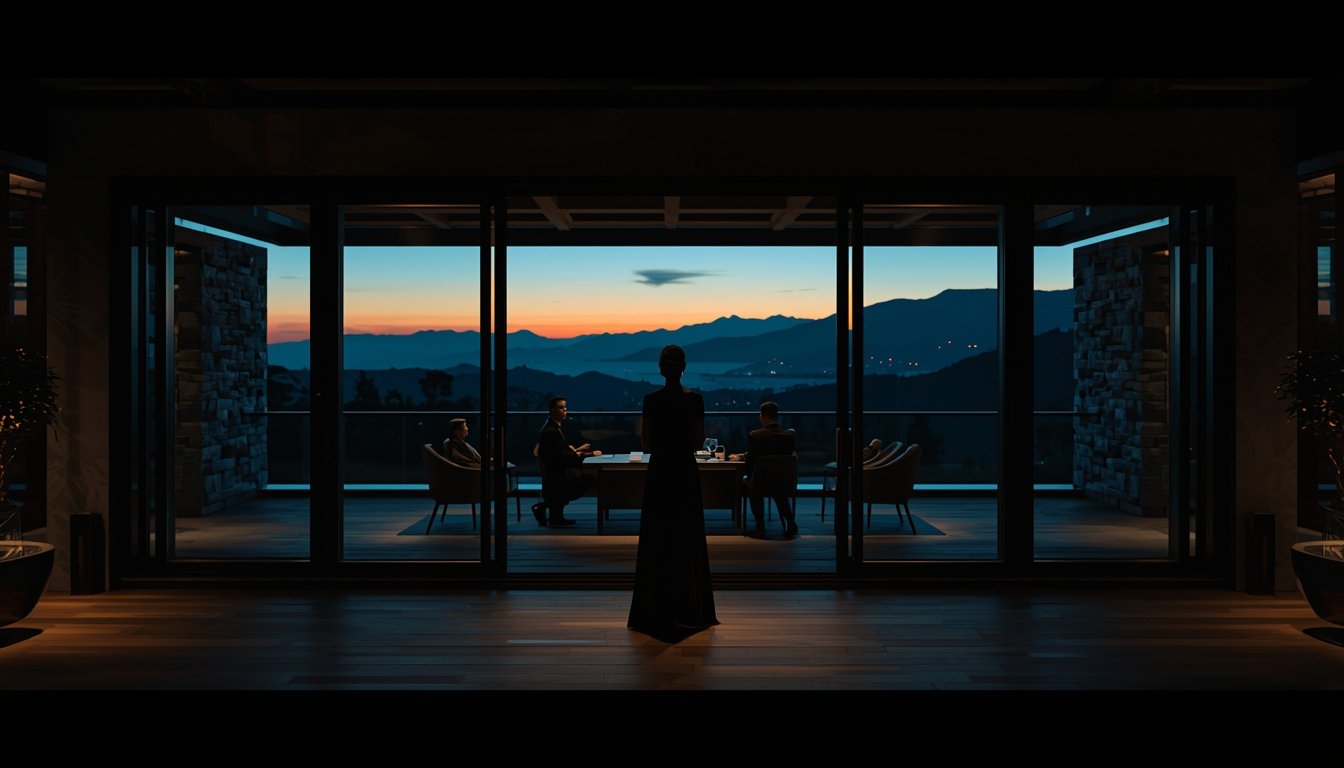
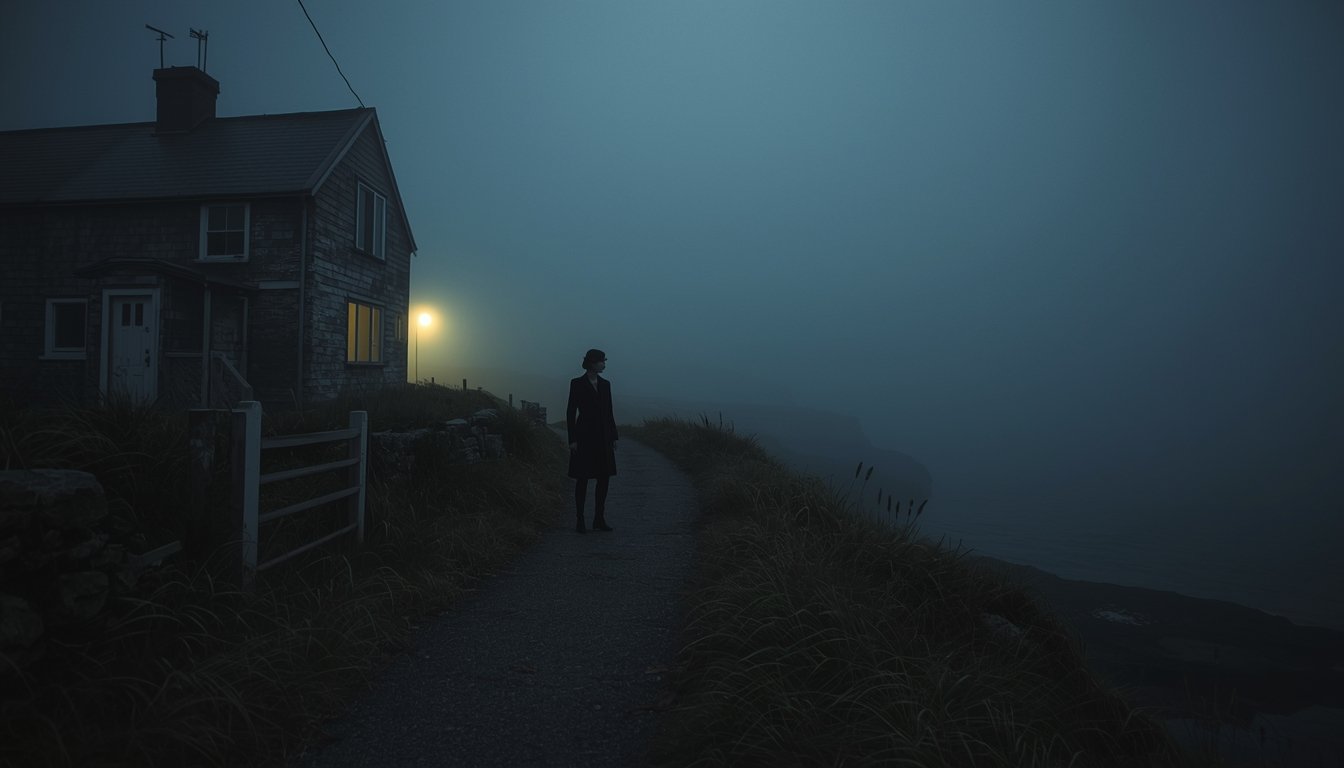
Even in winter, Hollowmere Hall carried roses somewhere in its breath. The old manor had done so for decades, as though beauty were the one family habit no scandal had managed to kill. Rain silvered the long windows. Bare hedges darkened the lawn. Beyond them, the ruined conservatory stood attached to the east wing like a glass memory no one had finished forgetting.
Iris parked under the stone arch and sat still with both hands on the steering wheel.
She had not wanted to come back for the engagement weekend.
Nevertheless, her mother had called the gathering important. Her older sister, Celine, was finally marrying well. The guest list was careful. The flowers had been ordered from London. Because Iris worked in restoration law, and because she understood contracts better than anyone else in the family, she had been asked to review a few estate documents before the celebration began.
Important, she had learned long ago, was the word her family used when they meant useful.
She stepped out into the cold.
The front door opened before she reached it. A maid relieved her of her coat. Somewhere deeper in the house, voices drifted through polished corridors already arranged for a future Iris did not trust.
Then, from the far end of the entrance hall, her mother said, “You’re late.”
Iris turned.
Vivienne Vale stood beneath the chandelier in deep green silk, elegant enough to make kindness look optional. She kissed Iris once on the cheek, more ritual than affection.
“Traffic,” Iris replied.
“Of course.”
That meant I won’t argue here, but I could.
Behind her mother, Celine descended the staircase in pale cashmere, smiling the fragile smile of a woman trying very hard to look chosen rather than trapped.
“You came,” Celine said.
“That usually happens when people threaten to send three separate messages in one morning.”
Celine laughed softly. Their mother did not.
For a brief moment, Iris let herself believe the weekend might remain merely unpleasant.
Then she looked past the staircase windows toward the east wing and saw a light moving behind the glass of the locked conservatory.
The Glass Room No One Entered
Dinner was served early and conversation arrived already exhausted.
Celine’s fiancé, Adrian Marlowe, spoke gracefully about the future of the estate. Vivienne praised practical marriages. An uncle discussed neighboring land values as though romance were simply a decorative tax. Meanwhile, Iris drank one measured glass of wine and watched her sister carefully.
Celine smiled at the right moments. She also kept twisting the stem of her water glass in small nervous turns.
That mattered more.
“You’ll stay through Sunday?” Adrian asked Iris.
His tone was warm. His eyes were not.
“At least until I finish the document review,” she said.
“Excellent. My solicitor left a portfolio in the morning room.”
There it was again.
Useful.
After dessert, while the others drifted toward coffee and polite manipulation, Iris slipped into the east corridor alone.
The hall there was colder. Family portraits lined the walls with the severe boredom of people painted before forgiveness was fashionable. At the end of the passage, double glass doors stood closed behind a decorative iron chain. A brass plaque fixed beside them read:
CONSERVATORY CLOSED FOR STRUCTURAL REPAIR
It had likely hung there for years.
Yet a pale line of light glowed beneath the door.
Iris touched the chain. It was unlatched.
That was the first lie.
The second waited on the other side.
The Winter Roses Beneath the Broken Glass
The conservatory door opened with a dry scrape.
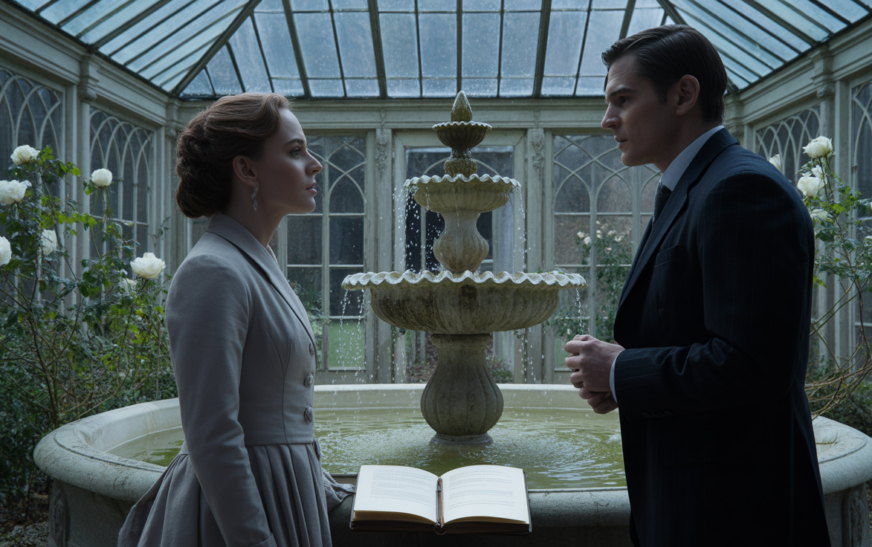
Warm air met her face, carrying earth, damp stone, and the sharp sweetness of winter roses kept alive against reason. The glass roof above was cracked in several places, though someone had covered the worst fractures with protective sheeting. Iron trellises climbed the walls. Dead vines twisted beside living ones. Under a suspended work lamp, a man stood near the central fountain with a ledger open on the rim.
Rowan Ashcroft.
Iris stopped at once.
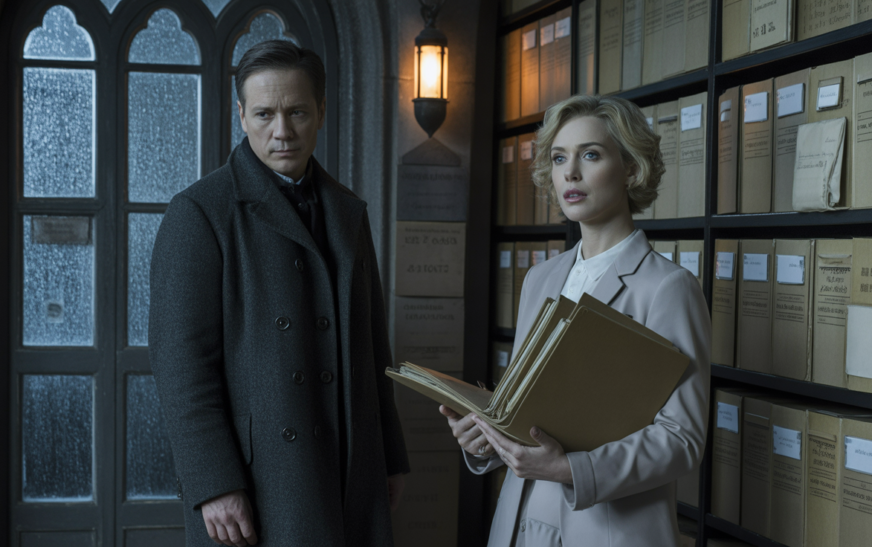
He looked exactly wrong for the room in the way she remembered too well: dark coat, rolled sleeves, a face sharpened by restraint rather than ease. Years ago, when they were both too young to know how expensive honesty could become, Rowan had worked as an assistant archivist for the estate trust. Later, he had left after a conflict no one ever explained clearly and everyone discussed with polished contempt.
“You shouldn’t be here,” Iris said.
Rowan closed the ledger but did not move away from it. “Neither should your sister’s engagement contract.”
The answer landed cleanly.
She took two steps forward. “What does that mean?”
Rain tapped faintly overhead. Rowan watched her with the same dangerous calm that had once made her feel both understood and badly defended against herself.
“It means the family is trying to bury a property claim before the marriage is announced publicly,” he said. “And the locked conservatory is where they hid the register that proves it.”
The Name Written in the Register
Iris stared at him. “That sounds theatrical, even for this house.”
“It also happens to be true.”
He turned the ledger toward her.
The page was older than she expected, thick with age and edged in dust. Several estate entries filled the left margin: rose inventories, heating expenditures, restoration notes. Then, halfway down the sheet, a separate notation had been added in darker ink.
Use of east conservatory restricted following private transfer dispute involving the Ashcroft line and provisional dowry security attached to Vale marriage negotiations.
Iris read the line once. Then she read it again.
Ashcroft line.
Vale marriage negotiations.
Her pulse shifted with sudden precision.
“What exactly am I looking at?” she asked.
“Evidence that part of this wing should never have been folded fully into your family trust,” Rowan said. “My grandmother’s share was absorbed when one of your great-aunts entered a marriage arrangement with my grandfather’s family. The settlement was never completed lawfully. Instead, the papers were rewritten after the wedding.”
“And this concerns Celine because—”
“Because Adrian Marlowe’s investment group needs clear title before the marriage merges certain holdings. If questions about the old transfer resurface now, the east wing becomes difficult to package.”
There was something almost offensive about how much sense that made.
Iris thought of dinner. Adrian praising the estate’s future. Her mother calling the weekend important. Celine’s careful hands twisting around the water glass.
Nothing false ever arrived alone. It traveled with flowers, silver, and excellent timing.
The History They Called Practical
Rowan moved to the far side of the fountain and kept that measured distance between them. The restraint mattered more than proximity would have.
“Why show me this now?” she asked.
He gave a brief, humorless smile. “Because you’re the only person in this house who reads legal language as if it means something.”
That was unfair.
It was also, unfortunately, accurate.
Iris set her hand on the fountain rim and looked around the warm, damaged room. Once, the conservatory had been used for winter concerts and summer announcements. Later, after the family finances narrowed and the scandals multiplied, it had been closed to guests and reclassified as unstable. Apparently, unstable was another useful word.
“My mother knows?” she asked.
“Enough to prefer the register missing.”
“And Celine?”
“I don’t know.”
That answer hurt more than certainty would have.
If Celine knew, she was trapped. If she did not, she was being used. Neither option felt survivable in the soft, respectable way the house demanded.
Readers who loved Drama, Marriage & Secrets, and Secrets & Suspense understood this kind of cruelty well. The most elegant betrayals rarely looked violent. Instead, they arrived as arrangements everyone else called sensible.
The Reason He Stayed Away
Iris looked back at Rowan. “You disappeared three years ago.”
His jaw shifted once. “I was encouraged to.”
“By my mother?”
“By several people with better tailoring and worse intentions.”
That nearly made her laugh. It also made her angry.
Years earlier, before the silence between them had been professionally arranged, Rowan had been the only person at Hollowmere who spoke to her without either caution or appetite. He asked questions and waited for real answers. Worse still, he had once looked at her as though she might become more dangerous if she ever stopped behaving well.
She had thought about that look far longer than she should have.
“Why didn’t you send this to a court?” she asked.
“I tried through estate counsel. The copies vanished. The originals were reclassified. Therefore, I came back for the register itself before your sister’s marriage finished the paperwork they started generations ago.”
His voice remained steady. Even so, fatigue had begun to show beneath it.
“And now?” she asked quietly.
“Now I need someone the family cannot dismiss as bitter.”
The words struck harder than they should have.
Because he was right.
The Sister Waiting in the Morning Room
Iris found Celine just after midnight.
The morning room overlooked the south lawn and had been arranged in creams and golds severe enough to make comfort feel like an afterthought. On the low table rested the promised document portfolio. Beside it sat Celine, still in her evening dress, staring at a cold cup of tea as though it had personally disappointed her.
She looked up when Iris entered. “Mother says you vanished.”
“I was in the conservatory.”
Celine went still.
That told Iris everything it should not have needed to.
“You knew it was open,” Iris said.
“I knew someone had gone back in.”
“Did you know why?”
Celine turned away toward the dark lawn. “Adrian said there were old estate complications. He told me they were technical and nearly resolved.”
“And you believed him?”
A sad smile touched her sister’s mouth. “No. I decided not to ask the question a second time.”
The honesty of that made the room feel colder.
Iris crossed to the table and opened the portfolio. Trust amendments. Property maps. Marriage-adjacent asset notes disguised as practical schedules. Hidden among them, precisely where no honest person would place it, was a transfer authorization for the east wing pending post-engagement consolidation.
Signed by Adrian.
Prepared for Vivienne Vale’s review.
Celine watched Iris read. “I thought if I kept everything calm,” she said, “it might become harmless.”
“Calm and harmless are not the same thing.”
“I know.”
At last, Celine looked up. Her composure had thinned into something rawer and much younger.
“What happens if I stop this?” she asked.
Iris answered honestly. “The house will call you irrational. Mother will call you ungrateful. Adrian will call it unfortunate timing. None of that means you are wrong.”
The Man Her Mother Preferred
Vivienne arrived before Celine could reply.
She entered without knocking, took in the open portfolio, and understood the room at once. That was one of her many refined talents.
“You’ve been reading things out of order,” she said.
“That implies there’s a correct order for deception,” Iris answered.
Vivienne closed the door behind her. “Do not dramatize paperwork.”
“Then stop hiding life-altering clauses inside family celebrations.”
For a moment, her mother’s expression sharpened enough to show the younger woman she had once been—the one who learned early that survival often preferred control to tenderness.
“This estate has stood because people before you made difficult decisions,” Vivienne said. “Celine’s marriage secures stability. The conservatory dispute is old, partial, and manageable.”
Celine spoke before Iris could. “Manageable for whom?”
Silence followed.
Vivienne turned to her elder daughter with something almost like disappointment and almost like fear.
“For the family,” she said at last.
Celine rose slowly from her chair. “You say that as though I am not part of it.”
That changed the room.
Vivienne looked from one daughter to the other and understood, perhaps for the first time that night, that obedience was no longer available in its old form.
The Choice Beneath the Politeness
“Adrian will be here in the morning,” Vivienne said. “We can discuss revisions then.”
Iris closed the portfolio. “No. We can discuss disclosure.”
“You are making this uglier than it needs to be.”
“No,” Iris said. “The ugliness was already there. We simply opened the right room.”
Her mother’s gaze hardened. “And Rowan Ashcroft helped you do that, I assume.”
Iris did not answer quickly enough.
It was the wrong kind of silence to offer a woman like Vivienne.
“I warned you about him years ago,” her mother said softly.
“You warned me because he noticed things you couldn’t control.”
The truth landed between them with surgical precision.
Celine sat down again, one hand pressed flat to the table as though steadying the whole house. “I’m not marrying Adrian with this hidden,” she said.
Vivienne closed her eyes once. When she opened them, her face had returned to its practiced elegance. That was always the most chilling part.
“Then you will both live with the consequences,” she said.
She left the room as quietly as she had entered it.
The Confession in the Conservatory
Iris returned to the east wing before dawn.
The house slept badly. Pipes murmured in the walls. Rain had slowed to a thin mist on the glass. When she entered the conservatory, Rowan was still there, standing beside the fountain with the register, as though the night had simply decided to keep him.
He looked up when she approached. “Well?”
“Celine is ending the engagement unless the dispute is disclosed properly.”
Relief flickered across his face and vanished almost immediately.
“Then she’s braver than most of this house.”
Iris stopped across from him. The fountain between them felt less like a barrier now than an old habit they were both pretending not to notice.
“Why did you really come back?” she asked.
He held her gaze. “For the register.”
“That isn’t the whole answer.”
No denial came.
Instead, Rowan looked up through the cracked glass roof toward the paling sky. “I told myself I came back because old theft should not become legal simply because it grows respectable,” he said. “That part is true.”
He lowered his gaze to hers.
“The rest is that I heard you were returning for the weekend, and I did not trust myself to stay away from a house that has always used you too well.”
There were sentences built for seduction. This was not one of them.
That was exactly why it worked.
Years of caution shifted inside her all at once. No wonder readers drawn to Dark Romance, Forbidden Love, and Romance returned to stories where restraint hurt more than contact. The heart did not become civilized just because the room demanded manners.
“Nothing can happen,” she said, though the words felt borrowed the moment they left her.
“I know.”
“This house would turn it into a scandal before breakfast.”
“I know that too.”
He did not move closer. That made it harder to breathe than if he had.
The Morning the House Changed
Adrian arrived at nine with flowers.
That felt so perfectly offensive that Iris almost admired the instinct behind it.
The confrontation took place in the drawing room beneath a painting of a dead ancestor who had likely approved of contracts more than affection. Celine sat upright on the sofa with the portfolio beside her. Vivienne stood at the mantel. Adrian remained by the window. Rowan, at Iris’s request, waited near the doorway with the register case in hand.
“This is unnecessary,” Adrian said after the first ten minutes of explanation.
“No,” Celine replied. “It’s merely inconvenient for you.”
He turned to Vivienne for support. She did not offer it quickly enough.
That hesitation mattered.
Iris set the copied register pages on the table. “The east wing transfer cannot be treated as clear while the Ashcroft claim remains buried. If you proceed without disclosure, you risk fraud exposure after the marriage.”
Adrian’s expression cooled. “This should have remained internal.”
“That’s another way of saying hidden,” Iris said.
He looked at Celine. “You’re willing to destroy the weekend over archival ambiguity?”
“I’m willing,” Celine said, voice steady now, “to stop being folded into a tidy solution.”
The sentence landed beautifully.
For once, beauty was on the right side of the room.
Adrian left first. He did so with measured composure, which somehow made the ending colder. Men like him rarely fled consequences. Instead, they began drafting better language for them. A solicitor would certainly follow. So would unpleasant calls and strategic regret.
None of that changed what had happened.
The engagement was over before lunch.
The Room That Could Not Be Closed Again
By afternoon, the house felt lighter in all the wrong places.
Staff moved carefully. Doors opened and shut with unusual softness. Somewhere upstairs, Celine was finally sleeping. Vivienne had retreated to her private sitting room, where she would no doubt begin redesigning the family version of events before dinner.
Iris carried the register back to the conservatory one last time.
Sunlight, weak and silver, filtered through the cracked glass. The winter roses still held their shape in the damp warmth. Rowan stood near the doorway, coat on now, as though he understood leaving was the safest form of mercy available.
“What happens next?” she asked.
“Lawyers,” he said. “Then repairs. Then the long unpleasant work of forcing old families to admit paperwork can bleed.”
She smiled despite herself. “You make that sound almost festive.”
“I save my optimism for structural collapse.”
The answer was dry enough to ease something in her chest.
For a moment, neither of them spoke. Then Iris looked around the conservatory: cracked glass, living roses, hidden heat, and the register that had nearly vanished into another polished lie. The room had been called unstable for years. Perhaps that was always because it remembered too much.
Nothing False Gets to Bloom
“You’ll leave again,” she said.
Rowan did not insult her with false reassurance. “Probably.”
That hurt because it was honest.
She stepped closer, though still not close enough for recklessness. “And if I asked you not to?”
Something changed in his face then, small and devastating.
“Iris,” he said quietly, “don’t ask questions that would make staying the honorable failure.”
The line went through her like winter light.
He did not touch her. There was no need for it. Between them, the promise of what might have been—and what might still become—felt sharper than contact and more dangerous than confession.
Outside, the first clean break in the clouds widened above Hollowmere Hall.
Inside, the locked conservatory no longer belonged to secrecy. It belonged to consequence, to witness, and perhaps, much later, to a different kind of honesty.
Some families built their futures on silence.
Others hid theft beneath flowers and called it tradition.
Iris looked at Rowan, at the cracked glass, at the winter roses refusing to die in a room everyone claimed was finished.
“Nothing false gets to bloom here again,” she said.
He held her gaze. “Then keep the door open.”
That was not a promise. It was not even a plan.
Still, it was the truest thing anyone had said to her all weekend.
Explore more emotionally layered fiction in Stories, and follow related themes through locked conservatory, winter roses, hidden register, forbidden love, family engagement, broken trust, and estate mystery.