The Call to Confirm Dinner
Ava found out because she disliked uncertainty more than surprise.
The restaurant booking was for Friday at eight thirty, their wedding anniversary, and Simon had been strangely vague about it all week. He claimed he had handled everything. He said she did not need to think about a single detail. Usually, that kind of confidence would have pleased her. Lately, however, it only made her uneasy.
So, at four twenty on Friday afternoon, Ava called Maison Lorre to confirm the reservation herself.
The hostess answered in a voice smooth enough to belong to polished silver. Ava gave Simon’s surname, then waited while keys clicked softly at the other end of the line.
“Yes,” the hostess said. “I see the anniversary table for two at eight thirty.”
Ava smiled despite herself. “Good. Thank you.”
There was a pause.
Then the hostess added, “And would you also like to keep the second reservation under the same name for ten fifteen?”
Ava stopped breathing for one suspended second.
“I’m sorry,” she said.
“The second reservation,” the hostess repeated. “Also for two. I assumed they were connected.”
The room around Ava did not tilt or blur. Instead, it sharpened with unnatural clarity. The kitchen counter, the half-sliced lemon, the late light on the window glass, the small crack in the tile near the sink she had always meant to fix. Everything came into focus at once.
“No,” Ava said quietly. “They are not connected.”
Readers drawn to Drama know how quickly an ordinary afternoon can change shape. Meanwhile, readers who stay for Breakup & Betrayal understand the colder truth. Sometimes betrayal begins not with a confession, but with an administrative mistake no one thought to hide properly.
What She Asked Next
Ava could have ended the call there. Instead, she heard herself say, “Can you tell me when the second reservation was made?”
The hostess hesitated only briefly. “This morning at 11:12.”
This morning.
Simon had kissed her forehead at eight, left for work with his coffee in a travel mug, and texted just before noon to say he was buried in meetings but looking forward to tonight. By then, apparently, he had already reserved a second table under his own name for later in the evening.
“And the name attached to the first reservation?” Ava asked.
“Mr. Simon Vale.”
“The second?”
Another pause, smaller this time. “Also Mr. Vale.”
Ava thanked her, ended the call, and stood with the phone still in her hand long after the screen had gone dark.
At first, she tried to imagine some explanation that did not disgust her. A work dinner added carelessly. A client meeting. A duplicate booking made by mistake. However, none of those possibilities required the hostess to ask whether she wanted to keep both. The tone had been too knowing for innocence.
Then another detail surfaced.
Simon had chosen Maison Lorre because, he said, it was quiet enough to talk in. He had not taken her there in three years.
The Shape of the Lie
By five o’clock, Ava had stopped hoping for a misunderstanding and begun studying the architecture of the lie instead.
Simon had become more polished lately. Not kinder. Not warmer. Merely more polished. He noticed flowers when he previously ignored them. He brought home wine she had not asked for. He touched the base of her spine at dinners with friends in the same absent way people adjust expensive furniture, as though the gesture mattered more as display than affection.
She had mistaken those changes for effort.
Now, however, effort looked dangerously close to compensation.
Ava crossed the apartment slowly, taking in the details she and Simon had built over seven years. The framed black-and-white print in the hall. The linen curtains they argued over and then chose together. The sideboard inherited from his mother and refinished over one exhausting August weekend. Every object suggested continuity. Still, beneath that continuity, another life had apparently been making reservations of its own.
At six twelve, Simon texted.
Leave by 8? I’ll drive. Wear the black dress.
The black dress. Her hand tightened around the phone.
Even his instructions now looked theatrical, as though he had cast her into a role and expected gratitude for the lighting.
What She Chose to Wear
She wore the black dress anyway.
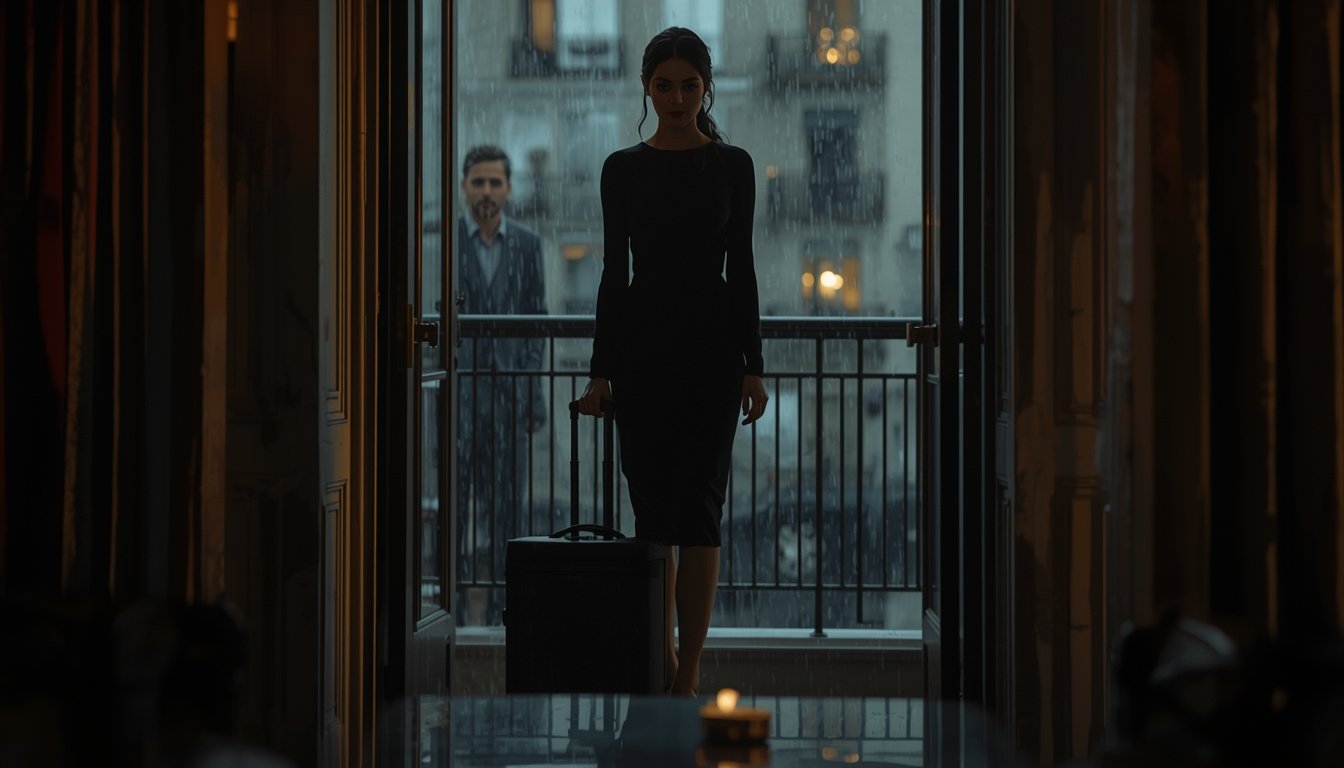
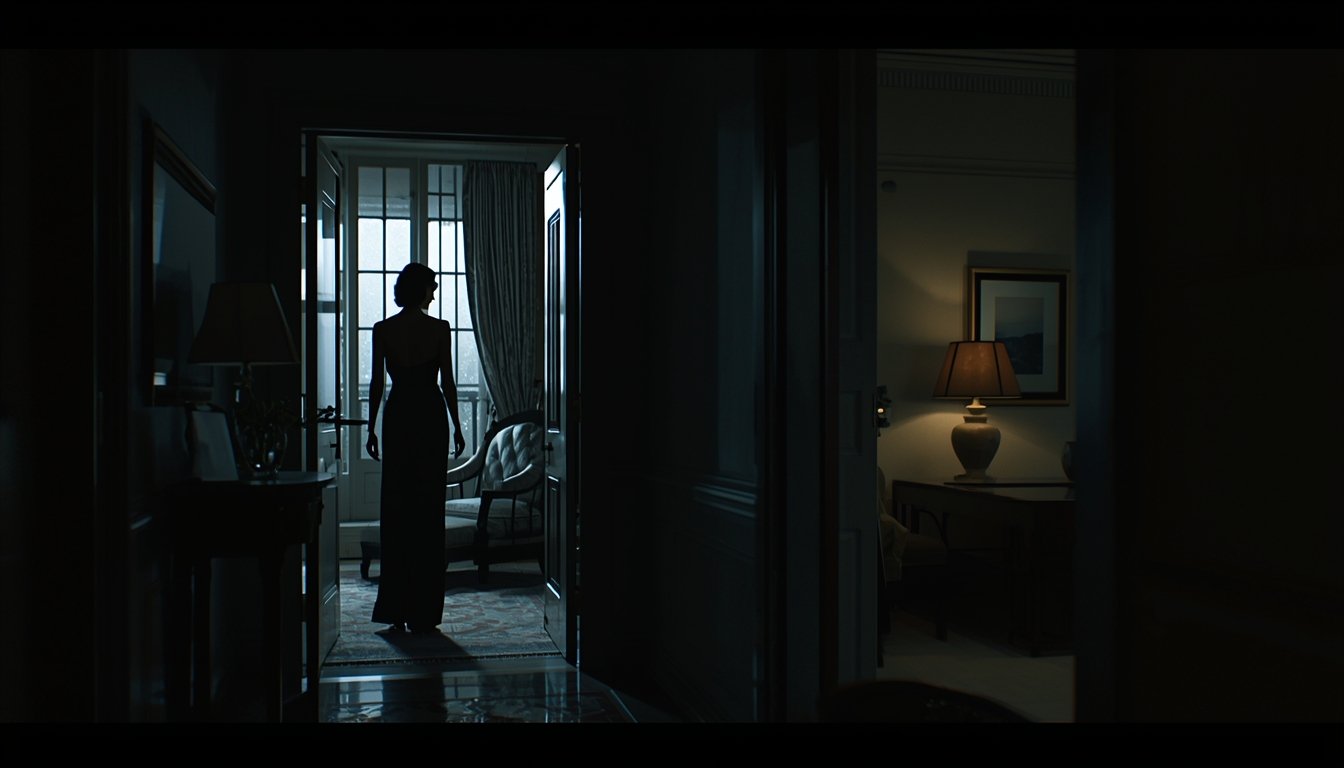
Not because he asked. Rather, she wanted to arrive looking exactly as he expected, at least until the truth began to shift the room around him. The dress skimmed her shoulders and fell in clean dark lines to her knees. Simon had always liked it because it made her look, in his words, “impossible to improve.” That memory no longer felt flattering.
While she dressed, Ava watched herself in the mirror with a calm she did not fully trust. Anger would have been easier to recognize. Grief, too. Instead, she felt something colder and more disciplined moving beneath her skin.
At seven fifty-eight, Simon came home with white tulips.
“For the table,” he said.
Ava took them and almost laughed at the phrasing. “How thoughtful.”
“You sound tired.”
“Long day.”
He kissed her cheek, then stepped back to look at the dress. Satisfaction crossed his face so quickly he likely thought she missed it. “You look beautiful,” he said.
“Do I?”
He smiled. “What is that supposed to mean?”
“Nothing,” Ava said. “Not yet.”
The First Reservation
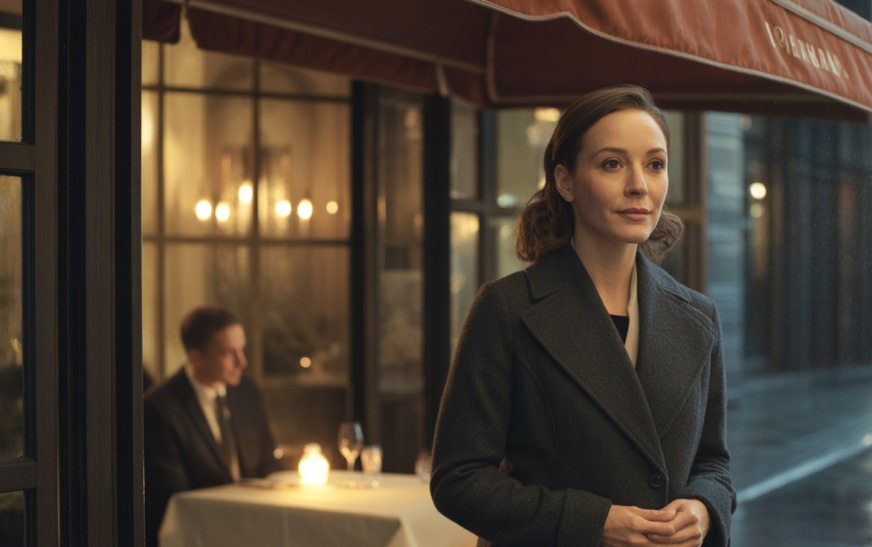
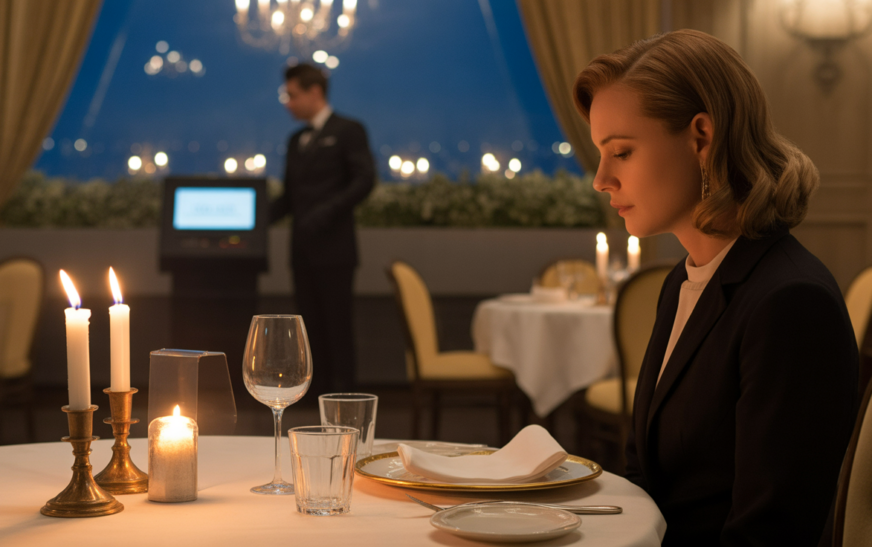
Maison Lorre glowed with candlelight and expensive privacy.
The hostess greeted them with practiced warmth and led them to a table near the back wall where mirrors doubled the lamps into soft gold halos. Simon ordered champagne before sitting down. Ava watched him do it and thought how strange it was that a man could look so entirely at ease while standing in the middle of his own exposure.
“To seven years,” he said once the glasses arrived.
Ava touched hers lightly to his. “To accuracy.”
He laughed, but the sound was uncertain at the edges.
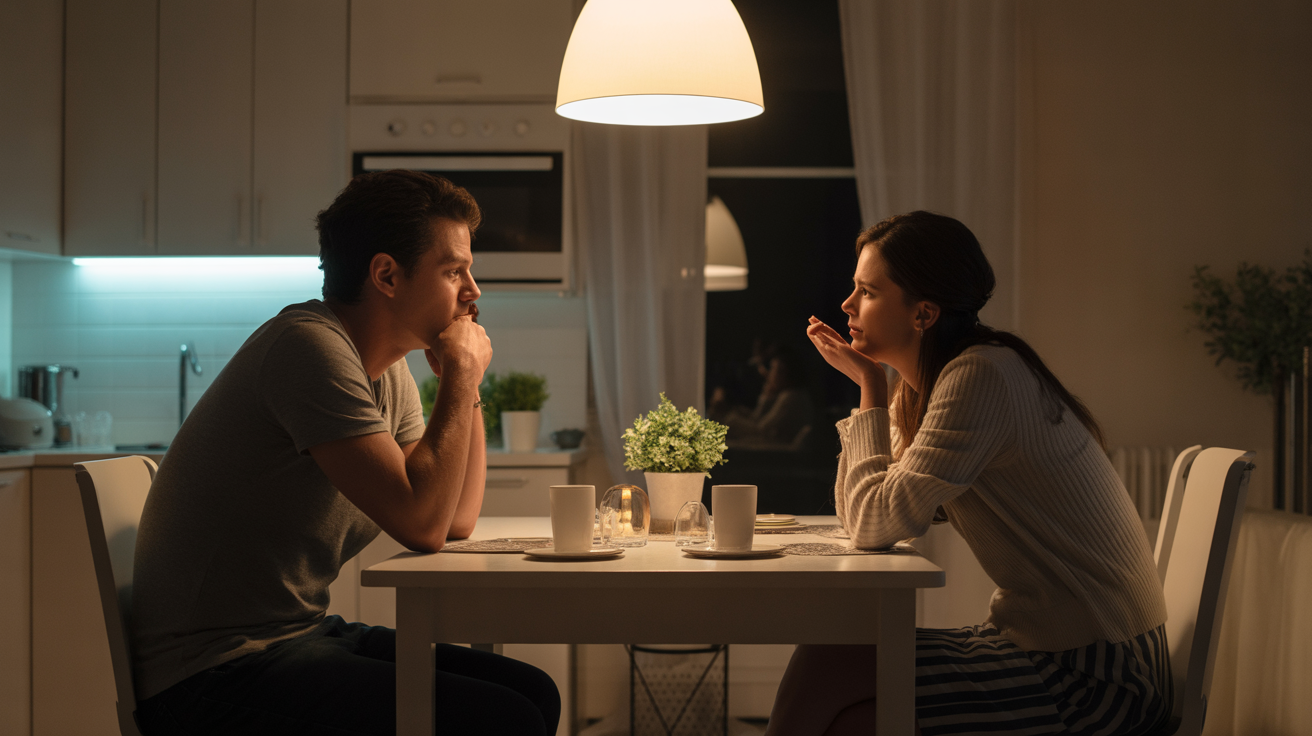
Dinner began with oysters, then moved to sea bass and white wine. Simon spoke about a difficult quarter at work and a possible trip in autumn. He even reached for her hand once across the table. Meanwhile, Ava listened with perfect attention and counted the minutes toward ten fifteen.
At 9:41, he checked his phone face down beside the bread plate.
“Work?” she asked.
“Unfortunately.”
“You should answer if it’s urgent.”
“It can wait.”
The lie came easily. That was what she noticed most now: not its content, but its fluency.
What the Hostess Revealed
At 10:02, Simon excused himself to take a call outside.
Ava waited three seconds, then stood and crossed the dining room toward the host stand.
The same woman from the afternoon call looked up and recognized her at once. Recognition flashed in her expression, followed quickly by something like discomfort.
“Good evening,” Ava said. “I need one clarification.”
The hostess nodded cautiously.
“The second reservation,” Ava said. “Has the other guest arrived yet?”
The woman glanced toward the entrance, then back at the screen. “Not yet.”
“And the table?”
After the smallest pause, she answered, “Window alcove. Ten fifteen.”
Ava smiled with unbearable politeness. “Thank you.”
Then she returned to her seat and waited.
Simon came back two minutes later, apologizing for a colleague’s late panic about figures. He sat, reached for his glass, and asked whether she wanted dessert.
“No,” Ava said. “But I’d love to stay for your second dinner.”
His hand stopped halfway to the stem.
The Look on His Face
There are expressions people never imagine practicing.
Simon’s belonged to that category. Surprise arrived first. Then calculation. Finally, the faint irritation of a man inconvenienced by the fact that reality had become visible too early.
“What are you talking about?” he asked.
“The ten fifteen reservation under your name.”
His face changed again, not enough to interest a stranger, but enough to tell a wife everything she needed.
“Ava—”
“No,” she said softly. “Don’t waste the first sentence.”
He looked toward the host stand, then at the entrance, then back at her. That quick sequence revealed more than any confession could have. He was not shocked by the accusation. He was assessing the damage.
“It isn’t what you think.”
“Then improve it.”
Silence settled between them, thin and bright as glass.
Finally, he lowered his voice. “I was meeting someone.”
“After our anniversary dinner.”
He said nothing.
“That is a remarkable level of ambition,” Ava continued. “Even for you.”
Who She Was
“How long?” Ava asked.
Simon rubbed one thumb against the side of his glass. “Since March.”
March. Spring rain. Dinner on balconies. Her birthday. The weekend they drove north and stopped by the lake because he said the light was too good not to. The memory of those months did not shatter. Instead, they simply turned ugly all at once.
“Who is she?”
He hesitated. Therefore, she knew the answer would matter.
“Mara Dene,” he said at last.
The name meant nothing to her.
For some reason, that cut deeper. A stranger has a particular cruelty to her. It means there is a room in the other person’s life built entirely beyond your sight, furnished and warmed and made private while you are still laying out shared plans in the next room.
“Does she know where you were before tonight?” Ava asked.
His expression tightened. “That’s not fair.”
“Fair ended at the host stand this afternoon.”
He looked down. Meanwhile, the restaurant continued around them in low voices and polished silver, as though betrayal should always have the decency to stay elegant.
Readers who return for broken trust, anniversary dinner, restaurant reservation, and relationship lies know why scenes like this linger. The wound is not only the affair. It is the confidence of the scheduling.
The Woman at the Window
At 10:14, the other woman arrived.
Ava saw her first in the mirror behind Simon’s shoulder: dark coat, pale hair pinned neatly at the nape, face composed in the way women compose themselves when they are trying not to look as eager as they are. The hostess stepped forward at once and guided her toward the window alcove.
Simon turned then and went still.
No one spoke for several seconds.
From the bar, a piano track drifted through the room in soft expensive notes. Glassware caught candlelight. Somewhere near the entrance, the hostess said something low and urgent to the waiting woman, who looked from Simon to Ava and understood enough to stop walking.
“Go to her,” Ava said.
“Ava—”
“Please,” she replied. “I would hate for your schedule to suffer.”
He closed his eyes briefly.
Then he rose.
Watching him cross the room toward another table should have felt dramatic. Instead, it felt administrative. One reservation ending. Another beginning. The cruelty lay precisely there.
What She Left Behind
Ava remained in her seat until the waitress quietly approached with the dessert menu and then quietly withdrew again after seeing her face.
The anniversary candle had burned halfway down beside the flowers. Simon’s napkin still lay folded across the edge of his plate. His untouched second glass of champagne had already gone flat.
She stood, took her coat, and walked past the window alcove without turning her head.
Outside, the air smelled of rain and cold stone. Traffic slid along the avenue in long bright streaks. Ava did not cry on the pavement. She did not call anyone. Instead, she walked three blocks before stopping beneath the awning of a closed bookshop and looking back only once at the restaurant’s upper windows glowing over the street.
By then, she understood something final. This marriage had not been undone tonight. Tonight had merely forced its hidden arrangements into the light.
After the Second Reservation
Back home, Ava placed the white tulips in the bin and took off the black dress without switching on the bedroom lamp.
In the kitchen, she poured a glass of water and stood at the counter where the late afternoon sun had once touched the cracked tile near the sink. The apartment looked unchanged. That, she thought, was the first insult of betrayal: rooms remain loyal to their shapes long after the people inside them do not.
At 11:07, Simon texted.
Please let me explain.
Ava looked at the message and set the phone face down.
There would be explanations tomorrow, and lawyers later, and all the practical choreography that follows when a polished life finally admits its fractures. However, tonight belonged only to the exact cold clarity of what she now knew.
Sometimes relationships end with shouting. Sometimes they end because a restaurant confirms too much in one calm voice and a woman realizes she was meant to be one dinner in a longer evening.
Readers who come for Drama, Breakup & Betrayal, second reservation, quiet betrayal, double booking, and emotional tension know why such endings last. They are not loud. They are scheduled.