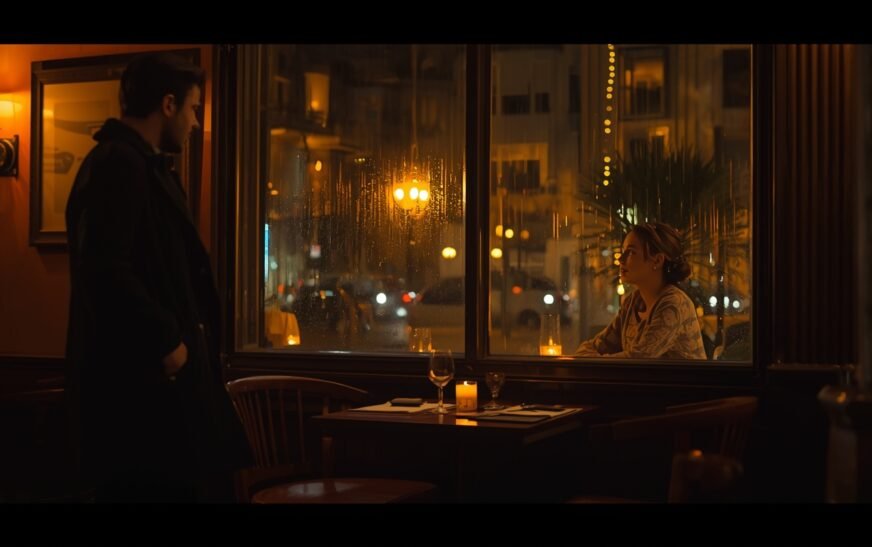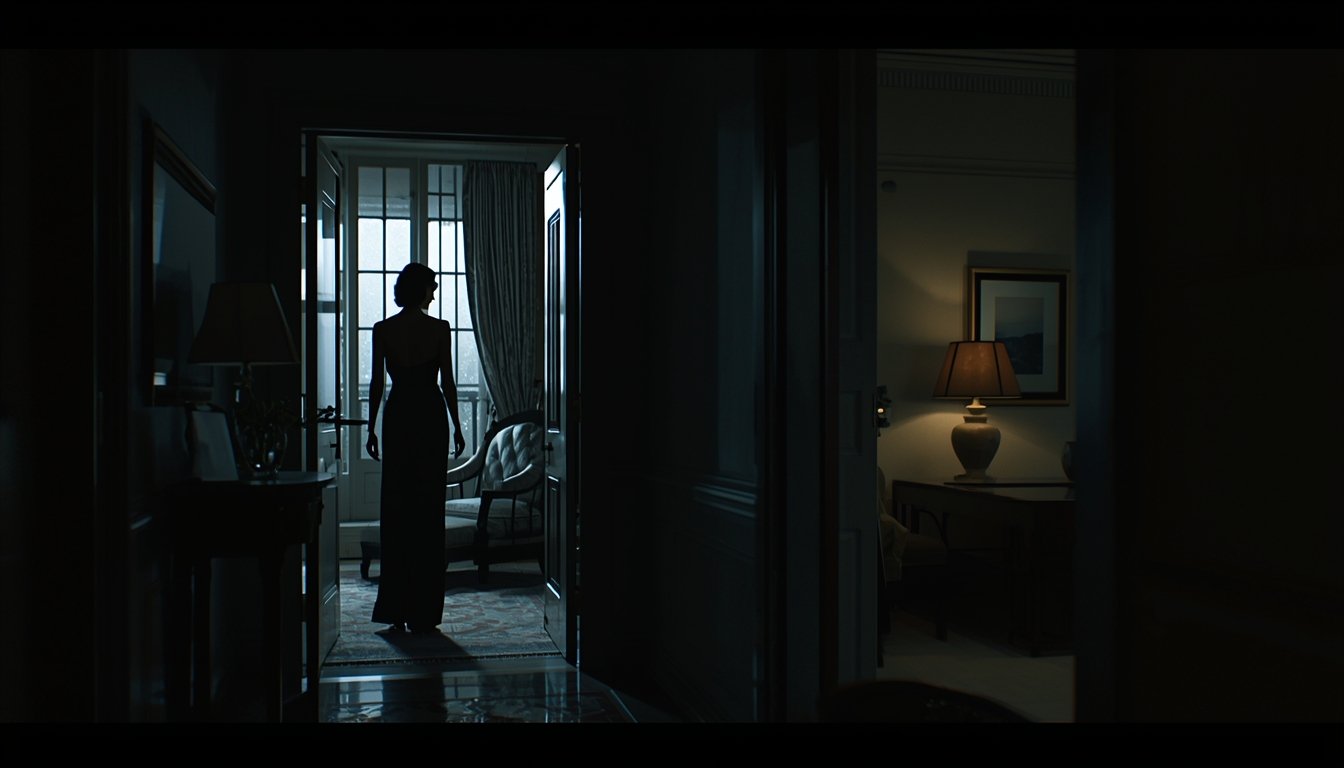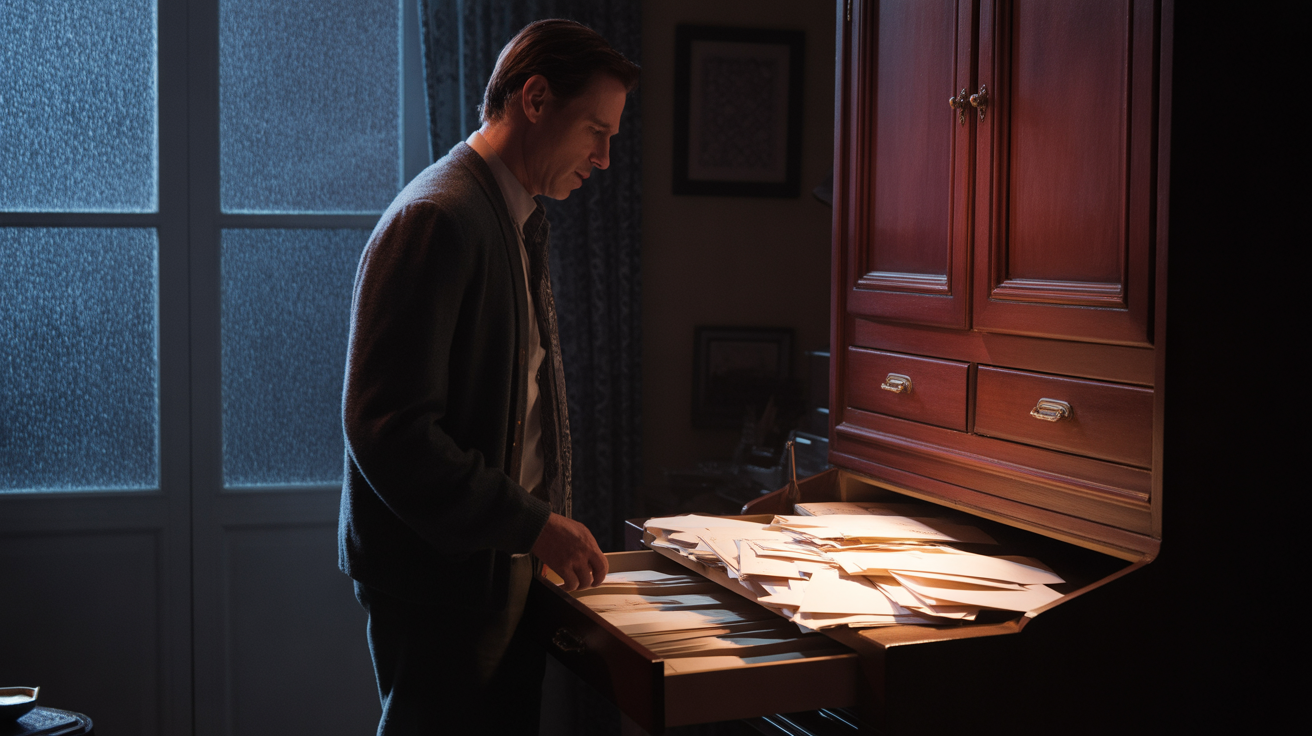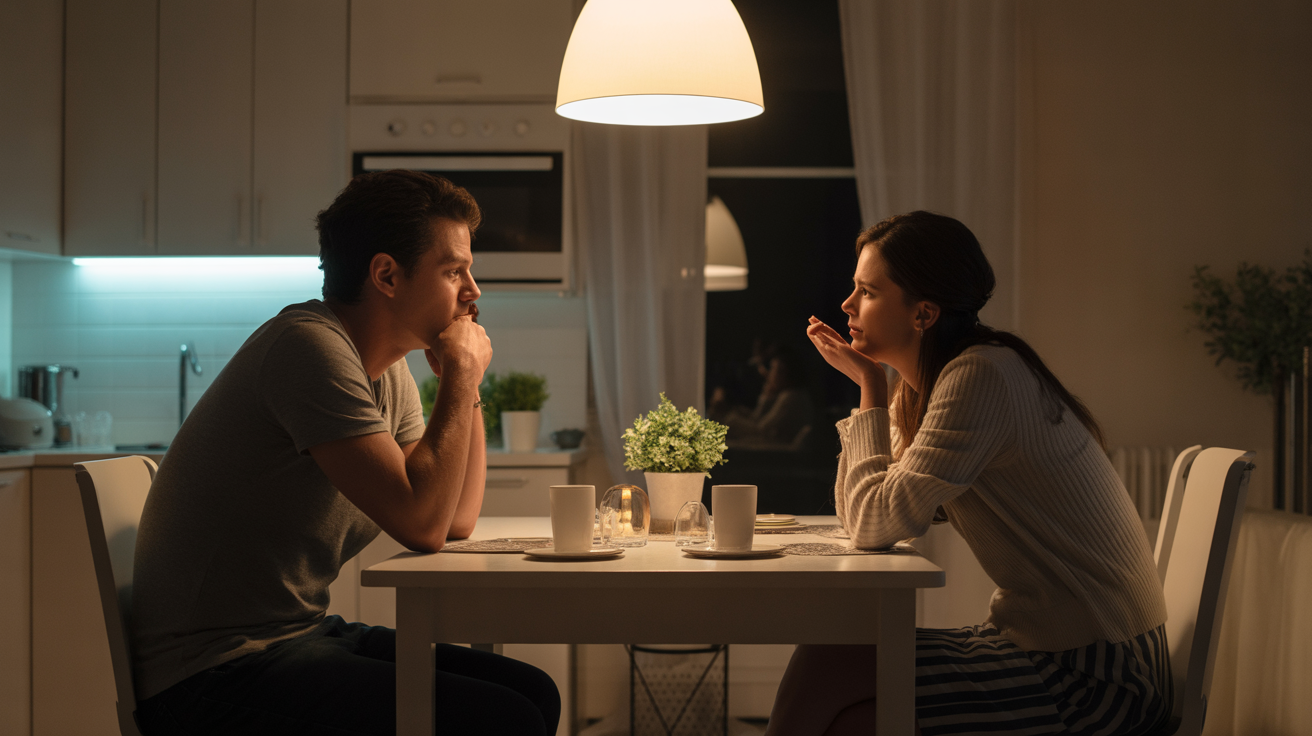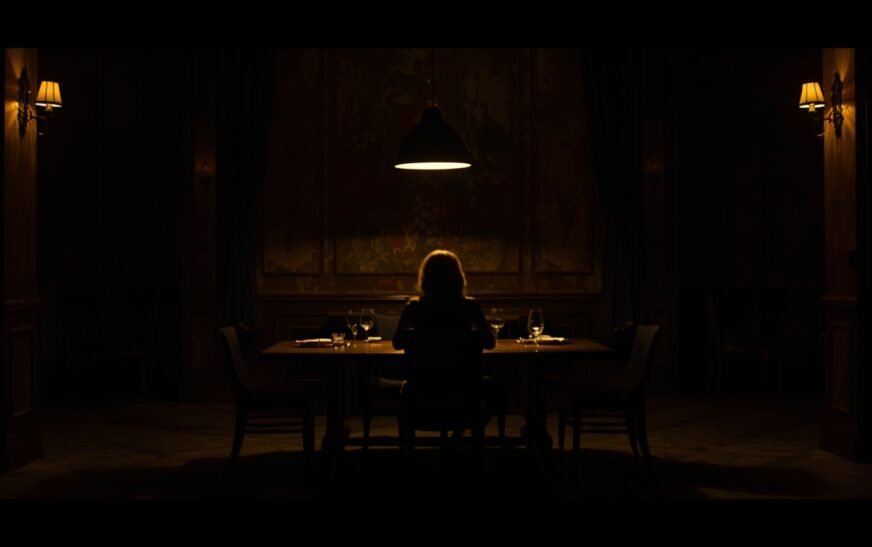
The silence after dinner always began the moment he set down his fork. For three years of marriage, Lena had measured their evenings by this quiet. It arrived without announcement. It settled between them like a third person at the table. And each night, it lasted a little longer than the one before. Marriage secrets did not always announce themselves with shouting. Sometimes they arrived as silence, patient and complete.
She noticed the shift first in October. Before that, Marcus would linger. He would ask about her day while stacking plates. He would touch her shoulder as he passed her chair. However, by the time the leaves turned, those small gestures had vanished. He still ate what she cooked. He still carried his plate to the sink. But the words that once filled the space between dinner and evening had thinned into nothing.
At first, Lena blamed his work. The firm had taken on a new client, a merger that required late calls and earlier mornings. Therefore, she told herself the silence after dinner was simply exhaustion. After all, she was tired too. Working full days at the gallery, managing the household accounts, remembering his mother’s birthday—these things drained her as well. Consequently, she understood the weight of a long week. Still, understanding did not make the quiet less heavy.
The Routine That Replaced Conversation
By November, the silence after dinner had acquired a shape. Marcus would finish his meal, wipe his mouth with a cloth napkin, and carry his plate to the kitchen. Then he would pour himself two fingers of whiskey—always the same brand, always the same glass. He would sit in the leather chair by the window, the one that faced away from the table. Meanwhile, Lena remained seated. Listening to the ice shift in his glass, she watched the back of his head as he stared into the dark garden.
This routine repeated every weeknight. Monday through Friday, the same choreography. Weekends offered slight variation. On Saturdays, he sometimes watched a film with her, though he rarely spoke during it. On Sundays, he read the paper and answered her questions with single syllables. Nevertheless, the silence after dinner remained the centerpiece of their evenings together.
One Tuesday, Lena decided to stop filling it.
The Night She Stopped Trying
She had tried everything else. Open-ended questions filled her first attempts. Anecdotes from the gallery followed. Mentions of new restaurants she wanted to try came next. In response, Marcus nodded. He made small sounds of acknowledgment. He said, “That’s nice,” in a tone that meant nothing at all. Therefore, on that particular Tuesday, she simply said nothing after he set down his fork.
The silence after dinner stretched between them like a held breath. Five minutes passed. Then ten. Marcus did not seem to notice. Sipping his whiskey, he stared at the garden. Finally, he stood, rinsed his glass, and went upstairs to bed. He did not say goodnight.
The Question She Stopped Asking
For years, Lena had asked him the same question each evening. “How was your day?” It came out automatically. It was a door she held open, an invitation to connect. And for years, he had answered with some version of “Fine” or “Busy” or “The usual.” However, the answers had grown shorter. Eventually, they became a single word. Eventually, they became nothing at all.
On Wednesday, she did not ask.
Instead, she ate her pasta in silence. Listening to the clock on the mantle tick, she noticed, for the first time, how loud the refrigerator sounded when no one was speaking. Marcus did not seem to notice the missing question. He ate, he wiped his mouth, he carried his plate away. The silence after dinner claimed the room without resistance.
By Thursday, Lena had stopped expecting anything different. Setting the table for two, cooking the meal, sitting across from her husband while he ate—she moved through these motions without hope. And she said nothing. Meanwhile, a strange calm settled over her. Emotional absence had become so familiar that its removal felt almost like presence. She had stopped waiting for him to return to her. Consequently, she stopped feeling the ache of his distance.
Observing the Stranger at the Table
That evening, she studied him with new eyes. His hair had more gray than she remembered. Shoulders curved slightly forward, as if carrying an invisible weight. Hands once so expressive when he talked about architecture now moved only to lift his fork or his glass. Furthermore, she realized she could not recall the last time he had laughed. Not a polite chuckle, but a real laugh that came from somewhere genuine.
She wanted to ask him what had changed. She wanted to say, Where did you go? But the words felt too heavy. Moreover, she feared the answer might be that he had never been where she thought he was. Perhaps the man she married had always contained this silence. Perhaps she had simply filled it so completely with her own voice that she never noticed.
After he went upstairs, Lena remained at the table. She traced the grain of the wood with her fingertip. The silence after dinner was no longer something he did to her. Instead, it had become something they did together. And that realization frightened her more than any argument could have. Quiet dread did not announce itself with noise. It arrived in the absence of it.
The Friday That Changed Nothing and Everything
Friday arrived without ceremony. Lena worked her usual hours at the gallery. She stopped at the market for ingredients. She came home and cooked. Marcus arrived at six-fifteen, hung his coat in the closet, and washed his hands. He kissed her cheek—a gesture so perfunctory it felt like muscle memory. Then he sat at the table.
They ate. The silence after dinner began. But this time, something shifted.
Halfway through his whiskey, Marcus turned from the window. He looked at her directly for the first time in weeks. His expression was not angry or sad. Rather, it was curious, as if he had just noticed she was still sitting there.
“You stopped asking,” he said.
Lena met his gaze. “You stopped answering.”
The words hung between them. Outside, the wind moved through the bare branches of the garden. Inside, the silence after dinner waited to see what would happen next.
A Turn from the Window
He set down his glass. “I didn’t think you noticed.”
“I notice everything, Marcus. I’ve been noticing for months.”
He nodded slowly. His thumb traced the rim of the glass. “I don’t know how to come back.”
Because she had imagined this conversation a hundred times, Lena expected to feel relief. She expected tears or anger or some dramatic release. Instead, she felt only the quiet weight of his honesty. It was not an apology. Nor was it a promise. Simply the truth, offered without decoration.
“Come back from where?” she asked.
He exhaled. “I don’t know. Somewhere I went without realizing. Work got hard. Life got heavy. And I just… stopped talking. At first it was easier. Then it became the only thing I knew how to do.”
Lena considered this. For months, she had constructed narratives about his silence. Affairs, secret resentments, a slow falling out of love—all of these she had imagined. Nevertheless, the reality was both simpler and more complicated. He had not left her for someone else. He had simply left himself.
A Small Opening
“I stopped asking because it hurt too much to be ignored,” she said. “But I don’t think ignoring me was ever your intention.”
“It wasn’t.”
“Then what was?”
He was quiet for a long moment. Finally, he said, “I think I forgot that you were still waiting. I got so used to the silence that I forgot it was something I was doing to you.”
She stood from her chair and walked to the window. Standing beside his chair, she looked out at the same dark garden he had been watching for months. From this angle, she saw what he saw: bare branches, a sliver of moonlight, the neighbor’s porch light glowing faintly through the hedge. There was nothing out there worth staring at for hours. Therefore, he had not been looking at the garden. He had been looking away from her.
“I’m still here,” she said. “I haven’t gone anywhere.”
He reached up and took her hand. His palm was warm. His grip was light. It was the first time he had touched her voluntarily in weeks. Behavioral shift did not require grand gestures. Sometimes it was just a hand reaching out in the dark.
The New Silence After Dinner
They did not resolve everything that night. Real life does not work that way. However, something did change. The silence after dinner remained, but its texture shifted. It became less like a wall and more like a pause. It became a space where words could return when they were ready, rather than a void where words went to die.
On Saturday, Marcus asked her how her day was before she could ask him. The question sounded rusty in his mouth, unpracticed. Nevertheless, he asked it. And she answered.
On Sunday, they ate dinner without the television on. They talked about small things—a book she was reading, a project he was starting. The conversation did not flow easily. Pauses lingered. At times, the old silence threatened to return. But they stayed in the room with each other. They did not retreat to their separate corners.
By the following week, Lena had started asking her question again. “How was your day?” And Marcus had started answering with more than one word. He was not the man she married. Neither was she the woman he married. They were two people who had drifted so far into their own quiet that they had forgotten how to find each other. And now, slowly, they were learning the way back.
Learning to Speak Again
The silence after dinner never fully disappeared. In fact, Lena realized she did not want it to. Some quiet between two people is necessary. It is the space where thoughts gather. It is the pause that gives words their weight. The problem had never been the silence itself. The problem had been what the silence replaced.
Now, when Marcus set down his fork, Lena did not brace herself. Counting the seconds until he retreated to his chair no longer consumed her thoughts. Instead, she waited to see what would happen next. Sometimes he poured his whiskey and sat by the window. But now, he sometimes turned his chair to face her. Sometimes he asked if she wanted to join him. And sometimes, more often than before, she did.
Drama in a marriage rarely arrives as a single explosive event. Rather, it accumulates in small absences. It builds in the spaces where words used to live. And sometimes, if both people are willing, it recedes the same way it came: quietly, slowly, one small return at a time. Psychological distance can be bridged only by the willingness to cross it.
One evening in December, Marcus looked up from his whiskey and said, “Thank you for waiting.”
Lena looked at him. She saw the gray in his hair. The tiredness around his eyes caught her attention next. And beneath all of that, she recognized the man she had chosen to marry. Not a perfect man. Not an easy man. But a man who had noticed her absence and decided to find his way back.
“I would have waited longer,” she said. “But I’m glad I didn’t have to.”
He smiled. It was a small smile. It was rusty. But it was real. And the silence after dinner that followed was not empty at all. It was full of everything they had finally begun to say.