Claire realized the sunday check-in had changed before she admitted anything else had. It was just after six on a wet April evening, and the tea on the coffee table had already gone pale with cooling. Every week for almost three years, she and Ben called his mother at the same time on Sunday, always from the same side of the sofa, always with the same soft complaints about work, groceries, and whether either of them had remembered to water the basil on the kitchen sill. That evening, however, Ben had kissed Claire’s temple, picked up his keys, and said he needed “one quick errand” before the call.
At first, she believed him because routine had trained her to. The sunday check-in belonged to habit, and habit often looked more trustworthy than love when love grew tired. Still, by 6:12, Ben had not returned. At 6:14, his mother called anyway, bright-voiced and apologetic, and Claire answered alone.
“Where’s my favorite son?” Marianne asked.
Claire forced a small laugh. “Running late.”
The answer sat badly in her mouth because Ben was never late for his mother.
What always happened on Sundays
There had once been comfort in the ritual. Marianne lived two hours north in a stone house with bad mobile reception and too many roses. Therefore, the weekly call became a small bridge across distance. Ben usually balanced the phone against a stack of coasters, then leaned back into the sofa with one arm along the cushion behind Claire’s shoulders. Sometimes he rolled his eyes affectionately when Marianne asked whether they were eating enough iron or planning a holiday or finally thinking about a bigger place.
Claire had loved those calls because they made the future sound ordinary.
By contrast, ordinary things had become harder lately. Ben still made coffee in the mornings. He still remembered her editor’s name and which train line made her anxious after dark. Nevertheless, his attention had turned strangely polished. He no longer forgot anything messy enough to be useful. Instead, he had become the kind of considerate that required no emotional risk.
“Did he take the dry cleaning?” Marianne asked through the speaker.
Claire glanced toward the empty hallway. “I think so.”
“Typical,” Marianne said lightly. “He always remembers clothes before conversation.”
Claire smiled because Marianne expected it. Even so, something in the remark tightened against her ribs.
Alone on speakerphone
The call lasted twelve minutes. Marianne talked about a neighbor’s new fence, the church raffle, and a fox that had stolen one of her gardening gloves from the back steps. Meanwhile, Claire answered in the soft competent voice she had learned to use when she was substituting for the version of the evening that had not arrived.
Twice, Marianne asked when Ben would be back.
Twice, Claire said, “Any minute.”
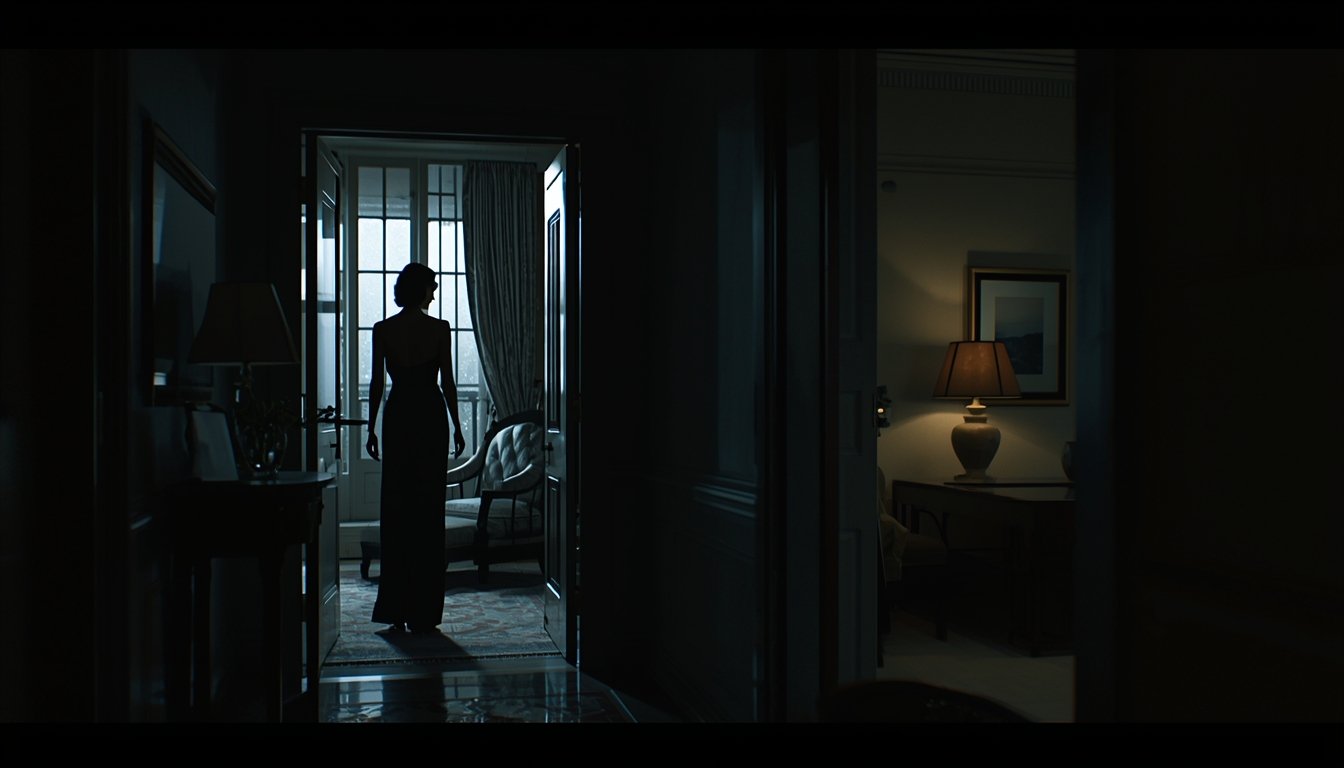
By the end, even the room seemed embarrassed for her. Rain moved down the window in slow silvery tracks. The lamp near the bookshelf cast a warm circle over the rug and the untouched tea. Somewhere upstairs, a child dragged furniture across the floor with determined malice.
After they hung up, Claire texted Ben.
Your mother called. I covered.
His answer came quickly enough to feel prewritten.
Sorry. Lost track of time. Be home soon.
Lost track of time. On a Sunday. During the one ritual he never mishandled.
The sound from the hallway
At 6:31, the apartment door opened.
Ben stepped in carrying nothing. No dry cleaning, no groceries, no bag from the pharmacy downstairs. Rain had darkened the shoulders of his coat, and the collar sat wrong, as if he had fastened it while distracted.
Claire stayed on the sofa.
“You missed the sunday check-in,” she said.
He closed the door with more care than usual. “I know. I’m sorry.”
“What was the errand?”
Ben looked at her for half a beat too long. “Parking. Then traffic. Then I had to stop somewhere.”
Not one answer. Three weak ones braided together.
Claire had spent enough time around him to recognize when he was searching for a version of the truth slim enough to carry indoors.
“Did your mother know you’d be gone?” she asked.
“No.”
“Interesting.”
He exhaled and crossed to the kitchen, where he opened a cupboard simply to do something with his hands. “Claire, I said I was sorry.”
That sentence might once have ended things. It no longer did.
The receipt she never needed
At first, she did not intend to follow him. Then again, suspicion rarely announced itself nobly. It arrived through timing, tone, and the tiny abrasions of a sentence that refused to settle.
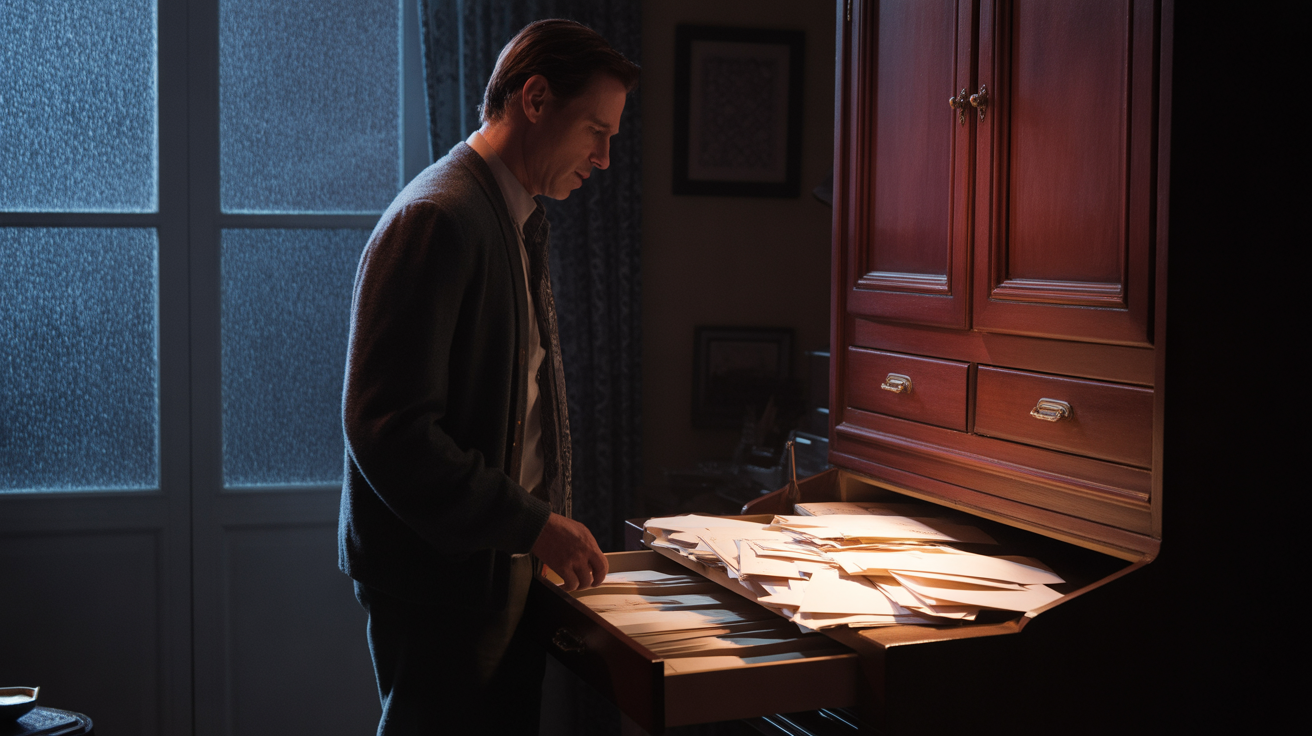
Claire carried her mug to the sink and noticed his phone lying face down near the fruit bowl. Ben never left it behind when he changed rooms. He had become almost graceful about carrying it elsewhere in recent weeks, as if privacy were a muscle he had been strengthening in secret.
The screen lit with a banner preview before she could stop herself from seeing it.
Agent: Thanks again for viewing Flat 3. Let me know by tomorrow.
Claire did not touch the phone.
She did not need to. The message had already done its work.
A letting agent. A viewing. Tomorrow.
No lipstick mark, no hidden earring, no dramatic evidence slid from an unfamiliar pocket. Instead, she stood in her own kitchen and understood that Ben had been somewhere concrete enough to have an address, an agent, and a deadline.
What he should have said first
When Ben returned from the bedroom, he saw her expression and stopped.
“What happened?” he asked.
Claire looked at the phone, then back at him. “Flat 3 sounds promising.”
The silence that followed was not confusion. It was impact.
Ben’s face changed in small increments, each one worse than denial would have been. “Claire—”
“No,” she said quietly. “You don’t get my name first. You had the viewing first.”
Rain tapped harder against the window. A bus sighed at the stop below. Somewhere in the building, a dog barked once and was immediately corrected by its owner.
“I was going to tell you,” Ben said.
“When?”
He looked down. “Soon.”
“That is a calendar word, not an answer.”
For a moment, he had nothing. Then he moved toward the table and rested both hands against the chair back as if he needed furniture to complete the scene.
“I wanted to be sure first,” he said. “I didn’t want to upset you for something that might not happen.”
Claire almost laughed. “You went to view an apartment that did not include me. That already happened.”
The life he had begun elsewhere
He sat down slowly, perhaps because standing had become harder to defend.
“It’s small,” he said, as though size mattered. “One bedroom. Near the station. Nothing special.”
“You sound like you’re describing a lamp.”
“I’m trying not to make this worse.”
“That stage passed.”
Ben rubbed his forehead with two fingers. Once, that gesture would have made Claire soften. Lately, it only made her tired.
“Things haven’t been right for a while,” he said. “You know that.”
She folded her arms. “I know things have been quieter. I know you’ve been tidier with your feelings than usual. I did not know you were interviewing apartments behind my back.”
His mouth tightened. “I wasn’t interviewing apartments.”
“You were attending viewings in the hour of your mother’s weekly call. That seems close enough.”
He looked toward the rain-dark glass rather than at her. “I needed to think about what leaving would actually look like.”
There it was. Not the possibility. The shape. He had moved past feeling and into logistics while still letting her sit inside the old routine.
Why the sunday check-in mattered
“You missed the sunday check-in for this,” Claire said.
Ben closed his eyes briefly. “I know how that sounds.”
“Do you?”
He opened them again, weary now rather than defensive. “Claire, I’ve been trying to understand whether this is just a bad season or something final.”
“And while you studied that question, you let me keep answering your mother like nothing had changed.”
He had no reply ready for that. Good. Ready answers were part of the problem.
Claire looked around the room they had built together in practical installments. The blue chair from his first bonus. The framed print she bought in Lisbon on the trip they kept calling “proof we travel well.” The narrow shelf he installed crookedly and then insisted was visually interesting. Nothing in the apartment looked unstable. By contrast, the truth of it had already been moving out in small private motions.
“Did anyone else know before me?” she asked.
He hesitated.
That was enough, but she made him say it.
“Who?”
“Owen,” he said. “And Cara. I asked what they thought.”
Owen from work. Cara from university. Two people invited into the outline of her ending before she had even seen the first draft.
What his kindness had become
At first, Claire felt anger refined to a cold useful point. Later, grief would come. For the moment, clarity arrived first.
“This is why you’ve been so nice,” she said.
Ben frowned. “What?”
“The coffee. The flowers after my deadline. Remembering every small thing I mentioned and somehow forgetting to be emotionally present while you did it.”
He looked wounded by the accuracy. “I was trying not to hurt you before I understood what I was doing.”
“No,” Claire said. “You were trying to prepay for the damage.”
The phrase landed and stayed there.
In the weeks before that evening, his care had become smooth enough to slide over. He had asked about her meetings, picked up oranges she liked from the market, and offered to handle small chores without being asked. However, none of that had felt alive. It felt administered. He was not deepening the relationship. He was buffering the exit.
Ben sat very still. Meanwhile, the apartment held the kind of quiet that appears after something irreversible has finally been named aloud.
The pause in the kitchen doorway
“There isn’t someone else,” he said.
Claire leaned against the counter. “That is not the relief you think it is.”
“I’m not asking for relief.”
“Then what are you asking for?”
His answer took too long. “A way to do this without destroying everything at once.”
She looked at him and understood the deeper cruelty. Ben still imagined the ending as something he could arrange aesthetically, as if timing alone could save character.
“You already destroyed the honest version,” she said. “Now we’re just left with the managed one.”
He flinched.
For a moment, the room narrowed to small details: the radiator ticking, the dish towel hanging unevenly from the oven bar, the pale ring her teacup had left on the table. Ordinary life remained in place with unbearable composure.
Claire thought of the stories hidden inside quiet emotional drama, where love did not end in spectacle but in administrative choices made elsewhere. This was one of those stories. Worse, it was hers.
After he told the shape of it
Eventually, Ben spoke again, softer now. “I didn’t want to blindside you.”
“You viewed apartments before telling me,” Claire replied. “What exactly do you think that is?”
His shoulders lowered. “Cowardly.”
At last, a useful word.
Claire nodded once. “Yes.”
Neither of them raised their voice. That made the evening darker rather than gentler. By contrast, a loud fight would have at least admitted the scale of what was happening. This quiet demanded that she absorb each sentence in full detail.
“When were you planning to say it?” she asked.
“Tonight. After dinner.”
“What dinner?”
He looked confused for a second. Then he remembered he had suggested takeaway earlier that morning, noodles from the place on Finch Street, candles lit if the rain kept them home. A domestic stage set for collapse.
“I thought I could explain it properly,” he said.
“You mean attractively.”
He did not argue.
The room she would sleep in
By nine, the conversation had thinned into logistics neither of them was ready to solve. Ben offered the bedroom. Claire refused it on principle and then accepted it from exhaustion. He asked whether they should tell Marianne together next Sunday. She nearly laughed at the absurdity of there being a next sunday check-in, though of course there would be. Family habits outlived romance all the time.
“Not tonight,” she said.
He nodded. “All right.”
She passed him in the hallway and noticed, absurdly, that he smelled of rain and the cold mineral scent of stairwells. For a flashing second, memory arrived where anger had been holding the line: the first winter they shared this apartment, the way he used to press frozen hands against her waist just to make her yelp, the laugh that followed. Then the memory was gone, leaving only fatigue.
Claire closed the bedroom door and sat on the edge of the bed without turning on the lamp.
Outside, rain softened to a misty hush. The city beyond the curtains glowed in scattered amber strips. Somewhere in the next room, Ben moved carefully, as if care still counted for something simple.
After the sunday check-in
Claire did not cry until much later, when the apartment had gone still and the shape of the betrayal became plain enough to hold. The sunday check-in had not ruined the relationship. Ultimately, it had only revealed how long Ben had been practicing a private future while asking her to keep performing the shared one.
That was the wound.
Not another woman. Not a dramatic lie. The wound was sequence. He had gone looking for the next room before giving her the dignity of standing in the current one with accurate light.
Readers drawn to breakup and betrayal, marriage and secrets, psychological tension, and quiet suspense will recognize the colder kind of heartbreak that arrives through planning rather than chaos.
Meanwhile, this evening carried traces of routine disruption, emotional absence, polished deception, family calls, partner withdrawal, delayed honesty, and private endings that had nothing to do with noise and everything to do with being edited out before goodbye.
In the dark, Claire lay back against the pillows and listened to the rain thinning against the glass. Next Sunday would arrive whether she wanted it or not. So would the calls, the explanations, the key returns, the divided books, the embarrassing arithmetic of who kept the kettle and who took the blue chair.
But that could wait until morning.
For now, she understood one thing with painful, elegant clarity: Ben had not left her all at once. He had been leaving in the quiet hour reserved for family, trusting routine to hide the sound.