The locked attic had been part of the house for as long as anyone remembered. Cora inherited the property from a great-aunt she had met only twice, a reclusive woman named Edith who had lived alone for sixty years. The realtor mentioned the attic only in passing. “It’s been locked for decades,” she said with a practiced smile. “The key was lost long ago. Probably just old storage.” Cora nodded, already imagining the attic as a future project. However, she did not think about it again until the first night. Dark fear rarely announces itself with noise. More often, it begins with a light where no light should be.
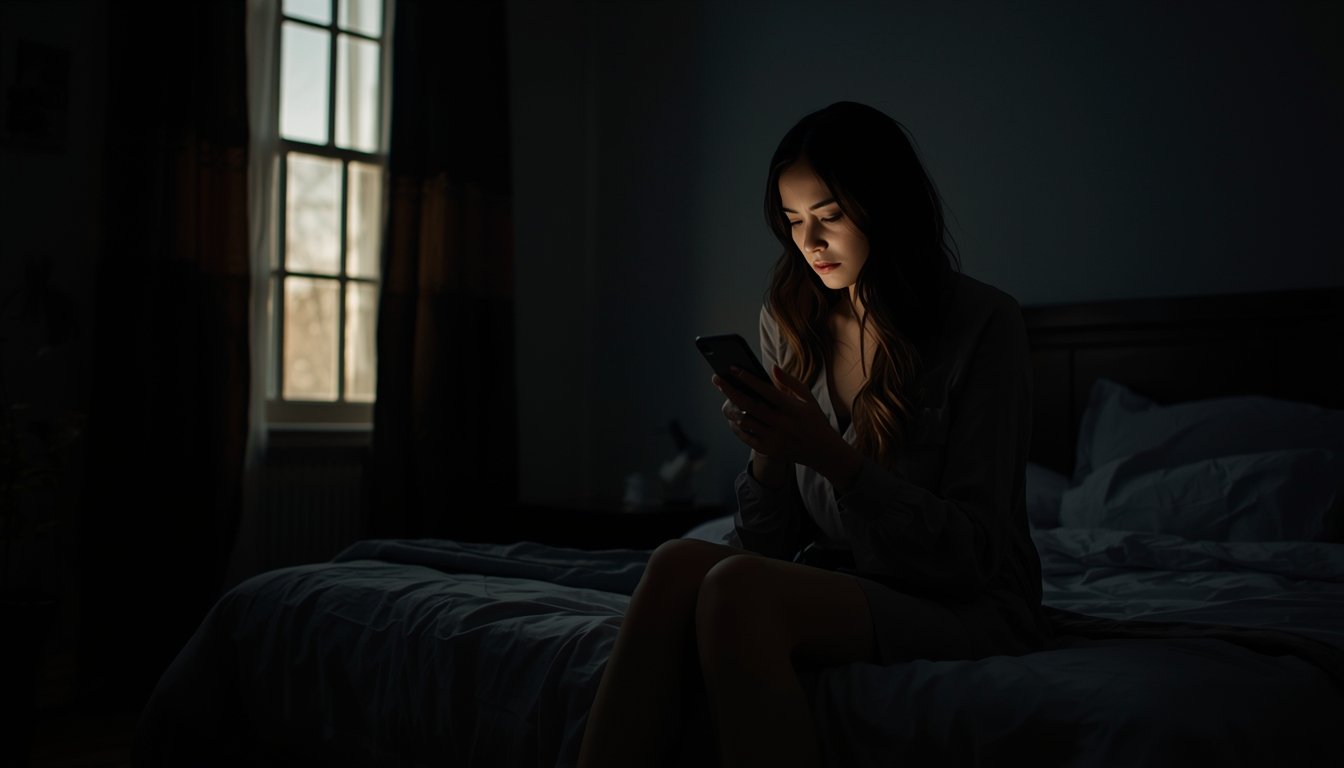
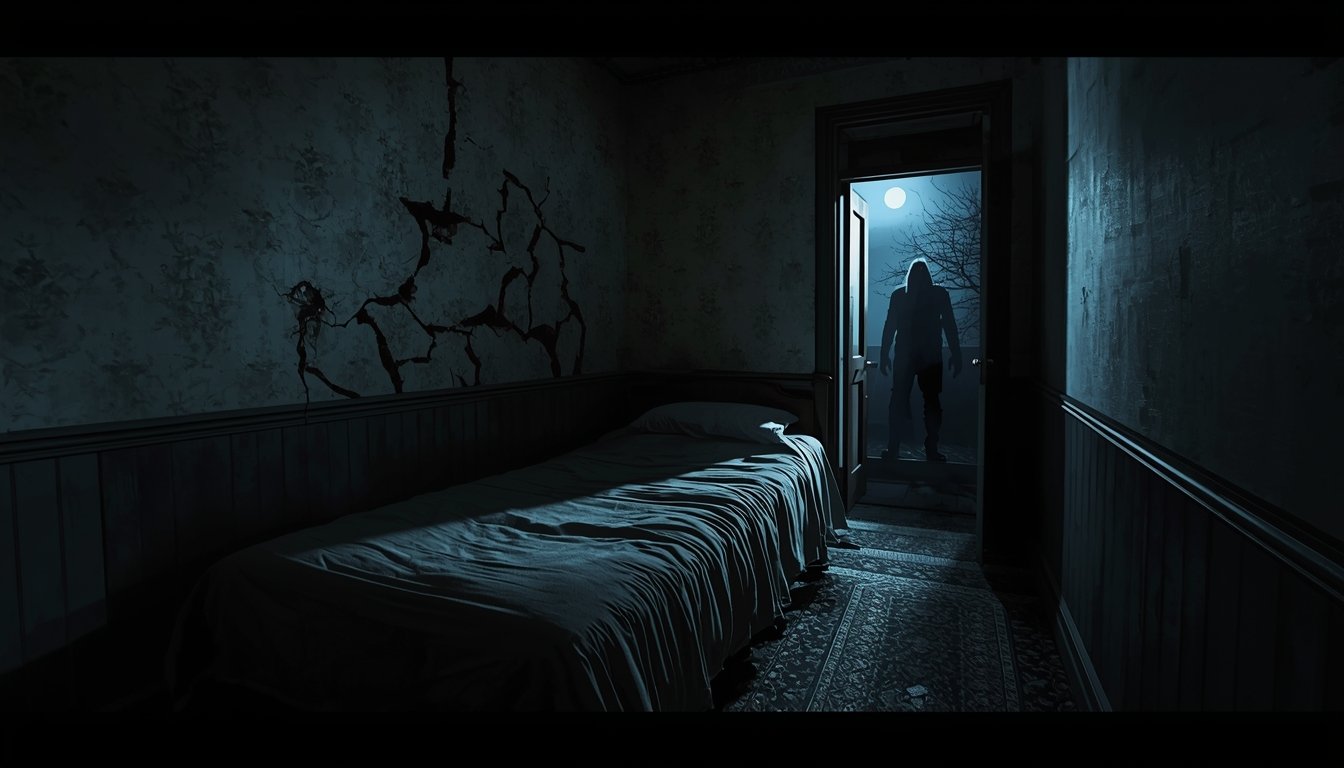
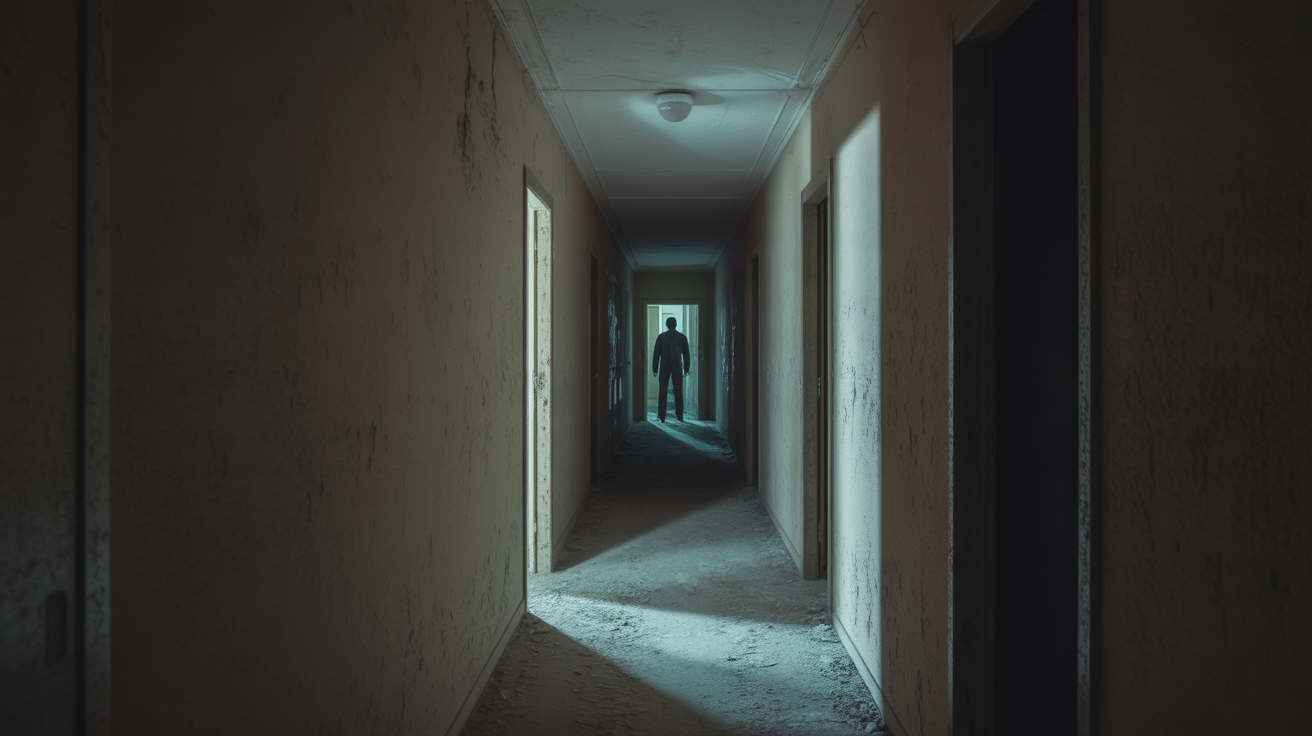
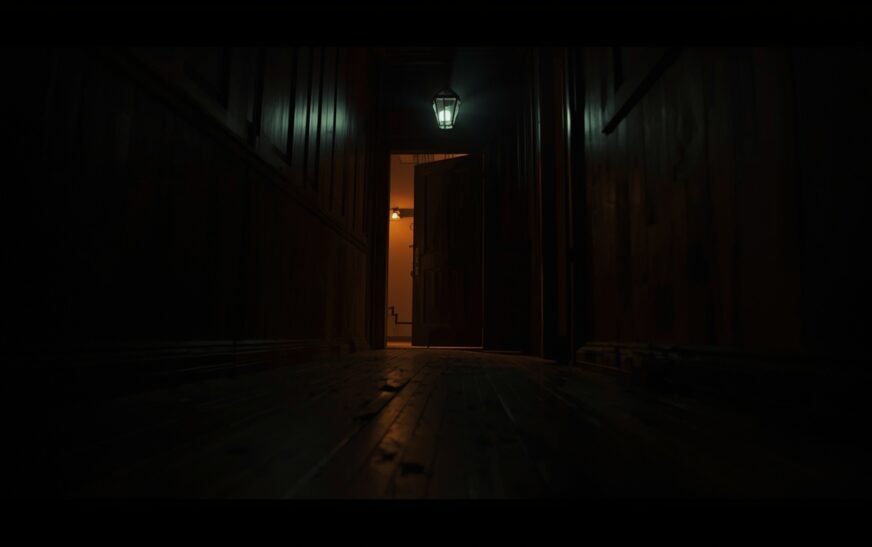
She woke at 2:13 AM. Not to a sound, but to a feeling. A subtle shift in the darkness of her bedroom, as if the shadows had rearranged themselves while she slept. Meanwhile, she lay still, listening. The old house creaked and settled around her. Wind murmured against the windowpanes. Then she saw it. A thin line of warm, golden light stretching across the hallway floor beyond her open bedroom door. It came from above. From the attic stairs.
Cora’s breath caught. She sat up slowly, her eyes fixed on that impossible glow. The locked attic had no electricity. The realtor had confirmed it. Moreover, there were no windows up there either, at least none visible from the outside. And yet, a light burned steadily, casting a soft rectangle onto the landing. Consequently, she stared at it until her eyes ached. Then, as suddenly as it had appeared, the light vanished. The hallway plunged back into darkness. At last, the clock on her nightstand read 2:17 AM.
The Second Night and the Growing Dread
She told herself it was a dream. After all, she had been exhausted from the move. Boxes still lined the living room walls. Her sleep had been fractured for weeks. The mind played tricks. Nevertheless, she avoided the hallway for the rest of the night. She pulled her blanket higher and watched the darkness until dawn bled through the curtains.
The next night, she set an alarm for 2:10 AM. When it buzzed, she was already awake. She had been lying in the dark, waiting. At 2:13 AM precisely, the light returned. The same soft, golden glow. The same thin line beneath the locked attic door. Cora watched it with a hammering heart. Furthermore, she counted the seconds. Four minutes. Then darkness. She had not dreamed it. Something in that sealed space was producing light. Place-based dread had a way of making the familiar feel foreign. Her inherited home was becoming a stranger to her.
During the daylight hours, she examined the attic door. It stood at the end of the upstairs hallway, a simple wooden panel painted white decades ago. The paint had yellowed and cracked. A brass keyhole gleamed dully beneath the handle. She pressed her ear against the wood. Silence. She tried the handle. Locked. She knelt and peered beneath the door. A narrow gap, barely a finger’s width. Dust and darkness. No sign of a bulb or fixture that could explain the nightly glow. Consequently, the mystery deepened into something she could not dismiss.
Researching the House’s History
That afternoon, Cora visited the town library. She found old property records, newspaper clippings, and a single photograph of her great-aunt Edith standing on the front porch in 1962. Edith looked severe, her mouth a thin line, her eyes directed somewhere beyond the camera. The librarian, an elderly woman named Mrs. Delaney, offered more than documents.
“You’re Edith’s niece, then,” Mrs. Delaney said. “She was a private woman. Kept to herself. Some said she never recovered after her sister disappeared.”
Cora frowned. “Her sister? I didn’t know she had a sister.”
“Margaret. She vanished in the late fifties. They lived in that house together. One day, Margaret was simply gone. Edith told the police her sister had left in the night. But no one ever saw Margaret leave town. No one ever heard from her again.” Mrs. Delaney’s eyes held a knowing weight. “Edith locked the attic after that. Said it was too painful to see Margaret’s things.”
Cora drove home with the words echoing in her mind. The locked attic held more than storage. It held the remnants of a vanished woman. And every night, it glowed.
The Third Night and the Sound
At 2:13 AM, the light returned. This time, Cora was standing in her bedroom doorway, watching. The glow seeped beneath the attic door with an almost liquid quality, pooling on the hallway floor. She took a step toward it. Then another. The floorboards creaked beneath her bare feet. She stopped. From above, a soft sound drifted down. A rustling. Like fabric shifting. Or breath.
She retreated to her bedroom and closed the door. Her hands trembled as she pressed her back against the wood. Meanwhile, the light continued to glow through the gap beneath her door. At 2:17 AM, it vanished. The rustling stopped. Silence returned, heavier than before. Quiet terror did not need to scream. It only needed to wait.
The next morning, she called a locksmith. He arrived by noon, a burly man with a toolbox and a skeptical expression. “Old locks like this can be tricky,” he said, examining the keyhole. “Might need to drill it out.” Cora nodded. She did not tell him about the light. She did not tell him about Margaret. Instead, she simply watched as he worked, his drill whining against the old brass.
The lock gave way with a sharp crack. The door swung inward, revealing a narrow staircase swallowed by darkness. The locksmith peered up. “Smells musty. You want me to check it out?” Cora shook her head. She paid him and waited until his truck disappeared down the drive. Then, alone, she faced the open door.
The Ascent Into the Attic
The stairs groaned under her weight. Dust motes swirled in the beam of her flashlight. The air grew colder with each step. At the top, the attic opened into a single long room beneath the sloped roof. Old furniture huddled beneath white sheets. Boxes lined the walls. A dress form stood in the corner, draped in yellowed lace. Everything lay still and silent. Nothing glowed. Nor did anything move.
Then her flashlight caught something in the far corner. A small wooden table. On it, an oil lamp. Its glass chimney was clean, the wick trimmed. Beside it sat a framed photograph of two young women. One was Edith. The other, smiling softly, must have been Margaret. And beneath the photograph, a single sheet of paper with handwriting she recognized from the property documents. I’m sorry, Maggie. I should have let you go. But I couldn’t. So I kept you here.
The lamp was warm to the touch. It had been lit recently. Cora’s blood turned to ice. The locked attic had no other entrance. No one had been up here in decades. And yet, every night, something lit the lamp. A presence rustled in the darkness. And the waiting continued without end. Creeping dread filled the space behind her ribs.
The Night She Stayed
She did not run. Instead, she descended the stairs, left the attic door open, and waited. At 2:13 AM, she stood in the hallway, watching the dark rectangle of the open doorway. The light did not come from the attic. It came from behind her. Spinning around, she saw the lamp was in her bedroom. On her nightstand. Glowing softly. Beside it, the photograph of Margaret. And standing in the corner, barely visible in the warm light, a figure in a white dress. Watching. Waiting. Edith had kept her sister. Now the house kept them both.
Cora did not scream. She did not run. She understood, in that moment, that the house had been waiting for someone to open the door. And she had. The locked attic was no longer locked. Consequently, the light would never go out again.
Horror does not always arrive with violence. Sometimes it is an inheritance. Sometimes it is a light in the dark. And sometimes, it is the face in the photograph that looks just like you. Psychological terror lingers long after the door is opened.