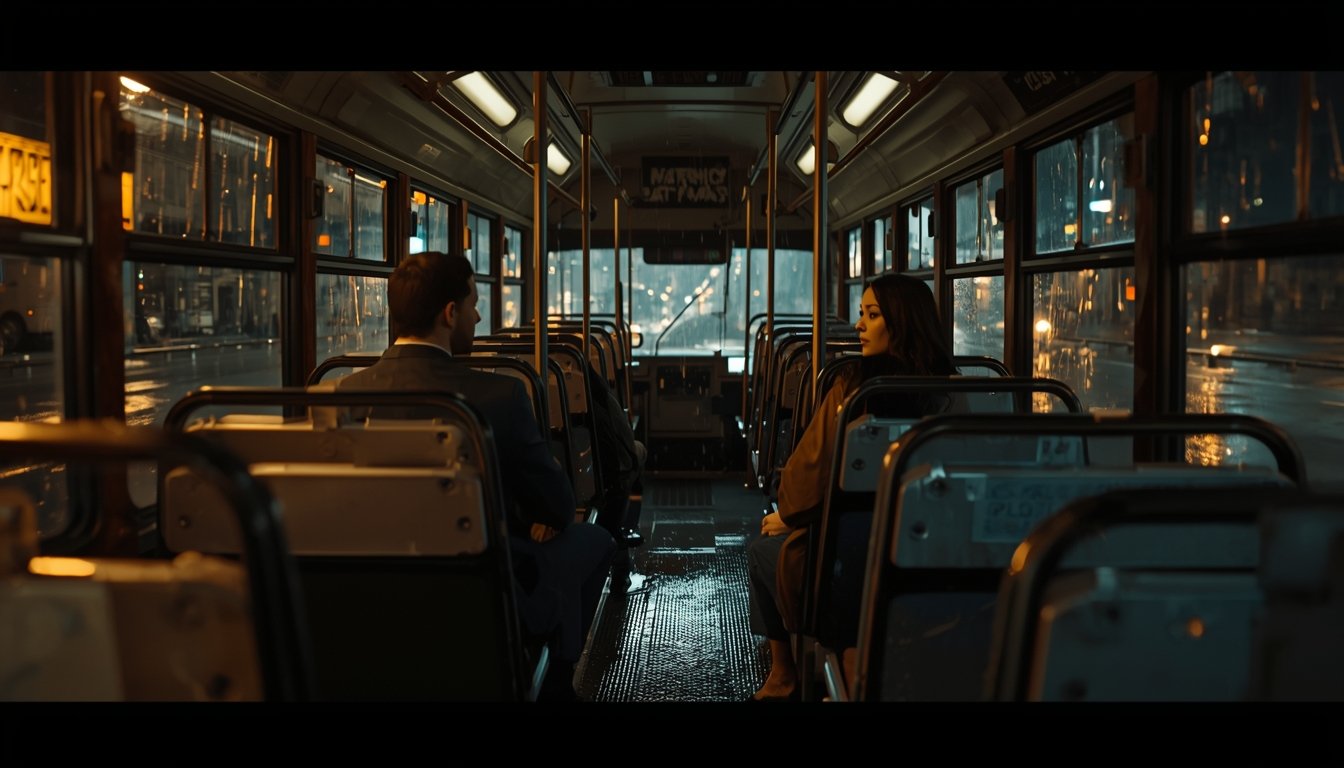
By the fourth late shift, Nora had started measuring the archive by the maintenance bell.
At first, the sound seemed harmless.
The Bellmere Museum closed to the public at six, but the paper records department often stayed open much later. Exhibition loans arrived badly labeled. Insurance forms turned up incomplete. Meanwhile, curators developed sudden urgency whenever an object had already been mishandled by someone more senior. Therefore, Nora learned to expect evenings among acid-free boxes and dustless shelves while the rest of the building emptied around her.
The first time she heard the bell, she assumed it belonged to routine. A single clear ring came from the service corridor beyond the archive door. After that, silence returned so neatly that she barely looked up from the accession ledger in front of her.
On the second night, it rang again at 8:43.
By the third, she began checking the time before the sound arrived.
“What is that bell for?” she asked Tomas from conservation while they packed a crate of framed sketches.
He did not glance up. “Which one?”
“The one from the staff corridor.”
Only then did he pause. “I’ve never heard one.”
Nora laughed as if the answer were charming. However, the archive no longer felt entirely procedural after that.
After the Museum Closed
Bellmere was elegant in the hours meant for admiration.
During the day, visitors moved through pale galleries under flattering light, reading wall texts in softened voices and pretending not to photograph the things they had already photographed. By contrast, evening reduced the building to its other anatomy. Public music stopped. Climate systems became audible. Lift doors closed with metallic restraint. The polished halls behind the exhibitions began smelling faintly of stone, paper, and locked air.
Nora liked that transformation more than she admitted. Museums by day belonged to interpretation. Museums by night belonged to inventory, and inventory felt more honest.
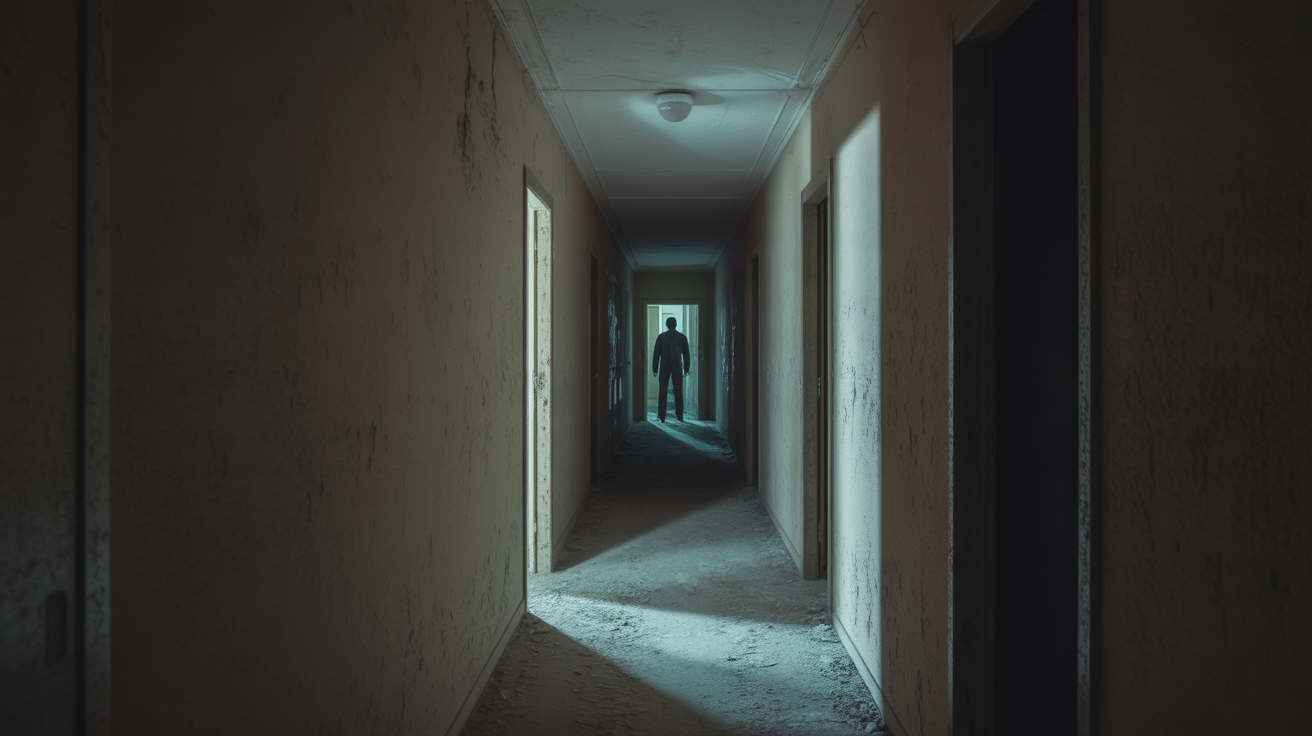
Still, the archive floor carried its own discomfort after seven. The public staircase remained roped off. Only the service lift moved. Farther down the back corridor sat a line of unlabeled doors, one electrical cabinet, a freight entrance, and the narrow junction where the sound of the bell kept returning.
At dinner one night, she found herself wandering through the Horror and Dark Fear archives on her phone, as though other people’s invented unease might make her own seem theatrical. Instead, those stories gave shape to what she already disliked: fear becomes worse when the setting remains efficient.
The Ring at 8:43
By Thursday, Nora had begun listening for the exact minute.
At 8:38, she capped her pen. At 8:40, she checked the corridor glass. Then, at 8:43, the maintenance bell rang once from somewhere beyond the service junction.
Not loud. Not urgent.
Its tone was almost polite, which made it harder to dismiss.
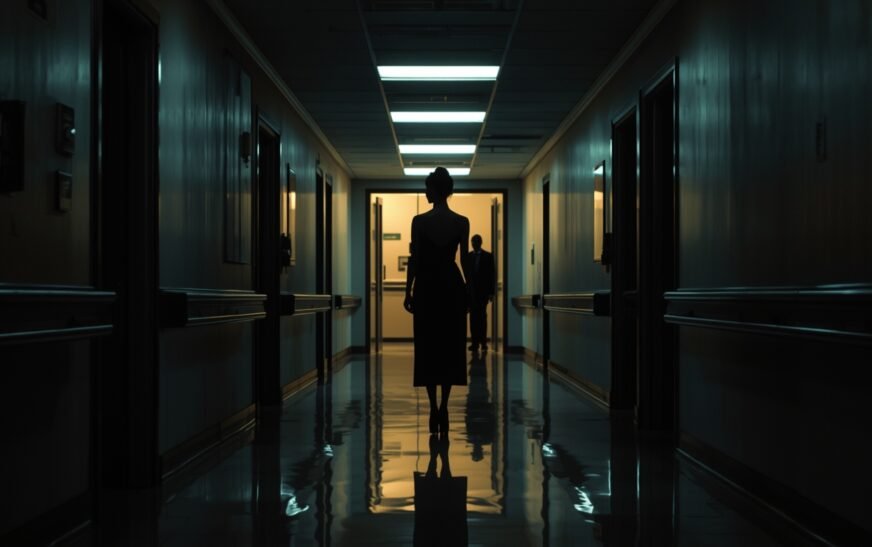
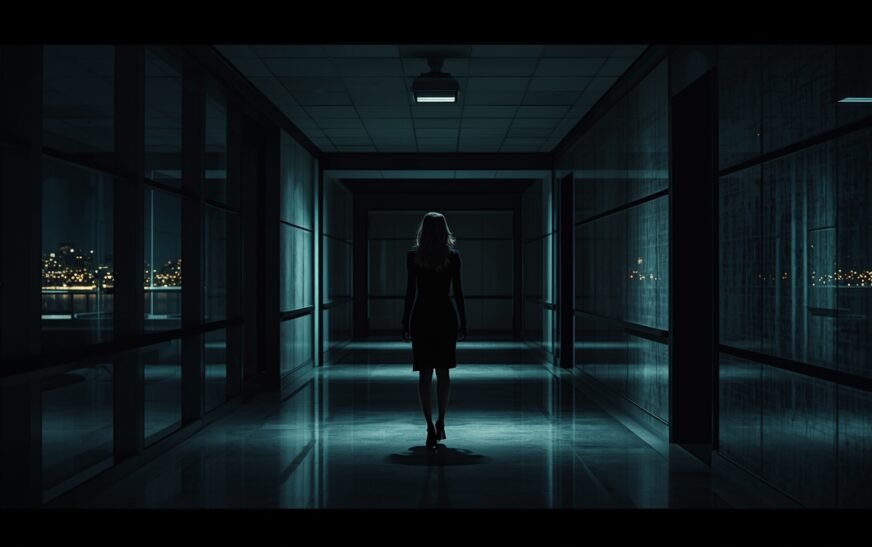
Nora stood, crossed the archive, and opened the door. The corridor beyond was empty. Fluorescent light held steady along the ceiling track. A trolley of folded signage waited against the wall. From farther down, a strip of yellow light showed under the door to the prep room, though she knew no one was scheduled there.
“Hello?” she called.
No answer came.
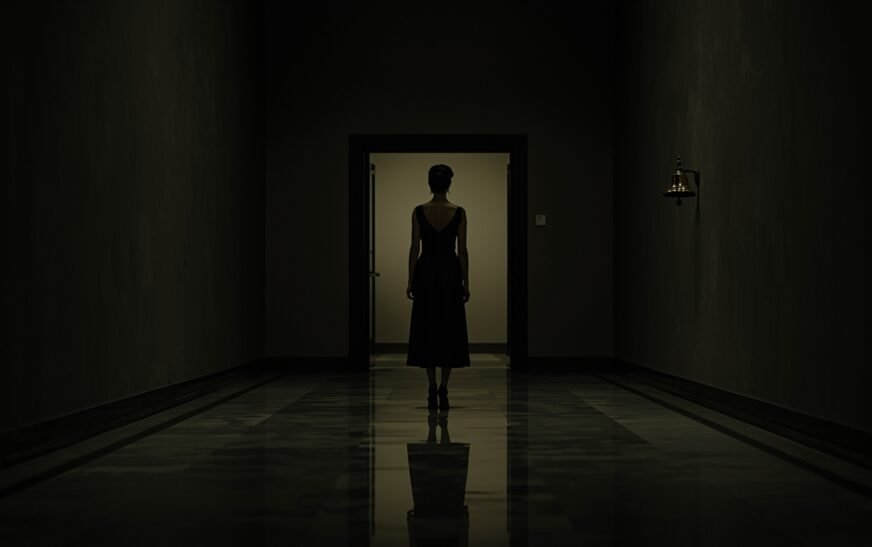
She walked as far as the junction and stopped. To the left was the freight lift alcove. To the right lay the stair to storage and the locked photography studio. Straight ahead, another short hall ended at a gray metal door with a brass bell fixed beside it. Nora had never noticed that bell before. Perhaps because it was small. Perhaps because the corridor had not wanted her to.
When she returned to the archive, the wall clock read 8:44.
That one missing minute bothered her far more than the sound itself.
What Tomas Said Later
The next day, Tomas helped her move a folio cabinet and finally looked unsettled when she mentioned the brass bell.
“That door used to lead to restoration intake,” he said. “Years ago. Before they moved all that downstairs.”
“So why keep the bell?”
He slid his gloves off finger by finger. “Old buildings forget to remove things.”
“That sounded rehearsed.”
“It sounded administrative.”
“Not the same thing.”
For a moment, he considered her. Then he said, “Night staff used to complain about calls from empty rooms. Facilities changed the wiring, or said they did. After that, nobody discussed it because nobody wanted to sound devotional about plumbing.”
Nora gave him a flat look. “You could have told me this before I started staying late alone.”
“You work in archives,” Tomas replied. “I assumed your relationship with dead things was already professional.”
The line almost made her smile. Nevertheless, she left work with the uneasy sense that everyone in the museum knew exactly how much disbelief to perform.
Later, while answering emails at home, she drifted into the Psychological and Mind Games sections, searching for language sharper than nerves. Nothing fit perfectly. Anxiety was too broad. Paranoia was too neat. What she felt was architectural.
The Floor Above Archives
On Friday, Nora stayed until nine-thirty because a registrar in Vienna had confused two loan numbers and then gone offline with criminal timing.
At 8:43, the bell rang.
This time, another sound followed.
It was not a voice exactly. More like a reply given from farther away than the corridor should have allowed. A brief murmur. Then the scrape of something being moved across stone.
Nora rose too fast and nearly upset her tea. She reached the service junction in seconds and found the hall unchanged. Yet the reply came again, softer now, seeming to travel from above rather than ahead.
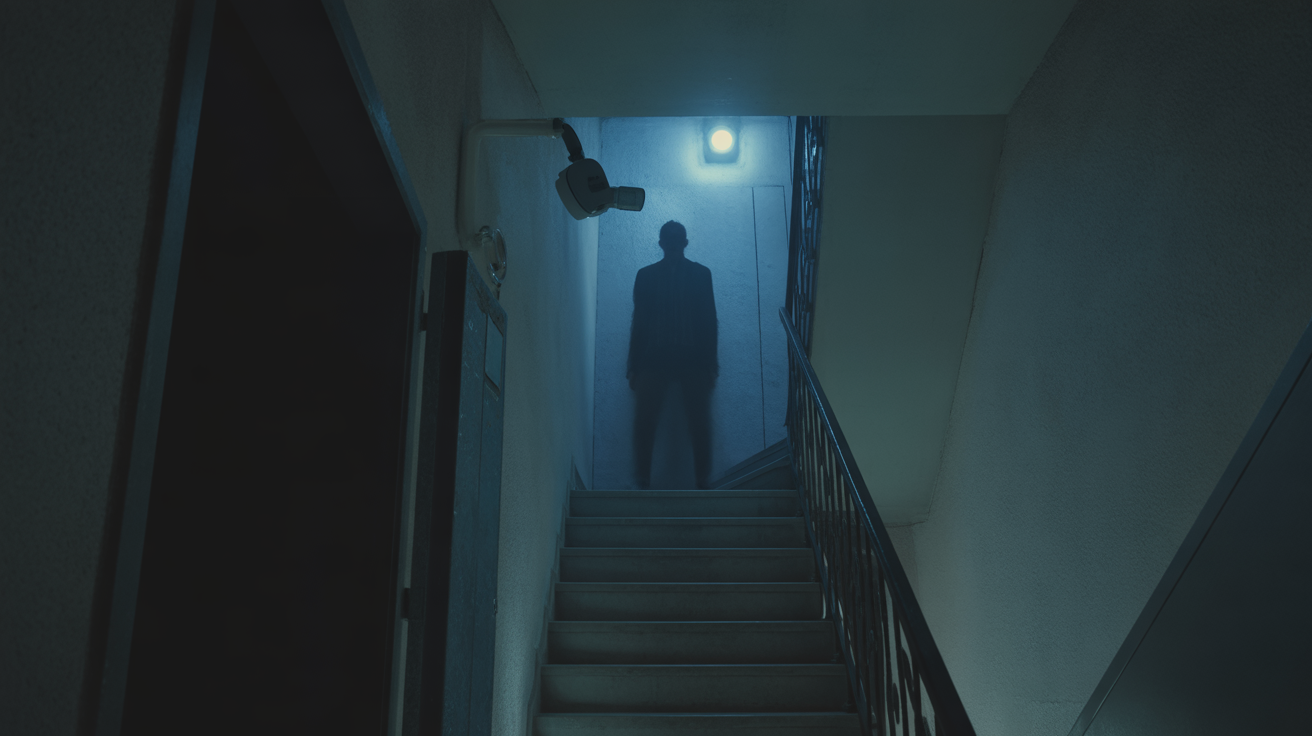
The stair door to upper storage was ajar.
That detail stopped her.
She was certain it had been locked earlier. Facilities kept it closed because the top floor was under cataloguing restriction while a donor collection was being inventoried. Even so, the metal door now stood open by three inches, enough to expose darkness and the first section of concrete stair beyond it.
Nora should have called security.
Instead, she moved closer and listened.
From somewhere above came a faint shifting sound. Then, very distinctly, a woman’s voice said, “Late again.”
Nora went cold all at once.
The voice was not angry. If anything, it sounded patient, which was worse.
The Security Desk
She did call security after that.
The guard on duty, Malik, took the service lift up with more politeness than concern. He checked the stair, the top storage corridor, and the former intake room with the bell beside it. Then he returned ten minutes later carrying the expression of a man trying not to embarrass someone frightened.
“Nobody’s up there,” he said.
“The stair door was open.”
“It sticks sometimes.”
“And the voice?”
His pause lasted just long enough to become irritating. “Sound carries strangely in this building after close.”
Nora folded her arms. “Everyone says that as if you’ve all signed the same memo.”
Malik almost smiled. “That would be more organized than reality.”
He stayed long enough to walk her to the staff exit. By contrast, his kindness only made the archive seem less persuasive as a place for reason. Institutions become more frightening once they begin protecting your dignity.
The Maintenance Bell on Monday
She told herself she would leave on time next week.
Monday proved that intention had no authority in Bellmere.
A courier arrived late with six uncatalogued papers from a private estate. Tomas called in sick. Consequently, Nora was still in the archive at 8:41, flattening tissue around a set of unsigned letters and pretending the night meant nothing.
At 8:43, the maintenance bell rang once.
Then it rang again.
That had never happened before.
Nora did not move immediately. Somewhere in the corridor, the second ring was followed by three measured knocks, as if someone on the far side of the gray door had adjusted their expectations and become formal.
Knock. Knock. Knock.
A moment later, the woman’s voice returned.
“You may come in now.”
Nora backed away from her desk so quickly her chair struck the filing cabinet. The archive lights seemed suddenly too bright, their reflection flattening every surface into obedience. For one wild second, she thought of simply leaving everything where it was: gloves, coat, open register, bag. However, the idea of crossing that corridor alone felt worse than staying in the room that had heard it.
So she called Tomas.
He answered on the fifth ring, groggy and hoarse. “If this is about the Vienna registrar, I want a formal apology before nine.”
“It spoke to me.”
Silence replaced humor at once.
“Nora,” he said carefully, “go to the front desk. Don’t use the stair. Don’t answer anything if it speaks again.”
“You believe me?”
“I believe late buildings behave badly. Please leave.”
What the Old Logbook Recorded
She left, but not before doing the one thing her job had trained into her against all wisdom.
Nora checked the records.
The archive kept retired incident files in a locked side cabinet, mostly because museums preserve embarrassment as faithfully as they preserve art. With hands that did not feel entirely reliable, she opened the cabinet and pulled the facilities ledger for Bellmere’s east wing refurbishment, completed seventeen years earlier.
Near the back sat a short run of handwritten notes clipped behind a typed report. Call bell complaints. Evening intake confusion. Staff hearing requests after closure. One line had been underlined twice in blue pen:
Do not answer from corridor unless intake is open and both attendants are present.
Below it, another line in different handwriting:
Problem worsens if late paperwork remains unsigned.
Nora stared at the letters she had been cataloguing.
They were unsigned.
For a moment, the building seemed to arrange itself around that fact. Her desk lamp hummed. The corridor beyond the glass held stillness so complete it felt attentive. Then, from the service hall, the bell rang a third time.
The Room Behind the Gray Door
Nora should have run then.
Instead, the old professional reflex returned with indecent strength. Unsigned paperwork. Intake room. Attendants present. A system, however irrational, still resembled a system. She gathered the letters, took a museum pencil from the desk, and walked into the corridor with her pulse beating visibly in her throat.
The gray door stood open.
She was certain it had been closed before.
Inside lay a small room furnished like an office no one had loved enough to modernize. A wooden counter. Two stools. Shelving units stripped almost bare. At the far wall, a hatch-window opened onto darkness rather than another room. Beside it sat a ledger spread to a blank page, pen placed across the center as if set down moments earlier.
No one was there.
Yet the room carried recent presence in the oldest possible way. The air felt occupied.
Nora placed the letters on the counter because her hands had stopped negotiating with thought. Then the hatch-window slid open by an inch.
Not fast. Not theatrically.
Simply enough to admit a narrow depth of black and the smell of rain on stone, though the room had no exterior wall.
From the other side, the woman’s voice said, “Name?”
What She Wrote Down
Nora did not answer aloud.
Some part of her, still clinging to the blue-ink warning in the logbook, reached instead for the pencil beside the ledger. On the blank line she wrote her first name only. The graphite looked too pale against the old cream paper.
A pause followed.
Then the voice said, “Late.”
The hatch opened another inch. Beyond it there was still only blackness, though now she could hear something like pages being turned very slowly by a hand she could not see.
Nora stepped back.
The ledger moved.
No wind touched it. No visible fingers turned it. Nevertheless, the page shifted on its own, dragging forward until a much older sheet lay exposed beneath the modern blank. The handwriting there was faded brown, not ink but something near it. Names filled the column in a narrow, disciplined script. Some had dates. Some had only times.
At the bottom of the page, one line remained unfinished:
Nora Vale — 8:43
She stopped breathing.
Vale.
Her surname was Maren now, and had been for years professionally. Yet the old name stared back at her from the ledger as if the room had chosen a version of her she no longer used in daylight.
From beyond the hatch came the faintest sound of approval.
After She Left the Room
What happened next remained mercifully plain.
Nora ran.
She left the letters, the pencil, and the open ledger where they were. The corridor blurred into fluorescent strips and pale doorframes. By the time she reached the front desk, her lungs burned and Malik was already on his feet, alarm finally stripping courtesy from his face.
He drove her home himself.
The next morning, Bellmere looked polished, public, and offensively innocent. Tomas met her in archives before opening and said nothing at first. Then, with unusual gentleness, he handed her a photocopy from another facilities file. It was a closure memo for restoration intake, dated seventeen years earlier.
Reason for closure: repeated after-hours discrepancies in receiving records. Final listed attendant: Elspeth Vale.
Nora read the line twice.
“My grandmother worked here,” she said.
Tomas nodded. “Apparently your father used her name when he got the job for a few months in storage. After that, records became messy.”
“And the room?”
“The room was sealed.” He looked toward the service corridor. “At least, officially.”
What Still Rings at 8:43
Nora no longer stayed late alone in the archive.
That was the practical ending, the one administration preferred. New procedures were introduced. Malik began escorting final staff from the east wing. Tomas insisted every intake form be signed before seven. Meanwhile, the gray door at the end of the service corridor remained closed and, according to facilities, permanently locked.
Nevertheless, some corrections arrive too late to feel complete.
On Tuesday evening, Bellmere hosted a donor reception, which meant Nora had to pass through the public galleries after dark while the museum performed safety for wealthy people. Near 8:43, she paused by a glass case of devotional silver and looked toward the staff door half hidden beyond the tapestries.
She did not intend to listen.
Even so, the sound reached her.
One clear ring from deep inside the closed corridor.
No one around her reacted. Guests continued speaking softly about provenance and lighting. A waiter passed with champagne. Somewhere in the gallery, a donor laughed at the wrong volume and then corrected herself.
Then a woman near the medieval cabinet turned to Nora and said, in a voice entirely her own, “You’re late again.”
By the time Nora looked directly at her, the woman was only studying the silver, expression mild, hand resting on her glass.
The museum lights remained flattering. The room remained civilized. Yet beneath all of it, Bellmere had recovered something it had clearly been waiting to reopen. The maintenance bell no longer sounded procedural at all. It sounded patient. It sounded inherited. More than anything, it sounded like a system that had finally found the correct name to write down.