The Shape in the Nursery Window
The Shape in the Nursery Window is a dark fear story about a quiet house, a locked nursery, creeping dread, and the shape that appears at the window after midnight. For readers who enjoy eerie atmosphere, slow-building horror, and unsettling tension, this HollowVelvet story turns one empty room into the center of a growing nightmare.
If you enjoy chilling fiction, you can also explore our Horror stories and discover more uneasy tension inside Dark Fear.
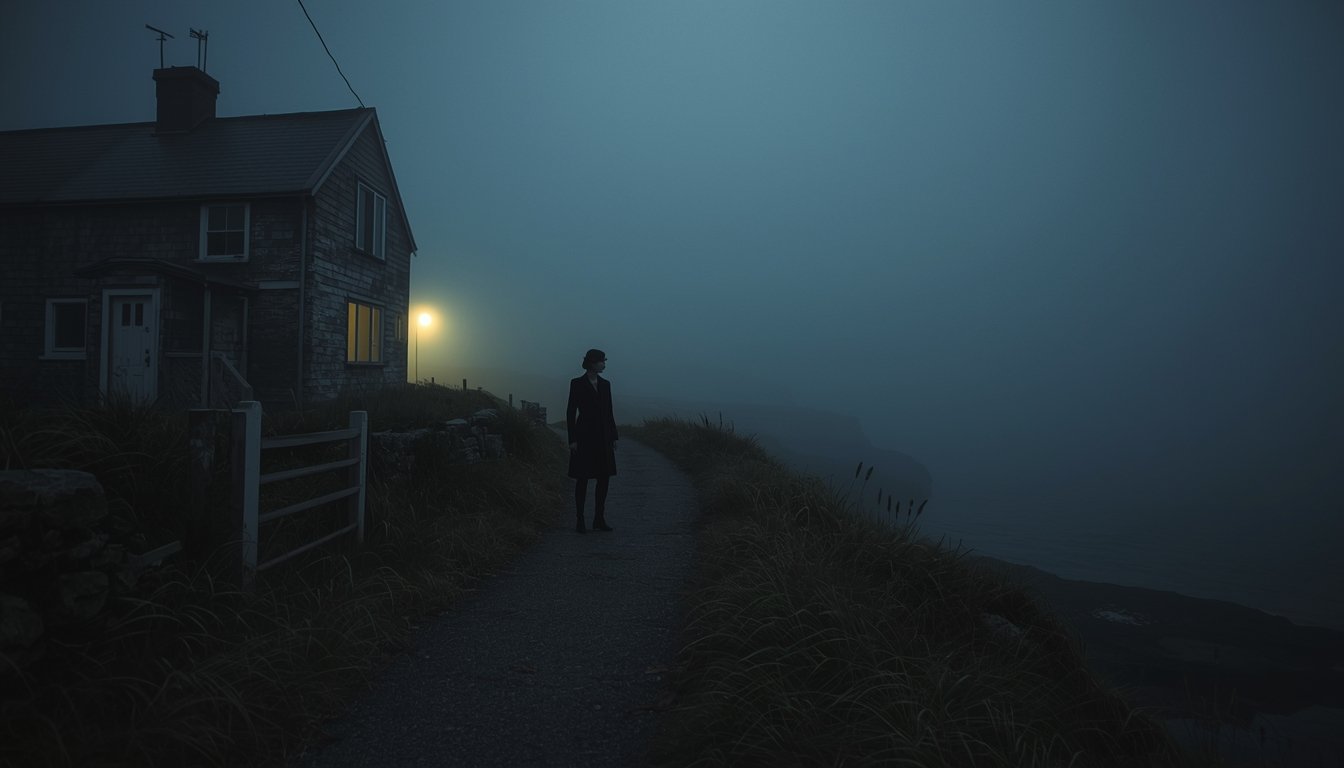
The House at the Edge of Town
When Iris Vale moved into the house on Marrow Hill, she chose it for the silence.
After the noise of the city and the long collapse of a life she no longer liked naming out loud, silence felt expensive. This house, however, came cheaply. It stood at the far edge of town where the road narrowed, the trees grew closer, and the streetlights ended too early. Even so, the place looked almost gentle in daylight.
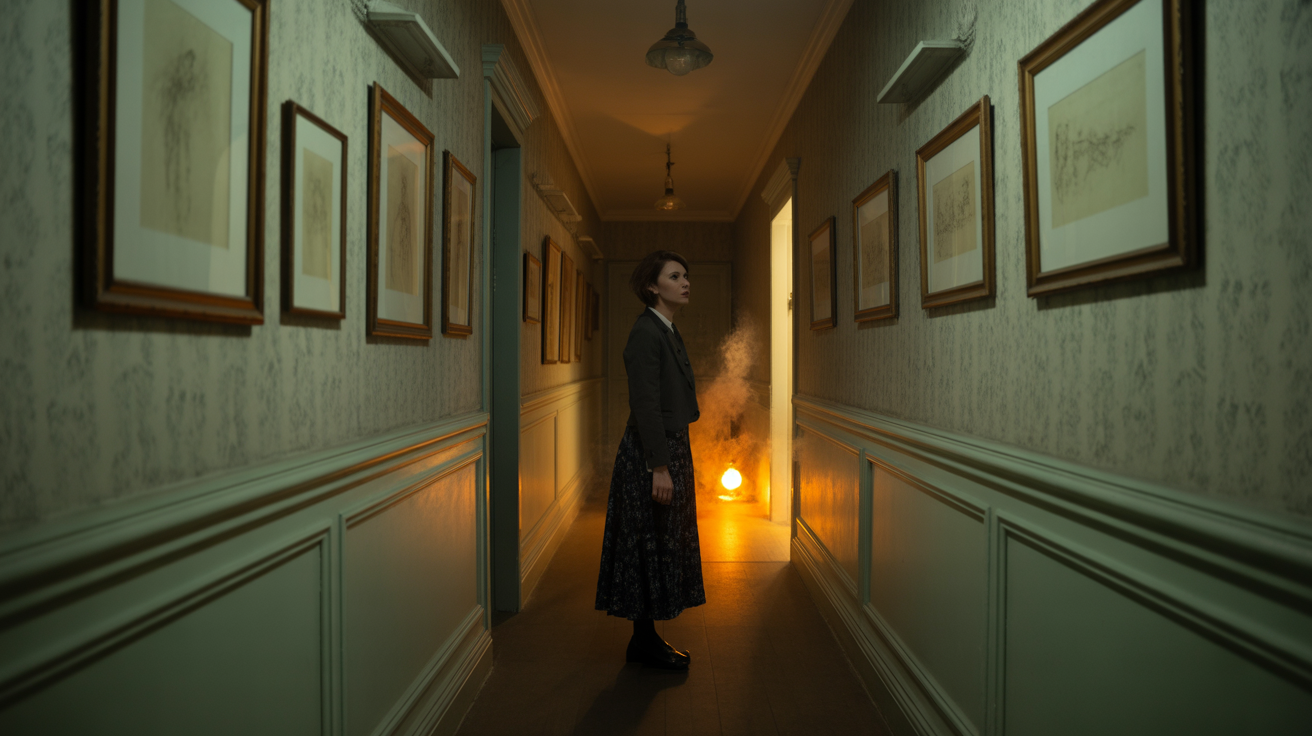
The windows were tall. The floors were old oak. Pale wallpaper softened the narrow upstairs hall, while a small garden leaned behind the house in tired, overgrown layers. According to the agent, it had belonged to an elderly couple who had both died years apart. Because of that, the house had sat empty for too long and developed the stale stillness of unused places.
Iris told herself she could air that out.
For the first few days, she almost believed it.
The Room She Did Not Want to Open
Upstairs, one room stayed closed.
The door stood at the end of the hall beneath a small brass light that never seemed bright enough. According to the floor plan, it had once been a nursery. The previous owners had left behind almost nothing, yet the agent had mentioned that room in a lowered voice, as if speaking too casually about it might sound disrespectful.
“You may want to leave it as storage,” she had said.
Iris never asked why.
Instead, she carried boxes past it for two days without touching the handle. She told herself she was busy. She told herself she did not need every room immediately. More than that, she told herself that old houses often came with odd details and stranger moods. Still, every time she passed the nursery door, she felt the same thin reluctance move through her.
By the third night, she locked it.
That choice made no sense. After all, the room was empty and the house was hers. Even so, locking it felt easier than opening it.
The First Night at the Window
Rain started just before midnight.
The sound should have been comforting. Water moved across the roof in soft waves, and wind brushed the back garden with a patient hand. Meanwhile, Iris lay awake in her bedroom listening to the house settle around her. Sleep was close, but not close enough.
At 12:37 a.m., something tapped lightly against glass.
Her eyes opened at once.
The sound came again.
Not from her room.
It came from the end of the hall.
Iris sat up and listened. For a few seconds, she heard nothing except the rain. Then the tap returned. This time, it came in a small pattern, as though fingernails were testing the nursery window one careful touch at a time.
She left the bed, crossed her room, and opened the door.
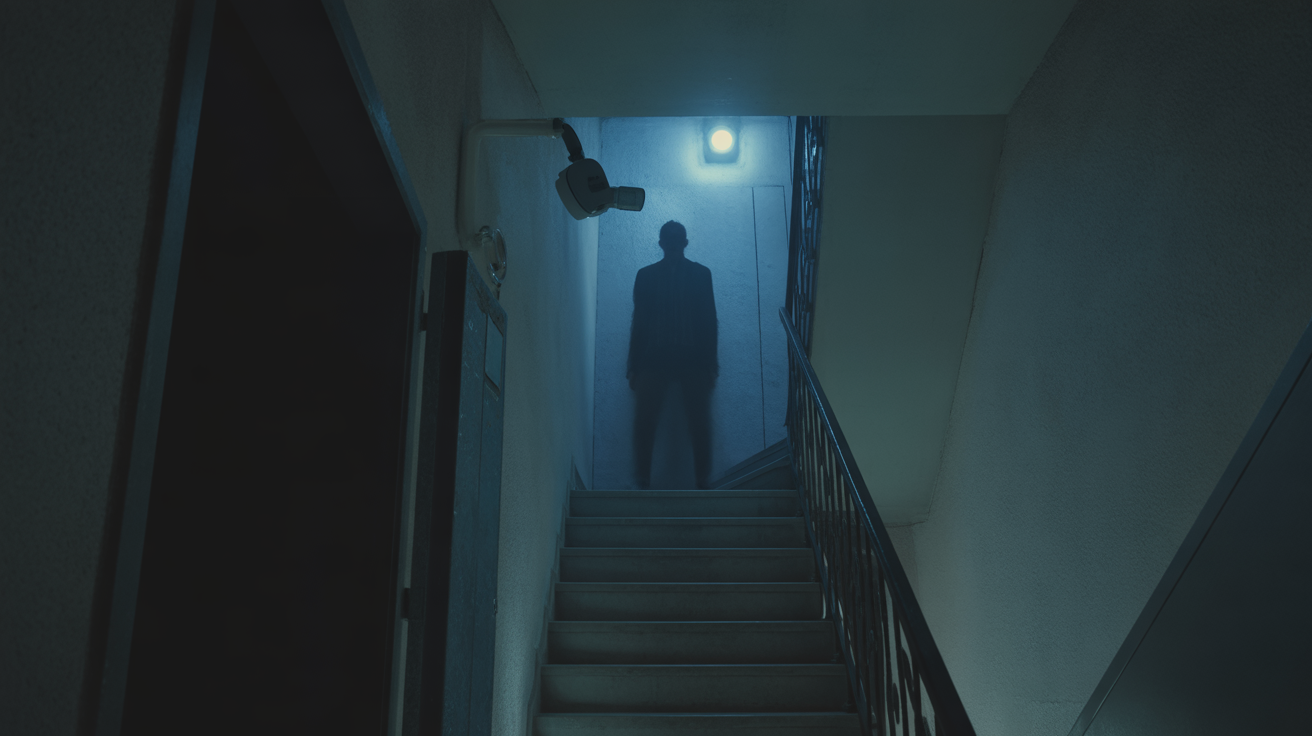
The hallway was dark except for the weak yellow bulb above the stairs. At the far end, the nursery door stood closed exactly as she had left it. However, light from the storm flashed across the narrow window on the landing, and in that brief silver glare she saw something outside the nursery window.
A shape.
Tall.
Still.
Watching.
Morning Made It Seem Smaller
By daylight, fear had already begun its usual work.
It softened details. It thinned certainty. It made the night feel like something tired nerves had exaggerated.
So Iris made coffee, opened the kitchen windows, and tried to be reasonable. Perhaps a branch had tapped the glass. Perhaps the shape had been a shifting shadow from the trees behind the house. Because of that, she almost managed to turn the memory into something harmless.
Almost.
After breakfast, she went upstairs.
The nursery door was still locked. The brass knob felt cold beneath her fingers, although the rest of the hall had already warmed in the morning sun. She unlocked it, opened the door a few inches, and waited.
Nothing moved inside.
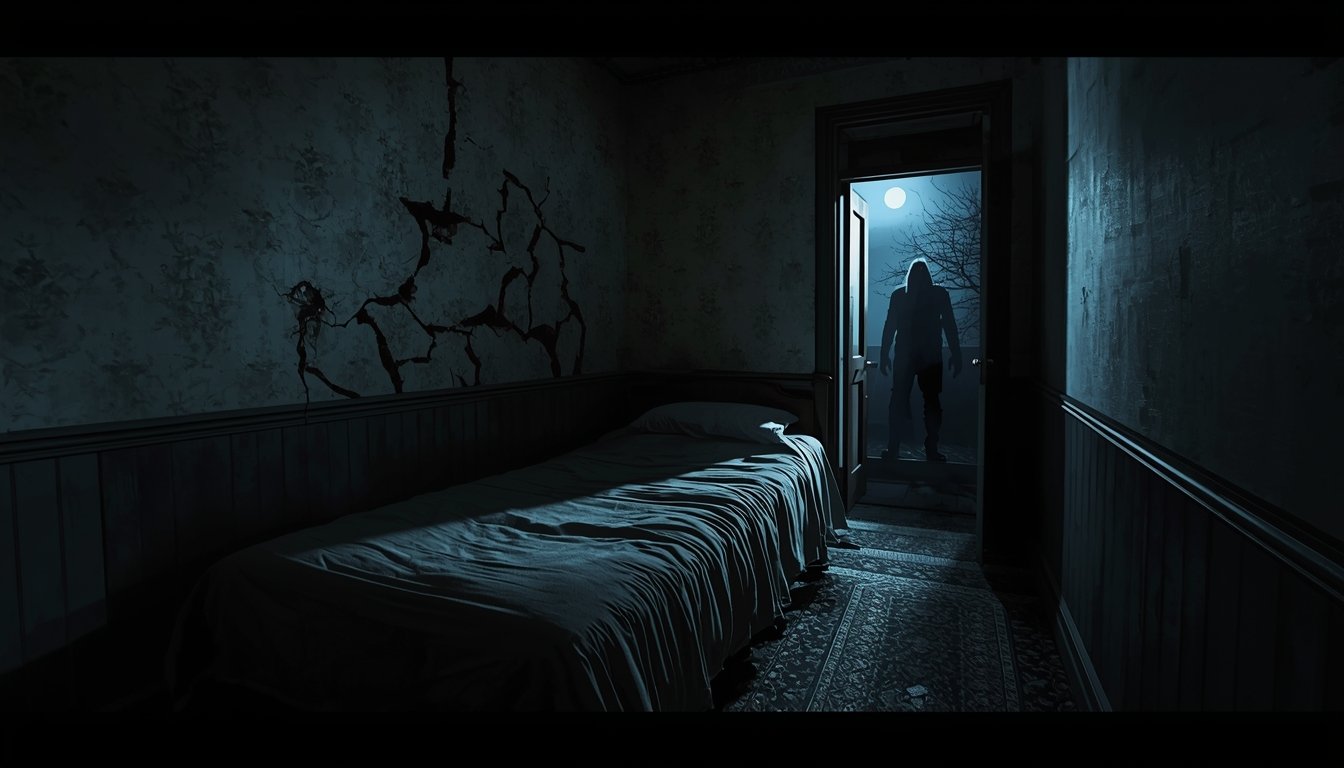
Dust drifted through the pale light. The room was smaller than she expected. A faded moon-and-stars border still ran along the top of the wall. In one corner sat a narrow wooden chair. Beneath the window, peeling paint marked the sill in long strips like old skin.
The window itself was closed.
Even so, five wet marks rested on the outside of the glass.
They were too high for any child.
The Chair by the Window
Iris should have cleaned the room that day.
Instead, she left it untouched and shut the door again.
By late afternoon, the choice began bothering her. Avoiding a room inside her own house felt childish. Worse than that, it made the nursery seem important in ways she did not want. So, just before sunset, she brought upstairs a bucket, a cloth, and a box of old newspapers for the floor.
Dust lay everywhere. It coated the chair, the baseboards, and the inside edges of the closet. However, when she reached the window, she stopped.
The chair had moved.
That morning, it had been near the corner.
Now it stood directly beneath the window, facing out.
Iris stayed very still.
There are moments when the mind tries to rescue itself with logic even while the body knows better. She told herself she had remembered the chair wrong. She told herself empty rooms can distort distance. Even so, her pulse had already changed.
She put the bucket down and left the room without cleaning anything.
The Voice on the Stairs
That evening, she called her sister.
Maren listened patiently, then with concern, and finally with the careful gentleness people use when they do not want to sound dismissive.
“You haven’t been sleeping well for months,” Maren said. “Maybe the move is making everything louder.”
Iris stared into the dark kitchen while the kettle hissed beside her. “I know the difference between being tired and seeing a chair move.”
“Did you check the floors?”
“What?”
“Old houses shift,” Maren said. “Furniture slides sometimes.”
Iris almost laughed. Instead, she rubbed one hand over her eyes. “Yes. I’m sure that explains the marks on the glass too.”
Maren went quiet for a beat. Then she said, “Come stay with me for a night.”
Iris should have said yes.
Instead, she said, “If I leave before I understand it, I think it will get worse.”
Even as the words left her mouth, she hated how true they felt.
If you enjoy eerie fiction shaped by hidden tension and quiet dread, you can also explore our Psychological stories and browse darker unease inside Horror.
The Shape Returned at Midnight
At 12:37 the next night, the tapping began again.
This time, Iris was already awake.
She had left the bedroom lamp on. She had also told herself she would stay in bed, ignore the sound, and prove that fear only grows when fed. However, the tapping came in that same slow pattern, careful and patient, until ignoring it felt worse than facing it.
So she opened her door.
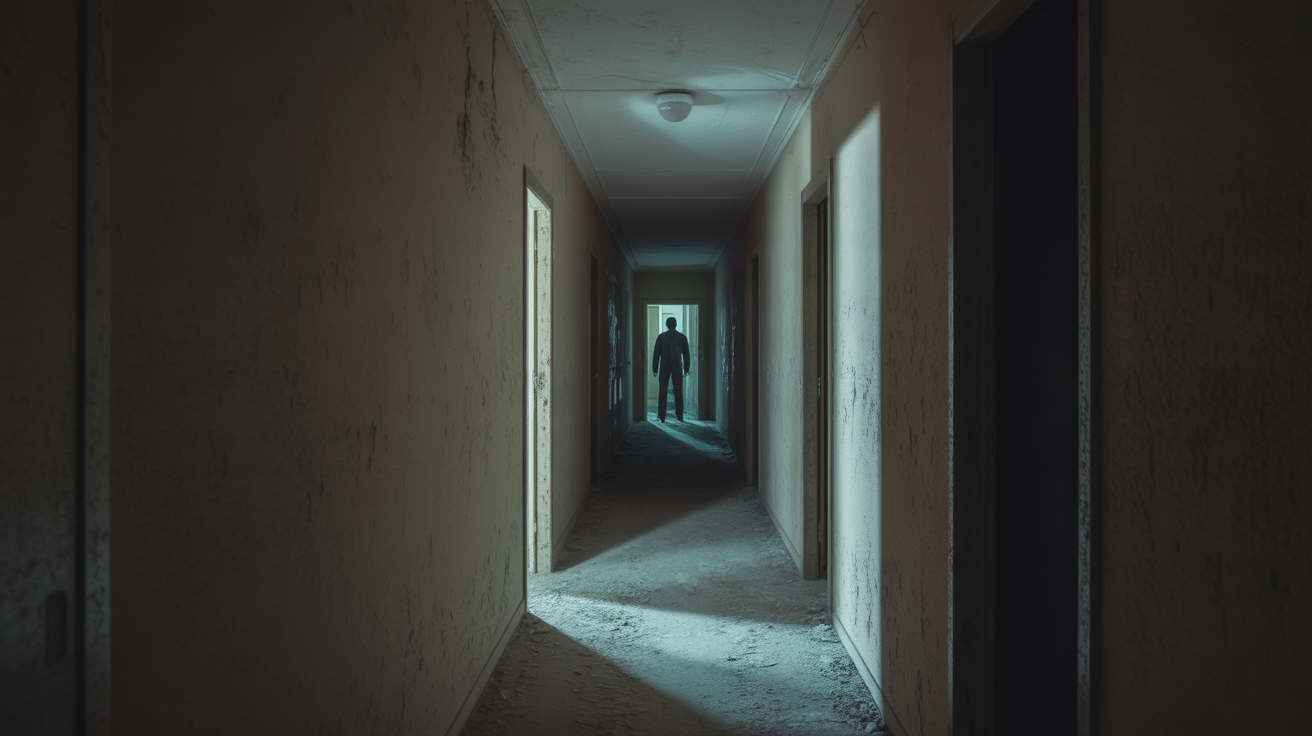
The hall looked exactly as it had the night before. Rain moved faintly against the windows, and the weak stair light painted thin shadows across the walls. Yet the nursery door was open now.
Iris had locked it.
She knew she had.
Cold moved through her arms.
The tapping stopped.
Then something shifted inside the room.
What Waited in the Nursery
She walked down the hall before she could stop herself.
Fear makes strange bargains with the body. It can freeze you, but it can also drag you forward when not knowing becomes unbearable.
Iris reached the doorway and looked in.
The nursery was almost dark. Storm light from the window gave shape to the furniture and the old border near the ceiling. The chair still stood beneath the glass, but now it was angled slightly toward the room, as if whoever had been sitting there had just turned to listen.
Nobody was inside.
At least, that was what she thought until lightning flashed.
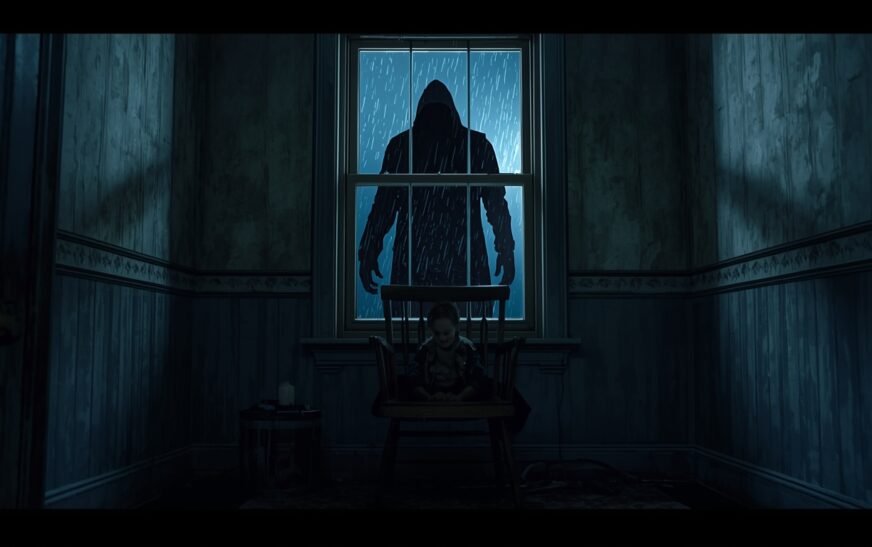
In that instant, she saw the window clearly.
On the other side of the glass stood the same tall shape from the night before. It had no face that she could understand, only the suggestion of one beneath wet darkness. One hand rested lightly against the pane. The fingers were too long. The arm bent wrong at the elbow.
Then the light was gone.
Iris stumbled backward into the hall.
The Neighbor on the Corner
By morning, she went to the only house nearby that looked lived in.
An older man named Mr. Carden opened the door after the second knock. He smelled faintly of tobacco and cedar, and his expression shifted the moment Iris mentioned Marrow Hill.
“You bought the Vale house?” he asked.
She nodded. “Do you know anything about it?”
He took too long to answer.
That silence alone made her chest tighten.
Eventually, he stepped aside and motioned her in. The sitting room was neat and dim, with heavy curtains drawn against the gray morning. Mr. Carden remained standing while Iris explained the tapping, the window, and the nursery.
When she finished, he looked toward his fireplace as if he disliked the memory waiting there.
“There was a child,” he said at last. “A little girl. Sick often, they said. Kept upstairs. Then one winter she died, and after that the mother stopped opening the nursery at all.”
Iris swallowed. “That doesn’t explain someone at the window.”
“No,” he said. “It explains why the room was never meant to look outward again.”
The Photograph in the Hall Closet
That afternoon, Iris searched the house.
She began in the kitchen, then moved through the sitting room, the drawers, and the hallway cabinet beneath the stairs. Finally, inside a shallow closet near the landing, she found a box of old papers and a small stack of framed photographs wrapped in cloth.
Most showed ordinary things: a garden in summer, a man in a dark coat, a woman beside a gate. However, the last photograph made Iris stop.
It showed the nursery window from the outside.
The image had been taken years ago, perhaps decades. Even so, one detail was clear enough to turn her stomach cold. Behind the glass stood a child-sized figure looking out. Beside the window, half-hidden by the frame, was a second shape taller than the child and bent at an unnatural angle.
On the back of the photograph, someone had written five words in faded ink:
Do not let it in again.
The Window Would Not Stay Closed
Iris locked every downstairs door before sunset.
After that, she closed the nursery door, pushed the chair back into the corner, and fastened the window latch twice. For extra certainty, she slid a narrow dresser against the wall beneath the sill.
None of it made her feel safer.
At 12:37 a.m., the tapping began for the third time.
Now it sounded stronger.
Not patient.
Insistent.
Iris sat upright in bed and listened as the tapping became a slow scrape against the nursery glass. Then came a sound she had not heard before.
A child laughing.
The sound was soft at first. However, it carried through the hall with a thin sweetness that made it worse, not better. Nothing about it felt alive. Worse still, it was followed by another noise underneath it, low and wet and almost too quiet to notice.
Breathing.
The Face at the Window
Iris did not remember leaving her room.
One moment she was in bed. The next, she was halfway down the hall with her pulse hammering so hard she felt sick.
The nursery door was wide open.
Inside, the dresser had been dragged away from the window. The chair stood directly beneath the glass again. Above it, pressed lightly to the pane from the outside, was the face of a child.
At least, it looked like a child from a distance.
Its skin was pale and swollen with rain. Dark water ran from its hair in thin lines down the glass. The eyes were open too wide, and the mouth held a smile so fixed and small that it did not look human. Behind it, towering in the dark, the taller shape leaned over the child’s shoulder as if guiding it closer.
Then the child lifted one hand and tapped the glass from the outside.
Three times.
Slowly.
Gently.
The Mother in the Room
Iris could not move.
Lightning flashed, and for a second the entire room turned silver. In that brief light, she saw more than she wanted. The tall shape outside was not holding the child. It was growing from behind it, wrapped around its small body like a second shadow. Long arms bent around the window frame. A face hung above the child’s head, stretched and wrong, with dark hollows where the eyes should have been.
Then the child spoke through the glass.
Although the sound was muffled, Iris understood the words clearly enough.
“She let me in.”
The taller thing smiled.
At once, the window latch lifted by itself.
The Only Door Left Open
That broke the spell.
Iris ran forward, slammed both hands against the window, and forced it shut just as it opened a breath too wide. Wind knifed through the gap. Rain hit her face. On the other side, the child’s hand pressed against hers through the glass with impossible gentleness.
Then the larger shape moved.
Its head tilted once. After that, its mouth opened far too wide, not in a scream but in a silent and patient hunger.
Iris shoved the latch down again, grabbed the chair, and drove it beneath the window handle. Then she backed out of the room, slammed the door, and turned the key with shaking hands.
For one second, there was silence.
Then something hit the nursery door from the inside.
Once.
Again.
A third time.
Each blow was wet and heavy, as though whatever stood beyond the wood had too many limbs and too much patience.
What the House Wanted
Iris stumbled downstairs and reached for her phone. There was no signal. The screen showed one pale bar, then none at all. Even so, the house had not gone quiet.
Above her, footsteps moved across the ceiling.
Not one set.
Two.
One sounded small and quick. The other dragged behind it with a slow and broken rhythm.
Iris backed toward the front door, unlocked it, and pulled.
Nothing happened.
The lock had turned. The door should have opened. Instead, it held fast as if the frame had grown around it.
From upstairs came the sound of a child laughing again.
Then, very softly, a woman began humming.
Morning on Marrow Hill
The delivery driver found the front gate open at 8:12 the next morning.
That was strange enough to notice because the house at the edge of Marrow Hill had been empty for years before Iris moved in, and nobody in town expected company there. Even so, he might have kept driving if he had not seen the upstairs nursery window standing open in the cold morning light.
Police arrived twenty minutes later.
They found the front door unlocked.
They found the kitchen light still burning.
They found muddy water across the upstairs hall and a wooden chair jammed beneath the nursery window.
What they did not find was Iris.
Inside the nursery, however, the old faded border had changed. On the wall beneath the stars and moons, written in a child’s uneven hand, five new words had been scratched into the paint.
Now she opens it too.
To read more unsettling fiction, explore our Dark Fear, Horror, and Stories categories on HollowVelvet.