The House After the Funeral
Elise returned to the house on a Thursday because grief seemed easier to manage on weekdays.
Weekends belonged to visitors, phone calls, and people who said her mother’s name too carefully. Thursdays, however, felt administrative. They suited paperwork, florist receipts, and the practical violence of deciding what to keep after someone’s life had stopped using it.
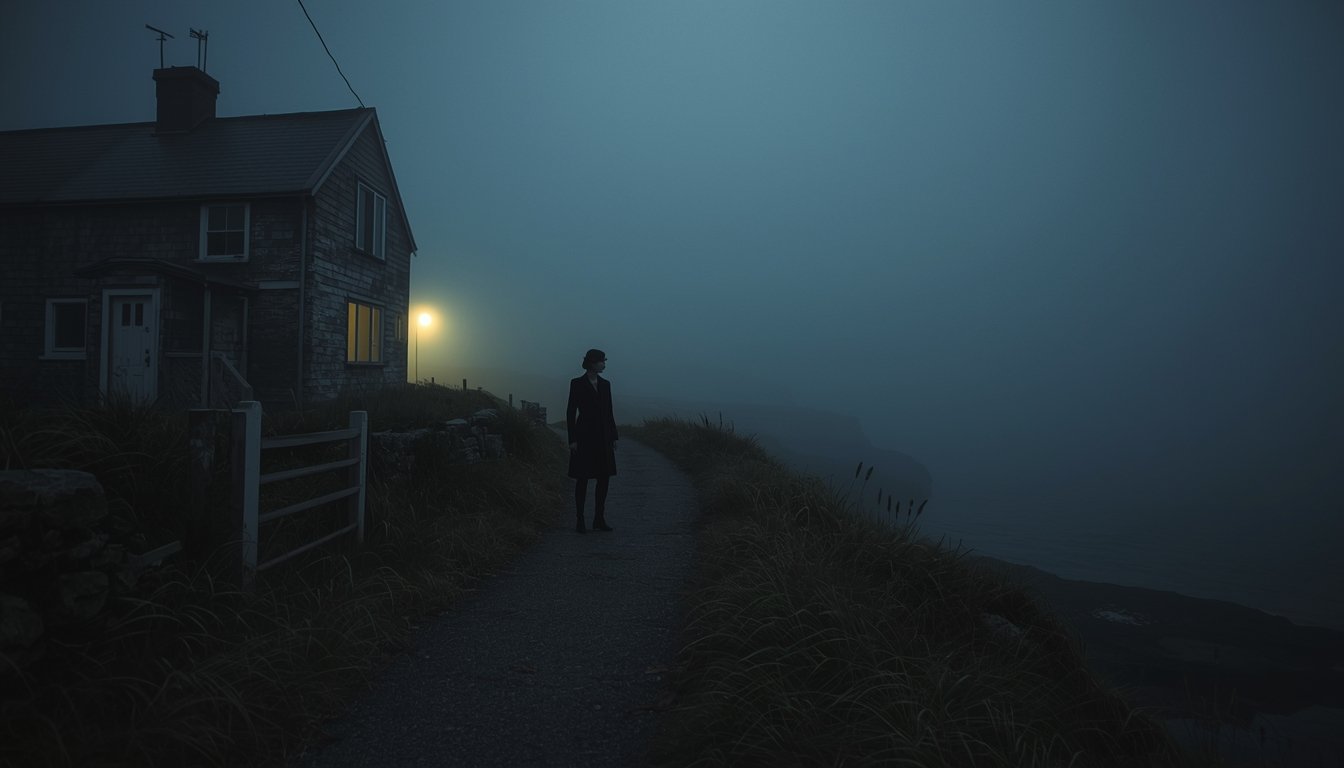
The house stood at the edge of a quiet lane where the hedges grew too high and the streetlamps never looked fully awake. Elise had known every window of it as a child. Even so, the place seemed altered now, as if death had shifted its proportions without moving a single wall.
Inside, the air held the faint smell of lavender, dust, and radiator heat long since switched off.
She set down her overnight bag in the front hall and listened.
Nothing answered except the settling creak of old timber.
That should have reassured her. Instead, the silence felt arranged. It had the careful quality of a room that wanted to be overheard later.
“I’m only here for three nights,” she said aloud.
The words landed softly in the dim house and went nowhere.
The Corridor Upstairs
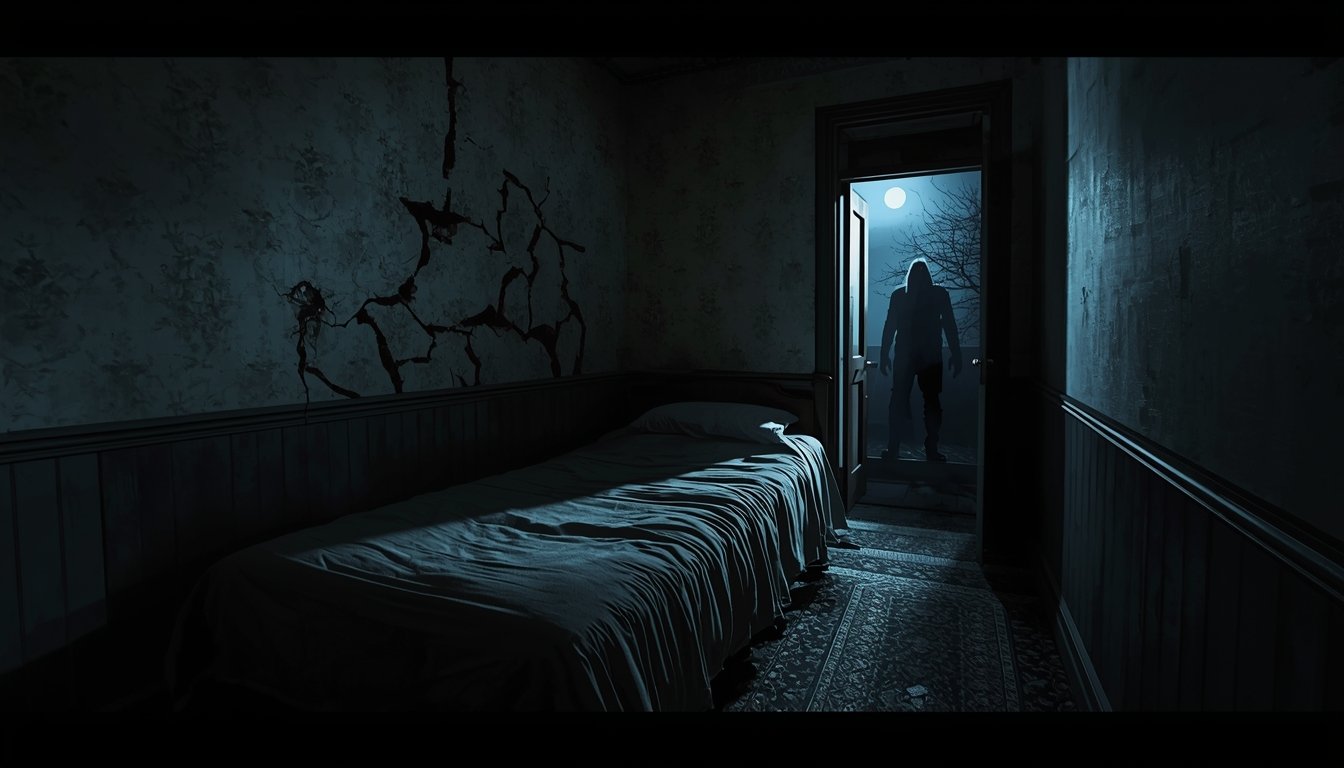
Her mother’s bedroom was at the back, facing the garden. Elise chose the smaller guest room instead. It had once belonged to an aunt who embroidered flowers no one liked and believed clocks should always run five minutes fast. The room was narrow, neat, and emotionally harmless. That was reason enough.
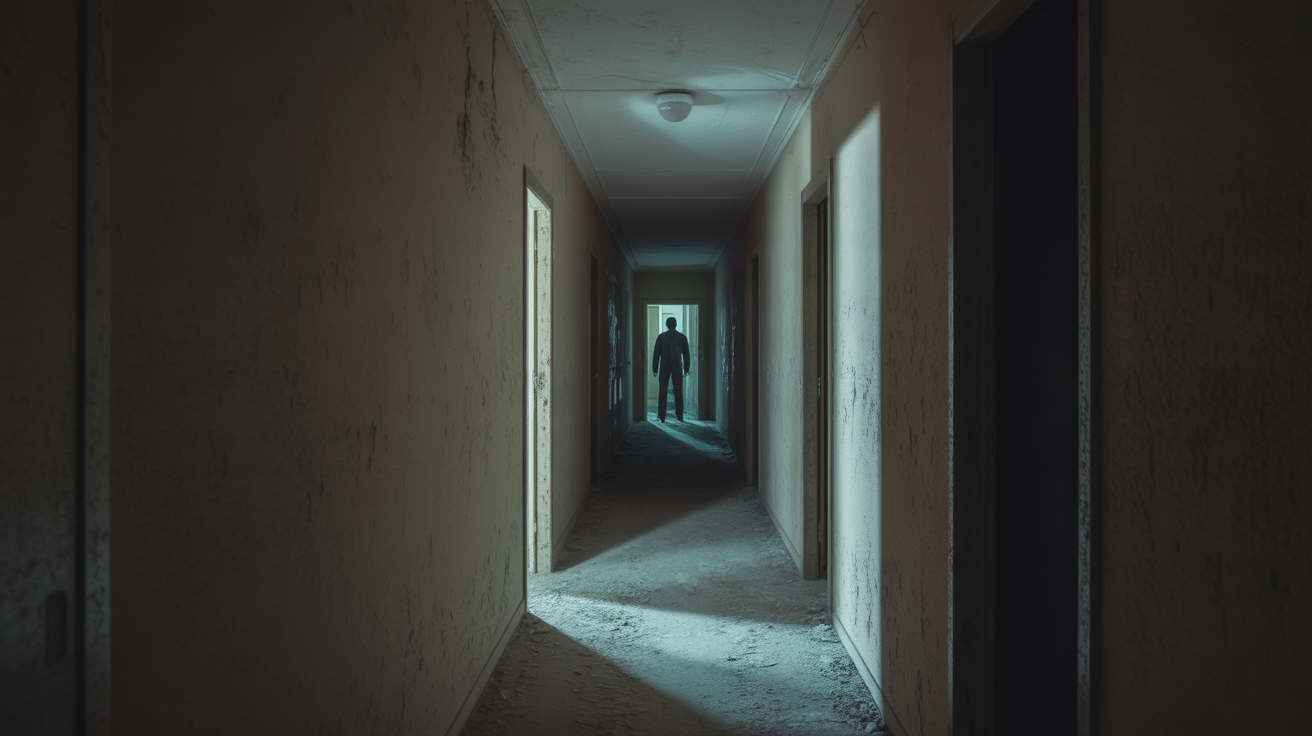
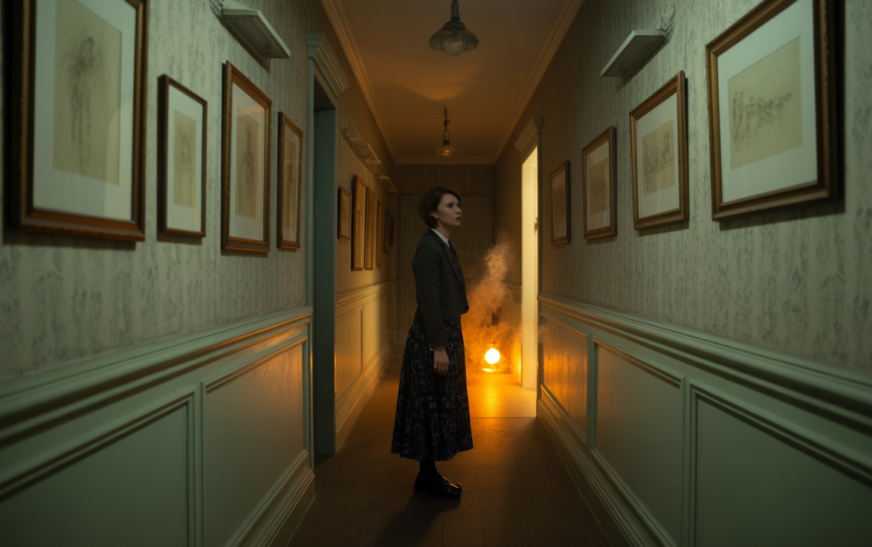
Upstairs, a single corridor connected the bedrooms to the bathroom and the linen closet. During the day, it looked ordinary enough: faded runner carpet, pale walls, framed sketches of local churches, one warped patch of wood near the bathroom door.
At night, the corridor changed.
Elise noticed it after midnight, when she came out to wash her face and found the air outside her room unexpectedly warm. Not hot. Not dramatic. Just warmer than the bedroom, warmer than the landing, warmer than the house had any right to be in late October.
She stood still in her socks.
The warmth hovered in the hall as if someone had passed through seconds earlier and left a body behind in the air.
Elise touched the wall. It felt normal. The radiator beneath the window was cold. Meanwhile, the bathroom tiles beyond the doorway held the honest chill of an unheated house.
“Pipes,” she murmured.
That was the right explanation. An old house was full of half-working systems and invisible drafts. Still, she brushed her teeth quickly and shut her door with more force than necessary.
The First Bad Night
Sleep came badly.
She dreamed of her mother folding towels at the end of the hall, though the towels never became smaller no matter how many times they were folded. In the dream, Elise tried to speak, but each sentence arrived too late, as if the house had already heard it first.
At three seventeen, she woke to darkness and a sensation she could not name.
Then she realized what it was.
Her bedroom was cold. The gap beneath the door glowed faintly with landing light. More troubling than that, a ribbon of warmth slipped through the crack at floor level.
Elise sat up.
For several seconds she listened, expecting footsteps, a boiler cough, the harmless noise of a system starting itself. Instead, there was only the old-house chorus of distant wood and soft weather against the windows.
She got out of bed and crossed the room.
When she opened the door, the corridor met her like breath.
The warm hallway stretched empty in both directions. The pictures on the wall remained straight. The bathroom door was half open. At the far end, the landing lamp glowed over the banister with a muted amber that made the carpet look bruised.
Nothing moved.
Even so, Elise knew with the blunt certainty of exhausted people that someone had just left.
The Morning Explanation
Morning made everything smaller.
Sunlight entered through thin clouds and gave the upstairs wallpaper a tired honesty. Elise walked the corridor twice with a mug of tea in her hand, checking vents, touching radiators, and opening the linen closet only to find folded sheets and the old vacuum cleaner her mother had hated.
No heat source. No hidden appliance. No mystery worthy of the night she had given it.
Later, a plumber named Owen came by to inspect the kitchen sink, which had started dripping with theatrical persistence the week before the funeral.
While he replaced a washer, Elise mentioned the upstairs corridor as casually as she could.
“One hallway gets warm at night,” she said. “Probably bad insulation.”
Owen looked up from the pipework. “Warm?”
“Only upstairs.”
“That’s the wrong season for mystery heat.”
“So there is a right one?”
He gave a brief smile. “In old houses, there’s always a wrong room. Usually cold, though.”
Elise walked him up after lunch. He checked the radiator valves, the bathroom pipes, and the attic hatch above the landing.
Finally, he shrugged. “Nothing obvious.”
“That is not helpful.”
“No,” he admitted. “But it’s honest.”
He packed his tools and left before dusk. As his van disappeared down the lane, the house seemed to notice that she was alone again.
The Routine Her Mother Kept
That evening, Elise sorted drawers she had avoided all day.
Her mother had been meticulous in ways that bordered on ceremonial. Rubber bands in one tin. Batteries in another. Birthday cards tied by year with ribbon that faded from cream to yellow. Nothing was thrown away if it had once proven useful. Therefore, grief arrived not as absence, but as inventory.
At the back of a bedside drawer, Elise found a small weekly planner with her mother’s rounded handwriting crowded neatly into each day.
Medication times. Appointments. Reminders to water the fern in the downstairs sitting room. On several pages near the end, one note appeared again and again beside a penciled line drawn after midnight.
Check hall.
Elise stared at it.
At first, she assumed the note referred to locking the front door or switching off the landing lamp. Yet the entries appeared only in the final six weeks, and always after midnight. Never in the evening. Never in the morning.
Check hall.
Her mother had not been forgetful. She had not written reminders without reason.
Outside, rain began lightly against the windows.
Elise closed the planner and told herself she would not let one repeated note turn the house theatrical. However, once darkness settled across the lane, every room seemed to wait for the same hour.
The Heat Moved
At half past twelve, Elise stood in the upstairs corridor wearing her coat over her pajamas.
The hall was warm again.
This time the warmth did not sit evenly between the walls. It gathered in sections, strongest near the bathroom, fainter by the linen closet, then oddly concentrated halfway toward the landing. She could feel it with her hands held out, almost like sunlight that had learned to move after dark.
Rain ticked softly at the window over the stairs.
Elise took one step forward.
The heat shifted with her.
She stopped at once. So did it.
Her mouth went dry. “No.”
The answer seemed foolish the moment it left her, because she had spoken as if something had offered itself. Still, the corridor changed again. The warmer patch drifted backward, slow as a person reconsidering.
Then the bathroom tap turned on.
Not fully. Just enough for a thin silver thread of water to strike porcelain in the quiet.
Elise did not move for several seconds. Finally, she forced herself into the bathroom and twisted the tap shut with unsteady fingers.
The mirror above the sink was fogged at one edge.
Not the whole mirror. Only a soft oval in the center, as though someone’s face had hovered there moments earlier.
The Neighbor Across the Hedge
The next day, Elise carried two bags of clothes to the donation box at the end of the lane and met Mrs. Fenwick clipping roses in the garden next door.
The woman had lived beside her mother for nearly twenty years and wore suspicion as naturally as perfume.
“You stayed the night,” Mrs. Fenwick said by way of greeting.
“Two nights.”
“Ah.” Her shears paused. “Your mother stopped doing that near the end.”
Elise looked over. “Stopped doing what?”
“Sleeping upstairs.”
For a moment, the lane seemed to lose all weather.
“She never told me that.”
Mrs. Fenwick snipped another rose with unnecessary care. “She said the upper corridor felt close. That was her word. Close.”
“Close to what?”
“I asked the same thing.” The woman shrugged. “She changed the subject and complained about my hydrangeas.”
Elise tried to smile, but it failed halfway. “Did she seem frightened?”
“Your mother?” Mrs. Fenwick gave a dry laugh. “She seemed offended. As if the house had developed bad manners.”
That evening, Elise did not sort any more drawers. Instead, she read the planner from beginning to end and found one final note written three days before her mother was admitted to hospital.
Too warm again. Do not stand still.
Below it, in smaller letters, almost pressed through the page:
It waits if you stop.
The Hour After Midnight
She should have left then.
A reasonable woman would have packed the car before dark and slept in a hotel with bright corridors, bland artwork, and central heating that obeyed physics. Elise, however, had inherited enough of her mother to dislike being driven out of her own family house by something she could not name.
So she waited.
At twelve forty-seven, the landing lamp flickered once.
At twelve fifty-two, the upstairs corridor began to warm.
Elise stood in the guest room doorway holding her phone like a useless charm. The hall looked unchanged, but the air thickened in front of her, warm and intimate and wrong. Meanwhile, the framed church sketches along the wall seemed to darken at the edges.
She remembered the note.
Do not stand still.
Therefore, she moved.
One step into the corridor. Another toward the bathroom. Another back toward the landing. The heat followed in pulses, never quite touching, always just behind her shoulder blades. When she slowed, it crowded closer. When she quickened, it seemed to lengthen in the air, stretching itself after her like an invisible hand.
By the time she reached the far end, her breathing had turned shallow.
Then she made the mistake of stopping beneath the window.
The warmth closed around her at once.
Not all at once like fire. More intimately than that. It wrapped her from behind with the awful suggestion of arms, chest, and a face inclining near her hair. The sensation carried no weight, only presence. Human-shaped. Patient. Familiar in the way nightmares sometimes borrow from memory without asking.
Elise lurched forward with a sound she never admitted making later.
Behind her, the landing lamp went out.
The Voice in the Dark
Blackness swallowed the upper floor.
Her phone slipped from her hand, struck the runner carpet, and vanished into shadow. Elise dropped to her knees blindly, reaching for it, while the corridor kept its impossible warmth around her.
Then a voice spoke near her left ear.
Not loud. Not spectral. Simply present.
“Don’t stop.”
It was her mother’s voice.
Elise found the phone, turned on the flashlight, and staggered up. The beam shook across wallpaper, frames, the bathroom door, the banister. Nothing stood there. No figure. No outline. Yet the heat recoiled from the light in a slow withdrawing ripple.
She began walking immediately, almost circling, from one end of the corridor to the other. Her heart struck hard enough to blur her sight. Still, the warmth kept just beyond the edge of the flashlight, shadowing her route with terrible patience.
“What are you?” she whispered.
No answer came. Only the sense of being measured whenever she slowed.
After several minutes that felt like an hour, the landing lamp blinked back on. At once, the warmth thinned. The corridor became what it had always pretended to be: faded carpet, weak bulb, harmless pictures, old house.
Elise did not sleep again that night.
The Cold Room Downstairs
Before dawn, she carried her bag to the sitting room and locked herself in with two blankets, tea, and the planner on her knees.
The downstairs sofa had become her mother’s bed in the final month. Elise understood why now. The room was cold, almost sternly so, and the cold felt clean. It kept to itself.
As morning lifted over the garden, she read the last pages again and saw what exhaustion had hidden. On the inside back cover, beneath a grocery list and a dentist reminder, her mother had written one final note in darker ink.
Warm in hall after twelve. Feels like someone trying to remember being alive.
Do not let it hold you in place.
If it speaks kindly, leave.
Elise closed the planner and stared at the pale window until the room sharpened around her.
By noon, the estate agent arrived for the keys and final paperwork. She apologized for being late. Elise said it did not matter. Then she signed everything with a hand that looked steadier than it felt.
When the woman asked whether Elise wanted one last walk through the house, she answered no before the question had fully finished.
After the Sale
The house sold in sixteen days to a couple from the city who admired original features and believed old places only kept the memories you brought into them.
Elise never corrected them.
Later, when night pressed too closely against apartment windows, she found herself drawn to fiction shaped by Horror, the creeping unease of Dark Fear, and the quieter tension inside Psychological stories. Meanwhile, the most lasting dread often lived where Mind Games overlapped with the emotional ache of Drama, because fear rarely arrived alone.
Some stories begin with noise. Others begin with a warm hallway, a patch of midnight fear, or the first hint of creeping dread in a familiar place. The deepest unease often grows through an unsettling house, the pressure of haunted routine, and the chill of night footsteps that may never fully sound. Sometimes grief itself becomes a corridor, and all a person can do is keep moving through the dark until morning remembers her name. In other cases, the oldest terror is not being followed. It is being gently, patiently invited to stay.