The Invitation to Greyhaven
Talia accepted the invitation because ambition often arrives wearing manners.
The message came from Greyhaven House, a private arts foundation known for funding difficult work by difficult people. It offered a weekend residency interview in the countryside. Small guest list. Private dinner on arrival. Final selections after Sunday lunch. On paper, the invitation looked flattering. In practice, it felt like being asked to audition for wealth under low lighting.
At first, she meant to decline. However, the autumn had already been too full of invoices, unfinished notes, and the brittle calm that settles over a career when praise arrives more often than payment. Therefore, by Friday evening, she found herself standing in the gravel drive of Greyhaven House with one overnight bag, a black coat damp at the hem, and the sense that she had already agreed to something more intimate than work.
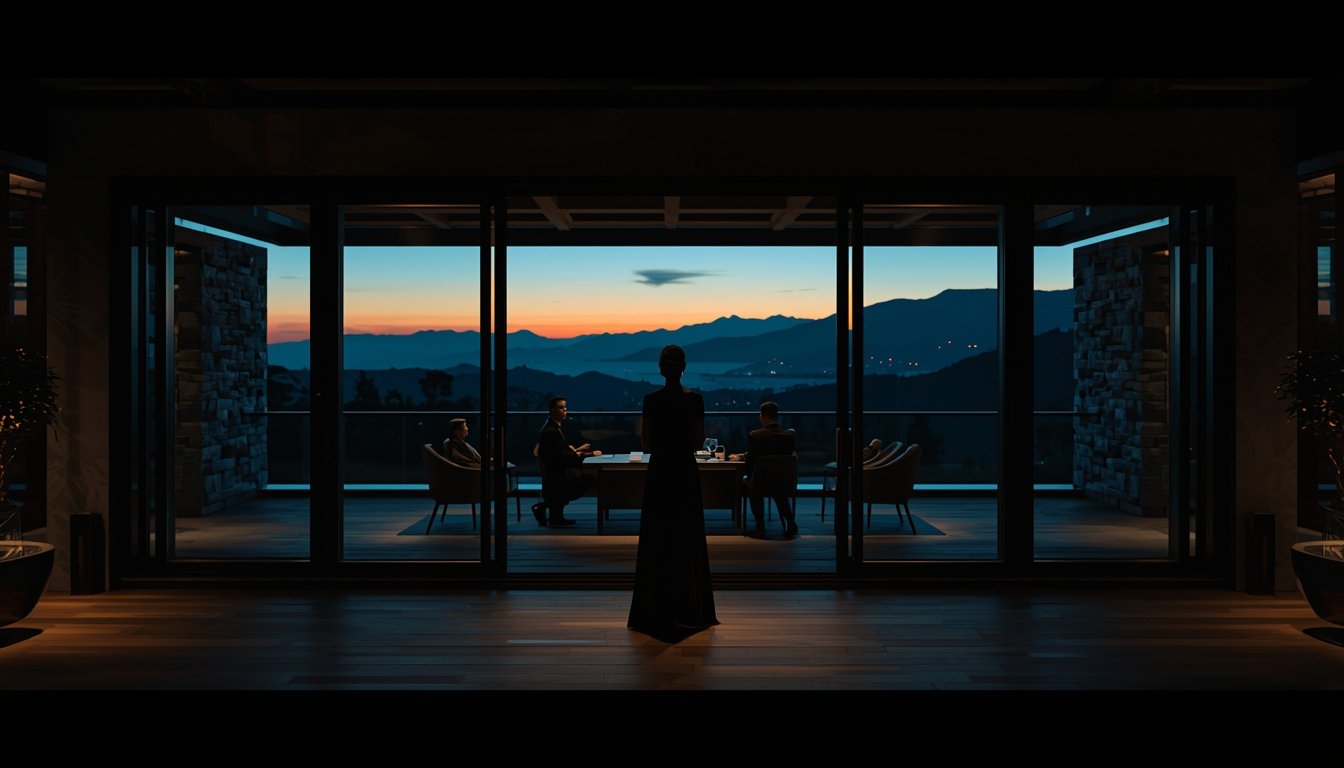
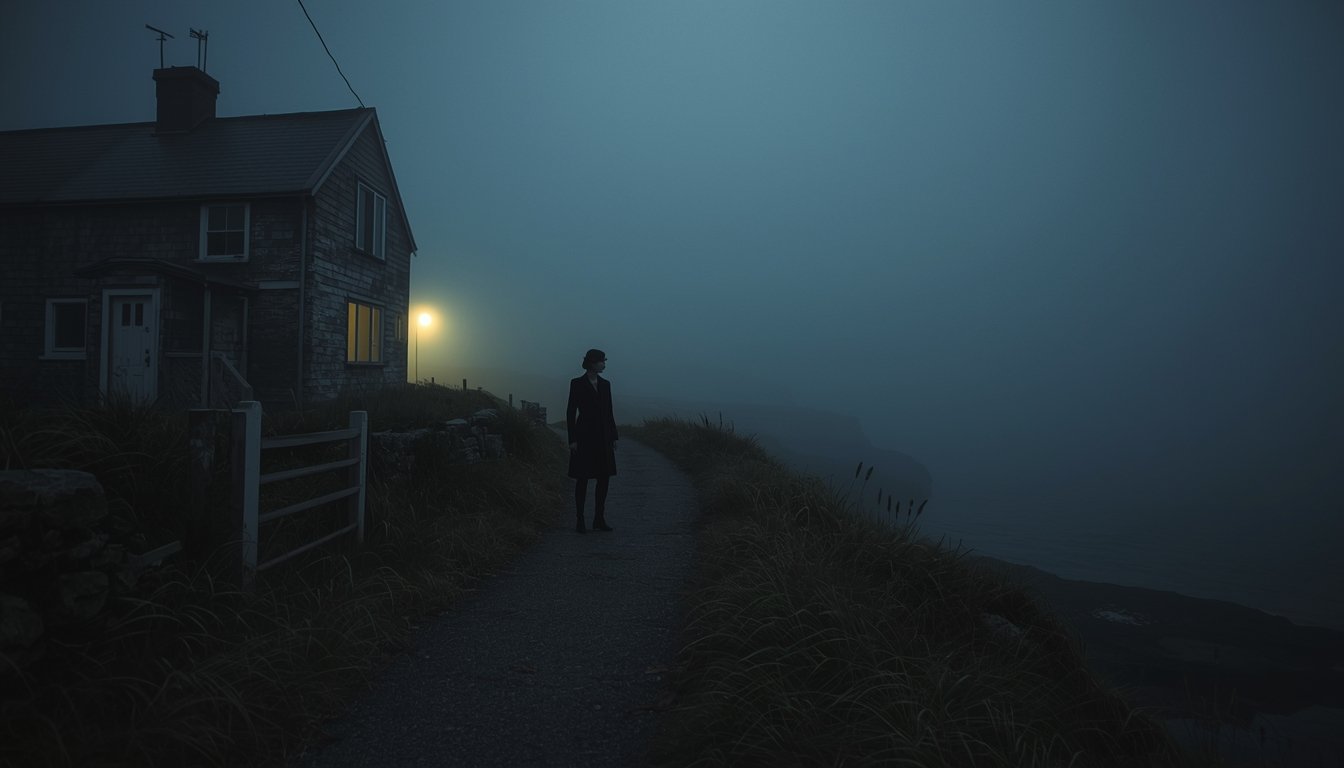
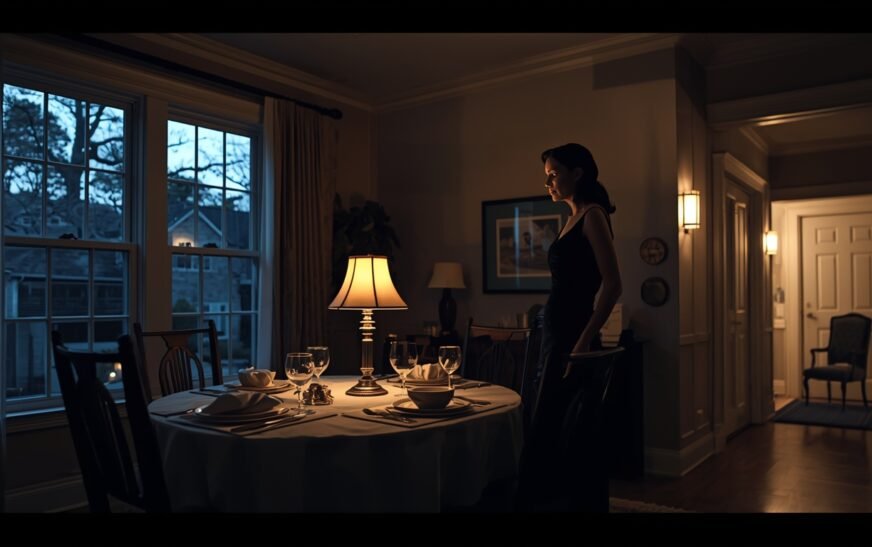
The house stood beyond a line of bare trees and old stone walls. Its windows glowed amber through a fine mist. Somewhere beyond the gardens, water moved in the dark with the patience of something that had outlived the estate.
The Hall With the Portraits
A woman in charcoal silk opened the door before Talia knocked.
“You must be Talia Ward,” she said. “Welcome. I’m Elise, the director’s assistant.”
The entrance hall smelled of cedar, polished floors, and expensive restraint. Portraits lined the walls, all of them tasteful enough to seem harmless at a distance. Up close, each face looked faintly disappointed by the present century.
“How many candidates?” Talia asked as Elise took her coat.
“Six,” Elise replied. “Small enough for honesty.”
That answer should have warned her. Instead, she followed the woman toward the drawing room, where low voices and firelight were already performing hospitality.
Five other guests stood in careful clusters beside the hearth and the windows. Two poets, if the scarves meant what they usually did. A composer with silver cuffs and a predatory stillness. A ceramic artist Talia knew by reputation. Near the mantel stood Adrian Vale, founder of Greyhaven, speaking with the relaxed authority of a man long accustomed to setting the tone before others noticed it had been set.
When he turned, his attention landed on her with unsettling precision.
“Talia,” he said. “I was hoping you’d come.”
“That sounds dangerous from a man who controls the weekend.”
His mouth curved faintly. “Only if you plan to disappoint me creatively.”
The Card Beside the Glass
Dinner began an hour later in a room overlooking black lawns and invisible water.
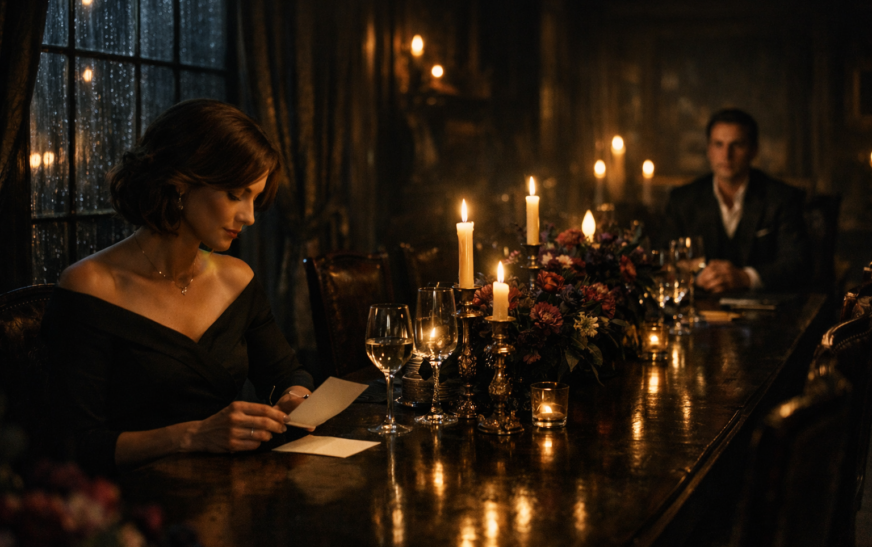
Candles stood between dark flowers and polished silver. Rain whispered at the windows. Every place setting held the expected architecture of wealth: crystal, linen, too many forks, and one cream card laid beside the glass.
Talia sat halfway down the table. Adrian sat at the far end, not quite central and therefore more powerful for the choice.
She picked up the card before the first course arrived.
It was printed with four brief prompts under the Greyhaven crest.
Choose one:
Recognition.
Freedom.
Stability.
Influence.
Talia looked around the table discreetly.
The others had matching cards near their plates. A few guests glanced at them with mild curiosity. No one seemed disturbed.
“A game?” asked the ceramic artist to her left.
Adrian lifted his glass. “A preference exercise,” he said. “Nothing more. Greyhaven asks candidates to identify what they value most. It helps us avoid funding beautiful work for the wrong reasons.”
Light laughter followed. Even so, Talia noticed how little he smiled while delivering the line.
She lowered her eyes to the card again.
Something was wrong.
At first, she thought it was only the typography. Then she saw it clearly. On her card, there were only three options.
Recognition.
Stability.
Influence.
Freedom was missing.
The Missing Option Appears
At first, Talia assumed the omission was an error.
Printing mistakes happened. Assistants misaligned files. Wealth could produce incompetence as elegantly as everything else. However, once the first course was served, Adrian began asking the table to speak, one by one, about the value each person had chosen.
“Freedom,” said the younger poet immediately. “Or there’s no reason to make anything at all.”
“Influence,” said the composer. “Art that changes nothing is decorative.”
The ceramic artist chose stability. The woman across from Talia chose freedom and said it with enough reverence to sound rehearsed.
Talia kept her face still.
There it was: the missing option, no longer theoretical but public. Everyone else had been given freedom. She had not.
“And you?” Adrian asked at last, looking directly at her.
The room quieted in that polished way expensive rooms do when they smell conflict and want it served elegantly.
“I haven’t decided,” Talia said.
“You’ve had time.”
“So has everyone else,” she replied.
A few guests smiled into their wine. Adrian did not.
“Then take another minute,” he said lightly.
The lightness was the problem. It arrived too carefully, as if he had anticipated resistance and selected the tone that would make refusal look theatrical.
The Guest Across From Her
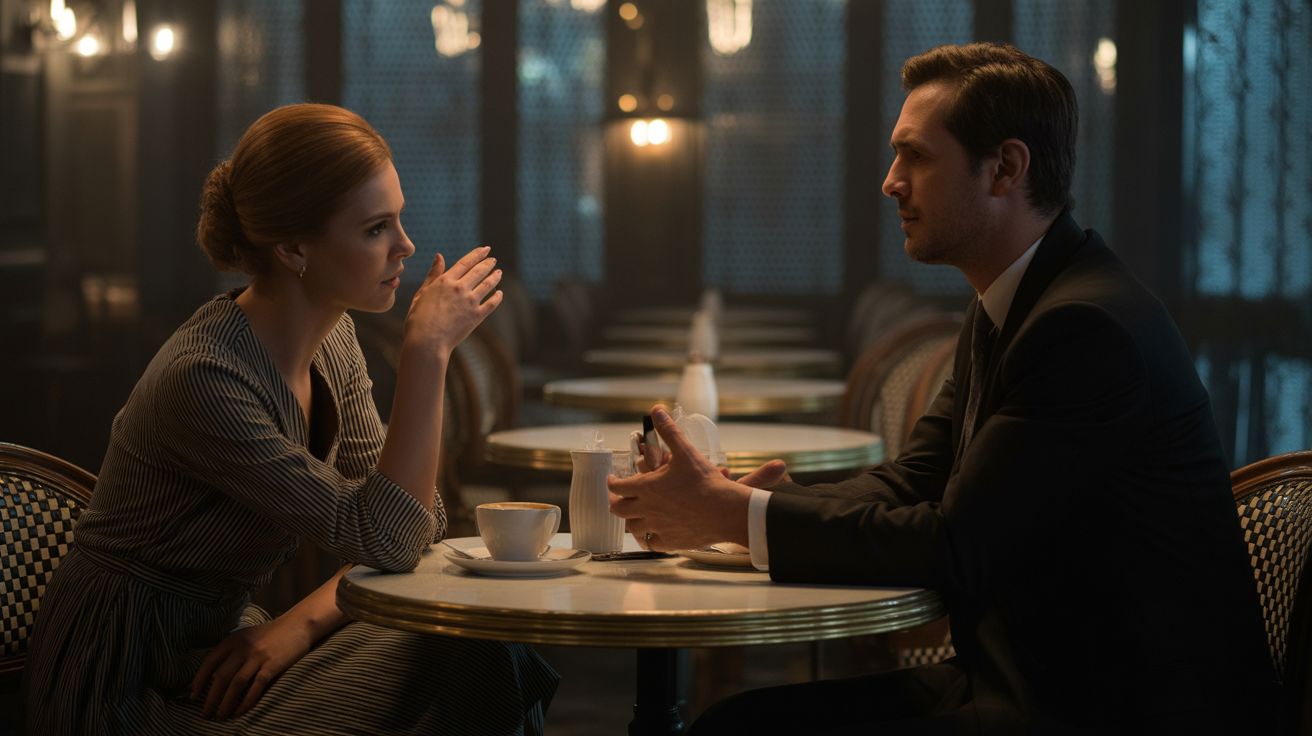
Later, while plates were cleared and conversation drifted toward grants, failed exhibitions, and the politics of praise, the woman across from Talia leaned forward slightly.
She was called Miriam Cole, an essayist with dark hair gathered at the nape and the calm face of someone who had learned to treat rooms as temporary weather.
“You haven’t touched your card,” Miriam said quietly.
“Neither have you.”
“I already chose.”
“Freedom?”
Miriam’s gaze sharpened almost invisibly. “Yes.”
Talia let a beat pass. “Interesting. That one wasn’t available to me.”
No surprise crossed Miriam’s face. That absence mattered more than reaction would have.
“Then it wasn’t a printing error,” Talia said.
Miriam lowered her glass. “Greyhaven dislikes errors. It prefers arrangements.”
“You say that as if you’ve been here before.”
“I have.”
“And?”
“And the house enjoys seeing who notices the frame before answering the picture.”
Talia leaned back. “That is a very polished way to describe manipulation.”
“It’s the language they use for it.”
The Walk Into the Conservatory
After dinner, guests were encouraged toward the conservatory for coffee and brandy.
The room was long, warm, and full of dark leaves shining under hidden lamps. Rain ran softly over the glass roof. Beyond the panes, the gardens dissolved into reflections and black branches. It should have felt calming. Instead, it felt curated for confession.
Talia stood near a lemon tree she suspected had cost too much to keep alive.
Adrian joined her without haste.
“You dislike the exercise,” he said.
“That sounds less like observation and more like bait.”
“Is there a difference?”
She turned toward him. “My card was missing an option.”
“Yes.”
The answer came so plainly that irritation sharpened at once.
“You admit it?”
“Why wouldn’t I?” Adrian replied. “The point was never concealment. It was response.”
“To what?”
“To constraint.”
The rain above them seemed louder suddenly.
“You removed freedom from my card,” Talia said, “to see whether I’d ask for it.”
“No,” he said. “To see whether you’d expose how much you need it named before you can claim it.”
The sentence landed with the quiet precision of something prepared earlier. That made it worse, not better.
The Answer He Expected
“That is an astonishingly ugly thing to do to a guest,” Talia said.
“Candidate,” he corrected.
“That’s even uglier.”
For the first time, something like real amusement touched his expression. “Most applicants choose what flatters their work. Freedom for the daring. Influence for the serious. Stability for the tired. Recognition for the honest or the shameless.”
“And what did you expect from me?”
He did not answer immediately. That pause felt deliberate enough to count as theater.
“Stability,” he said at last. “Because public versions of you are built on independence, but your work is full of women bargaining with rooms to keep a little ground under them.”
Talia stared at him.
“You think this is insight,” she said. “It’s only intrusion with funding behind it.”
“Perhaps,” Adrian replied. “Yet you’re still here.”
The conservatory seemed to tighten around the remark. A laugh sounded at the far end, bright enough to prove someone else was losing a different kind of evening.
“People stay in controlling rooms for all kinds of reasons,” Talia said quietly. “Curiosity is the least flattering one.”
The Folder in the Library
She left the conservatory before he could place another sentence where it might hurt usefully.
The corridor beyond was dim and lined with shelves of art monographs no one had ever opened in anger. Talia walked until the house widened into a library where only one lamp was burning beside a leather chair.
Miriam was already there.
“I wondered how long you’d last with him alone,” she said.
“That sounds unhelpfully calm.”
“Experience often does.”
On the side table beside her rested a slim gray folder stamped with the Greyhaven crest.
Talia looked from the folder to Miriam. “What is that?”
“Candidate notes,” Miriam said. “Carelessly left where careful people could find them.”
“You opened it?”
“No. I respect privacy when it belongs to people who understand the word.”
Talia picked up the folder anyway.
Inside were short typed summaries under each guest’s name. Strengths. Weaknesses. Predictable defenses. Under her own name, one sentence had been underlined in pencil.
Responds poorly when choice is narrowed in public. May mistake structure for coercion.
Below it was another note, handwritten.
Remove freedom. Observe whether she asks for it or performs indifference.
The room went cold without changing temperature.
The Statement at Breakfast
Morning brought pale light, silver coffee pots, and the false innocence of breakfast after a bad house.
The candidates gathered around a long table overlooking the wet lawn. Some looked rested. Others looked beautifully depleted. Adrian arrived last, as though allowing the room to prepare itself for him was part of his discipline.
Talia waited until coffee had been poured.
Then she set the folder beside her plate.
No one spoke at first.
Adrian looked at the folder once and did not otherwise change expression. “That was in the library,” he said.
“Yes,” Talia replied. “Like a trap, a test, or a confession with branding.”
Across the table, the younger poet went still. The ceramic artist stared at her toast with sudden commitment.
“Greyhaven studies applicants,” Adrian said. “You knew that.”
“Study is not the same as staging pressure and calling it discernment.”
The air at the table sharpened. Even so, no one interrupted. That was how she knew they had all felt some version of the same hand.
Miriam said, almost lazily, “Mine said I romanticize discomfort when curated elegantly.”
“Did it?” Talia asked.
“Cruelly,” Miriam said. “Which is why I knew it was mostly true.”
A brief, strained laugh moved down the table and failed halfway.
The Missing Option Ends
Adrian folded his hands. “Greyhaven doesn’t fund work. It funds temperament under pressure.”
“No,” Talia said. “It funds compliance dressed as complexity.”
That landed harder than she expected. Perhaps because it was said in daylight. Perhaps because breakfast tables are less forgiving than candlelight.
The ceramic artist pushed her chair back slightly. The younger poet looked at Adrian with new, injured attention, as if discovering she had auditioned for a role she had not agreed to play.
“You make this sound predatory,” Adrian said.
“You removed freedom from my choices and then waited to see whether I would politely live without it.”
Silence followed.
Then Miriam lifted her cup and said, “That does sound predatory.”
The others did not rush to defend him. That, more than anything, broke the shape of the room.
Adrian saw it too. For the first time since Talia arrived, he looked less like a director and more like a man watching a mechanism fail publicly.
“Perhaps,” he said, “Greyhaven is not the right place for everyone.”
“That,” Talia replied, “is the first true thing you’ve said since dinner.”
After Greyhaven
Talia left before lunch and before the rain fully stopped.
The drive back to the city unwound through wet trees, old walls, and the kind of countryside that always looked composed enough to lie. She did not regret leaving. She regretted only how close the house had come to making manipulation feel intelligent.
Later, when she found herself drawn to fiction shaped by Psychological tension, the polished cruelty of Mind Games, and the pressure built inside Thriller rooms, she understood why such stories lasted. They rarely depended on spectacle. Instead, they turned on framing, curated discomfort, and the small humiliations people excuse when power is dressed beautifully. Some nights carried the emotional edge of Drama or drifted toward Secrets & Suspense, because control is most effective when it convinces the room to participate.
In the end, a missing option can sharpen into social manipulation, deepen through quiet pressure, and leave behind the chill of emotional control, conversation suspense, or the ache of subtle humiliation. Sometimes the cruelest thing a room can do is offer a choice that was narrowed long before anyone sat down to answer it.