The House at Dallow Mere
Emilia accepted the invitation because refusing a country weekend from people she barely knew would have looked deliberate.
The message had come from Celia More, a patron of one of the galleries Emilia handled through work. Charming house near the water, it said. Small group. Late autumn air. Books, wine, and decent conversation if everyone behaved. The note sounded effortless in the way wealth often does when it expects gratitude without saying so directly.
At first, Emilia meant to decline. However, the week had already been too full of polite obligations and too empty in the ways that mattered. Therefore, on Friday evening, she found herself stepping from a hired car onto wet gravel before a long pale house lit from within by amber windows.
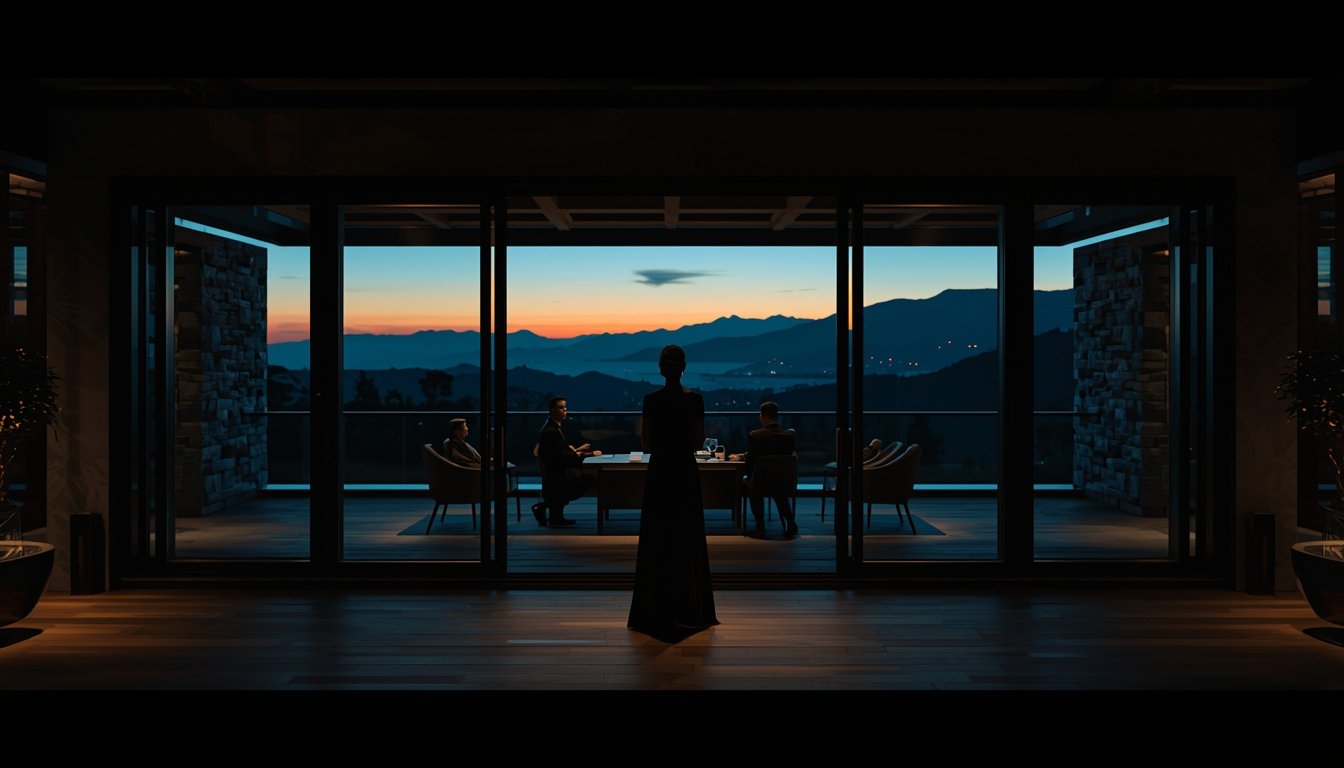
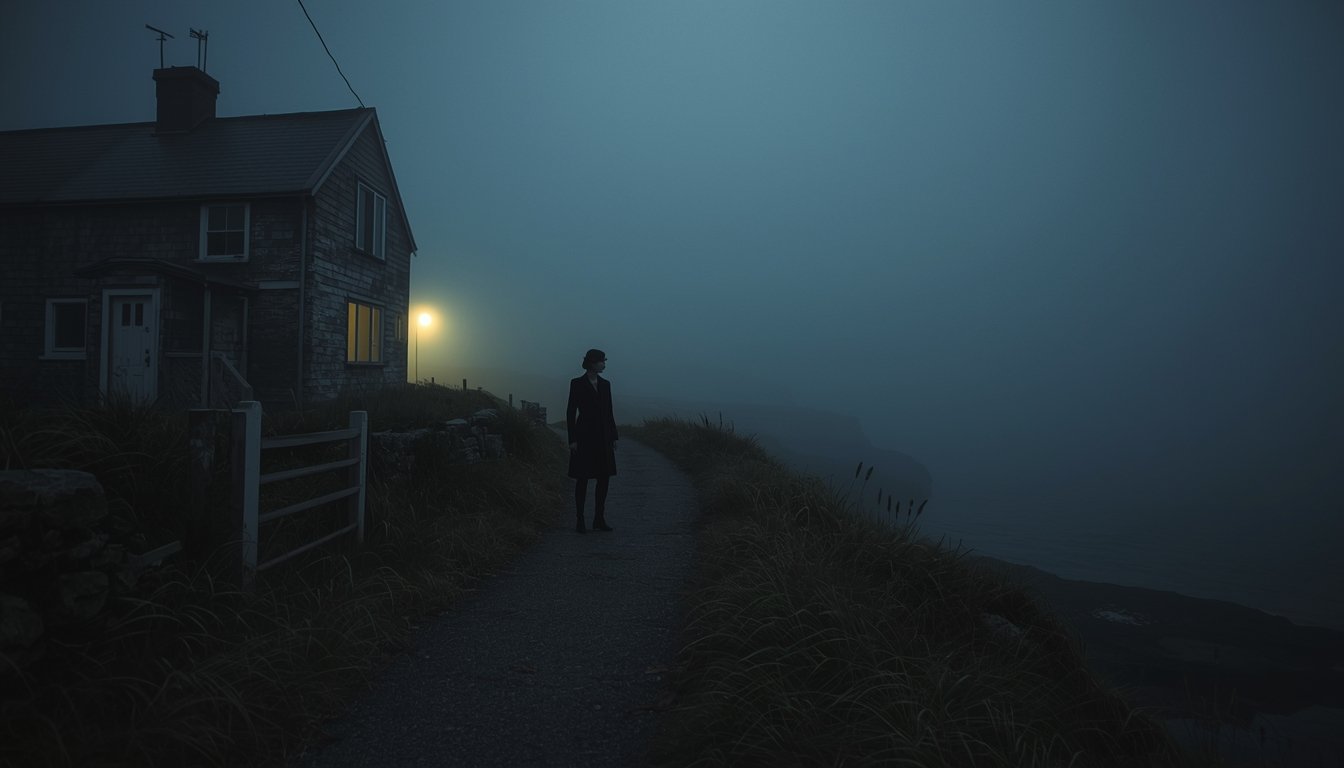
Dallow Mere stood behind black trees and low stone walls. The air smelled of rain, leaves, and chimney smoke. Beyond the gardens, a sheet of dark water held the last of the evening like a private thought.
Celia herself opened the door.
She wore cream silk, soft gold earrings, and the calm expression of a woman who had never once doubted a room would improve when she entered it. “Emilia,” she said warmly. “You came after all.”
“You make it sound improbable.”
“Only pleasing,” Celia replied.
Inside, the entrance hall glowed with lamplight and polished floors. Somewhere deeper in the house, laughter rose and lowered itself quickly, as though someone had remembered to keep elegance intact.
The Guests by the Fire
The drawing room held six other guests, low jazz, and the kind of firelight that made everyone seem more forgiving than they probably were.
Emilia recognized one man from the gallery world, a critic named Owen Vail who spoke in finished paragraphs even when no one had requested them. The others looked familiar only in type: expensive coats, disciplined smiles, and the easy posture of people long accustomed to entering curated spaces without gratitude.
Near the mantel stood Lucian More, Celia’s husband.
He was not handsome in the obvious way. Instead, he had the steadiness some men acquire after years of being listened to. Dark suit, open collar, one hand curved around a glass. When Celia introduced Emilia, his attention settled on her with such measured courtesy that it felt almost like assessment.
“We’re glad you came,” he said.
“That makes one of us,” Emilia answered lightly.
His mouth shifted by a fraction. “Good. I prefer guests who arrive with doubt intact.”
The line could have sounded rehearsed. Somehow, in that room, it only sounded selective.
Celia touched Emilia’s arm. “Come. We’re just discussing whether civility improves honesty or ruins it.”
“That sounds like a dangerous way to begin a weekend,” Emilia said.
“Exactly,” said Owen from the hearth.
The Rule Before Dinner
Drinks passed. Rain touched the windows. Conversation moved in polished circles around books, cities, and the refined disappointments of other people’s marriages.
At first, nothing in the evening seemed stranger than usual.
Then Celia set down her glass and smiled at the room with the ease of a hostess introducing something she expected everyone to admire.
“One little thing,” she said. “After midnight, we keep to the house rule.”
Emilia looked up.
“The house rule?” asked Owen.
Lucian answered instead. “No direct questions after midnight.”
Light laughter followed from two guests on the sofa. Clearly they knew this already.
“That sounds absurd,” Emilia said before she could soften it.
Celia turned toward her, amused rather than offended. “Not absurd. Useful.”
“For what?”
“For conversation,” Lucian said. “Questions create laziness. People use them to pry, to perform interest, or to force revelations too early. After midnight, we speak only in statements.”
There it was: the polite rule, small enough to sound whimsical and precise enough to make the air change around it.
“You’re serious,” Emilia said.
“Entirely,” Celia replied. “It keeps the evening honest.”
“Or mute.”
Lucian’s gaze held hers for one measured second. “That depends on how interesting the guests are without interrogation.”
The Dining Room Windows
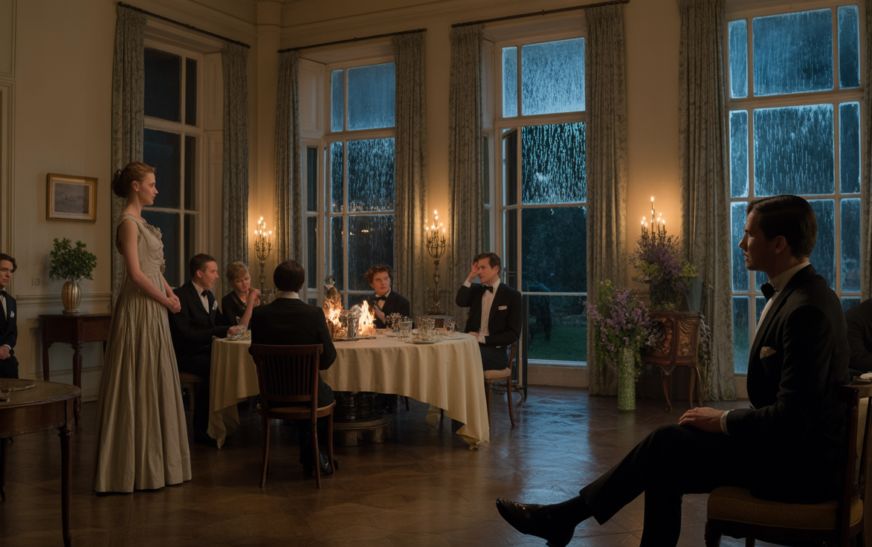
Dinner was served in a long room overlooking the water.
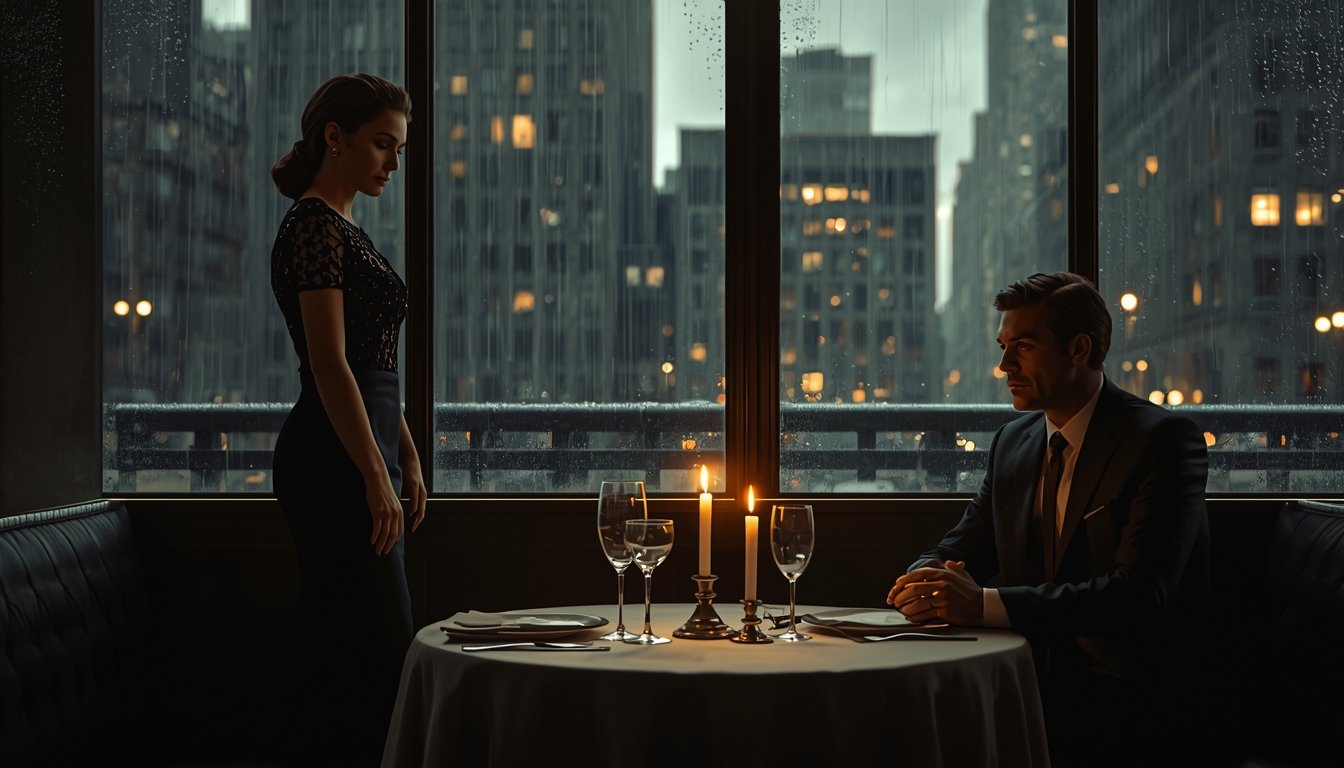
Candles stood in silver holders between dark flowers and polished glassware. Rain streaked the windows in thin black lines. The lake beyond had disappeared almost completely, leaving only reflections and the suggestion of distance.
Emilia’s place card sat halfway down the table. Lucian took the seat opposite her. Celia remained at one end, radiant with control so natural it no longer looked like effort.
At first, the meal behaved as elegant dinners do.
Soup arrived. Wine was poured. Owen delivered an opinion about minimalism severe enough to count as autobiography. A woman named Sabine described Florence with the polished sorrow of someone who needed cities to disappoint her beautifully. Meanwhile, Lucian spoke rarely, yet every silence around him felt chosen rather than accidental.
“You work with contemporary painting,” he said to Emilia during the second course.
“Mostly.”
“That sounds like a profession built on persuasive ambiguity.”
“You say that as if ambiguity hasn’t funded half this room.”
The answer drew a small laugh from Sabine. Celia watched Emilia over the candlelight with something like approval. That approval unsettled her more than criticism would have.
Later, when dessert was placed on the table untouched for several seconds simply because it looked expensive, Lucian checked the clock on the mantel.
“Nearly midnight,” he said.
No one replied immediately. Even so, the room shifted toward anticipation.
The Polite Rule Begins
At twelve oh-three, Celia lifted her glass.
“To discipline,” she said.
The guests smiled and drank.
After that, conversation resumed under the polite rule.
The effect was subtle at first. Then it became unmistakable. Without direct questions, every sentence arrived more carefully dressed. Observations replaced inquiries. Confessions disguised themselves as commentary. People no longer asked where anyone had been, what they meant, or why they had gone quiet. Instead, they offered statements shaped to invite correction without requesting it.
“Some people improve in low light,” Owen said to no one in particular.
“Certain marriages don’t,” Sabine replied.
Celia laughed softly. “Truth always sounds better when no one is chased into it.”
Emilia set down her fork. The room had become more intimate and less human at once.
Across from her, Lucian said, “Silence makes patterns visible.”
“Control does too,” Emilia answered.
His expression changed by less than a smile. “That sounds almost accusatory.”
“Only observant.”
No one rescued the exchange. That, perhaps, was the strangest thing. The rule had removed the usual social exits. No one could ask her what she meant. No one could smooth the tension by requesting another topic. Everything had to remain declarative, and declarations are harder to deny elegantly.
The Drawing Room After Midnight
They moved back to the fire after dessert, carrying wine and the evening’s sharpened edges with them.
The rain had stopped. Windows now reflected the room perfectly, turning the dark grounds outside into a second interior where everyone looked slightly more haunted.
Emilia stood near the bookshelves, trying to decide whether the night had become ridiculous or dangerous.
Lucian joined her with quiet timing.
“You dislike the rule,” he said.
“That’s a statement disguised as confidence.”
“Naturally.”
She faced him more fully. “It changes people.”
“It reveals them.”
“No. It arranges them.”
The fire cracked once behind them. Across the room, Celia leaned toward Sabine and said something that made the other woman laugh too brightly to be relaxed.
Lucian followed Emilia’s glance. “Most people use questions as shields. Remove them, and they have to risk posture instead.”
“You speak as if risk were equally distributed here.”
That landed. She saw it because his mouth lost some of its ease.
“Interesting,” he said.
“There,” Emilia replied. “That word again.”
“You mind being interesting?”
“I mind when men use it to mean compliant with their curiosity.”
For a moment, neither of them moved. The room kept breathing around them in low voices and curated warmth. Yet the space between them had narrowed into something far less social.
The Guest by the Window
Later, Emilia found Sabine standing alone by the far window with a glass she no longer seemed to want.
“You’ve been here before,” Emilia said.
Sabine glanced at her reflection in the pane. “Twice.”
“And this is normal?”
“For them,” Sabine replied. “Not for the rest of us.”
“Why do people keep agreeing to it?”
Sabine’s mouth curved faintly. “Because everyone believes they’ll be the one the room favors.”
The statement sat between them with unpleasant clarity.
“And does it?” Emilia asked.
Sabine looked toward Lucian and Celia across the drawing room. “The room always favors whoever designed the discomfort.”
There was no time for more. Celia appeared at Sabine’s shoulder with another bottle of wine and a smile too polished to refuse.
“You two look conspiratorial,” she said.
“That’s a generous term for survival,” Emilia answered.
Celia laughed softly. “You’re adjusting beautifully.”
The compliment felt worse than mockery.
The Morning Table
By breakfast, the house had regained its daylight innocence.
Steam lifted from silver coffee pots. A pale sun spread across the lawn beyond the terrace doors. Someone had arranged pears in a bowl as though fruit itself needed etiquette.
Emilia slept badly and disliked the room more for how cleanly it had hidden the previous night.
Owen was already at the table reading a newspaper with the solemnity of a man pretending civilization had resumed. Sabine appeared ten minutes later in cream knitwear and the face of someone who had decided to remain only because departure would look like concession.
Lucian entered last.
“You survived,” he said to Emilia as he poured coffee.
“That sounds congratulatory.”
“Only accurate.”
She looked at him over the rim of her cup. “You think the rule succeeded.”
“I think it clarified the room.”
“For whom?”
Celia appeared in the doorway before he answered. “No questions before coffee,” she said brightly.
Light laughter circled the table. Emilia did not join it.
The joke was too revealing. The rule had not ended at midnight. It had simply changed costume.
The Library at Noon
Rain returned just before lunch and trapped everyone inside with admirable timing.
Emilia escaped to the library, where dark shelves rose to the ceiling and the windows looked onto nothing but wet branches and stone. The room smelled of leather, dust, and old confidence.
She found Lucian there, standing by the fire with a closed book in one hand.
“Convenient,” she said.
“Or inevitable.”
“That’s worse.”
He set the book down on a side table. “You believe the rule exists to control people.”
“It does.”
“That’s incomplete.”
“Then complete it.”
For the first time since she arrived, he answered without polishing the pause first. “Celia hates being questioned.”
Emilia said nothing.
“Years ago,” he continued, “a guest asked her something at dinner that should never have been asked in front of witnesses. She answered gracefully. Later, she made this rule. Eventually, it became tradition.”
“Tradition is a flattering word for avoidance.”
“Perhaps.” He looked toward the rain-streaked window. “Perhaps control began as defense and then discovered how pleasurable it could be.”
The honesty surprised her enough to feel like a misstep.
“And you?” she said. “Do you enjoy it too?”
He met her eyes directly. “Less than she does. More than I should.”
The Statement He Chose
Lunch was delayed by weather, silence, and the invisible maintenance of privilege. Somewhere upstairs, doors opened and closed. Below the windows, rain wrote itself repeatedly across the gravel and disappeared.
Emilia remained by the hearth because leaving now would have made the conversation too clean.
“You could have told me that last night,” she said.
“No,” Lucian replied. “Last night it would have sounded like strategy.”
“And now?”
He considered her. “Now it sounds like a warning.”
She folded her arms. “About Celia?”
“About the house,” he said. “It teaches people to accept curated versions of themselves. Some notice quickly. Others begin cooperating before they understand what they’ve surrendered.”
The rain thickened outside. The library darkened by degrees. For a moment, the entire weekend seemed to gather itself around that admission.
“You included yourself,” Emilia said.
“Yes.”
“That may be the first fully honest thing anyone has said since I arrived.”
His expression altered, not into pleasure but into something more dangerous: recognition.
“Then you should leave this afternoon,” he said.
That surprised her enough to show. “You want me gone?”
“No,” Lucian said. “I want the house to fail with you before it improves its method.”
The statement was not kind. That was why she trusted it.
The Car Before Tea
Emilia left before tea and before the weather cleared.
Celia accepted the change of plan with polished regret. Owen offered a farewell too elaborate to be sincere. Sabine squeezed Emilia’s hand once in the hall and said nothing, which felt like solidarity in the only language the weekend had not managed to corrupt.
Lucian did not come to the door.
That omission stayed with her as the car moved down the wet drive between black trees and stone walls. The house receded into rain and pale windows until it looked less like architecture and more like an idea people had agreed to live inside.
Later, when Emilia found herself reaching for fiction shaped by Psychological tension, the elegant cruelty of Mind Games, and the pressure built inside Thriller rooms, she understood why such stories endured. They rarely depended on spectacle. Instead, they turned on ritual, social pressure, and the polished violence of being arranged by other people’s manners. Some nights carried the emotional edge of Drama or drifted toward Secrets & Suspense, because control always wants company.
In the end, a polite rule can sharpen into social pressure, tighten through quiet manipulation, and leave behind the chill of emotional control or the ache of unsettling silence. Sometimes the deepest discomfort begins with manners, then settles into social control so elegant it almost passes for culture. By the time a guest notices, the room has already taught her how not to ask.