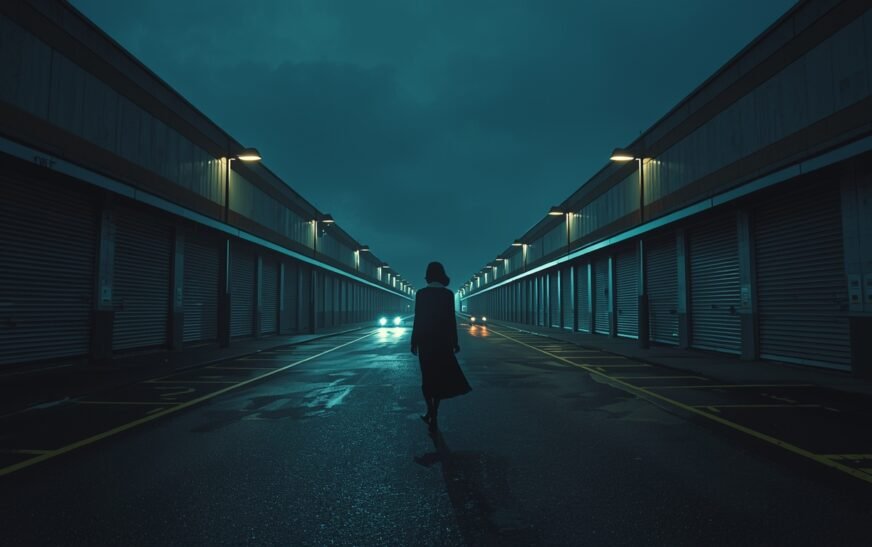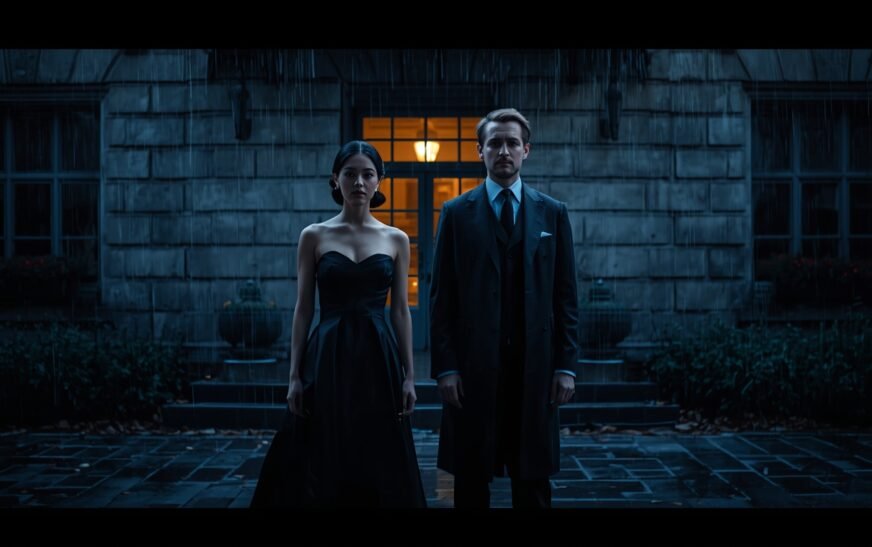
By the fifth Tuesday, Lena had started measuring her week by the courtyard pause.
It lasted less than four minutes.
Even so, those minutes had acquired the dangerous clarity of ritual. At 6:23 p.m., the side door of the old municipal arts building opened onto the courtyard. At 6:24, someone crossed the wet stone with unnecessary calm. By 6:25, she was pretending not to have expected him.
The first time, it had seemed accidental.
Then it happened again.
After that, repetition gave the moment its shape.
“You’re early,” Adrian said on the fifth week, as if he had not arranged himself into the same patch of light beside the iron fountain.
Lena adjusted the strap of her bag. “You say that every time.”
“Because it remains true.”
“So does your talent for appearing exactly before class starts.”
A brief smile touched his mouth. “That sounds suspiciously like an accusation.”
She should have walked inside. Instead, she stayed where she was while rain gathered in the fountain basin and the upstairs windows brightened one by one.
Tuesday Evenings in the Old Building
The class itself was nothing dramatic. Intermediate Italian for adults who wanted a second language but not a second life. The students were a mixture of careful ambition and private loneliness: a divorced accountant with perfect verbs, a florist who pronounced everything musically, two sisters who competed over homework, and one architect who rarely spoke unless he had already formed the entire sentence in his head.
That architect was Adrian.
Lena had noticed him during the second session because of the way he listened. Most people listened with their expressions. Adrian listened with stillness, which was more unsettling. He wore dark coats, arrived alone, and answered the teacher with clean precision. However, he was not cold. Every now and then, a dry remark slipped out and altered the room.
Meanwhile, the courtyard became its own chapter. Before class, students drifted through it toward the side door. Some rushed, some checked their phones, and some paused only long enough to complain about weather. Lena, however, found herself lingering near the fountain, as though she had forgotten how doors worked.
Once, while scrolling the Romance archive before work, she had laughed at how easily stories turned repetition into destiny. Real life was less generous. Real life involved bad lighting, damp sleeves, and the possibility that a man was simply punctual.
The Week the Pattern Announced Itself
By the sixth Tuesday, coincidence had become difficult to defend.
Lena arrived early because of a delayed meeting downtown. Adrian was already there.
The following week, she came late after a train problem. He was still there, standing under the stone arch with rain on one shoulder, as though time had paused politely on his behalf.
“Do you ever go straight inside?” she asked.
“Sometimes.”
“That was not convincing.”
“I wasn’t trying to be convincing.”
The honesty of that answer unsettled her more than flirtation would have. Flirting was social. Flirting belonged to timing and tone. This felt more deliberate than that, though not yet intimate enough to name.
After class, she found herself wandering through Dating and Flirty Stories on her phone, as if categories might simplify a man who seemed to prefer the minute before things officially began.
What He Never Did
He never asked for her number.
He never leaned too close.
He never performed charm in the obvious way men sometimes do when they want to be admired for wanting.
That restraint changed everything.
During class, Adrian sat two rows behind her and answered grammar questions without showing off. At the break, he passed her paper cups of bitter vending-machine coffee without asking whether she wanted one first, because by then he already knew. Later, when their teacher asked them to pair off for dialogue practice, he never crossed the room too quickly. Yet somehow they still ended up together.
“You’re difficult to translate,” Lena told him once, after he corrected a verb and then apologized for correcting it.
“That sounds unpromising.”
“No,” she said. “Only precise.”
He looked at her for half a second too long. Then the teacher called the class back, and the moment shut like a book.
On her walk home, Lena opened tags she had saved from previous late-night reading: quiet attraction, repeated meetings, and unspoken connection. The phrases were clean. Her actual mood was not.
The Courtyard Pause in Rain
By November, the courtyard had become colder and more beautiful.
Rain darkened the paving stones until they reflected the lamps in long broken lines. The fountain no longer ran, but water still gathered in the basin like a habit the season had forgotten to end. Ivy climbed the old walls in nearly black strands. Above them, classroom windows held rectangles of warm light that made the outside feel more secret than it was.
On one particularly wet Tuesday, Lena almost went in without stopping.
Adrian’s voice behind her changed that plan.
“You’re escaping the ritual.”
She turned. “I didn’t realize you considered it a ritual.”
“I considered denying it.”
“And?”
He stepped beneath the arch, close enough for her to see rain at the edge of his hair. “That seemed dishonest.”
For a moment, the courtyard pause felt less like a habit and more like a sentence neither of them had finished. However, the door opened behind them, and two late students crossed the stone with loud apologies. The interruption was ordinary. Even so, it forced both of them back into caution.
Lena went inside first.
The Night of the Partner Exercise
That week, their teacher announced a speaking exercise about imagined travel plans. The room answered with collective dread.
“Pairs,” she said, clapping once. “No hiding behind grammar tonight.”
Predictably, Adrian ended up across from Lena.
“We are apparently going to Florence,” he said.
“Only apparently?”
“I prefer not to promise cities too early.”
The line should have made her laugh and nothing more. Instead, it settled somewhere lower, in that dangerous space where wit becomes possibility.
They built their imaginary itinerary in careful Italian, negotiating train times, hotel rooms, and museum tickets with a seriousness that bordered on absurd. Nevertheless, the exercise created an intimacy class itself could not quite contain. Every choice implied a future hour. Every correction sounded more personal than grammar deserved.
“You always choose the window seat,” Adrian observed.
“I like seeing where I am.”
“No,” he said softly. “You like seeing how far there is to go.”
Lena forgot the next sentence entirely.
Afterward, while others packed bags and joked about homework, she stood by the radiator pretending to reread her notes. Across the room, Adrian was doing the same poor imitation of composure.
After Class on the Stair Landing
The real shift happened outside the classroom rather than in it.
Students left in clusters. Voices faded down the corridor. Somewhere downstairs, a cleaner moved chairs. Lena reached the stair landing and found Adrian waiting by the window that overlooked the courtyard.
“I owe you an apology,” he said.
“For Florence?”
“For sounding as if I pay too much attention.”
She leaned one shoulder against the wall. “Do you?”
His answer came without decoration. “Yes.”
The building seemed suddenly quieter.
“That should be alarming,” Lena said.
“Is it?”
She thought about that. “Not yet.”
Something in his face eased, though only slightly. Adrian did not look triumphant. He looked like a man who had set down a fragile object and was waiting to see whether it would break.
“I keep telling myself to go straight into class,” he said. “Then I see the courtyard and think perhaps I have another minute.”
Lena lowered her eyes to the wet stone below. “I know.”
The Friday She Almost Cancelled
Three days later, she nearly withdrew from the course.
Not because she disliked him. The opposite made more trouble. Attraction she understood. What frightened her was the quiet seriousness gathering around it. Adrian had not been casual from the start, and Lena’s life was arranged to protect her from men who meant things deeply and said them late.
Her last relationship had ended without drama but with enough exhaustion to teach caution. No betrayal, no smashed glass, no theatrical goodbye. Instead, there had been months of being translated badly inside her own life. Since then, she had preferred contained connections, manageable dinners, and people who revealed themselves immediately enough to refuse.
Adrian did not offer that convenience.
During lunch, she clicked through the Drama and Psychological sections, not for comfort but for language. Words like emotional restraint, timing-based tension, and meaningful glances were accurate enough to irritate her.
By contrast, accuracy rarely improves a mood.
The Tuesday He Arrived Late
On the next Tuesday, Adrian was not in the courtyard at 6:24.
Lena told herself this was excellent news.
At 6:25, she checked the gate.
At 6:26, she hated herself for checking again.
The side door opened. Students passed her in twos. One of the sisters from class nodded hello. The florist hurried by smelling of cold air and roses. Still no Adrian.
By 6:28, the courtyard pause had become an embarrassment she was performing alone.
Then he appeared at the gate, breathless for the first time since she had known him. His coat was unbuttoned. His composure had been replaced by something almost humanly disordered, which made him more attractive than was fair.
“I’m late,” he said.
“You are.”
“I know.”
She should have gone inside. Instead, she stayed where she was under the arch while rain ticked against the stone.
“Part of me thought you’d go in,” he admitted.
“Part of me thought I should.”
His expression altered very slightly. “But you didn’t.”
“No.”
The silence that followed was not awkward. It was worse than awkward. It was mutual.
What He Asked For
“Lena,” he said, and her name sounded unexpectedly formal in his mouth. “Would it be absurd if I asked you to have dinner with me after next week’s class?”
That was not a dazzling line. It had no polish at all. However, it carried exactly the right amount of risk.
“After next week?” she asked.
“I have a deadline tomorrow. And I dislike asking people into evenings I cannot keep.”
She laughed before she meant to. “That is either admirable or deeply inconvenient.”
“I’ve heard both.”
Rain moved through the courtyard in a finer, quieter pattern. Somewhere above them, a window shut. The building smelled faintly of dust and wet coats.
“You’ve had weeks to ask,” Lena said.
“Yes.”
“Why now?”
Adrian looked toward the fountain. “Because the courtyard pause has started to feel less like waiting and more like avoidance. I would prefer not to hide inside a pleasant ritual until it becomes a character flaw.”
That answer reached her more deeply than charm would have.
“All right,” she said. “After class next week.”
The Longest Seven Days
The agreement changed the room between them without simplifying it.
During class, they behaved almost impeccably. Adrian translated a paragraph about lost luggage. Lena answered a question about formal pronouns. Their teacher praised the group for sounding more natural, which felt like mockery from the universe itself.
Meanwhile, the promise of next Tuesday acquired its own pressure. It was no longer only flirtation. Now there was a date waiting beyond grammar exercises and damp stone, and dates belonged to the real world, where two people either continued or did not.
Lena disliked how visible her anticipation had become. At work, she misplaced a report. On Saturday, she changed outfits for no reason other than mood. By Sunday evening, she had drifted through Secrets & Suspense looking for distraction and found none.
The mind, she reflected, is vulgar when it hopes.
After the Courtyard Pause
Tuesday arrived with clear air and unusual cold.
This time Adrian was already by the fountain when Lena entered the gate. No rain. No archway. No excuse for staying half concealed. The lamps along the wall made the courtyard look cleaner than usual, almost ceremonial.
“You’re on time,” she said.
“I’m trying not to make a disastrous impression before dinner.”
“That suggests you plan to make one during dinner.”
“I hope to vary my mistakes.”
The line disarmed her enough to make honesty possible.
“I nearly quit the class on Friday,” she said.
He did not pretend not to understand. “Because of me?”
“Partly because of me.”
Adrian nodded as though that answer deserved respect. “I’m glad you didn’t.”
“So am I,” Lena said, and the admission felt both reckless and oddly calm.
After class, they left together by the side door rather than separately by habit. The courtyard pause still existed, but it no longer belonged to delay. It belonged to threshold.
They crossed the wet stone at the same pace, passed the fountain, and turned toward the narrow street where a small restaurant kept its windows amber against the dark. Nothing had been promised beyond dinner. Even so, the air between them held the dangerous elegance of something beginning exactly where it had spent weeks pretending not to.