The Table He Had Not Chosen
Cora knew the date was going badly before the bread arrived.
The restaurant was beautiful in a way that made ordinary disappointment feel overdressed. Candlelight moved across dark mirrors. Rain made the front windows shine like black glass. Every table seemed occupied by people performing ease with expensive discipline.
Cora sat across from a man named Adrian, who had been selected for her by a friend who believed compatibility could be engineered through adjectives. Thoughtful. Stable. Well read. Good listener. Those were the words used over brunch three weeks earlier. None of them were technically wrong. Still, something about the evening had the thin, airless quality of a room arranged for guests who never arrived as themselves.
Adrian held his wineglass carefully and looked at her with the concentration of a man trying not to make a mistake in public.
“You seem different from your messages,” he said.
“That rarely means anything good.”
“No,” he replied. “Only less rehearsed.”
The answer surprised her enough to make her look up fully.
He was handsome, though not in a way that announced itself. Dark jacket. Open collar. A face more composed than warm. However, his expression held none of the practiced delight she had begun to distrust in first meetings. If anything, he looked almost resigned by the room.
“You say that as if rehearsal is a shared problem,” Cora said.
“Isn’t it?”
The First Five Minutes
At first, she assumed he was trying to seem unusual.
Men on first dates often mistook self-awareness for originality. They named the awkwardness in order to control it. They confessed to disliking modern romance in the hope that critique itself would count as intimacy. Therefore, Cora waited for the gesture to expose itself.
Instead, Adrian glanced toward the candle between them and said, “We could continue pretending this is improving.”
She almost laughed.
“That sounds bleak.”
“Accurate,” he said. “Which is a better beginning than charm.”
The waiter arrived with bread and olive oil. Neither of them touched it immediately.
“Are you saying you want to leave?” Cora asked.
Adrian considered the question more seriously than it deserved. “I’m saying this room has already told us who we’re supposed to be. I dislike losing that quickly.”
“And what exactly are we supposed to be?”
“Polite strangers with promising chemistry,” he said. “You look unconvinced by the script. I’m not improving it.”
That was the first moment she believed him.
Not because he was smooth. Because he wasn’t. His honesty had edges where smoother men would have polished them down.
“This is the worst date proposition I’ve ever heard,” she said.
“Probably,” Adrian replied. “But it may be the first honest one.”
The Honest Exit
Cora looked around the dining room.
To her left, a couple smiled too brightly over oysters. Near the bar, a woman in velvet tapped her nail against a water glass while her companion checked his phone under the table. Meanwhile, soft jazz moved through the ceiling speakers with all the confidence of music that had never had to survive a real silence.
Then Cora looked back at Adrian.
“What are you suggesting?” she asked.
“An honest exit.”
“From dinner?”
“From the version of dinner where we continue out of manners.”
She leaned back. “You realize this sounds like the beginning of either something refreshing or a very elegant crime.”
“I’m hoping for the first.”
“And the second?”
His mouth shifted, not quite a smile. “That would at least make the night memorable.”
She should have been offended. After all, she had spent forty minutes deciding what to wear, another fifteen deciding not to cancel, and the train ride there rehearsing indifference in case she needed it. However, the relief moving through her was sharper than irritation.
“If we leave,” she said, “what happens next?”
“We find out whether honesty survives worse lighting.”
The line was good enough to worry her.
Still, she reached for her coat before her pride could interrupt.
The Bill for the Water
They paid for two glasses of wine, untouched bread, and a date that had ended before dinner could pretend it mattered.
The waiter accepted this with the grave discretion of expensive restaurants, which had seen richer forms of failure.
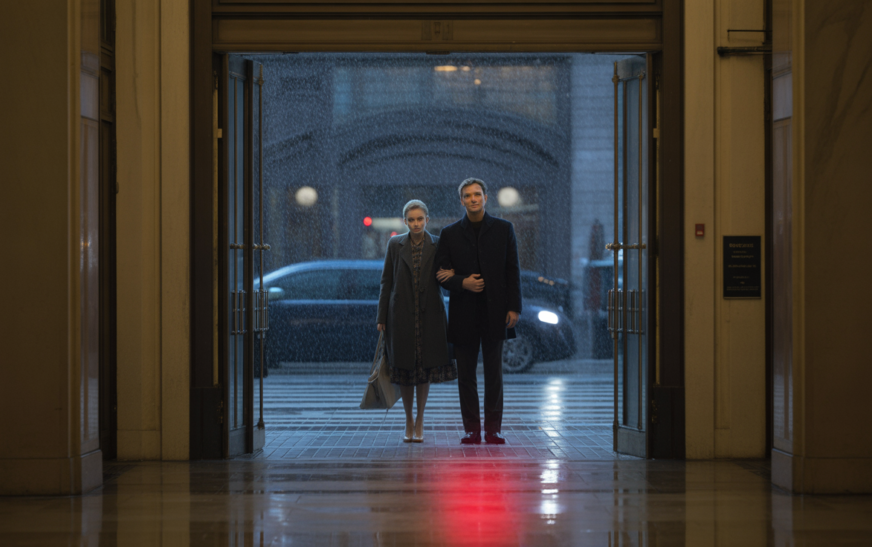
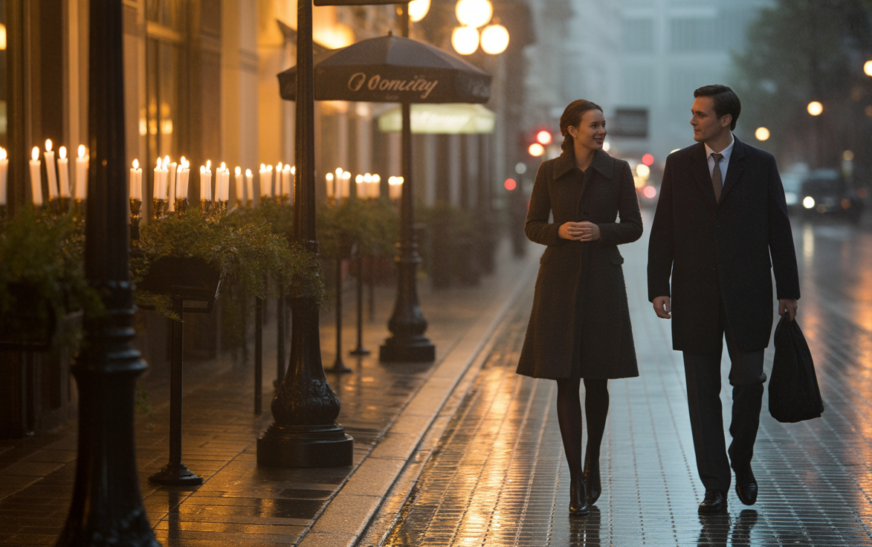
Outside, the rain had thinned to a fine silver mist. Streetlamps blurred over the pavement. Passing cars moved through wet light like private decisions. For a few seconds, Cora and Adrian stood beneath the awning without speaking, suddenly exposed to the absurdity of what they had done.
“Well,” Cora said. “You’ve ruined the formal part beautifully.”
“Thank you.”
“That wasn’t praise.”
“No,” he said. “But it was close enough to continue.”
She looked at him more carefully then.
He seemed less composed outside the restaurant, as if the room had been wearing part of him rather than the other way around. The mist darkened his hair at the temples. His hands stayed in his coat pockets, visible enough not to threaten, still enough not to perform.
“All right,” she said. “Let’s test your theory.”
“About honesty?”
“About worse lighting.”
Together, they stepped into the damp evening without agreeing where they were going. That lack of structure should have felt careless. Instead, it felt oddly exact.
The Street With No Destination
They walked east because the city seemed softer in that direction.
A florist was closing its shutters. A taxi idled near the curb, then moved on. Above them, apartment windows glowed in separate lives. Meanwhile, the mist settled over the street in a way that made every light look chosen.
“Did your friend describe me to you?” Adrian asked after a block.
“Unfortunately.”
“How bad was it?”
“Not bad. Just fatal.”
He glanced sideways at her. “Meaning?”
“She said you were thoughtful, stable, well read, and a good listener.”
“That sounds like a polite obituary.”
Cora laughed then, quickly and without permission.
“Exactly,” she said. “What did she tell you about me?”
“That you were intelligent, impossible to impress, and occasionally kinder than you intended to be.”
“That is an alarming amount of confidence for a referral.”
“I thought so too.”
The honesty in that answer kept the walk from becoming flirtation too quickly. Therefore, it became something more unsettling: relief.
“Why did you really want to leave?” Cora asked.
Adrian was quiet for a few steps.
“Because,” he said, “I could feel myself becoming the man I’m easiest to forgive later.”
That made her turn her head. “That sounds specific.”
“It usually is.”
The Doorway With Blue Light
They stopped beneath the blue spill of a closed cinema marquee while rainwater gathered at the curb.
“Explain,” Cora said.
Adrian leaned one shoulder lightly against the stone doorway. “There’s a version of me that appears on first dates. Calm. Reasonable. Interested in exactly the right way. Women tend to trust him before they’ve met the rest.”
“And the rest is awful?”
“No,” he said. “Only less simple.”
She studied him in the blue light. “That sounds almost suspiciously honorable.”
“I dislike being mistaken for easy safety.”
“Because you’re dangerous?”
His gaze held hers for a beat too long. “Because everyone is, once they are expected correctly.”
The line landed somewhere quieter than charm. Cora understood it more than she wanted to admit. Men were not the only ones who could arrive wearing edited versions of themselves.
“And what version was I becoming in there?” she asked.
“The one who can survive anything by turning it into wit.”
That answer hit with uncomfortable precision.
“You’ve known me twenty minutes,” she said.
“Longer,” Adrian replied.
She went still. “What does that mean?”
The Night He Remembered
He did not rush the explanation.
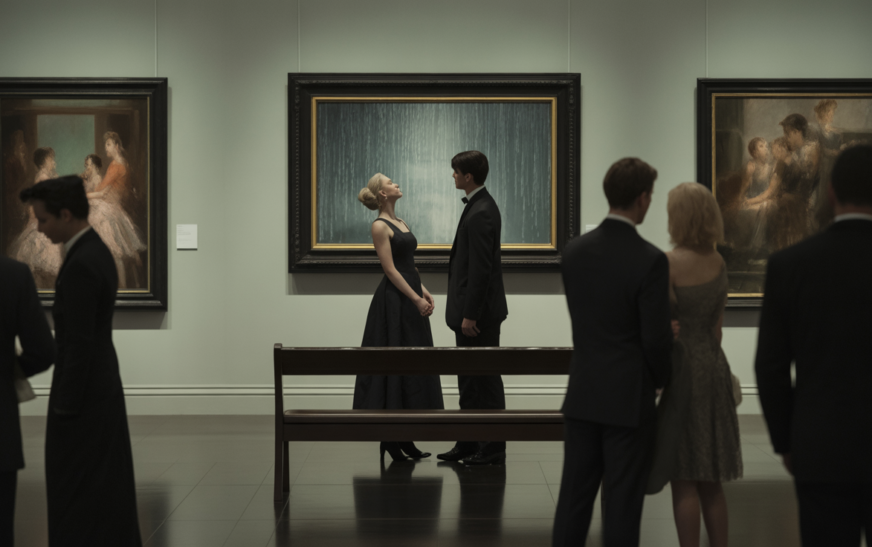
“Three months ago,” Adrian said, “I was at the gallery on Merrow Street during that awful donor event with the champagne tower.”
Cora frowned. “I was there.”
“I know.”
“You saw me?”
“You were standing by a painting of a flooded staircase, explaining to someone why beautiful people often mistake silence for depth.”
Memory returned all at once. The room. The gold light. The editor she had been trying not to offend. Her own voice, drier than usual because she had already wanted to leave.
“That was you?” she asked.
“Across the room, yes.”
“Why didn’t you say so?”
“Because it sounded like the kind of detail that belongs to men women should not trust.”
That answer was careful, and because it was careful, she believed it.
“So tonight wasn’t entirely blind for you,” Cora said.
“No,” Adrian replied. “But it wasn’t arranged around fantasy either. I remembered the way you spoke when you thought the room deserved less than honesty.”
“That is a very dangerous sentence.”
“I know.”
“And you still said it.”
“Yes.”
There was no apology in him, but there was no triumph either. Only the unsettling steadiness of a man who had decided accuracy was less insulting than charm.
The Bar That Stayed Half Empty
At the next corner, Adrian pointed to a narrow bar lit in amber behind rain-streaked glass.
“Shall we try a second location,” he asked, “or preserve the evening before it develops ambition?”
Cora considered the window. Inside, only a few tables were occupied. No pianist. No candles trying too hard. Just low light, dark wood, and the promise of less theatrical failure.
“You make retreat sound seductive,” she said.
“That’s not my intention.”
“No?”
“Not entirely.”
She should have declined. Instead, she opened the door.
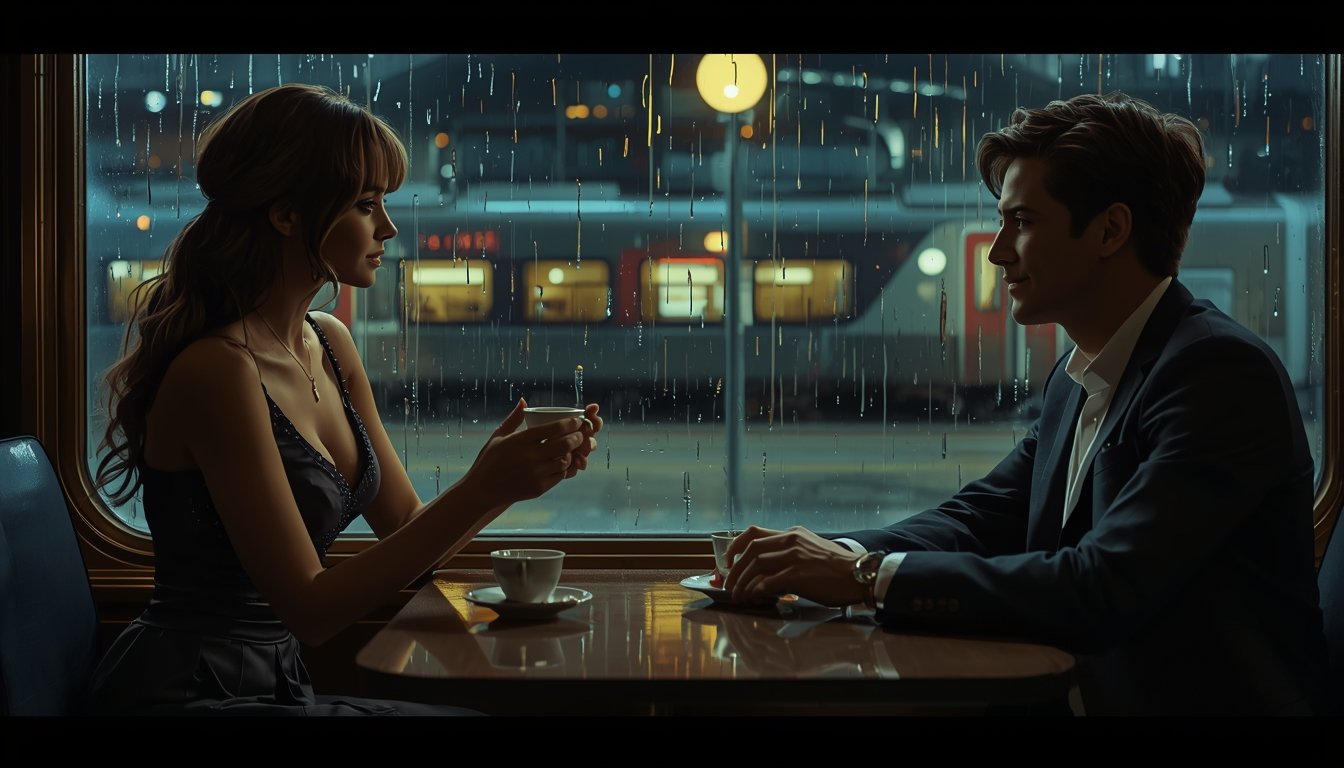
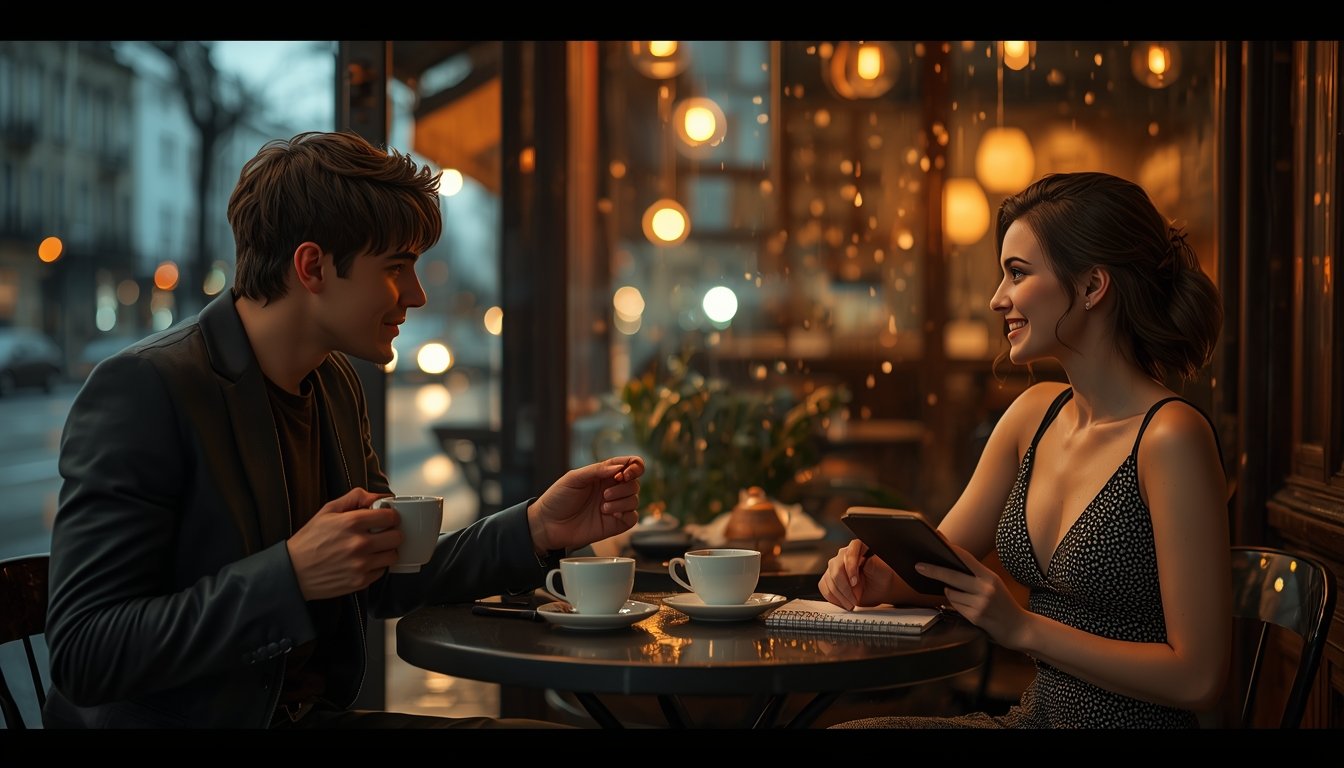
The bar smelled faintly of orange peel and rain-damp coats. They took a small table near the back, where the city appeared only in reflections. This time, when the drinks arrived, neither of them looked trapped by the choice.
“All right,” Cora said. “One true thing. No editing.”
Adrian nodded. “Agreed.”
“You first.”
He wrapped his hand around the glass but did not drink. “I nearly canceled tonight.”
“Why?”
“Because I remembered you from the gallery and thought meeting properly might ruin the version I’d invented.”
She looked down once, mostly to hide how much she disliked the answer affecting her.
“That is not flattering,” she said.
“No,” he replied. “It’s only true.”
The Part That Stayed
Cora traced the rim of her glass with one finger.
“My turn?” she asked.
“Please.”
She exhaled softly. “I was going to leave before you suggested it.”
Adrian gave the smallest nod. “I know.”
“How?”
“Your coat was already half turned toward the door. You had that expression people wear when they’re deciding whether disappointment is still worth performing.”
That should have embarrassed her. However, the room they were in now had no use for embarrassment if it arrived dressed as honesty.
“I hate that you noticed that,” she said.
“Understandable.”
“I hate more that you were right.”
“Also understandable.”
The restraint in him was becoming its own kind of heat. He did not lean too close. He did not turn the truth into sudden intimacy. Instead, he let the evening remain narrow enough to breathe.
“So what now?” she asked.
Adrian looked at her steadily. “Now we stop pretending this is the first version of the night.”
“And the second?”
“Better lit,” he said. “Less dishonest. Still dangerous.”
She smiled before she meant to.
“There,” he said softly. “That one.”
“What one?”
“The smile you don’t send in first.”
Cora held his gaze and understood then why she had stayed. Not because he was safe. Not because he was polished. Because he had ruined the evening early enough for something better to survive it.
The Train Home
They left the bar just before midnight.
No promises were made on the pavement. No dramatic invitation altered the weather. Still, when Adrian asked whether she wanted to see him again, the question felt clean rather than strategic.
“Yes,” Cora said. “But not somewhere with candles trying to help.”
“That sounds wise.”
“Do not sound pleased with yourself.”
“Too late.”
She laughed once, then stepped back toward the station entrance. Rain had nearly stopped. The city looked rinsed and temporarily honest.
On the train home, she watched her reflection pass through dark windows and thought about all the evenings that failed because no one interrupted them in time. Some nights became memorable through spectacle. Others turned on a cleaner risk: the decision to leave the wrong version before it hardened into fact.
Later, when she found herself drawn to fiction shaped by Romance, the uncertain beginnings inside Dating, and the charged restraint of Flirty Stories, she understood why those stories endured. They rarely depended on perfection. Instead, they survived through timing, candor, and the dangerous relief of meeting someone after performance had already begun to fail. Some nights drifted toward Psychological tension or carried the emotional edge of Drama, because honesty was often more intimate than charm.
In the end, an honest exit can lead to first date tension, deepen through quiet honesty, and leave behind the ache of romantic tension or uneasy chemistry. Sometimes all that remains is a failed dinner, a wet street, and the first hint of restrained attraction strong enough to make a second meeting feel earned.