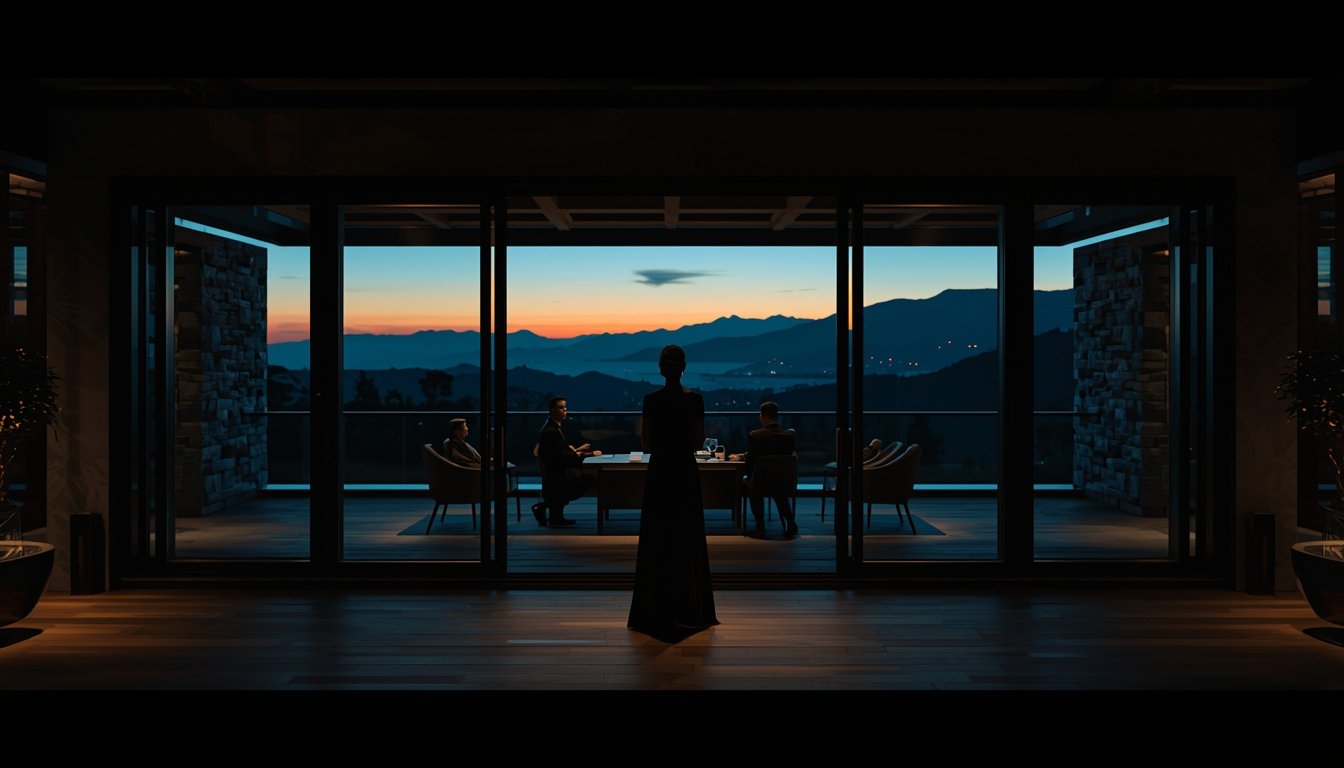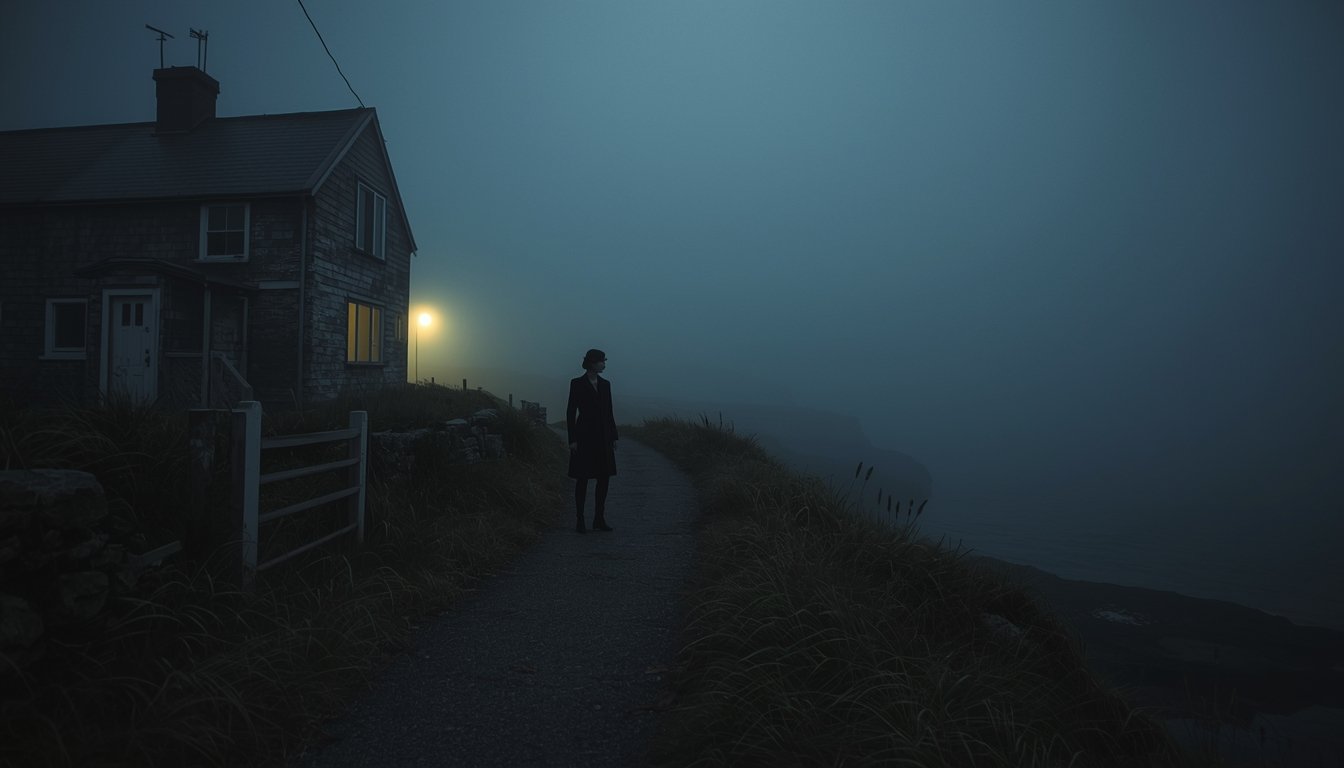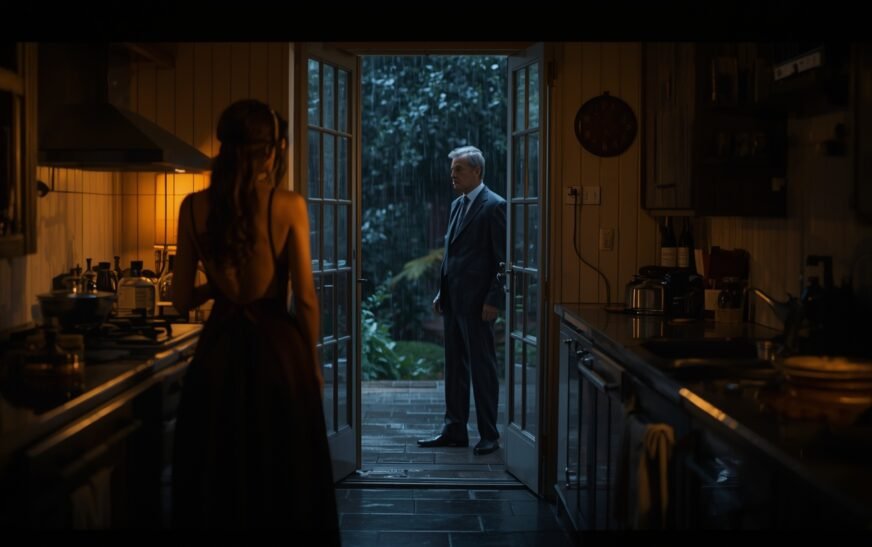
By the sixth Friday, Nora had started measuring her week by the last ferry.
At first, the crossing had seemed practical.
The bridge line was under repair, the underground closed early for signal work, and the ferry from Blackwater Pier cut thirty strained minutes from her trip home. Therefore, each Friday after late office meetings, Nora walked past the shuttered flower kiosk, bought a paper cup of bad coffee, and boarded the final boat at 10:20. It should have remained a piece of transport and nothing more.
However, repetition gives even public spaces a private shape.
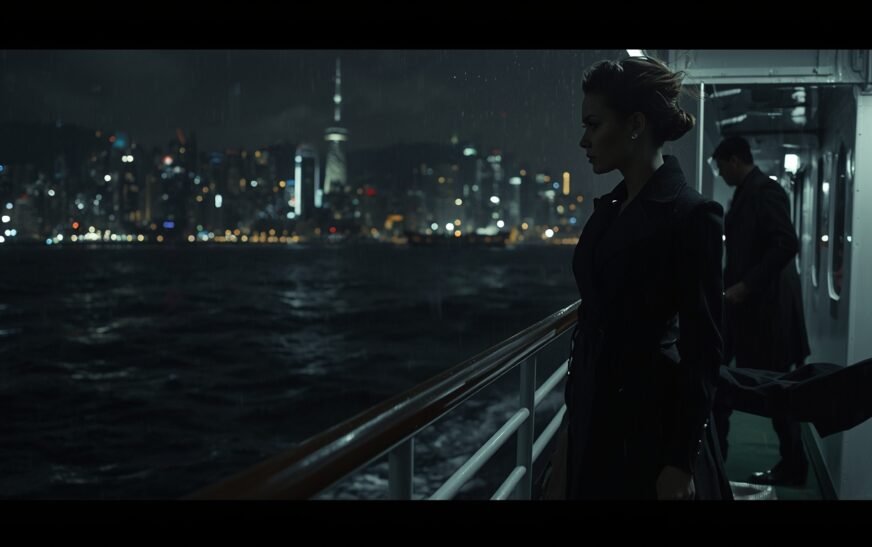
By the third week, she had begun expecting the same man to be there before her, standing near the starboard rail with his coat collar turned up and the city reflected in broken silver around him. He never waved. He never assumed company. Even so, the last ferry felt altered by his presence, as though the crossing had quietly decided it belonged to two people instead of many.
“You’re watching him again,” said Alma from finance on the fifth Friday as they left the office together.
Nora adjusted her scarf. “I’m watching the weather.”
“Conveniently shaped like a man.”
That answer should have embarrassed her more than it did.
Why Friday Ran Late
Nora’s weeks had become crowded in a joyless, adult way.
Her architecture firm was handling a museum redevelopment no client could discuss without using the phrase impossible timeline. As a result, Friday evenings now dissolved into revised drawings, budget arguments, and meeting notes no one would ever read with gratitude. By contrast, the ferry offered a brief strip of unowned time between work and the flat she had spent eight months trying to make feel like a life rather than a correction.
The correction had a name once. Daniel. Marriage. Eight orderly years. Then came the separation, handled politely enough to sound admirable in public and lonely enough to ruin entire Sundays in private. Since then, Nora had developed a firm distrust of beginnings that arrived too smoothly.
Even so, she liked the river at night.
On the walk to the pier, wind moved between glass towers with expensive indifference. Down by the water, the city lost some of its vanity. Reflections broke. Voices carried differently. People waiting for the last ferry looked less curated there, as though darkness had removed the day’s final layer of professional lying.
One evening, while stalling over dinner, Nora found herself wandering through the Romance and Dating archives on her phone. Those stories made repeated meetings look elegant. Real life was less polished. Real life involved damp shoes, overfull inboxes, and a man she knew only by posture.
The Man by the Rail
His name arrived because of the wind.
On the seventh Friday, the deck was emptier than usual. Rain had started just before boarding, and most passengers clustered inside near the fogged windows. Nora stepped out anyway because she preferred cold air to fluorescent comfort. Halfway across the river, the wind caught her ticket stub and sent it skidding toward the rail.
The man caught it before the water could.
“You almost lost the legal right to be here,” he said.
Nora took the ticket from his hand. “That sounds ominous for public transport.”
“I work in contracts. Everything sounds ominous.”
She smiled despite herself.
“I’m Nora.”
He hesitated for a fraction, then said, “Julian.”
The ferry horn sounded low over the black water. Neither of them spoke after that. Nevertheless, the silence had changed category. Before, it had been anonymous. Now it belonged to two named people standing side by side under rain-lit wind.
The Last Ferry in Rain
After that, the routine sharpened without becoming obvious.
Julian still boarded first most weeks. Nora still bought bad coffee and pretended that timing remained accidental. Yet small adjustments began collecting significance. He started leaving the narrow space by the rail unclaimed beside him. She stopped standing on the opposite side of the deck. Once, when the crossing pitched slightly in rougher water, his hand lifted toward her elbow and then stopped short, the restraint somehow more intimate than contact would have been.
“You always come out here,” Nora said one night.
“So do you.”
“I asked first.”
A shadow of amusement crossed his face. “Inside feels too much like waiting rooms.”
The answer sat between them for a moment, heavier than weather.
Later, while she dried her hair at home, Nora searched Flirty Stories and then Drama, as though one of those categories might explain why a single line on a ferry deck now occupied more of her attention than entire dinner invitations from kinder men.
What He Never Asked
Julian did not flirt in any of the ordinary ways.
He never asked for her number. He never used the crossing as an excuse to become suddenly personal. By contrast, his restraint made the atmosphere more dangerous. Carelessness can be categorized. Deliberate patience demands thought.
Some Fridays they spoke about harmless things: terrible office coffee, the arrogance of luxury developments, the mayor’s obsession with riverfront lighting. On other nights, they said almost nothing at all. Even then, the silence never felt empty. It felt selected.
“You make this boat sound private,” Nora told him once.
Rain tracked along the rail beside his hand. “Only in comparison with the rest of the city.”
“That is not the same as private.”
“No,” he said. “But it’s close enough for honesty to get ideas.”
That line followed her home like perfume on a coat she had not meant to borrow.
The Friday He Missed
Then, without warning, Julian was absent.
Nora noticed it immediately, which irritated her. The deck looked unchanged. The river still held the city in black broken pieces. The horn still sounded at the same patient interval. Even so, the crossing had lost an axis.
At first, she told herself that grown women did not build narratives around commuters. By mid-river, annoyance had become personal enough to embarrass her.
The following Friday, he was absent again.
That second absence made the last ferry feel brutally functional. The boat was only a boat. The cold was only weather. Even the city beyond the wake looked flatter, as if it resented being used for atmosphere.
Back in her flat, Nora opened tags she had once saved half-mockingly: repeated meetings, quiet longing, and late evening routine. The phrases irritated her on sight.
A week later, he returned.
What He Carried Back
Julian looked the same at first glance and wrong at second.
He was thinner in the face, more tired around the eyes, and wearing the expression of a man who had been orderly under pressure because the alternative would have looked like collapse. When Nora stepped onto the deck, he straightened as if her arrival required courage.
“I missed two Fridays,” he said.
“I am capable of counting.”
The edge in her voice surprised both of them.
He accepted it without defense. “My brother had surgery.”
The river wind took the words and returned them colder.
“I’m sorry,” Nora said.
Julian looked toward the lights on the opposite bank. “So am I. He’s fine now. It was never as dramatic as hospitals like to sound.”
That sentence carried an exhaustion older than the week itself. For a moment, Nora saw the shape of him more clearly than before: not calm by nature, perhaps, but by discipline.
“You could have said that sooner,” she heard herself say.
“To a woman I only know on ferries?”
“You know my name.”
At that, something gentler entered his face. “Yes,” he said. “I do.”
The Last Ferry After the Storm
The next Friday arrived with hard rain and fewer passengers.
Most people stayed inside. Nora and Julian did not. The deck lights turned the wet rails into thin lines of gold. Around them, the river moved like black fabric folding under strain.
“Why contracts?” Nora asked.
He laughed once. “That sounds as if you expect a confession.”
“I expect a reason.”
For a while he watched the wake. Then he said, “My wife died three years ago. After that, I found I preferred documents to people. Documents break in ways you can number.”
The sentence reached her without warning.
Nora kept her hands around the paper cup she no longer remembered buying. “I’m sorry.”
“Thank you.”
Nothing in his expression asked her to comfort him. That, more than grief itself, made her trust the line.
After a moment, she said, “My marriage ended because politeness finally got too expensive.”
He turned then. “That sounds precise.”
“It’s what happens after you tell the story enough times.”
“And before that?”
Nora watched rain gather at the edge of the deck. “Before that, it was mostly silence wearing good clothes.”
Julian nodded once, as if he recognized the costume.
What the Crossing Allowed
After that night, they stopped pretending the boat was incidental.
Their conversations grew longer, though not louder. Julian told her his brother was recovering badly in spirit and well in body. Nora admitted she still drove the long way home to avoid passing the restaurant where Daniel had proposed, not because she missed him, but because memory often arrives without standards. Neither confession looked dramatic enough for fiction. Both mattered anyway.
One Friday, as the ferry docked, Julian said, “There’s a place by the river stairs that serves coffee too late and pastry too honestly. I go there after this sometimes.”
Nora waited.
“Would you like to come with me?” he asked.
The invitation was so measured it might have sounded formal in another mouth. Here, it sounded careful.
“Yes,” she said.
Relief passed over his face quietly, which made it more touching than charm would have.
After They Reached the Other Side
The café was narrow, overheated, and mercifully unromantic.
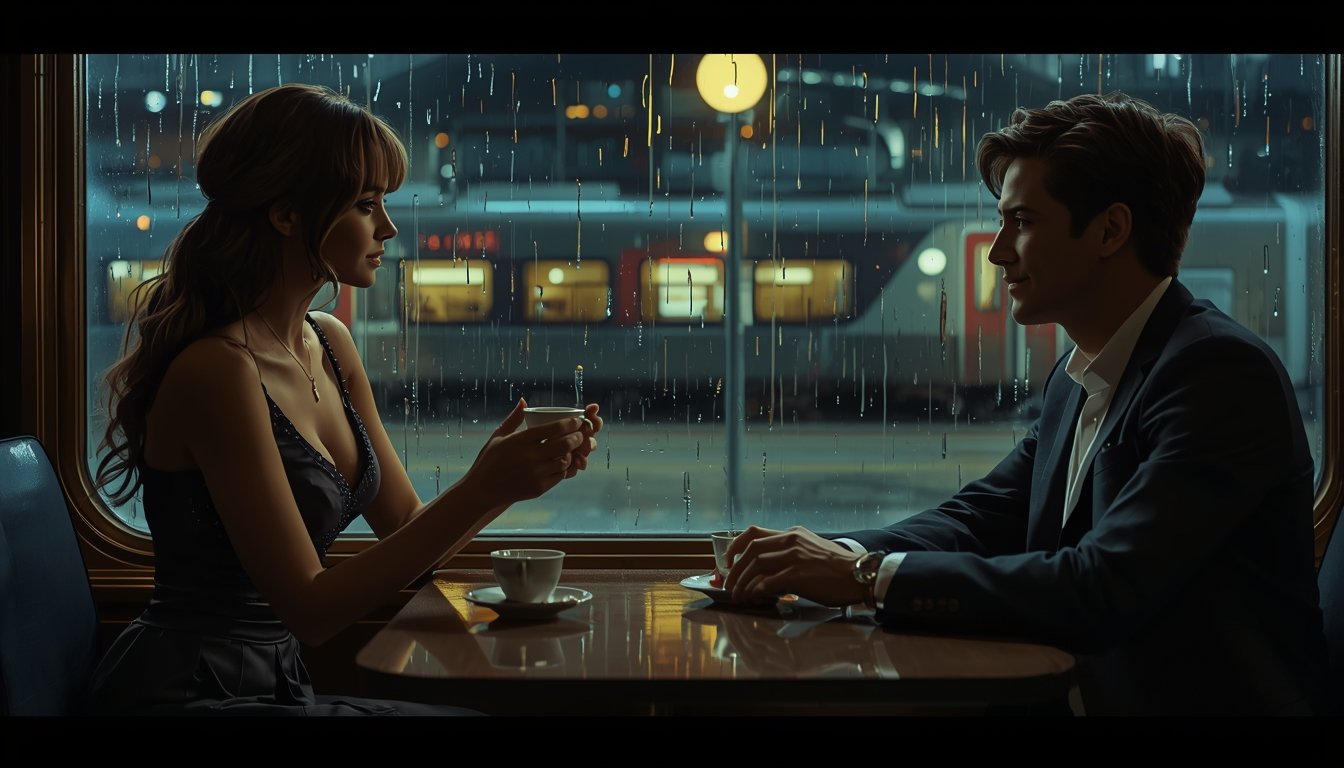
That made the hour better. No candlelight conspired on their behalf. No violin music lied about permanence. There was only chipped crockery, late-shift staff, and a window looking back toward the black line of the river they had just crossed.
Julian removed his coat and seemed, for the first time, slightly uncertain.
“I should warn you,” he said, “I am better at ferries than first dates.”
Nora smiled. “That is a very specific flaw.”
“I like contained spaces.”
“And this is not one?”
He glanced at her over the rim of his cup. “Less than before.”
The answer should have frightened her more than it did. Instead, it felt oddly adult. Not the recklessness of beginning, but the sober decision to permit one.
They spoke until the café staff began stacking chairs with pointed fatigue. When they stepped back into the night, the rain had thinned to mist and the city looked less accusatory than usual. Somewhere behind them, the final boat for the opposite bank sounded its horn.
Nora turned toward the river once, then back to him.
The last ferry had started as transport, become routine, and then turned quietly into witness. It had carried grief, timing, and all the things neither of them could say beautifully at first attempt. Now, standing beside Julian on the wet pavement, she understood something simpler and more dangerous: not every crossing is designed to return you unchanged.
Later, at home, she searched emotional restraint, vulnerable beginnings, and second-chance feeling. For once, the words did not feel borrowed from other women’s lives. They looked, instead, like directions learned over water in the dark.