The Bar Above the Lobby
Nina went to the hotel bar because her apartment had become too quiet to trust.
Rain pressed against the city all evening and turned the windows into wavering mirrors. One by one, her friends canceled dinner with the familiar politeness of adult life. A deadline waited at home. So did a sink full of glasses she kept meaning to wash. Meanwhile, the thought of another night alone with soft music and unfinished work felt less restful than defeat.
The Valenne Hotel stood six blocks from her building and charged too much for cocktails. That was part of the appeal. Expensive places asked people to behave elegantly, even when they were unraveling.
She arrived just after eleven.
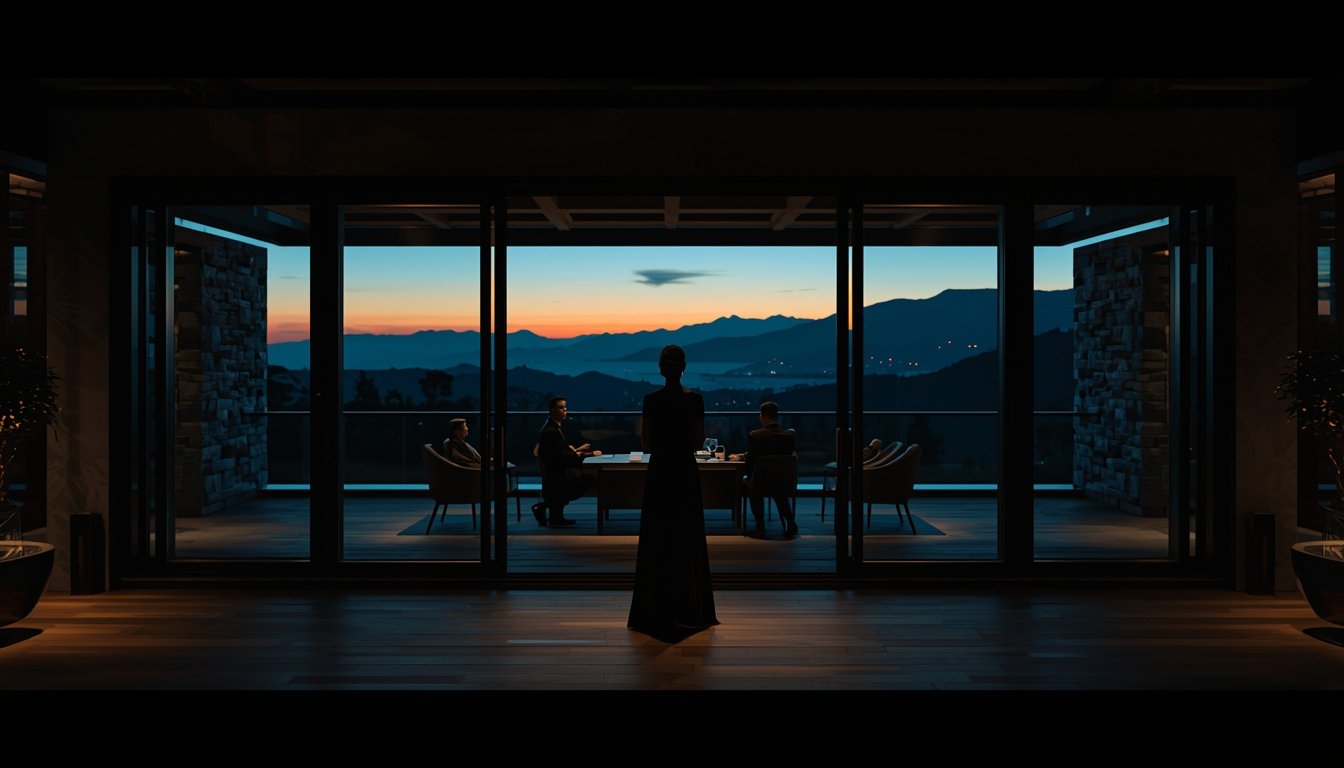
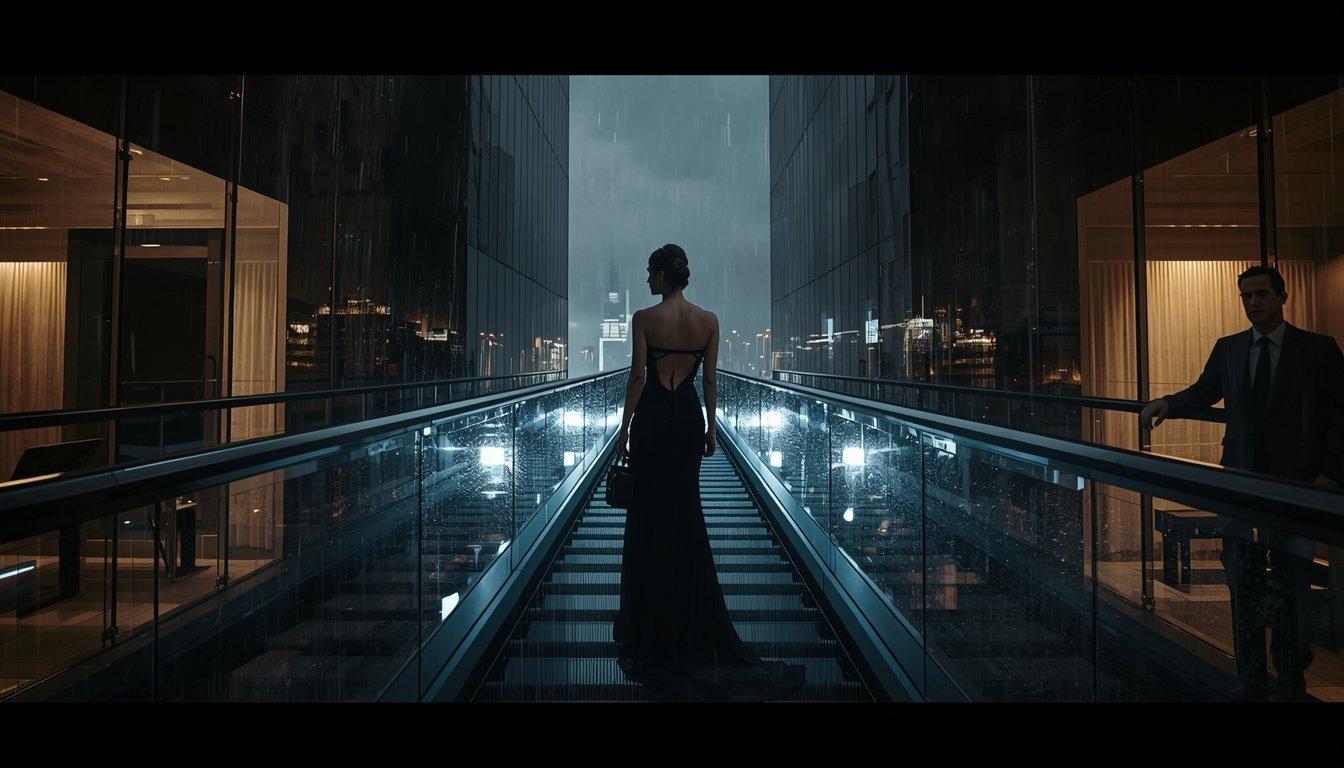
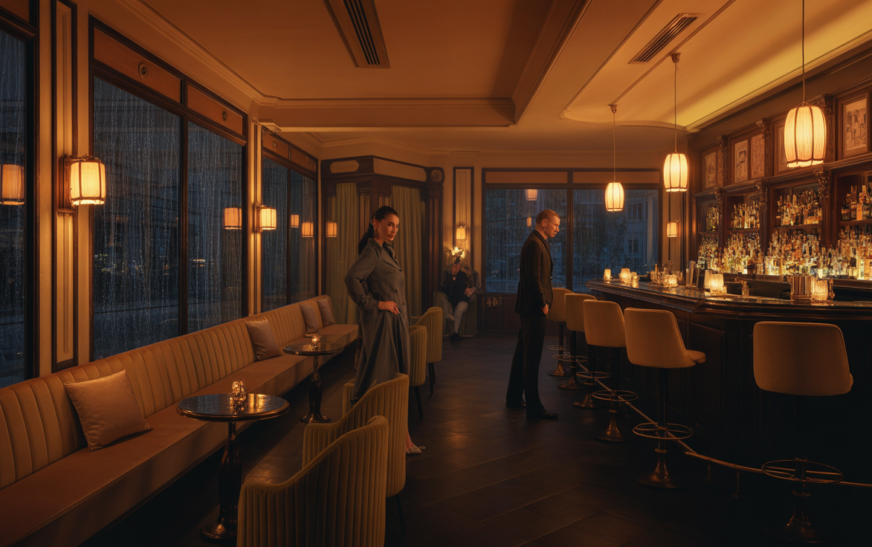
The bar overlooked the marble lobby through a half-circle balcony lined with dark brass. Amber lamps glowed over velvet seating. Low jazz moved through the room without demanding attention. At the far end, a pianist touched the keys with enough restraint to make the silence around each note feel deliberate.
Nina ordered something bitter with orange peel and chose a seat near the windows.
Below her, hotel guests crossed the lobby in coats damp with rain. Some looked tired. Others looked beautifully disappointed. She preferred the second kind because they usually had better manners.
The Sound That Reached Her
At first, she noticed only the voice.
It rose from the other side of the room, low and amused, then disappeared beneath the piano. A moment later, the laugh followed. Not loud. Not careless. Instead, it carried the polished ease of a man accustomed to being forgiven for interrupting the evening.
Nina glanced over despite herself.
He sat alone at the corner of the bar with one elbow resting lightly on the polished wood. His jacket was dark, his shirt open at the collar, and his expression carried that particular kind of composure that could become either charm or trouble depending on the hour.
The bartender placed a drink in front of him. He thanked her without looking away from the window.
Then, as if he had felt Nina’s attention cross the room, he turned.
Their eyes met for only a second. Still, the moment carried the unpleasant clarity of being noticed on purpose.
Nina looked back at the rain.
That should have ended it. However, some things begin not because they are invited, but because they arrive dressed exactly like distraction.
The Empty Stool Beside Her
Ten minutes later, the stool beside Nina was no longer empty.
“I’m trying to decide,” the man said, “whether you came here to be left alone or to watch everyone else fail in public.”
Nina turned slowly enough to suggest she had options. “That depends. Which answer flatters you more?”
A small smile touched his mouth. “The cruel one.”
Up close, he looked even more composed. Dark hair. Steady eyes. A face that might have seemed cold if his voice had not carried such careful warmth.
“Then yes,” she said. “I came to judge strangers in expensive rooms.”
“Excellent. I was worried you’d say reading.”
“That would have disappointed you?”
“No. It simply would have required better lines.”
The honesty of that almost made her laugh.
“You admit you arrived with one prepared?” she asked.
“Of course,” he said. “Prepared is respectful. Improvised is how men become embarrassing.”
She set her glass down. “And are you respectful?”
“Usually.”
“That sounds selective.”
“It is.”
The answer should have warned her away. Instead, it sharpened her interest in exactly the wrong direction.
The Midnight Laugh
“I heard you laugh from across the room,” Nina said.
“My condolences.”
“It sounded practiced.”
“Everything good is practiced.”
“That’s a dangerous philosophy.”
He lifted his drink slightly. “And yet you’re still speaking to me.”
She hated that he had earned the point.
“Nina,” she said at last.
“Julian.”
“I’m almost disappointed your name is not more theatrical.”
“I save drama for other categories of my life.”
That was the moment she heard it again: the same low, precise amusement beneath his words. The midnight laugh had a strange effect on the room. It did not fill the air. Instead, it adjusted it, as if everyone nearby had just been given permission to lean closer to whatever they already wanted.
Nina distrusted sounds that intimate coming from strangers.
Then the bartender returned, and Julian asked what she was drinking as if the answer mattered beyond politeness. When Nina told him, he nodded once and ordered the same for himself without trying to make the gesture look meaningful.
That restraint was worse than a performance would have been.
The Woman in Silver Shoes
Across the bar, a woman in silver shoes was arguing softly into her phone.
Nina watched her because watching someone else’s near-disaster felt safer than participating in her own. The woman paced three steps toward the piano, then back toward the elevators, each turn more controlled than the last.
“You prefer observing to being observed,” Julian said.
Nina glanced at him. “That sounds diagnostic.”
“Merely practical.”
“And what exactly have you observed?”
He took his time answering. “You chose the seat with the widest view and the least interruption. You hold your glass by the stem because fingerprints offend you aesthetically. You arrived alone, but not hopefully alone. There’s a difference.”
Nina smiled without warmth. “You do this often?”
“Only when someone looks too intelligent to accept ordinary conversation.”
“That was nearly flattering.”
“I can make it worse if that helps.”
She laughed then, briefly and against her better judgment.
He noticed. However, he did not press the advantage. Instead, he turned toward the piano and let the silence breathe.
That, more than anything he had said, made her stay.
The Piano Between Them
Just before midnight, the pianist changed songs.
The new melody moved through the room with the soft sadness of something already ending. A few guests drifted away toward the elevators. Meanwhile, the woman in silver shoes finally left, carrying her anger with expensive grace.
“You live nearby,” Julian said.
Nina looked at him sharply. “Why would you think that?”
“Because you came here in weather that discourages taxis, and you don’t have the posture of someone staying in the hotel.”
“What is the posture of a guest?”
“Temporary entitlement.”
She laughed again. “That is wicked.”
“Only accurate.”
Rain slid down the windows in slow ribbons. Outside, the city looked blurred and patient, as if it had agreed not to interfere with what the room was trying to become.
“Do you always speak like this?” Nina asked.
“Like what?”
“As though every sentence has already considered its lighting.”
For the first time, he seemed genuinely amused. “No. Only when the room deserves it.”
“And does it?”
“At midnight, in weather like this?” He glanced toward her glass, then back to her face. “Almost always.”
The answer arrived too smoothly. Even so, she felt it settle.
The Offer He Did Not Make
Nina expected him to ask the easy question after that.
Would you like another drink. Shall we move somewhere quieter. Can I walk you home. Men tended to mistake momentum for permission. Julian, however, did none of those things. He kept his hands visible on the bar and asked the bartender for water instead.
“That’s unexpectedly restrained,” Nina said.
“You sound disappointed.”
“I sound suspicious.”
“Good.”
She turned on the stool. “Good?”
“Suspicion means you’re awake. I prefer awake women to impressed ones.”
Nina stared at him for a second too long.
That line should have felt rehearsed. Perhaps it was. Still, it carried enough self-awareness to avoid sounding cheap.
“And what do you prefer for yourself?” she asked.
Julian drank his water before answering. “An evening that does not lie about what it is.”
“Which is?”
“Temporary,” he said. “Interesting. Possibly worth remembering.”
The honesty of it touched something quieter than excitement. She understood temporary. Temporary asked less of people and therefore often told the truth more quickly.
The Elevator Doors
At twelve ten, a pair of elevator doors opened below them in the lobby.
A wedding party spilled out in fragments of black silk, loosened bow ties, and flowers already beginning to look tired. Laughter rose from below, bright enough to disturb the bar’s careful atmosphere. Nina watched one bridesmaid remove her heels and carry them like a surrender.
“Do you like weddings?” Julian asked.
“As architecture,” she said. “Not as evidence.”
“That sounds experienced.”
“That sounds older than I am.”
“Not necessarily.”
He was looking at her too directly now. The room had thinned around them in a way that made every small movement count. Nina became aware of her own hand near the base of her glass, of the low piano, and of the fact that midnight had passed without either of them pretending not to notice.
“Why were you laughing before?” she asked suddenly.
Julian seemed surprised by the question. “Before what?”
“Before you came over.”
He glanced toward the corner where he had been sitting. “A man downstairs proposed in the lobby. The woman said yes three times as if she did not trust the first answer.”
“And that amused you?”
“No,” he said. “The pianist played louder to cover the crying. That amused me.”
Nina smiled despite herself. “That is terrible.”
“Yes.” His eyes held hers. “You laughed anyway.”
The Thing She Nearly Told Him
She should have left then.
The hour was dangerous, and not because of him alone. Midnight gave ordinary conversations false depth. Rain made cities feel smaller than they were. Expensive rooms taught people to confuse atmosphere with fate. Nina knew all of this, yet she remained on the stool as if the knowledge itself might keep her safe.
“You came here because your evening failed,” Julian said.
“That is rude.”
“Is it inaccurate?”
She looked down at the last amber line in her glass. “Not entirely.”
“Mine did too.”
That made her lift her head. “How?”
He considered the question with unusual seriousness. “I was supposed to meet someone who prefers me in smaller portions.”
“That sounds ominous.”
“It was honest. We decided not to continue disappointing each other elegantly.”
“You say that as if it happens often.”
“Only with the wrong people.”
Nina nearly told him then about her last almost-relationship, the one that had ended in slow retreat rather than drama. She nearly told him how dangerous calm could be when it arrived wearing tenderness. However, some confessions become vulgar if offered before they are earned.
So she only said, “That sounds civilized.”
“Civilized endings are rarely gentle,” he replied.
The Hall Outside the Bar
When Nina finally stood, she did it too suddenly to look undecided.
“I should go,” she said.
Julian nodded once. No protest. No disappointed performance. “You should.”
That answer almost kept her there.
Instead, she took her coat from the back of the stool and slid into it while the bartender looked politely elsewhere. Julian stood only after she had fully fastened the buttons, which she noticed and disliked herself for noticing.
They walked together to the hall outside the bar, where the light turned softer and the hotel smelled faintly of cedar, wax, and wet wool from coats drying in the lobby below.
“You are very calm,” Nina said.
“You mean I’m not asking for your number.”
“I mean exactly that.”
He leaned one shoulder lightly against the wall near the brass-framed mirror. “Would you like me to?”
There was no smile in the question. That made it harder.
“No,” she said.
“All right.”
“You answered that too easily.”
“You said no clearly.”
The corridor seemed to narrow for a moment, not from threat but from the dangerous courtesy of being taken at her word.
“Most men negotiate,” Nina said.
“Most men confuse persistence with charm.”
“And you don’t?”
At that, the midnight laugh returned, quiet and brief. “I try not to insult the room.”
The Rain Waiting Below
The lobby had nearly emptied by the time they reached it.
Rain still pressed against the revolving doors. A porter arranged luggage carts with unnecessary precision. Upstairs, the pianist moved into one last faded melody that barely reached the marble below.
Nina paused near the entrance.
“For what it’s worth,” Julian said, “I’m glad your quiet apartment lost.”
She looked at him. “How do you know it was an apartment?”
“You carry keys like someone who hates gardens and trusts elevators.”
“That is absurd.”
“Often.”
She shook her head, smiling now despite the effort it took. “You are difficult to classify.”
“Good.”
“That was not praise.”
“No,” he said softly. “But it will do.”
The doorman opened the entrance for a late-arriving couple wrapped in rain and silence. Cool air moved across the lobby. Nina stepped closer to the doors, then stopped.
“You really aren’t going to ask?” she said.
Julian studied her for one measured second. “No. I think tonight is better if it remains itself.”
Something in that answer felt almost cruel. Yet something else felt respectful enough to keep her from naming the first part aloud.
“And what is tonight?” she asked.
“A good interruption,” he said.
After Midnight
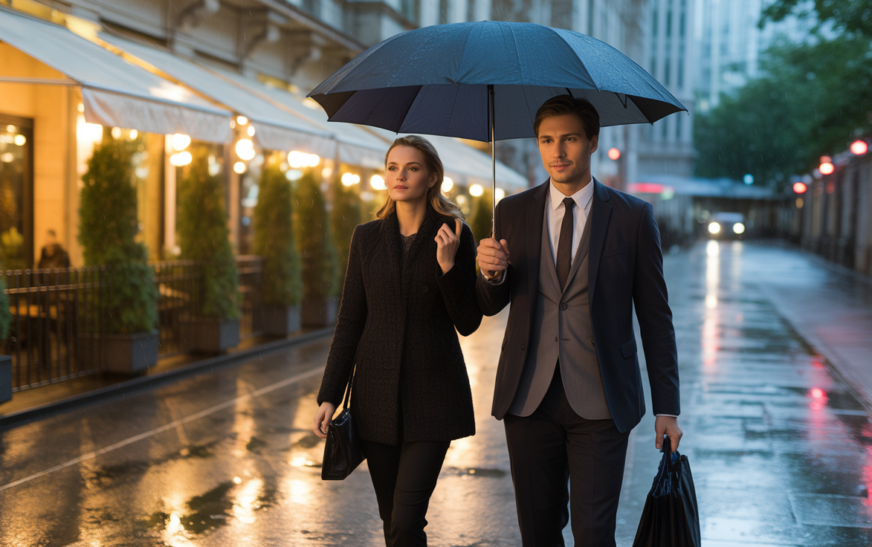
Nina walked home through the rain without hurrying.
The city had softened by then. Streetlamps shimmered in the wet pavement. Passing taxis cast gold over dark shopfronts. Her reflection appeared and vanished in windows, never staying long enough to look certain.
She should have felt relieved. Instead, she felt changed in a smaller, less manageable way. The evening had given her nothing practical. No plan. No number. No promise disguised as charm. Still, the absence of those things made the memory feel cleaner.
Later, when she reached for fiction shaped by Romance, the charged restraint of Flirty Stories, and the uncertain beginnings inside Dating, she understood why such nights lasted. They rarely depended on confession. Instead, they lived through timing, atmosphere, and the risk of liking someone who knew exactly when not to ask for more. Some evenings darkened into Psychological tension or brushed the emotional ache of Drama, because attraction was rarely as harmless as it first appeared.
In the end, what remained was not a promise but a pattern: a midnight laugh, a trace of dangerous charm, and the polished ache of playful attraction. Some moments sharpen into romantic tension, linger as uneasy chemistry, or settle into the soft unease of late night meeting and conversation suspense. Sometimes the most unforgettable part of a stranger is the way he leaves the evening untouched enough to haunt it properly.