The Reservation
Mara arrived seven minutes late on purpose.
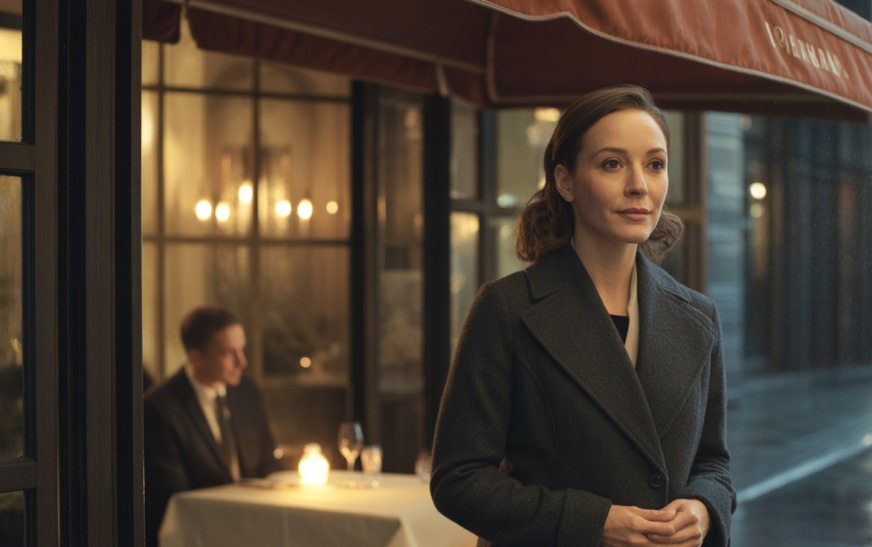
In her experience, an early arrival felt eager, and exact punctuality felt hopeful. Seven minutes suggested caution. It gave her enough time to stand outside the restaurant window, watch the amber light move across the glass, and decide whether she wanted to walk in at all.
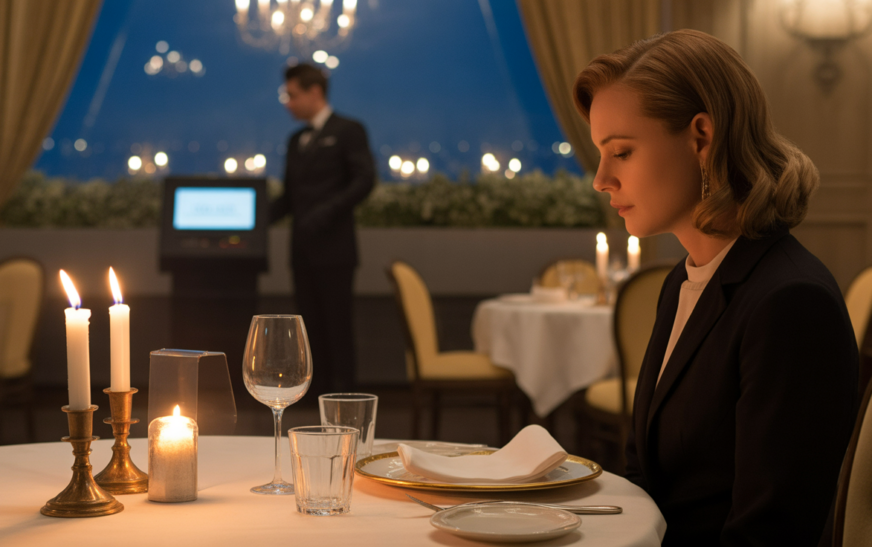
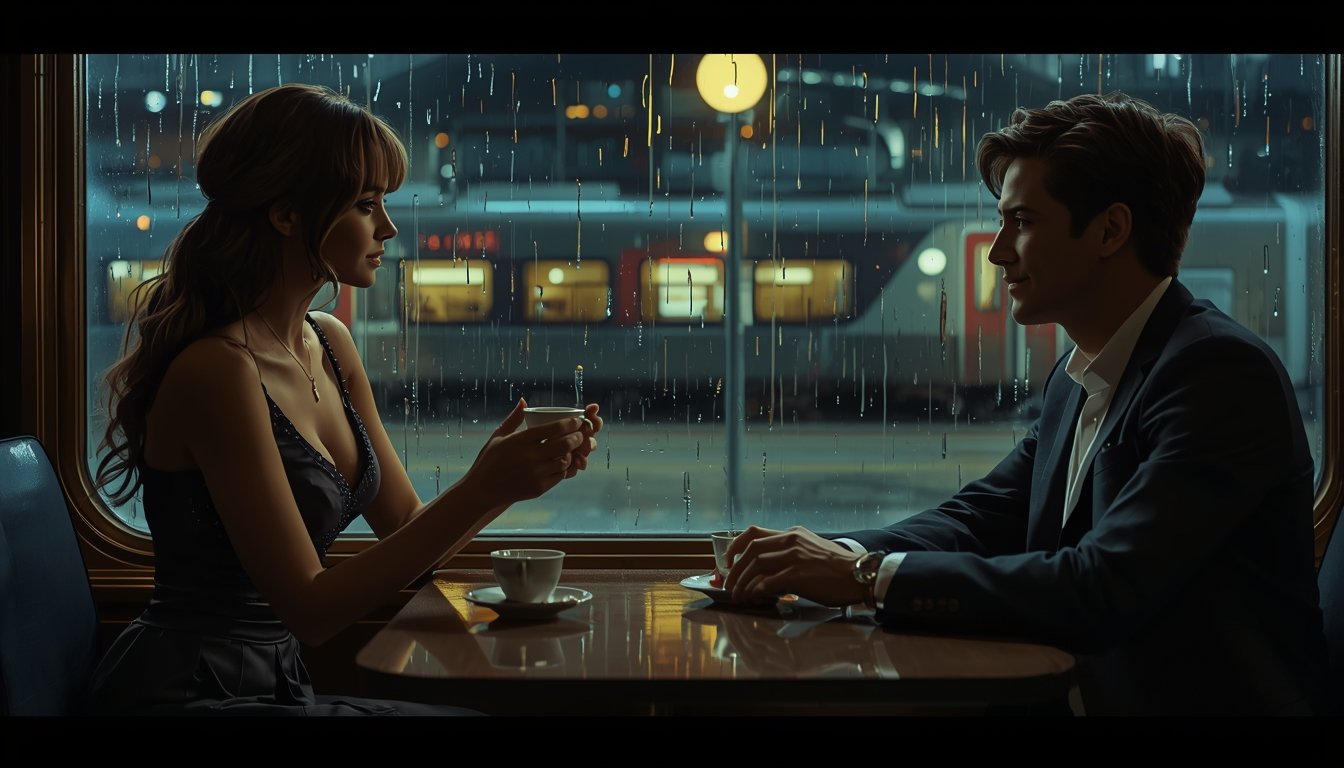
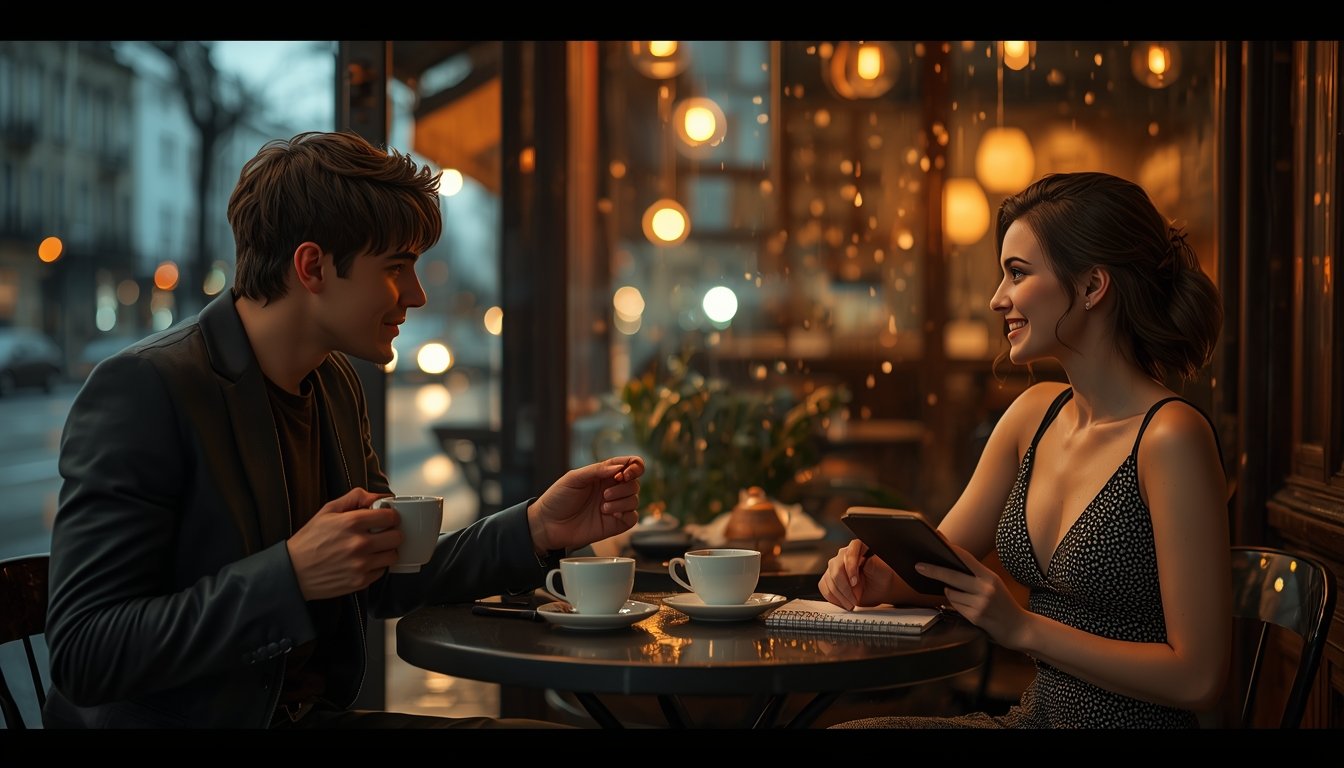
The place was called Vale. It sat on a narrow street where the rain always seemed to start first. Inside, candlelight trembled over polished wood, dark green velvet, and brass that looked older than the building itself. The room felt intimate without being warm. Mara liked that. Warmth asked too much from strangers.
At table nine, the man from her messages was already standing.
Adrian lifted a hand the moment she appeared in the doorway, as if he had known exactly when she would cross it. There was nothing dramatic in the gesture. Still, something about it felt finished, like a movement rehearsed before a mirror.
Then she saw the practiced smile.
It was handsome, careful, and almost impossible to fault. However, it arrived a second too early, before her coat was off, before she had spoken, before the moment had earned it.
“Mara,” he said softly. “You came.”
“You sound surprised.”
“Relieved,” he corrected.
That answer should have pleased her. Instead, it settled over the table like a card placed face down.
The Winter Coat
He took her coat only after asking permission. The courtesy was precise. So was everything else.
Adrian was not more attractive than his photos, which would have been easy to dismiss as vanity. He was simply more exact. Dark hair, charcoal suit, pale shirt without a wrinkle. Even his watch seemed chosen to avoid comment. When he sat, he did it with the composure of someone who had already imagined the angle from across the table.
“I ordered water,” he said. “I wasn’t sure whether you’d want wine on a first meeting.”
Mara paused. “Why not let me decide?”
His eyes held hers. “Because you said last week you don’t like a date to feel prewritten.”
She remembered typing that. Late, tired, amused by the question. Her phone had glowed in the dark while rain touched her apartment windows. She had forgotten the sentence the next morning.
He had not.
“You remember a lot,” she said.
“Only the important parts.”
Meanwhile, the waiter arrived with menus they barely needed. Adrian thanked him by name without looking at the badge pinned to his vest. It was a small thing, perhaps. Yet small things often carried the heaviest truth.
Mara opened the menu anyway, mostly to avoid looking impressed.
“Have you been here often?” she asked.
“Enough.”
“Enough for names?”
A brief silence crossed his face. Then the practiced smile returned, neat as a folded napkin. “I notice details.”
The First Wrong Detail
At first, she told herself that attention was not a crime.
After all, she had agreed to meet him because his messages were different. He had not leaned on cruel wit or lazy flirtation. He never sent midnight demands for photographs, never confused boldness with intimacy, never called himself honest as an excuse to be rude. Instead, he asked measured questions and replied as if her answers mattered.
That had become rare enough to feel dangerous.
“You changed your earrings,” he said.
Her hand rose instinctively to her ear. Small silver studs. “From what?”
“From the pearl drops in your profile picture.”
“That’s not difficult to notice.”
“No,” he said. “But I noticed you’d only wear silver tonight.”
She looked up. “Why?”
“Because your coat has silver buttons, and you strike me as someone who dislikes one discordant thing ruining the rest.”
Mara laughed once, though no real amusement touched it. “You make me sound severe.”
“Controlled,” he said.
“That’s worse.”
“Only to people who benefit from the lack of it.”
The line was clever. Worse, it was useful. It touched an old bruise she had not offered him. Therefore, she hated how quickly part of her relaxed.
He saw too much. He said too little. That combination had ruined women before.
The Story He Preferred
Their food arrived. Mara had ordered late, almost carelessly, to see whether he would try to influence her. He did not. He simply nodded when she chose the mushroom risotto and returned to his own meal.
Rain thickened against the windows. Other tables softened into reflections and shadow. Around them, cutlery moved with the discreet rhythm of expensive places where people pretended not to overhear each other.
“Why are you still single?” Adrian asked.
The question should have annoyed her. Instead, its bluntness felt strangely deliberate, like he wanted her anger measured as well.
“Because I prefer peace,” she said.
“That sounds like someone else turned loneliness into a virtue for you.”
Her fork touched the plate. “You do this often?”
“Do what?”
“Speak as if you’re reading footnotes under people.”
He lowered his glass. “Only when I think they’re tired of being misread.”
She should have ended the date there. She knew that later. Still, the room, the rain, his low voice, and that unsettling accuracy kept her in the chair. The danger was not his confidence. It was how carefully he used it.
“Tell me something true,” she said.
“I almost canceled.”
That surprised her enough to show. He noticed, of course.
“Why?”
“Because when someone seems exact in writing, meeting them can ruin the illusion.” He watched her steadily. “You were quieter online. In person, you’re harder to fool.”
Mara leaned back. “That sounds less like a compliment than a warning.”
“Perhaps it’s both.”
The Woman in the Mirror
When she excused herself, she did it for air rather than necessity.
The restroom was narrow and lined with black tile so glossy it reflected candlelight in broken slivers. Mara stood at the sink, pressed two fingers to the cool marble, and studied her own face in the mirror. Calm from a distance. Alert up close.
A woman leaving a stall met her eyes briefly.
“First date?” the woman asked with a knowing half-smile.
Mara hesitated. “That obvious?”
“Only because you look like you’re deciding whether he’s charming or a mistake.”
“Maybe both.”
The woman laughed under her breath and reached for the door. “Then he’s probably your type.”
After that, Mara checked her phone. No new messages. No rescue waiting in the form of a friend asking the question women used when they wanted an exit. She considered sending one anyway. Instead, she opened Adrian’s profile again.
Three photographs. Sparse details. Joined the app eight months ago.
Nothing false she could name. Nothing solid either.
Before leaving the restroom, she searched his first name in her messages. A pattern emerged that she had missed while living inside it. He often answered her thoughts a fraction before she fully revealed them. He steered questions away from himself with unusual grace. Meanwhile, he remembered every preference she had offered as if collecting them for later use.
Not vanity, she thought. Preparation.
The Table by the Window
Adrian stood when she returned, then sat once she did. Again, too precise.
“You were gone awhile,” he said.
“I was thinking.”
“And?”
“And I can’t decide whether you’re nervous or trained.”
For the first time, his expression changed without permission. It was a small change, but real. His mouth lost its polish. Something colder stepped briefly into view.
“Trained,” he said at last, almost lightly. “That makes me sound sinister.”
“You’ve earned a little suspicion.”
“Because I remember what you say?”
“Because you shape the room around what I say.”
The waiter returned to clear the plates. Adrian thanked him again by name. This time Mara caught the badge first: Elias.
So he had known it earlier.
“You come here on dates,” she said once the waiter left.
“Sometimes.”
“How many?”
He looked toward the rain-swept window. “Enough to stop mistaking novelty for connection.”
“That is not a number.”
“No.”
Her pulse slowed rather than quickened. That was how she knew anger had replaced nerves. “Did you bring me here because the light is flattering? Because the staff knows when not to interrupt? Because table nine gives you time to see someone before they reach you?”
He did not deny it.
“I brought you here,” he said, “because first meetings are fragile, and I dislike wasting them.”
“So you optimize them.”
“I refine them.”
The distinction made something in her go still.
The List He Never Mentioned
“You make people into projects,” Mara said.
“No. I remove avoidable failure.”
“That sounds worse.”
He accepted the blow with a calm that felt practiced too. Yet his fingers tightened once around the stem of his glass. Finally, there was the smallest crack.
“Do you want the ugly version?” he asked.
“I’m beginning to think it’s the only honest one.”
He leaned back. Candlelight sharpened one side of his face and left the other in shadow. “Years ago, I was very bad at this. Too eager. Too sincere. I said the wrong thing at the wrong moment and watched interest die in real time.”
Mara said nothing.
“Later,” he continued, “I started noticing patterns. Places people relaxed. Questions they answered. Timing that made them feel seen instead of examined. After that, dates became easier.”
“For you.”
“For both people, usually.”
“Usually?”
That drew another pause. Not long, but revealing. “Some people dislike being understood quickly.”
“No,” Mara said. “Some people dislike discovering they’ve been studied.”
Rain rattled softly against the glass. At the far end of the room, someone laughed too brightly. The sound made the table feel even smaller.
“You kept notes,” she said.
His eyes lifted to hers.
There it was.
Not surprise. Recognition.
The Honest Version
“Not in the way you mean,” Adrian said.
“Then tell me the way you mean.”
He exhaled through his nose, a gesture that looked almost like defeat. “I write things down after meetings. Impressions. Mistakes. Better questions. What landed badly. What felt true.”
“About women.”
“About dates.”
“Do not polish it for me.”
His voice softened. “You think I came here to perform. The truth is less elegant. I came here trying not to ruin something before it had a chance to become real.”
“By rehearsing me?”
“By preparing myself.”
She wanted to reject the difference. Nevertheless, part of her understood it too well. People with bruised histories often called their fear by more sophisticated names.
“How many women are in those notes?” she asked.
“I don’t know.”
“That answer alone should end this.”
“Probably.”
He said it without drama. No pleading. No sudden tenderness. Just fact.
Mara stared at him and felt the oddest thing of all: disappointment. Not because he had frightened her. Because he had nearly been what he appeared to be.
“Why stay on the app,” she asked quietly, “if every conversation becomes research?”
His jaw shifted once. “Because once, very briefly, it wasn’t.”
“With someone here?”
He looked toward the empty side of the table, then back at Mara. “With someone who sat where you’re sitting now. Last winter.”
The room seemed to lean closer.
The Empty Chair
At first, she thought the line was manipulation. Then she saw that he was no longer using the practiced smile at all.
“What happened?” Mara asked.
“I was careful with her too,” he said. “Not because I wanted control. Because I wanted no mistakes.”
“And?”
“She told me halfway through dessert that being with me felt like stepping into a room already arranged. Beautifully, perhaps. But not for her. She said there was no space to arrive as herself because I had met her with conclusions instead of curiosity.”
That hurt to hear because it was exactly right.
“Did she leave?”
“She did.”
“And you kept doing it.”
“At first, I thought she had misread my intention. Later, I thought if I refined it enough, someone else would understand.”
“That sounds lonely.”
“It is,” he said.
The answer was so plain that Mara looked away.
Outside, headlights slipped along the wet street like passing thoughts. Inside, the candle between them had burned low enough to hollow the shadows under his eyes. For the first time all evening, he looked less like a design and more like a man who had built habits around an old wound until the habits became the wound.
The Walk Into Rain
Mara reached for her coat.
He did not stop her.
That restraint almost undid her more than any plea could have.
“You’re leaving,” he said.
“Yes.”
“Because you should.”
“Also yes.”
He nodded once. “Then let me finally ask something unrehearsed.”
She waited.
His hands stayed flat on the table, visible, still. “Was any part of this real for you?”
The honest answer took longer than she liked.
“Yes,” she said. “That’s why I’m leaving now instead of later.”
For a moment, sadness crossed his face without defense. It made him look younger, and far more dangerous in a different way. Real vulnerability always arrived too late for women who had learned caution properly.
Mara put on her coat. Then she stepped away from table nine and crossed the restaurant without looking back.
Rain met her immediately, cold and thin. She stood under the awning, inhaling the metallic scent of the street, and let the night unfasten from her skin little by little.
After several seconds, the door opened behind her.
Adrian stopped beside the window, not close enough to crowd her. “I won’t message you again,” he said.
“Good.”
“But for whatever it’s worth, you were right.”
Mara turned slightly. “About what?”
He looked through the glass at their abandoned table. “I keep trying to perfect the moment before it happens. It means I never really enter it.”
She studied him in the rain-muted light. Then, because cruelty required less courage than kindness and she was tired of easy things, she answered softly.
“Then next time,” she said, “arrive with curiosity instead of a script.”
He gave a small nod. No smile followed.
That, finally, felt genuine.
After the Evening
Mara walked home without calling anyone.
Later, while the city settled into midnight and the rain kept touching her windows like patient knuckles, she opened the app and deleted the conversation. Then she sat in the dark with her phone facedown beside her, thinking not about danger, but about performance—the elegant versions people built when they feared being ordinary, unchosen, or wrong.
Some men arrived with lies. Adrian had arrived with preparation polished until it looked like fate.
That was worse in quieter ways.
Still, she would remember the last version of his face, the one stripped of timing and design. She disliked that memory because it almost redeemed him. Almost, however, was the language of women who stayed too long.
Instead, Mara kept the lesson and let the man disappear.
On nights when she wanted fiction with sharper edges, she found herself drawn to stories shaped by Romance, uneasy Dating, and the dangerous charm of Flirty Stories. Meanwhile, darker moods pulled her toward Psychological tension and the quiet manipulations of Mind Games.
She understood those worlds better now: the soft wrong note, the delay before a smile, the way a stranger could feel intimate for reasons that had nothing to do with closeness.
Some warnings screamed. Others simply arrived beautifully dressed and already knew your name.
For readers who linger in stories of a first date tension, a charming stranger, and a night shaped by subtle manipulation, the most lasting fear is often the gentlest one. It hides inside emotional suspense, grows through uneasy attraction, and leaves behind the ache of romantic tension long after the evening ends. Sometimes all that remains is an unsettling date and the memory of a practiced smile.