The Roof Above the City
Celia nearly left before she reached the elevator.
The invitation had arrived three days earlier, tucked between invoices and polite obligations in her inbox. It promised a rooftop anniversary party for a boutique publishing house. Black attire. Soft jazz. Private guest list. She had said yes because refusing would have required explanation, and explanation always invited more attention than silence.
Now, however, the mirrored elevator reflected a woman she only half recognized. Her black dress had clean lines. Gold earrings moved when she turned her head. Her lipstick was dark enough to suggest confidence, even when she did not feel it.
Above her, the floor numbers rose one by one.
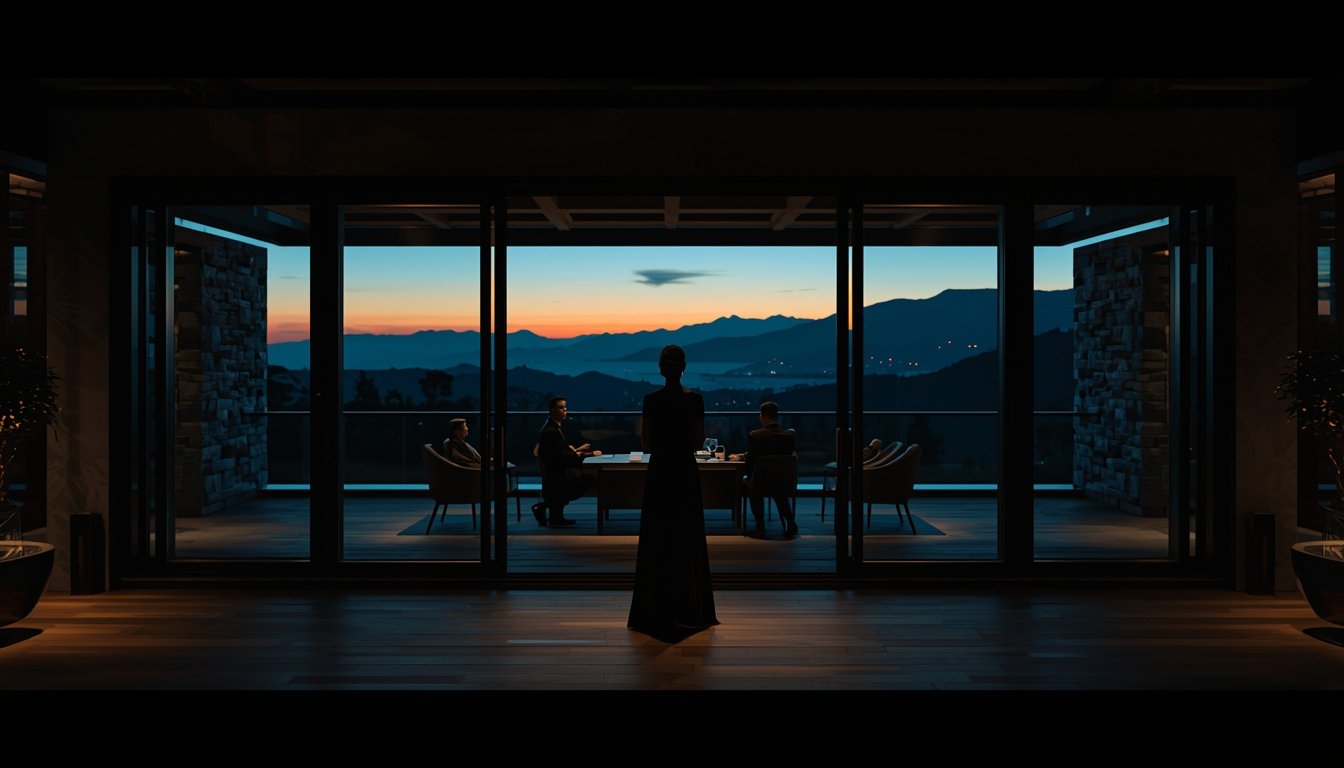
When the doors opened, the city had become a field of silver beneath the glass. Wind moved across the rooftop terrace and carried perfume, laughter, and the faint sweetness of late spring rain. Candles glowed in low bowls along the stone ledge. Somewhere near the bar, a saxophone lifted one slow note and let it linger.
Celia stepped into the crowd and promised herself one hour. No more.
The Party She Did Not Want
At first, the evening behaved exactly as expected.
Editors offered polished warmth. Novelists performed effortless wit while scanning the room for more useful faces. Meanwhile, assistants moved with trays of champagne through small groups of people who smiled without ever fully relaxing.
Celia took a glass she did not want and drifted toward the far edge of the terrace.
That was where she heard him laugh.
It was not the loudest sound in the room. Still, it reached her with unusual precision, low and amused, as if it had selected her from the rest. When she turned, she saw him near the iron railing, speaking to a woman in emerald silk.
He wore a dark suit without a tie. One hand rested in his pocket. The other curved lightly around his drink as if he had all evening to waste.
He looked over at the exact moment she did.
Then came the smile.
It was not polished. It was not careful. Instead, it arrived with the ease of someone who had long ago learned that looking delighted could be more intimate than looking handsome.
A few minutes later, he crossed to her as though the movement had simply become inevitable.
The First Line
“You look like the only honest thought in the room,” he said.
Celia blinked once. Then she laughed before she could stop herself.
“That is either very good or extremely practiced.”
“Why not both?” he asked.
He stood close enough for conversation, not close enough to presume. The distinction mattered. Men who understood distance were always more dangerous than the careless ones.
“Because if it’s practiced,” she said, “I should dislike it.”
“Do you?”
“Not yet.”
His smile shifted, smaller this time, as if approval interested him more than conquest.
“Lucian,” he said.
“Celia.”
“I know.”
That earned him a look. He lifted his free hand in surrender.
“The host introduced you to someone near the entrance. I’m flirtatious, not supernatural.”
“A pity,” she said.
“For you or for me?”
“For the story.”
He laughed again, and the sound landed somewhere unexpectedly warm in her chest. Therefore, she took a sip of champagne to disguise the effect.
The Ease of Him
“Do you know everyone here?” he asked.
“Only enough people to regret coming.”
“Then we have something in common.”
“You don’t look regretful.”
“That’s because I just stopped being bored.”
The line should have felt too smooth. Instead, it felt light, even playful. He wore charm the way some men wore expensive cologne: not to overwhelm a room, but to leave behind the idea of themselves after they moved through it.
Celia, against her better judgment, stayed where she was.
They talked beside the railing while the skyline burned in reflected gold.
Lucian asked what she read when she was lonely, which was not a question strangers usually dared so early. He wanted to know which endings she hated most and whether she trusted people who spoke softly on purpose. In return, he offered fragments rather than facts: a childhood near the sea, a habit of leaving parties without saying goodbye, and a dislike of roses because they looked too aware of themselves.
It was nonsense, perhaps. Still, it was elegant nonsense, and Celia found herself answering with more honesty than she had intended.
The View from the Glass
“That is unexpectedly cruel,” he said when she admitted that happy endings often felt undeserved.
“Realistic.”
“No,” he said gently. “Protective.”
The observation unsettled her because it was accurate enough to matter. She turned toward the city to break the angle of his gaze.
Far below, headlights moved in patient lines through the dark. Behind them, the rooftop shimmered with expensive warmth. A woman in silver laughed too brightly beside a potted olive tree. Two men near the bar nodded at each other with professional affection and mutual distrust.
“You’re watching escape routes,” Lucian said.
“I like to know where the edge is.”
“So do I.”
“That sounds less reassuring than you think.”
“I wasn’t trying to reassure you.”
“What were you trying to do?”
His gaze dipped briefly to her mouth, then returned to her eyes with such clean restraint that it felt more intimate than lingering would have. “Keep you here another ten minutes.”
She should have stepped away then. Instead, she smiled into her glass.
The Second Time She Heard It
Later, Celia went to the bar for water she actually wanted and conversation she definitely did not.
The bartender handed her a chilled glass. At the far end of the counter, the woman in emerald silk leaned toward a friend and said, with faint amusement, “He told me I looked like the only honest thought in the room.”
Celia did not move.
The friend laughed. “Did it work?”
“For twelve full minutes,” the woman replied. “Then he wandered off toward someone else.”
“Charming.”
“Very,” she said. “Just not original.”
Celia looked down at the condensation gathering around her fingers.
There it was. The repeated compliment, neat and bright as a shard of glass. It was not a crime. It was not even uncommon. Yet something about hearing it in another woman’s voice drained the warmth from the evening at once.
She was not foolish enough to believe herself singular after twenty minutes on a rooftop. However, she disliked being made interchangeable without consent.
What She Had Heard
Lucian appeared beside her a moment later, as if the room had called him back.
“You vanished,” he said.
“I was testing whether you’d notice.”
“And?”
“You noticed.”
“That sounds like a point in my favor.”
Celia turned fully toward him. “Depends on what game we’re keeping score for.”
For the first time, a pause entered his expression. Brief, but real.
“You heard something,” he said.
“That sounds like experience talking.”
“Only observation.”
“Those are not the same thing.”
He studied her quietly. Meanwhile, the party swelled around them with all the practiced ease of people determined to call themselves spontaneous.
“Walk with me,” Lucian said.
“Why?”
“Because difficult conversations deserve better scenery.”
That answer annoyed her enough to make her follow him.
The Dance Floor Without Dancing
They moved through the terrace to a quieter section near the indoor lounge, where tall windows reflected the party back on itself. Inside, a handful of couples crossed a small dance floor under amber lamps. Outside, the music softened to a pulse under the wind.
“All right,” he said. “Tell me which part offended you. The lack of originality or the illusion of exclusivity?”
Celia almost smiled despite herself. “You say that as if you know the difference.”
“I do.”
“Then enlighten me.”
He leaned against the window frame, elegant in a way that would have looked unbearable on someone less aware of the joke.
“A lack of originality is forgivable,” he said. “Most people are less unique than they hope. The illusion of exclusivity is unkind because it steals choice.”
“And which one was that line?”
He did not answer immediately.
“The second,” he said at last.
She gave a short, cold laugh. “At least you’re literate in your own flaws.”
“I try to be.”
“Do you also recycle all your flirtation by category? Rooftop line, candlelight line, late-night line?”
“That would be efficient.”
“You are impossible.”
“No,” he said. “Merely disappointing. Which is more common.”
The Real Offense
The honesty of that landed harder than apology might have. Celia looked away toward the dance floor. A woman in black rested her head briefly on her partner’s shoulder before straightening again, as though tenderness required witnesses to be bearable.
“Why do it?” she asked.
“Because charm opens doors.”
“And because you enjoy watching them open.”
“Sometimes,” he admitted.
“That is a dreadful answer.”
“It’s the truthful one.”
“You could have lied,” Celia said.
“Would that have improved my chances?”
“With me? No.”
“Then there was no profit in it.”
“How romantic.”
His mouth curved faintly. “You make cynicism sound ceremonial.”
She should have walked away. Instead, she remained in that strange narrow space where irritation and attraction had begun to resemble each other.
“Here’s what bothers me,” she said. “It wasn’t just a line. It was a very particular kind of line. It suggested you had seen something true. Not about beauty. About character.”
The Woman Near the Window
“Yes,” he said.
“Which means you borrowed intimacy you had not earned.”
Lucian looked at her for a long moment. Outside the glass, the wind lifted a strand of her hair and laid it against her cheek.
Finally, he said, “That is fair.”
Fair. Not sorry.
Oddly, that made her trust the answer more.
“Then why did it feel sincere?” she asked before she could stop herself.
Something in his face changed. Not dramatically. Just enough to pull the rest of the party further away.
“Because,” he said quietly, “with you, it was.”
Celia let the silence stretch between them. “That is convenient.”
“Agreed.”
“And impossible to verify.”
“Also true.”
“Then you see my problem.”
“I do.”
He spoke with such calm acceptance that it left her with nowhere to throw her anger. Therefore, she settled for suspicion, which had better manners.
The History of Easy Men
At first, she thought her interest in him was the real embarrassment. Later, she understood it was the familiarity.
Not him specifically. The type.
Men who moved through rooms as if nothing in them could stick. Men whose kindness came polished and prompt. Men who made women feel briefly brighter, only to reveal that brightness had been distributed widely all along.
Lucian, however, was more difficult than that. He did not pretend innocence. He did not ask forgiveness. Instead, he stood beside her with the composure of someone willing to be judged, which made judgment less satisfying than it should have been.
“You look like you’re remembering someone else,” he said.
“Several someone elses.”
“I’m sorry to hear that.”
“No,” she replied. “You’re sorry to be associated with them.”
He considered this. “Yes.”
Again, that awful honesty.
Celia crossed her arms. “Do you ever try silence instead?”
“While flirting?”
“While being a man other people survive.”
His laugh this time held no triumph. Only fatigue.
What He Had Learned
“Rarely,” he said. “Silence invites projection. People fill it with kinder things than the truth.”
“And what is the truth?”
He glanced toward the party. “That I learned early how useful charm can be. Later, I mistook usefulness for identity.”
“That is almost self-aware enough to be attractive again.”
“Almost is all I’ve got tonight.”
The answer should not have softened her. Yet it did, slightly, in the way rain softens a city without making it safer.
A server passed with champagne. Celia declined. Lucian took one, then set it untouched on the ledge beside him.
“I’m curious,” he said. “If you knew from the beginning that I wasn’t good for you, would you still have spoken to me?”
“That assumes I know such things from the beginning.”
“Don’t you?”
She looked back through the room toward the crowded terrace. From here, everyone seemed arranged. Beautiful dresses, expensive laughter, soft light over sharpened motives.
“Sometimes,” she admitted. “Usually I know and continue anyway.”
The Third Glass
“Because hope is stronger than reason?”
“Because reason is often lonelier.”
That quieted him.
After that, neither of them spoke for several breaths. The music shifted to something slower. Somewhere below, a siren passed and vanished. The city kept its own counsel.
“I did mean it,” Lucian said finally. “About you looking like an honest thought.”
“You’ve lost the right to that sentence.”
“I know.”
“Then why say it again?”
“Because surrendering a line isn’t the same as surrendering the truth inside it.”
The remark settled into her more deeply than she liked. He had a talent for reaching the bruised place and speaking just beside it.
That, she decided, was his most dangerous quality. Not the charm. The restraint.
The Exit Beneath the Lamps
Celia set her empty water glass on a nearby tray.
“I’m leaving,” she said.
Lucian nodded once, as though he had expected that for some time. “Sensibly?”
“Eventually.”
“Will you let me ruin things a little further and walk you to the elevator?”
“Why?”
“Because I’ve already disappointed you. I’d prefer not to do it from across a roof.”
The line was good enough that she nearly hated him again for it. Still, she allowed it.
They crossed the terrace together. The party carried on behind them in glittering indifference. Near the bar, the woman in emerald silk caught Celia’s eye and raised her glass with faint, ironic solidarity. Celia almost laughed.
At the elevator doors, the city lights fell across Lucian’s face and made him look momentarily younger, or perhaps only less finished.
“For what it’s worth,” he said, “I was better with you after the first mistake.”
“That is not comforting.”
“No.”
The Last Honest Thing
The elevator had not yet arrived. Silence stood between them, elegant and dangerous as cut glass.
“You know what the worst part is?” Celia asked.
“Tell me.”
“I still enjoyed speaking to you.”
His gaze held hers. “That isn’t the worst part.”
“What is, then?”
“That I did too.”
There was no script in the answer. She knew because it sounded less polished than the rest, and because it seemed to cost him something to say it plainly.
The elevator bell chimed.
Celia stepped inside, then turned before the doors closed. “Try a different opening line next time.”
“I might try none at all.”
“That would be new for you.”
A shadow of a smile touched his mouth. “That’s the idea.”
After the Roof
On the ride down, Celia watched her reflection break and reform in the elevator mirrors.
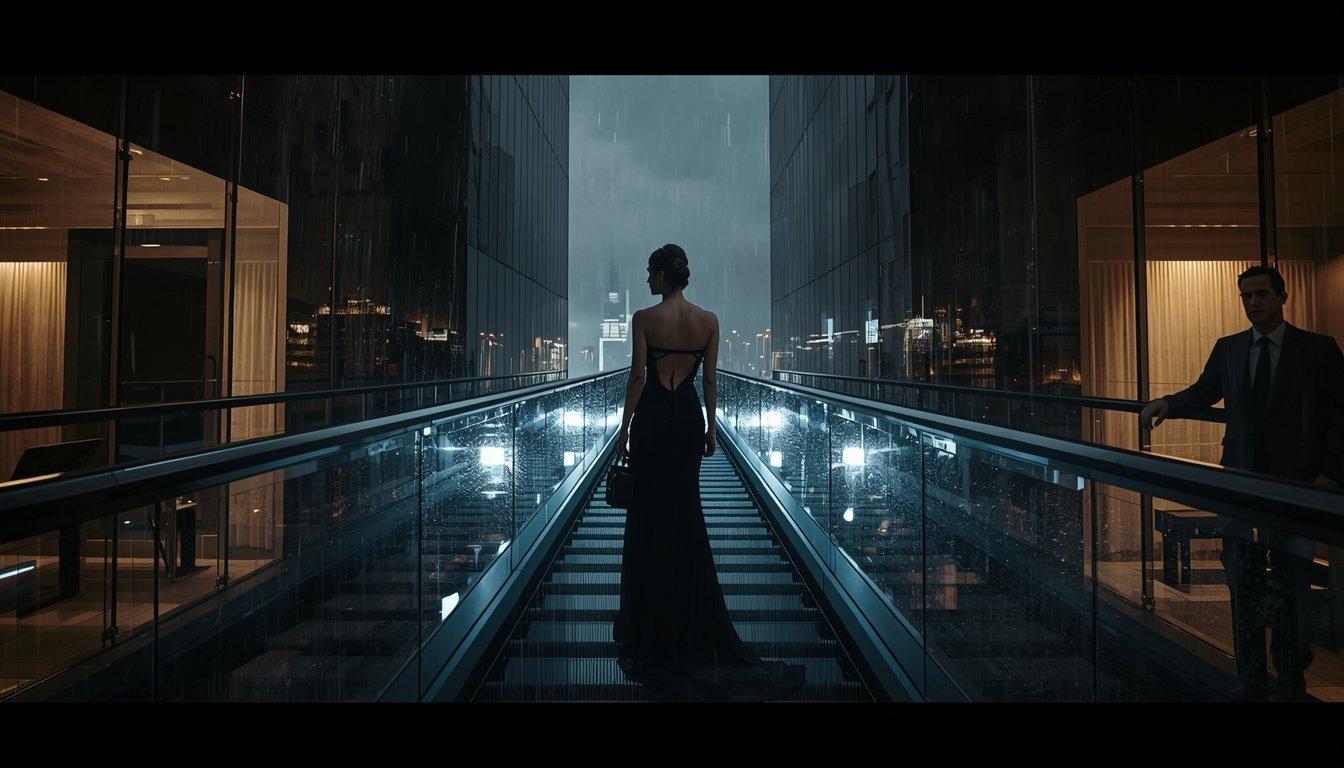
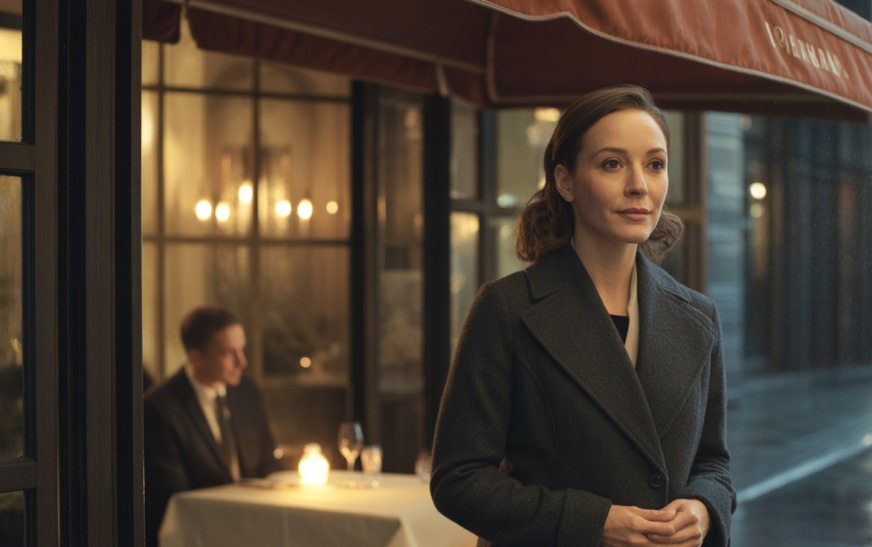
By the time she reached the street, the air had cooled. A fine mist hung above the pavement and turned traffic lights soft at the edges. She walked without hurrying, heels tapping lightly against the stone, and let the night sort itself around what had happened.
She had not been fooled exactly. Neither had she been untouched. The evening lived in the uneasy space between those facts.
There would be no dramatic message after midnight, no grand correction, and no polished confession heavy with suddenly earned sincerity. Men like Lucian did not change because one woman recognized the machinery. Women like Celia did not stay because charm learned a better vocabulary for regret.
Still, she carried the feeling with her: the bright danger of being almost singled out, almost seen, almost chosen honestly.
Later, when she looked for fiction that understood that narrow emotional edge, she found herself drawn to Romance, the playful tension of Flirty Stories, and the uncertain beginnings inside Dating. Meanwhile, darker moods always led her toward Psychological unease and the elegant cruelty of Mind Games.
Some nights are built from overt lies. Others turn on a repeated compliment, a dangerous charm, or the polished ache of playful attraction. The most unforgettable moments often live inside romantic tension, sharpened by elegant suspense and the sting of subtle manipulation. Sometimes all that remains of a glittering night is uneasy chemistry and the memory of a stranger who understood exactly how to be unforgettable.