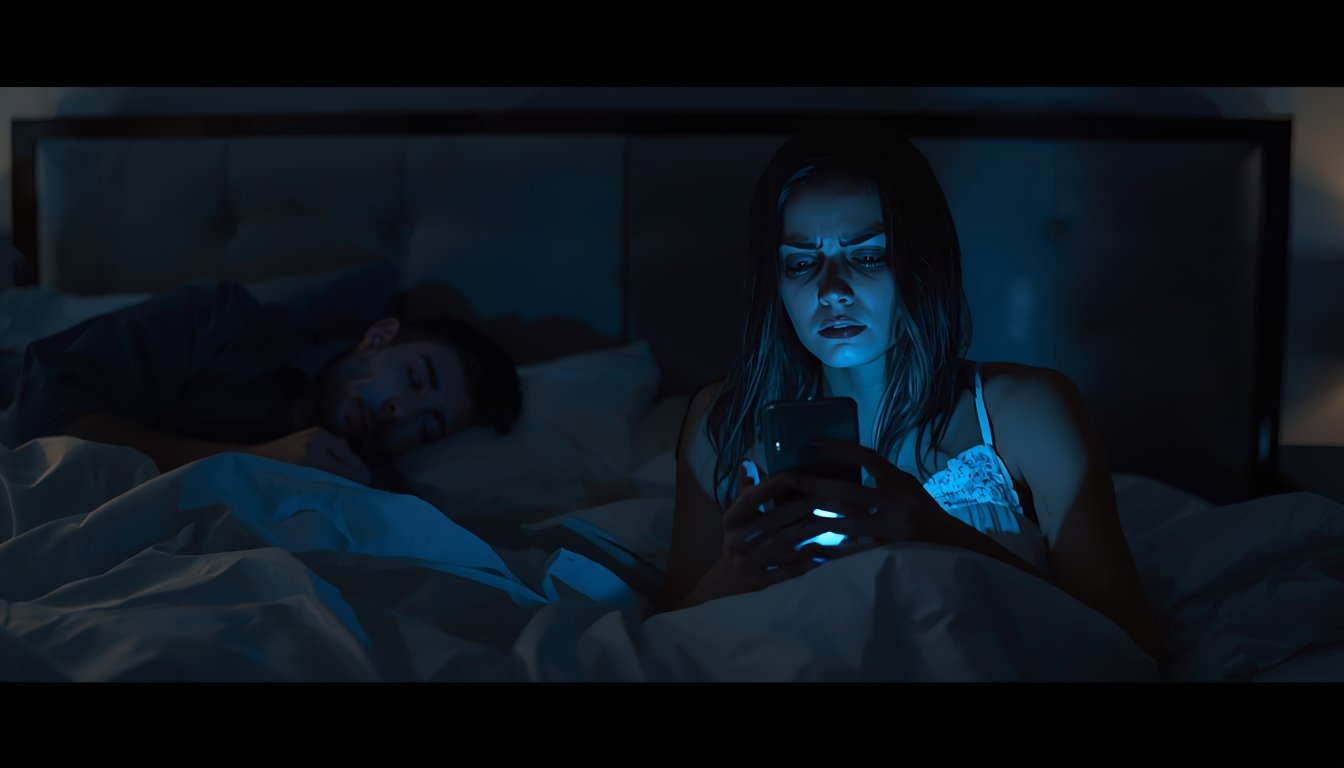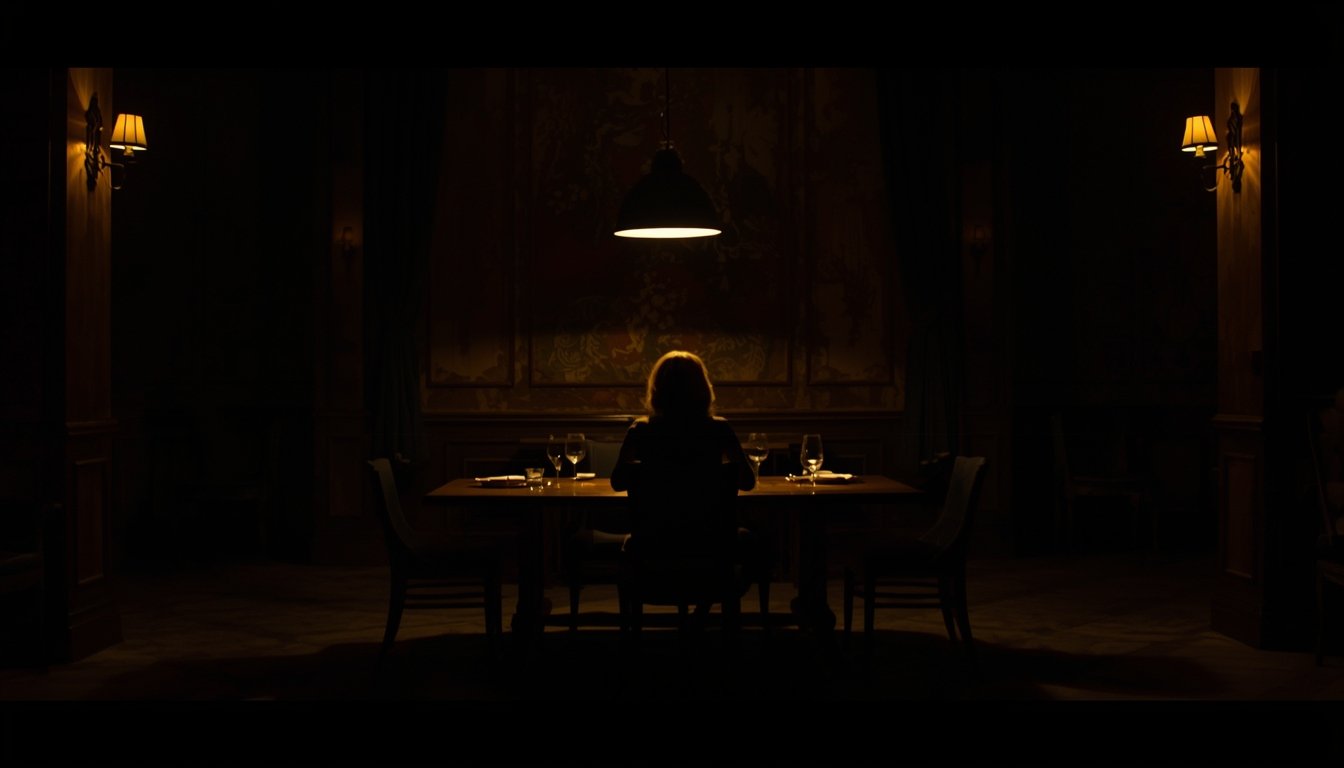
The wrong voicemail arrived at 11:07 on a Thursday. Marin had just poured a glass of wine after a long day of meetings she barely remembered. Her phone buzzed once against the kitchen counter—a notification she almost ignored. However, something made her pick it up. Perhaps it was the late hour. Perhaps it was simple curiosity. Nevertheless, she pressed play before checking the caller ID. Flirty stories sometimes begin in the most ordinary ways. This one began with a stranger’s voice.
“Hey, it’s me. I know you said you’d be at the gallery until late, but I just walked past that little bookshop on Mercer—the one with the crooked sign. They finally got that edition of Rilke you wanted. The one with the blue cover. Anyway, I bought it for you. I’ll leave it with your doorman. Call me when you get this. Or don’t. I just wanted you to know I was thinking about you.”
The message ended. Marin stood frozen, wine glass suspended halfway to her lips. The voice belonged to a man she had never met. Warm and unhurried, it carried a quiet intimacy that made her feel like an intruder in her own kitchen. Meanwhile, the words replayed in her mind: I just wanted you to know I was thinking about you. Someone, somewhere, had sent those words to the wrong number. And Marin had received them instead.
Deleting it was the obvious choice. After all, the message was not meant for her. It belonged to someone else—a woman who frequented a gallery, who loved Rilke, who had a doorman and a crooked bookshop on Mercer Street. But Marin did not delete it. Instead, she saved it. Then she poured more wine and listened again.
The Voice That Did Not Belong to Her
By midnight, she had listened to the wrong voicemail seven times. Studying it, she told herself. The cadence of his voice. The slight rasp on the word Rilke. The way he said or don’t as if he genuinely meant it, as if her response was entirely optional. There was no pressure in his tone. Only a gentle offering, left at an imaginary door.
Marin did not know why it affected her so deeply. Her own life contained no such messages. Her phone buzzed with work emails and dinner confirmations and occasional texts from friends asking if she was still alive. No one left her voicemails about bookshops and blue-covered poetry. No one said, I was thinking about you, without expectation attached. Quiet attraction to a stranger’s voice seemed absurd. Yet there she sat, replaying it for the eighth time.
On Friday, she went to work. Meetings were attended. Emails were answered. Meanwhile, the wrong voicemail sat in her saved messages like a secret she had stolen. During her lunch break, she searched for the bookshop on Mercer Street. It existed. The crooked sign appeared in photographs posted by local reviewers. A small, independent shop wedged between a bakery and a vintage clothing store. Consequently, the woman in the message was real. The man was real. The blue-covered Rilke was real.
Marin closed her browser. Stopping this obsession was the sensible thing to do. Nevertheless, that evening, she listened to the message again.
The Dangerous Pull of Knowing Too Much
By Saturday, she had memorized every word. She knew that he paused slightly before saying bookshop, as if searching for the right description. The way his voice softened on blue cover was also familiar now. Furthermore, the silence after or don’t lasted exactly two seconds before he added the final line. And she knew that she had no right to any of this knowledge. The wrong voicemail was a misdirected intimacy, and she was hoarding it like something precious.
Calling the number back crossed her mind. Just to say, You have the wrong person. But what then? He would apologize. He would hang up. He would find the correct number and leave the message again, this time for the woman who deserved it. And Marin would be left with nothing but the memory of a voice that was never meant for her. Therefore, she did not call. Instead, she kept the message like a pressed flower, preserved and useless and beautiful.
Accidental intimacy had a strange power. It bypassed all the usual defenses. There were no first dates, no awkward small talk, no careful curation of self. There was only a voice in the dark, speaking to someone else, revealing everything through what it offered.
The Walk to Mercer Street
On Sunday afternoon, Marin found herself on Mercer Street. She had not planned to go. Her feet, however, seemed to have made the decision without her. The bookshop appeared exactly as described: crooked sign, narrow door, stacks of books visible through a dusty window. Standing across the street, she watched people pass in and out. None of them looked like the owner of that voice.
Because she had come this far, crossing the street and going inside felt inevitable. The air smelled of old paper and wood polish. A gray cat slept on a stack of art books. An elderly man behind the counter nodded at her without speaking. Wandering the narrow aisles, Marin ran her fingers over spines until she found the poetry section. And there it was. Rilke. Blue cover. A single copy remaining.
She picked it up. The cover felt smooth beneath her fingers. Opening to a random page, she read: Let everything happen to you: beauty and terror. Just keep going. No feeling is final. The words landed somewhere deep in her chest. She closed the book and carried it to the counter.
“Did you find everything you were looking for?” the old man asked.
Marin hesitated. “I think so.”
She paid. Leaving the shop, she walked home with the blue-covered Rilke tucked under her arm, feeling like a thief carrying stolen goods. The book was not meant for her. It was meant for the woman in the message. And yet, somehow, it had found its way into her hands instead.
The Decision She Could Not Avoid
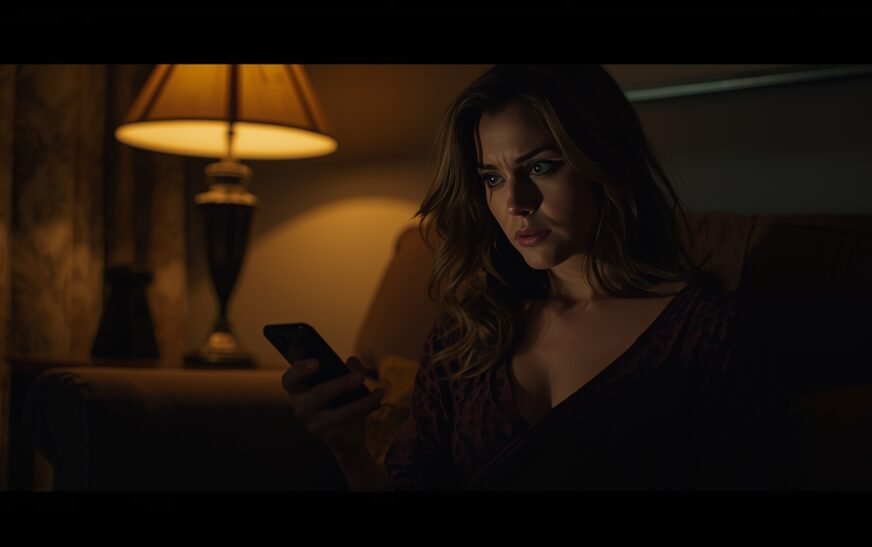
That night, Marin sat on her couch with the book unopened beside her and her phone in her hand. The wrong voicemail glowed on the screen. Two choices lay before her. Deleting it would mean forgetting the voice and moving on with her life. Or she could do something reckless.
Her thumb hovered over the callback button. Her heart beat faster than it had in months. Meanwhile, the city hummed outside her window, indifferent to the small drama unfolding in her apartment. Timing-based tension had brought her here. And now it demanded a resolution.
She pressed call.
The line rang once. Twice. Three times. Hanging up seemed wise, but Marin held on. Then a voice answered—the same voice, warm and slightly confused. “Hello?”
Opening her mouth produced no words. For a terrible moment, she simply sat there, breathing into the phone like a ghost.
“Hello?” he said again. “Is someone there?”
“You left me a voicemail,” she finally managed. “On Thursday night. About a bookshop. And Rilke.”
A pause. Then, cautiously, “I think you have the wrong number. I left that message for someone else.”
“I know.” Marin closed her eyes. “I’m not her. I’m the wrong number. The wrong voicemail came to me.”
Silence stretched between them. She expected him to hang up. Irritation or dismissal seemed likely. Instead, he let out a soft, surprised laugh.
“The wrong voicemail,” he repeated. “And you’re calling me now because…?”
“Because I listened to it more times than I should have. Because I went to the bookshop. Because I bought the blue-covered Rilke.” She took a breath. “And because I wanted to hear your voice again.”
The Conversation That Followed
He did not hang up. That was the first surprise. The second surprise was that he asked her name. The third was that he told her his: Elias. They talked for an hour. About the bookshop, about Rilke, about the woman he had meant to call—a friend, he explained, someone he had been quietly in love with for years. But she had moved away, and the message was a last attempt at something he already knew was over.
“I think I knew she wouldn’t call back,” he admitted. “I think I left that message for myself as much as for her. Just to say it out loud.”
Marin understood. For years, she had left messages no one received. Journals filled with words she never spoke. More than anything, she had wanted to be heard. And somehow, by accident, she had heard him first.
“I’m sorry I listened,” she said. “I should have deleted it.”
“I’m not sorry.” His voice was softer now. “No one’s ever listened to me like that. Even if you weren’t supposed to.”
They talked until Marin’s phone battery warned her it was dying. Before they hung up, Elias said, “Can I call you again? On purpose this time?”
She smiled into the dark. “Yes. On purpose.”
The Right Message Finally Sent
Three days later, another voicemail arrived. This time, it was meant for her. Elias’s voice, familiar now, said, “I was thinking about you. No bookshop this time. Just you. Call me when you get this. Or don’t. But I hope you do.”
Marin saved the message. Then she pressed call. Slow burn connection had begun with a wrong number and a borrowed intimacy. But what grew from it was entirely their own.
Sometimes Romance arrives through the wrong door. It wears someone else’s name. It carries a message meant for another. And sometimes, if you are brave enough to answer, it stays.
Psychological barriers lowered without permission. Drama had no place in this quiet beginning.