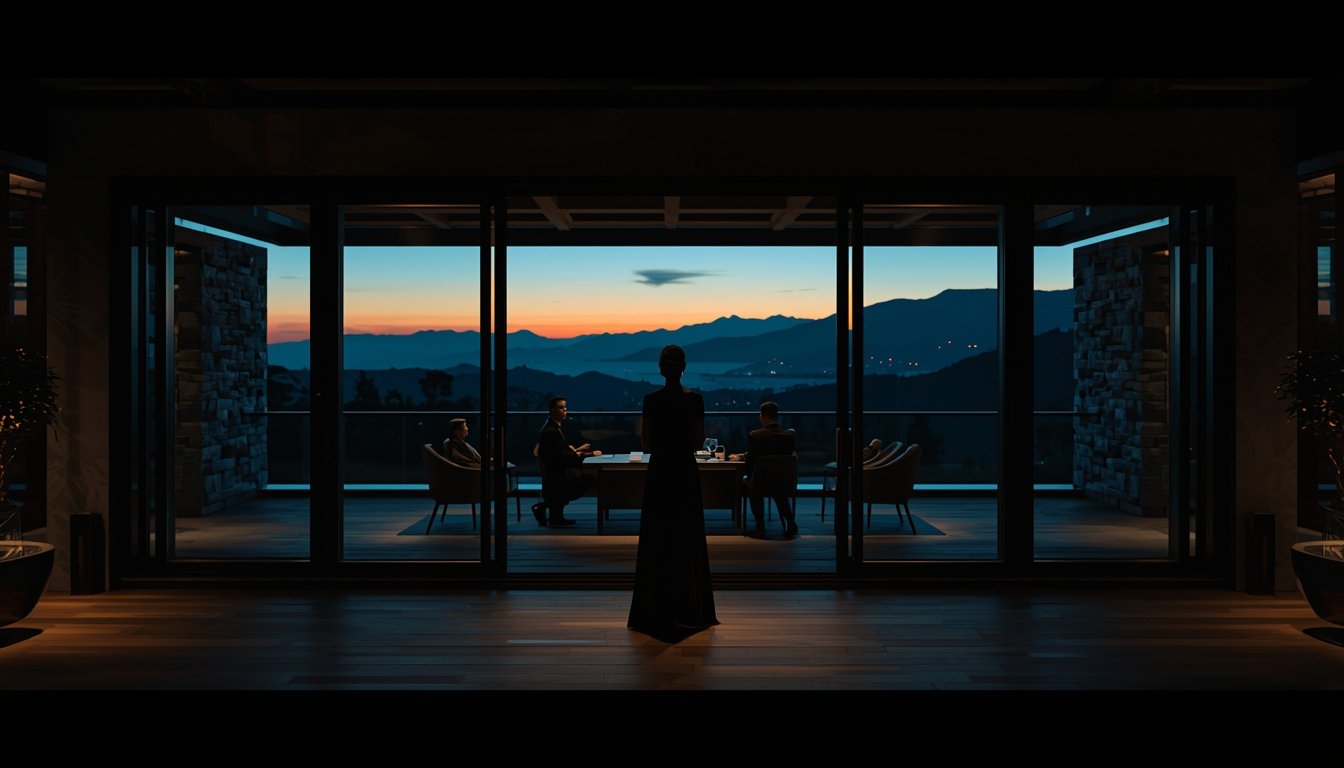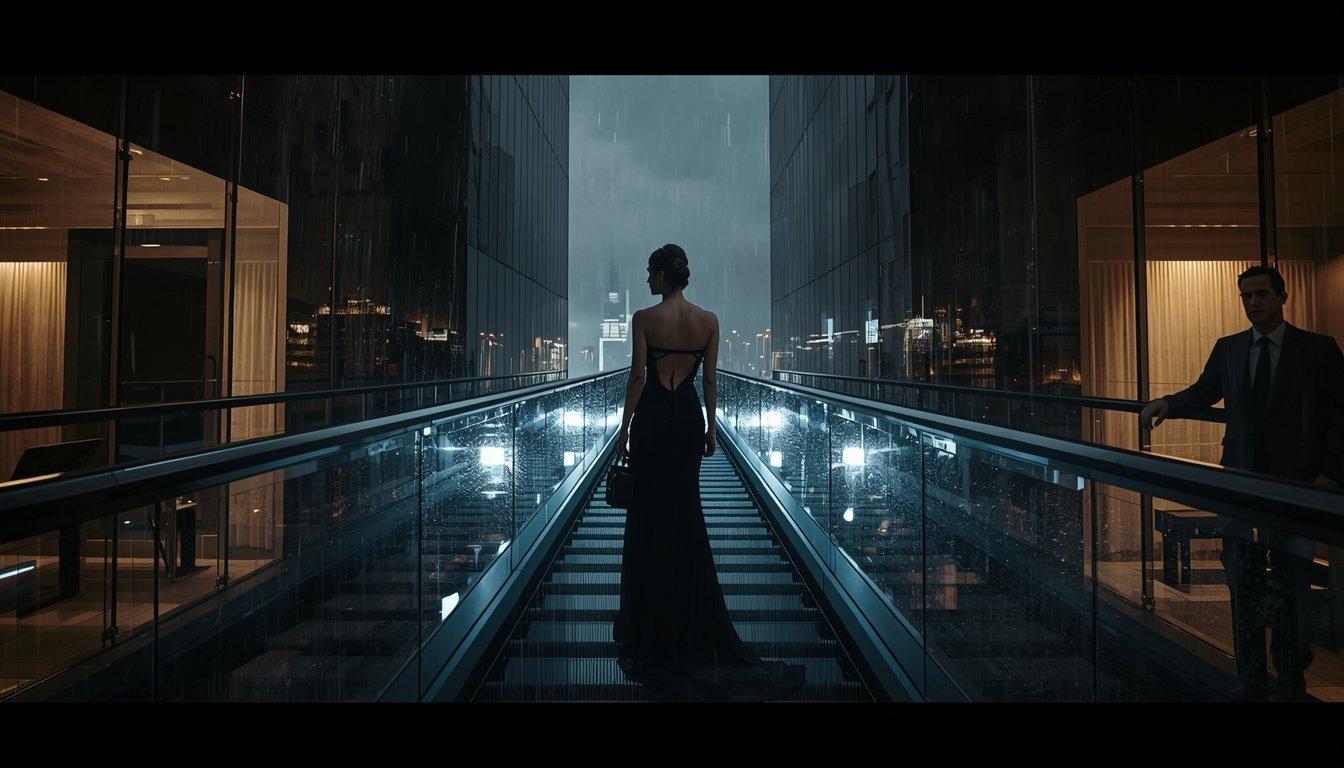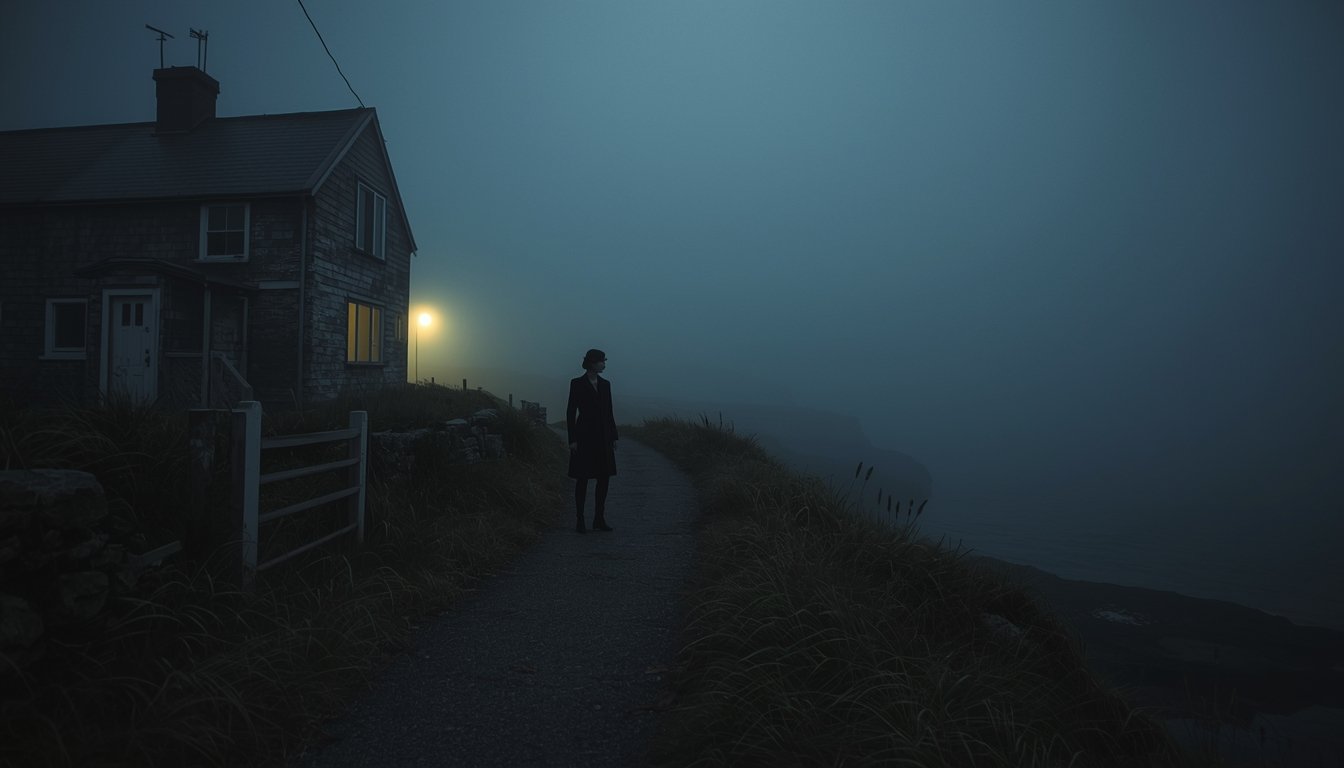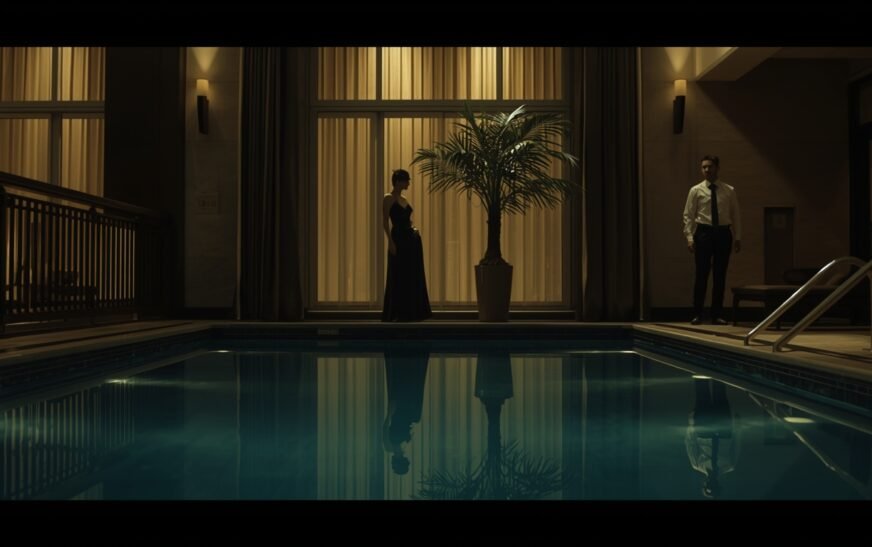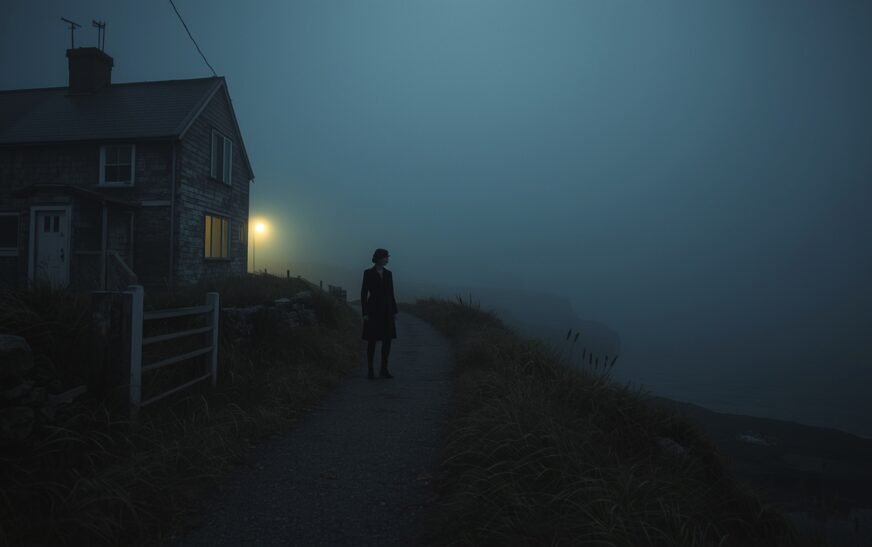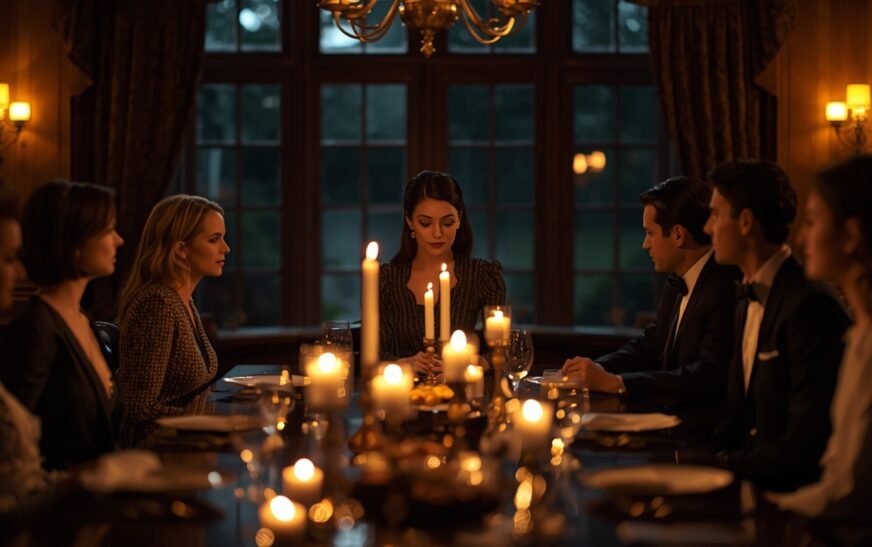
Vera first heard the phrase safe version at 7:46 on a Friday night, just as the second bottle of red was opened and the rain began tapping more insistently at the long windows of Ashmere House. The weekend had been arranged by her husband’s oldest friends, a yearly escape built around firelight, expensive food, and the performance of knowing one another too well. At first, everything had looked harmless: polished oak floors, deep green walls, candles reflected in dark glass, and six adults moving through a restored country house as if comfort were an old family skill. However, when Julian smiled across the table and said, “Let me give everyone the safe version of what Vera means,” the room shifted in a way only she seemed to feel at once.
The others laughed lightly. That was the problem. Nothing in his tone sounded openly cruel. He said it as though he were helping, smoothing, translating. Yet Vera had been married to Julian for four years, which was long enough to know when he was not merely speaking for her, but arranging the angle from which the room would receive her.
Rain moved in silver threads beyond the glass. Meanwhile, the low candlelight flattered every face at the table except hers, because hers now had to decide whether to smile, object, or let the moment pass as charm.
Why they were at Ashmere House
Julian called these weekends grounding.
Each autumn, his university circle rented the same large house somewhere beyond the city and recreated a version of themselves they seemed reluctant to outgrow. There was always one couple on the verge of separation but still beautifully dressed, one man who had become richer and less interesting, and one woman whose silence was treated as depth because she wore it elegantly. This year, Vera arrived already tired, partly from work and partly from Julian’s recent habit of pre-framing her before she entered a conversation.
At first, she blamed stress. His firm had lost a major account in August. Then his father had surgery in September. By October, however, stress had turned into a style. Julian had become gentler in public and more interpretive in private.
He no longer fought in ways she could answer. Instead, he summarized.
“What Vera is trying to say…”
“What she means, really…”
“The kinder version of that would be…”
Because every sentence sounded civil, every objection made her appear abrupt. That was the architecture of it.
The friends who knew him longest
There were six of them at dinner that first night. Julian and Vera. Felix and Imogen, whose marriage looked permanently one joke away from collapse. Daniel, the wealthier and duller man Julian had once admired without irony. And Mara Lin, recently divorced, sharply dressed, and watching everything with the cool patience of someone who no longer mistook social grace for innocence.
Mara took the seat nearest Vera.
That should not have mattered. Even so, by the time the first course was cleared, Vera had already begun to suspect Mara was the only person at the table listening without nostalgia softening what she heard.
“Do you still hate group holidays?” Felix asked Vera with cheerful recklessness.
“I don’t hate them,” Vera said. “I just think people behave most strangely when they call something relaxing.”
Julian smiled before anyone else could answer. “The safe version is that Vera likes solitude with excellent design.”
Laughter again. Then the conversation moved on.
Only Mara glanced at Vera for half a second longer than politeness required.
What he had started doing at home
Over the previous month, Julian had developed a fascination with refinement. He improved her sentences. He adjusted her tone. He once told a guest in their apartment that Vera’s directness was “usually kinder in draft form,” which was absurd enough that she nearly laughed.
Later, he explained it with concern.
“I’m trying to help you land better with people,” he said while rinsing wine glasses in their kitchen. “You can be sharper than you realize.”
“Or maybe people can survive hearing complete thoughts,” she replied.
He smiled then, not warmly. “There’s the unedited cut.”
At the time, she told herself it was only a phase in his language, some office habit bleeding into marriage. Yet phases usually pass. This one was deepening.
That was why the phrase in the dining room frightened her a little. Not because it was new. Because it was no longer private.
The room after dessert
Dinner stretched into the expected comforts: a pear tart, too much red wine, and stories from university sharpened by repetition until they sounded less like memory than property. Then, after dessert, they moved into the drawing room where a fire had already been laid and lit by someone paid to understand luxury better than any of them did.
The room was arranged for intimacy in the manipulative way large houses often are. Deep sofas faced each other across the hearth. Bookshelves rose to the ceiling. A record turned slowly in the corner, sending low jazz through the warm dark.
Vera sat near the fire with her glass untouched.
Imogen was describing a gallery opening in Paris when Daniel turned to Vera and asked, “Would you ever move out of the city?”
Vera opened her mouth.
Julian spoke first.
“The safe version is yes, if there are trees, a train line, and no neighbors with leaf blowers.”
This time, the silence that followed was fractionally longer.
“I can answer for myself,” Vera said.
Julian lifted one hand. “Of course. I was only helping the room move faster.”
Felix laughed too loudly. Imogen studied her glass. Daniel became fascinated by the fire. Meanwhile, Mara looked directly at Julian in a way that suggested she had no intention of helping him keep the moment soft.
The woman by the bookshelf
Later, when the others drifted toward coffee and cognac, Mara found Vera in the library alcove pretending to study old bindings she had no interest in reading.
“He does that often?” Mara asked.
The rain had eased outside. In its place came the soft ticking of a longcase clock and the muffled murmur of the others two rooms away.
“Enough to have a method,” Vera said.
Mara leaned against the shelf with elegant care. “There are men who interrupt because they’re vain. Then there are men who interrupt because they prefer authorship.”
Vera let out one breath that was almost a laugh. “That sounds expensive to learn.”
“Most useful things are.”
For a moment, neither spoke.
Then Mara said, “He’s not softening you. He’s relocating you.”
The sentence landed with such precision that Vera turned fully toward her.
“What does that mean?”
“It means,” Mara said, “he’s moving authority away from your own mouth and into his version of it. Once people accept that pattern, you’re always arriving second.”
Footsteps sounded in the corridor before Vera could answer. Julian’s voice followed, warm and social from a distance.
“There you are.”
What he said outside the room
He caught her alone in the hallway beside the staircase, where portraits of unknown women watched everything with the patient superiority of the long dead.
“You’ve gone severe,” he said quietly.
“And you’ve gone public.”
Julian’s expression remained composed. That composure had become one of the most exhausting things about him.
“Vera, it was dinner conversation.”
“It was repetition.”
“You’re reading malice into humor.”
“You keep translating me before I speak.”
He looked toward the drawing room, checking whether anyone could hear. Then he lowered his voice a degree further.
“I am trying to prevent your sharper instincts from costing you social ease.”
There it was again. Concern used as edit.
“And I am trying to remain a person while you do it,” she said.
For the first time that evening, something colder moved behind his eyes.
“You always become difficult when an audience is available.”
The line was so polished it almost admired itself.
The Saturday walk in rain
The next morning, Ashmere House arranged itself around damp weather and overgenerous breakfast. By noon, the group decided on a walk through the estate grounds because rich people are often strangely committed to the idea that drizzle improves character.
Vera wore boots, a navy coat, and a silence she no longer felt responsible for disguising. The path wound through wet gardens, a stand of ash trees, and finally toward a lake bordered by stone benches slick with moss. Daniel and Felix moved ahead arguing about politics. Imogen took photographs of dead hydrangeas as if grief might become decorative through framing. Julian lingered near Vera with the patience of a man preparing a private correction.
“You made last night larger than it was,” he said.
She kept walking. “That depends who benefited from calling it small.”
Water dripped from the branches overhead in slow cold intervals.
“You know what you’re like when you feel judged,” he continued. “The pause, the tone, the way you wait.”
“I wait because you keep stepping in first.”
He let out a breath through his nose. “There’s the safer version of this conversation, and there’s the one you insist on having.”
Vera stopped at once.
The others were far enough ahead to miss the moment. Even so, the lake beside them held their reflections with indecent clarity.
“Do not use that phrase with me now,” she said.
Julian’s face barely changed. “Then don’t make it necessary.”
The shape of the game
That afternoon, while the house slept or pretended to, Vera sat alone in the glass breakfast room with tea gone cold and the full pattern finally visible.
The safe version was not a joke. It was a mechanism.
Each time Julian used it, three things happened at once. First, he made her sound potentially excessive. Second, he made himself sound moderating and kind. Third, he trained the room to treat her own language as a less reliable draft than his polished substitute.
Once seen, it was impossible to mistake for humor again.
Mara entered quietly, carrying coffee and wearing a cream sweater that somehow made clear-eyed detachment look luxurious.
“You solved it,” she said.
Vera looked up. “Is it that obvious?”
“Only if you’ve met this kind of man before.”
“Have you?”
Mara stirred sugar into her cup. “I used to be married to one.”
The admission changed the room not through intimacy, but through orientation. Suddenly, the weekend felt less like a private failure and more like a recognizable weather system.
The table on the second night
Saturday dinner was smaller, quieter, and somehow crueler for it. Rain kept everyone indoors. The candles were lower. The wine was better. Ashmere House seemed to understand, with architectural confidence, that harm often looked more expensive when softened correctly.
Halfway through the main course, Imogen asked Vera whether she missed courtrooms.
Vera had practiced law before marriage, before Julian’s promotions, before “temporary pauses” became a more permanent architecture than anyone admitted.
She opened her mouth.
Julian smiled.
“The safe version is that Vera likes winning but dislikes the hours.”
No one laughed this time.
The room held.
Then Mara set down her fork with exquisite care and said, “That phrase has become very educational.”
Julian looked at her. “I’m sorry?”
“It tells the table exactly how much of your wife’s interior life you believe requires management.”
Daniel looked horrified. Felix looked fascinated. Imogen, for the first time all weekend, looked relieved.
Vera did not thank Mara. Gratitude would have made the scene sentimental, and sentiment was the one tool Julian still handled better than she wanted to allow.
Instead, she answered for herself.
“I miss being in rooms where men who summarize women are treated as a procedural error,” she said.
After the safe version
No dramatic fight followed dinner. That would have been easier. Julian went quiet in the dangerous way polished men do when they understand the room has stopped rewarding them. Guests dispersed early. Doors closed along the corridor. The house settled into old timber sounds and low weather.
Vera stood alone at the window in the upstairs sitting room and watched rain gather silver on the terrace stones below. Julian did not come looking for her. That, too, said enough.
Readers drawn to psychological fiction, the subtle pressure of mind games, the fracture inside emotional drama, the colder distance of marriage secrets, and the polished unease within secrets and suspense will recognize the particular violence of being translated before you are heard.
Meanwhile, the deeper current lived in social pressure, controlled language, partner control, country house weekend, subtle manipulation, public humiliation, and polished deception that never need shouting to become irreversible.
Later, when she heard Julian stop outside the door and then continue walking instead of entering, Vera understood the true shape of the weekend. The phrase had not merely humiliated her. It had clarified the marriage.
The safe version was never meant to protect her.
It was meant to protect the room from her unedited reality.