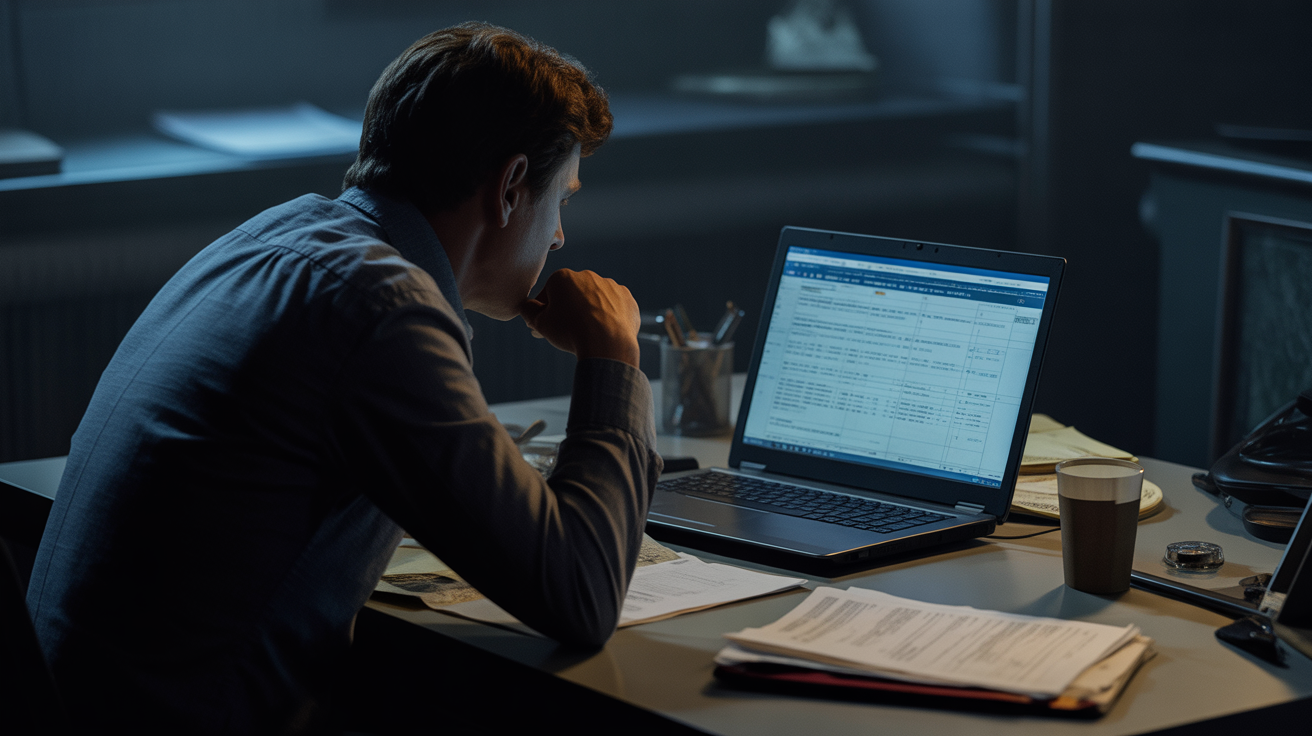
By the fifth evening, Mara had started measuring her engagement by the camera blindspot.
At first, it looked like a building fault.
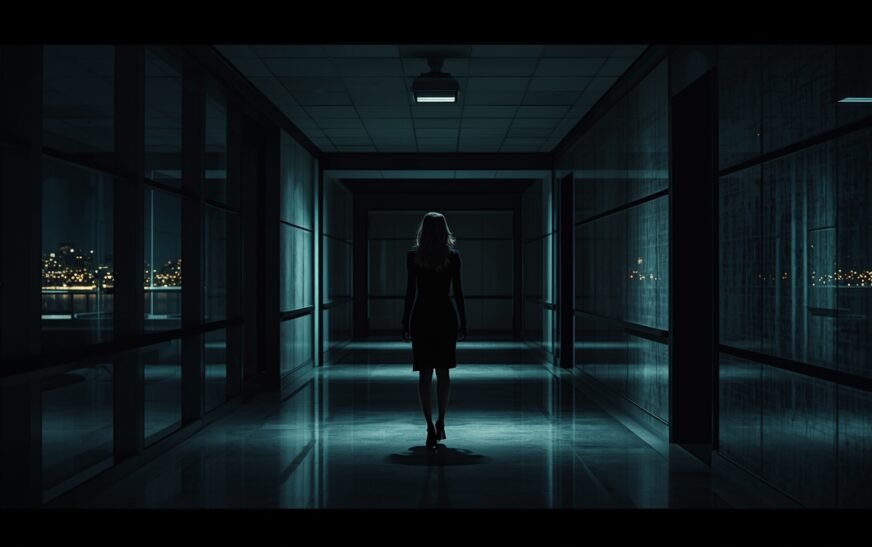
The offices at Halcyon Tower were too expensive for visible mistakes, yet every night at 8:16 p.m. the corridor feed outside Conference Room C dropped for exactly ninety seconds. Therefore, when Mara first noticed the gap while reviewing campaign footage for a client event, she assumed security would fix it before anyone important learned its name. However, the missing minute returned the next day. Then it returned again.
By the end of the week, she had stopped thinking of it as a glitch.
She had started thinking about Nolan.
“You’re still here?” he asked that Thursday, pausing at the glass wall of her department with his coat over one arm.
Mara minimized the security window on her screen too quickly. “Presentation revisions.”
His smile came in the polished way she had once mistaken for warmth under pressure. “You work too hard.”
That line might have sounded affectionate once. Now it sounded rehearsed.
After the Building Emptied
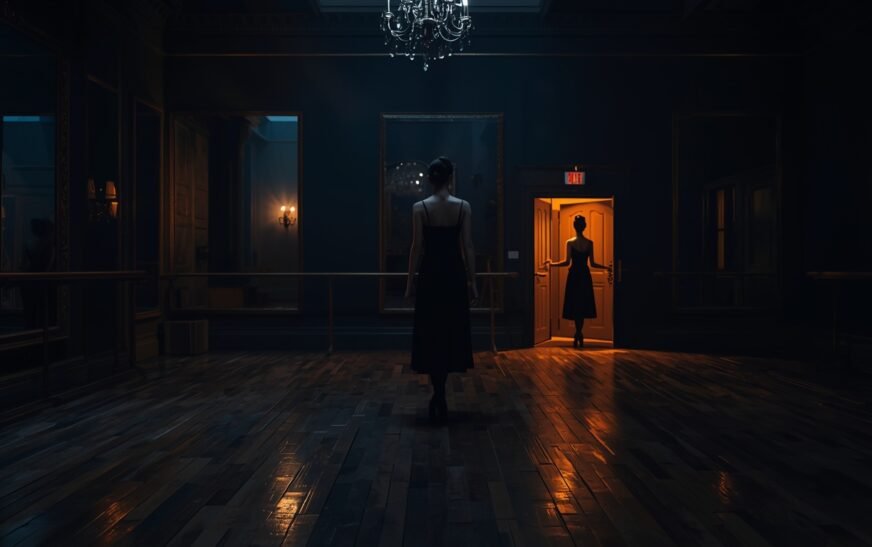
Halcyon Tower changed character after eight.
During the day, the place performed confidence through noise. Phones rang. Heels crossed stone. Assistants carried coffee with the urgency of diplomacy. By contrast, evening reduced the building to cleaner shapes. Reception lights softened. The café shutters came down. Lift doors opened onto floors already half erased by glass and reflection.
Mara usually liked those hours. She worked in brand strategy, which meant too many opinions arrived before lunch and too few decisions arrived before five. Later, once the louder people had gone home, she could think.
Recently, though, Nolan had started staying late as well.
That should have felt companionable. After all, they were engaged. They worked in the same tower, though on different floors. They even shared the same ride home often enough to make colleagues call it romantic in a voice that meant efficient. Still, something in his routine had shifted. Every evening, he disappeared from his department at 8:16. Every evening, the feed outside Conference Room C went dark at the same time.
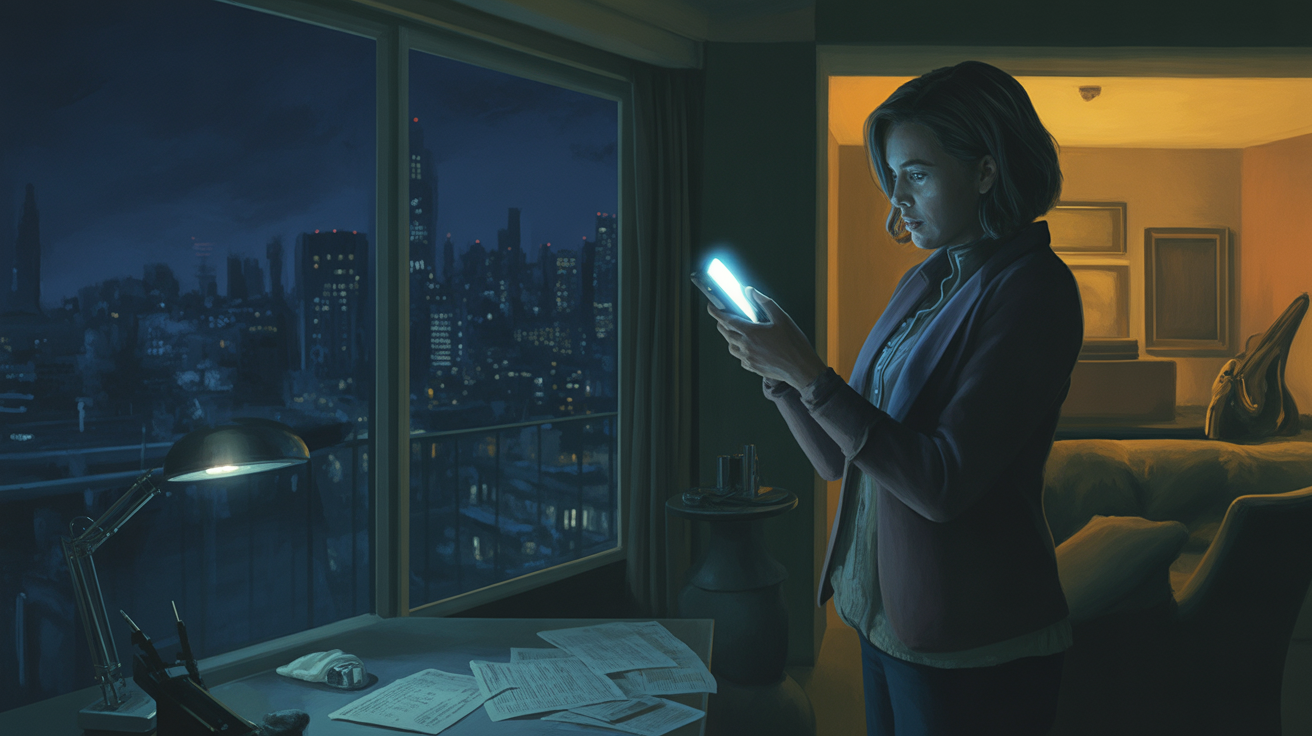
At lunch one day, Mara found herself drifting through the Thriller and Secrets & Suspense archives on her phone, as if genre could reduce a pattern into a harmless cliché. It did not. Nevertheless, it gave her a useful phrase: timing is often the first lie to become visible.
The First Missing Minute
The discovery came by accident.
A hospitality client had requested behind-the-scenes social clips from a rooftop launch. Because the in-house photographer had missed half the setup, Mara borrowed access to internal security feeds to confirm when vendors arrived. Most of the footage was dull enough to deserve archiving and oblivion. Delivery carts rolled in. Floral installers crossed the lobby. Someone from finance argued with a crate of glassware.
Then the sixth-floor corridor vanished for ninety seconds.
Not fuzzed. Not distorted. Gone.
The timestamp kept moving while the screen turned flat black, as if the camera had politely withdrawn from the evening. When the image returned, Nolan was stepping into the lift alcove alone, straightening his cuff as though nothing unusual had occurred.
Mara watched the clip three times.
The next night, she checked again. The same corridor. The same time. The same blank interval. After that, Nolan appeared near the lifts with that composed, mildly distant face he wore when he wanted the world to mistake control for innocence.
That was when the camera blindspot became personal.
What Nolan Did at 8:16
On Monday, Mara timed him in real life.
At 8:12, he sent a message saying he might be another half hour. At 8:14, he crossed the open-plan area outside legal with a folder in one hand. Two minutes later, the corridor feed dropped from her hidden browser tab. By 8:18, he was no longer visible anywhere on the sixth-floor cameras at all.
When he finally reappeared in the lobby at 8:28, he was carrying no folder.
“Sorry,” he said when he met her by the revolving doors. “Client nonsense.”
She looked at his empty hands. “That was fast.”
“Only because I’m talented.”
The answer landed lightly. Even so, it did not settle.
By then, Mara had started noticing smaller shifts too. Nolan kept his phone face down at dinner. He canceled one Saturday venue visit because of “board prep,” then came home with rain on his coat and a smell that was not the office. Passing changes can be explained. Patterns, by contrast, are harder to forgive because they have posture.
The Security Office
On Tuesday, Mara brought coffee to Elias in building security.
He accepted it with the suspicion of a man who knew generosity at work usually wanted something back. “What have I done?”
“Nothing yet,” Mara said. “I need a technical answer.”
The security office sat behind reception, all monitors, stale air, and an atmosphere of patient observation. On the wall, feeds from every floor turned the tower into a grid of polished habits.
She pointed to the sixth-floor corridor clip. “Why does this happen every night?”
Elias frowned. “That should have been fixed.”
“So it’s known?”
“Facilities logged it three weeks ago.” He leaned closer to the screen. “Old software conflict when the conference suite locks cycle. It creates a blackout in one segment. Ninety seconds, give or take.”
Mara kept her voice even. “And nobody considered that inconvenient?”
“It’s a dead corridor after hours.”
“Is it?”
Elias glanced at her then, reading more from her tone than the question required. “Shouldn’t be. Only conference storage and the old client lounge sit behind that section.”
Only.
The word stayed with her all afternoon.
The Floor Behind the Feed
Wednesday gave her the chance to look.
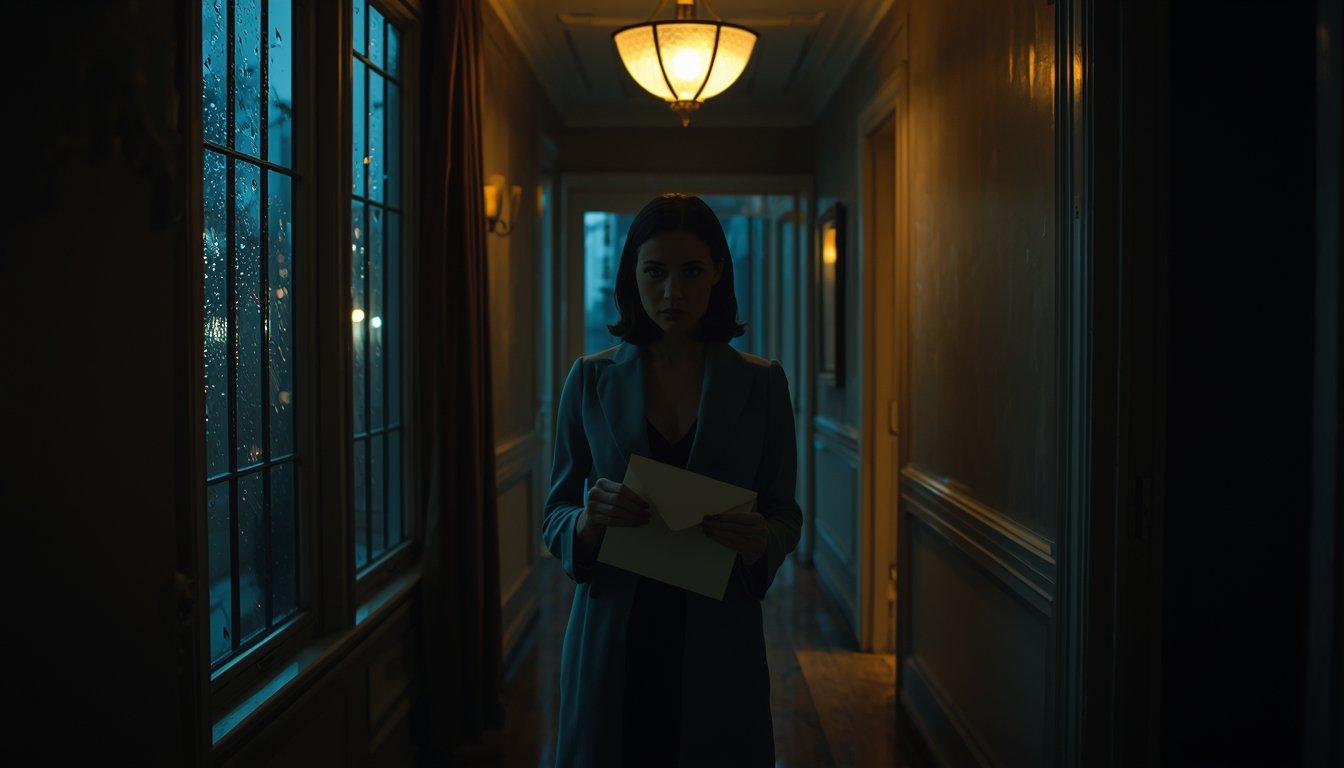
Nolan had texted at 7:50 to say he would be tied up late. Instead of waiting on twelve, Mara took the stairs to six and stepped quietly into the corridor just before 8:16.
The legal floor was almost empty. Desks stood in orderly rows behind glass partitions. A single lamp burned in a corner office. Beyond Conference Room C, the hall narrowed toward the old client lounge, a space no one used now that investors preferred the rooftop suites.
At 8:15, Nolan appeared from the far end.
He did not see her because she stood just inside the shadow of the stairwell recess. In one hand he carried his phone. In the other he held a slim access card Mara had never seen before. He paused beside the old lounge door, glanced once toward the main corridor, and waited.
Then the camera blindspot began.
The tiny indicator above the ceiling unit went red, then dark.
From the lift alcove, another figure emerged.
A woman. Dark coat. Hair pinned up. No hesitation in her step.
She crossed directly to Nolan. He opened the lounge door. Both of them disappeared inside, and the door shut with measured softness.
Mara remained motionless until the camera indicator returned.
After that, she walked back to the stairwell on legs that no longer felt entirely professional.
What the Lounge Was Used For
She did not confront him that night.
Instead, she went home first, stood in the kitchen too long, and opened pages tagged behavioral shifts, trust erosion, and quiet dread without reading more than a line of any of them. The words felt thin beside the plain brutality of timing.
At 10:11, Nolan arrived with takeout and apology ready in his mouth.
“You ate?” he asked.
“Not really.”
“Long day.”
Mara looked at him. “Was it?”
He paused only for a fraction. “For both of us, apparently.”
That answer told her more than confession would have. He knew something had shifted. He simply did not know how much she had seen.
Later, after he showered, Mara searched the old client lounge in internal room records. The space was officially inactive. However, a recent reservation entry appeared every weekday at 8:15 under a neutral code: Executive review holding.
Holding for what, she thought, if not exposure.
The Woman from the Lift
By Thursday afternoon, Mara knew her name.
Selene Ward worked for Vey & March, the crisis advisory firm that rented the eighteenth floor twice a week. She had one of those faces that looked calm in photographs and expensive in person. There were articles about her online, mostly flattering and mostly vague. Reputation strategist. Dispute architect. Confidential resolution specialist.
Mara stared at the phrase until it felt insulting.
Confidential resolution specialist.
That evening, she waited in the ground-floor café instead of her office and watched the lifts. At 8:10, Selene stepped out of one, checked her watch, and crossed to the service staircase rather than reception.
Mara followed at a distance.
On six, the same sequence unfolded. Nolan appeared. The corridor camera died. The lounge door opened. They vanished into the room together.
This time Mara reached the door before the blackout ended.
She did not knock. She went in.
Inside the Client Lounge
The room was softly lit and offensively ordinary.
No affair waited there. No half-buttoned confession. No romantic catastrophe dramatic enough to be clean.
Instead, documents covered the central table. Lease copies. Asset summaries. A draft prenup Mara had never seen. Beside it sat a property brochure for a furnished apartment in Southbank and a timeline printed under the heading Transition Communication Strategy.
Nolan looked up first. Selene did not even rise.
For a moment, nobody moved.
Then Mara said, very clearly, “You scheduled my erasure during a camera blindspot.”
Color left Nolan’s face with startling speed. “Mara—”
“No. Try harder.”
Selene closed the file in front of her. “I think I should step out.”
“You think very highly of timing,” Mara replied. “Stay.”
The crisis adviser actually had the grace to look uncomfortable.
What He Had Planned
Nolan stood slowly, as if calm might still rescue him.
“I was going to speak to you this weekend.”
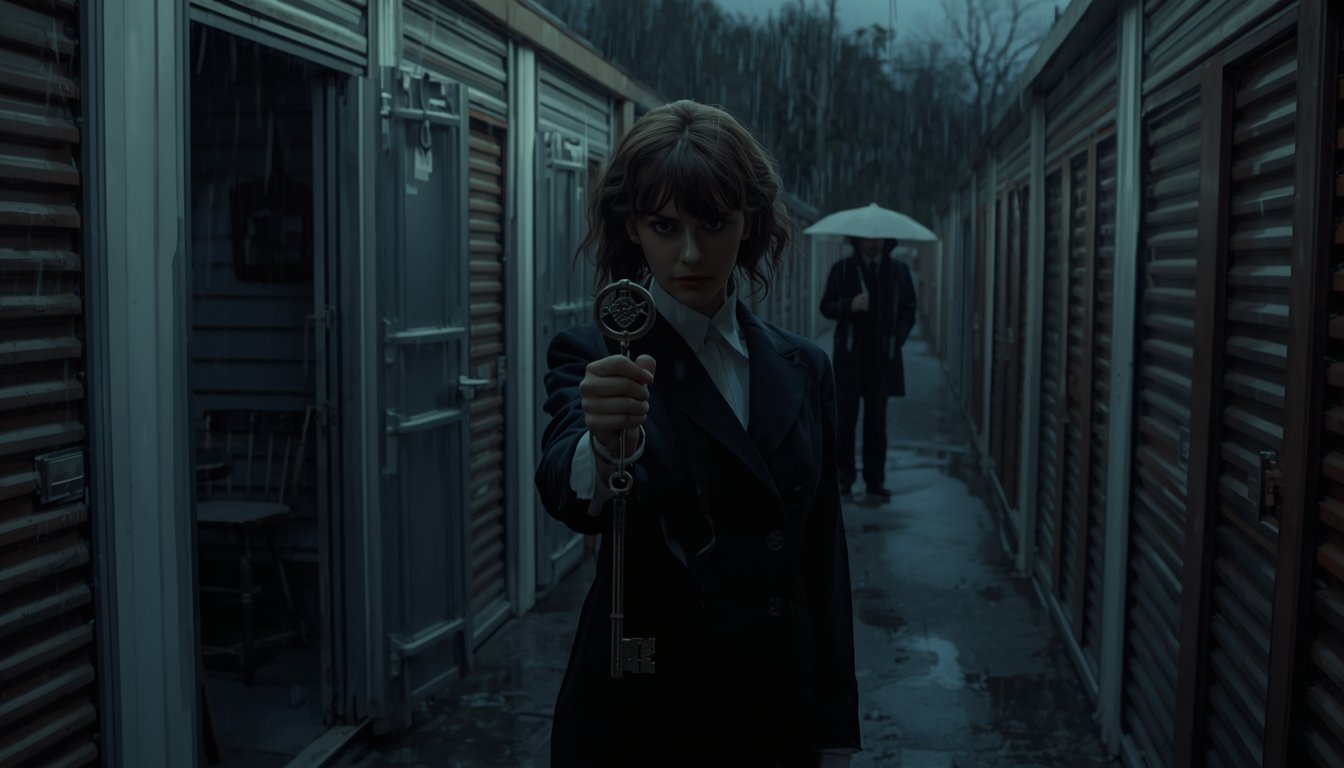
“With bullet points?” Mara asked. “Or after the apartment keys were delivered?”
He glanced at the papers, which was answer enough.
“This is not what it looks like,” he said.
“That sentence should be retired by law.”
Rain tapped the high windows beyond the blinds. Somewhere outside, the corridor camera returned to life with its tiny red indicator, too late to be useful.
Selene said quietly, “My role was to structure a separation conversation with minimal professional fallout.”
Mara turned to her. “That is a remarkably elegant way to describe cowardice as a service.”
Nolan flinched at that, though not as much as he should have.
On the table, the printed timeline detailed everything with administrative cruelty. Friday: confirm housing. Saturday: family statement draft. Monday: HR language if required. His exit from the engagement had been planned with the same polished competence he once used to choose wine for her mother.
After the Lights Came Back
She did not cry in the lounge.
That denied Nolan the version of events he was best prepared to manage.
Instead, Mara picked up the apartment brochure, folded it once, and set it back down. “You weren’t having an affair,” she said. “You were having a strategy.”
He opened his mouth, then closed it.
“That is somehow worse,” she added.
Selene looked toward the door again, perhaps understanding at last that some rooms cannot be professionally improved.
Nolan tried one final line. “I wanted this handled cleanly.”
Mara gave a brief laugh. “No. You wanted it handled without ever being seen from the wrong angle.”
Then she left him there with his adviser, his files, and the room he had chosen precisely because no one was supposed to witness its purpose.
In the lobby, Elias looked up from the security desk as she crossed toward the revolving doors. He said nothing. Still, his silence had the exact shape of discretion offered to the wounded.
What the Blindspot Revealed
Outside, the city looked rinsed and expensive after rain.
Mara stood beneath the awning and watched Halcyon Tower rise in mirrored sections above her, all that glass pretending transparency while its systems quietly arranged concealment. Behind one of those darkened panes, Nolan would still be explaining himself in language smooth enough to respect only his own discomfort.
He would fail.
Not because justice is dramatic. Usually it is not. Rather, he had mistaken secrecy for control and process for mercy. The camera blindspot had not hidden him at all. It had merely taught Mara where to stand when the truth opened its door.
Later that night, she opened the pages she had skimmed before: private deception, controlled exits, suspicious pattern, office corridor tension, and quiet investigation. This time the labels did not feel literary. They felt like evidence sorted after impact.
By morning, the engagement would be over, and the tower would resume its polished routines. Even so, somewhere on the sixth floor, a corridor camera would still go dark for ninety seconds at 8:16 p.m. The system would call it a software conflict. Mara, by contrast, would remember it more accurately: a narrow, expensive interval in which a man tried to leave without the inconvenience of being watched.