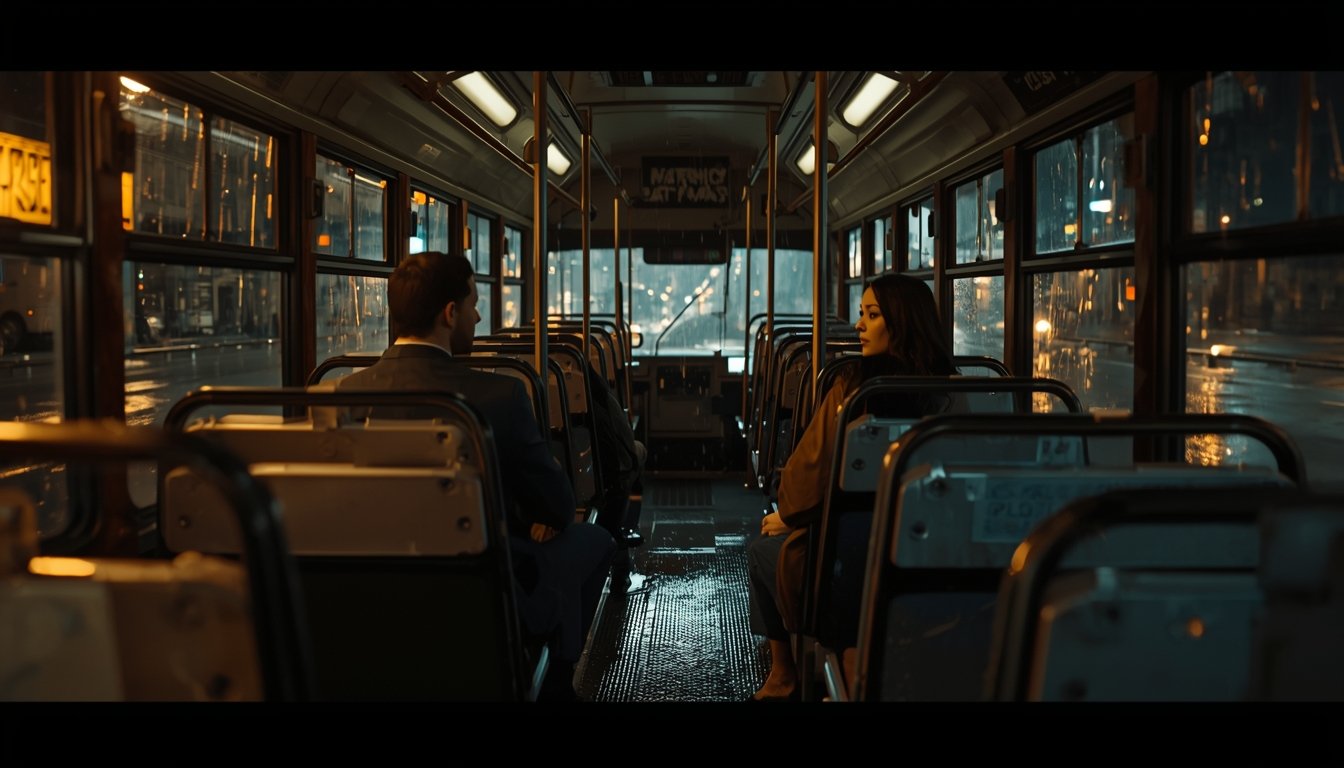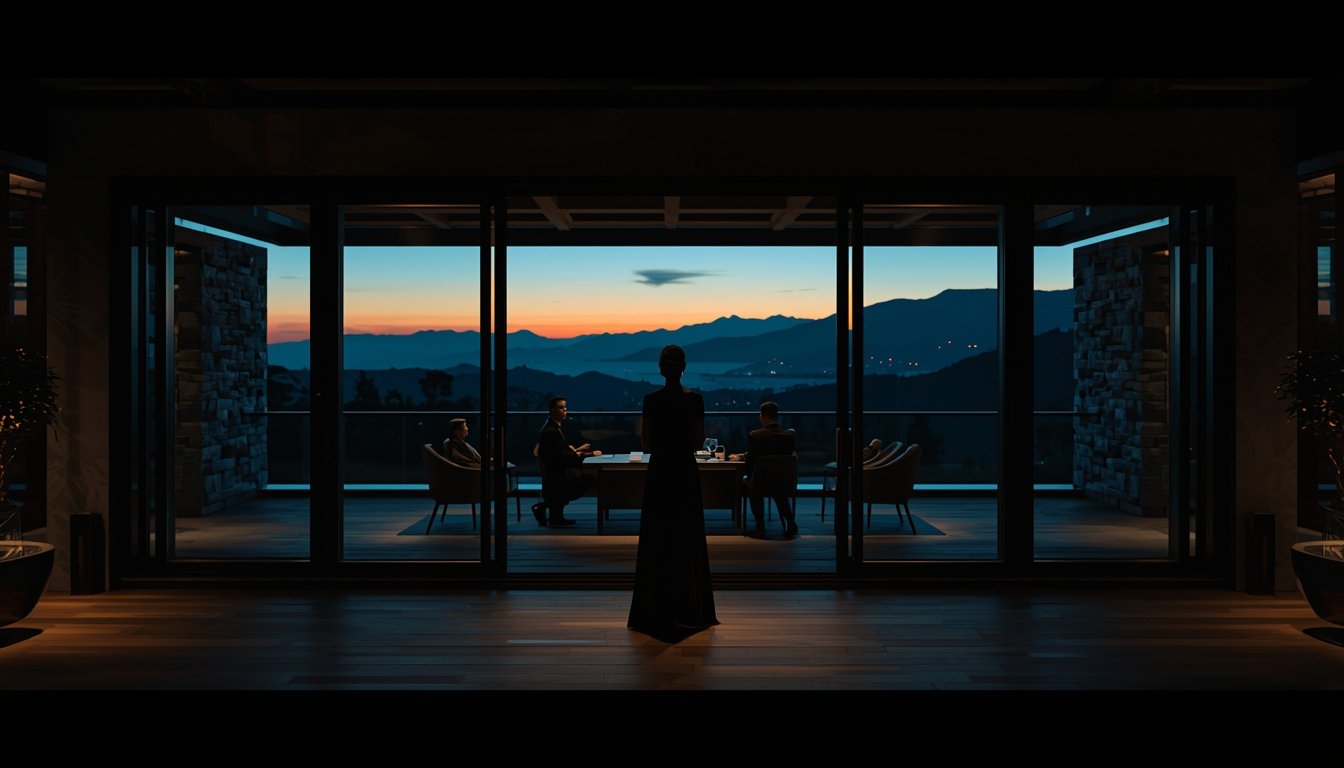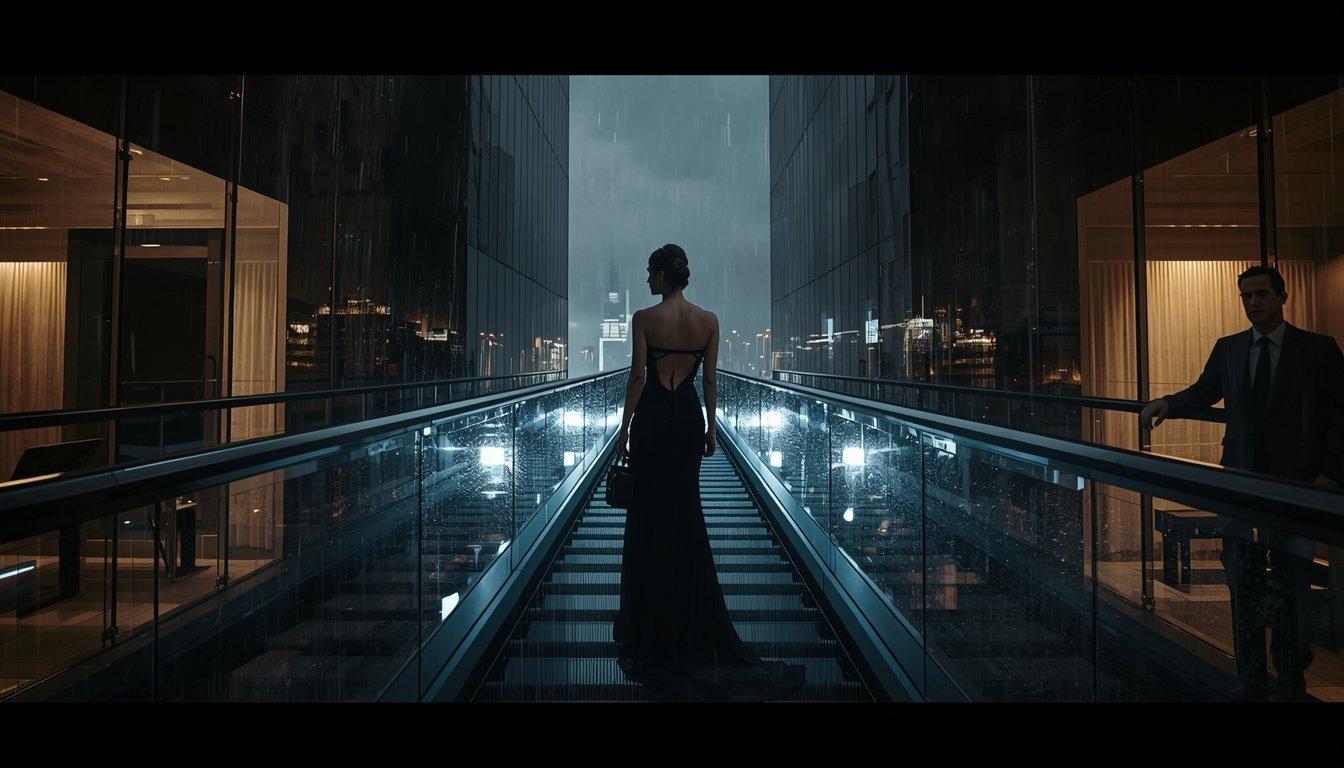
Tessa stepped into the service elevator because the ballroom had become too bright to bear. By 9:17, the charity gala at the Viremont Hotel was swollen with applause, camera flashes, and the polished noise of people congratulating one another for generosity under crystal light. Her husband, Daniel, had been missing for eleven minutes. That alone should not have mattered. He was on the event committee, and committee men were always being pulled toward urgent names and brighter corners. Even so, when a waiter told her the nearest ladies’ room was faster through the staff corridor, relief moved through her more quickly than suspicion.
The back hallway felt cooler at once. Music from the ballroom reached it only as a softened pulse through two swinging doors. Tessa walked past silver carts loaded with dessert plates, a stack of folded linen, and a florist’s crate still breathing out lilies. Ahead, stainless doors slid open with a muted chime. The sign above them read service only.
She almost turned back.
Instead, she stepped inside the service elevator, pressed two, and watched the hotel close around her in brushed metal and utility light.
Why she had come downstairs alone
The evening had begun well enough. Daniel looked impeccable in black tie, all practiced warmth and easy attention. He kissed her cheek in the taxi, adjusted the clasp at the back of her bracelet, and told her she looked “dangerously composed,” which was the sort of line he used when he wanted affection without lingering in vulnerability. Tessa had smiled anyway. After twelve years of marriage, people often lived on fluency more than surprise.
At first, she told herself his distance all month belonged to work. He chaired redevelopment meetings, fielded council complaints, and spent too many evenings on calls that ended only when dinner had gone cold. Still, lately his absences had changed character. Earlier stress made him irritable and obvious. Recent stress had made him smoother.
Smoother worried her more.
He remembered to pick up her dry cleaning. He texted when traffic slowed. He asked about her sister’s scan results with excellent timing and then drifted away mid-answer. Meanwhile, his gaze had begun landing on her like a hand placed carefully on expensive fabric: attentive, respectful, and slightly detached.
When the gala’s third speech began and Daniel leaned to murmur, “I need five minutes,” she had let him go without asking where.
Now five minutes had become eleven.
The wrong floor
The elevator stopped at three.
Tessa had not pressed three.
The doors opened on a dim service landing lined with housekeeping shelves, emergency signage, and a long strip of industrial carpet leading toward a fire door that had failed to close fully. Warm light spilled through the gap from somewhere beyond.
No one stood there.
For a moment, she assumed a staff member had called the lift from this floor and then vanished down the corridor. However, before she could press the button again, voices drifted through the unlatched door.
One of them was Daniel’s.
He was not loud. That made recognition slower and somehow worse. Tessa moved without deciding to, crossing the landing in soft heels until she reached the narrow gap beside the fire door.
Beyond it lay a private conference corridor, half renovated and not open to guests. Dust sheets covered two banquet tables. Wall sconces cast low amber pools across fresh paint and protective paper. Near the windows at the far end, Daniel stood with a woman Tessa recognized after a beat: Alina Mercier, the hotel’s redevelopment liaison, cool-faced and immaculate even at night.
They were not touching.
That should have comforted her.
What she heard first
“You can’t keep using the committee as cover,” Alina said.
Daniel ran one hand through his hair, the gesture she knew meant control was slipping. “I’m not using it as cover. I’m using it because it’s the only reason I can be in this building without questions.”
Tessa went still.
Not because the line proved an affair in the crude cinematic sense. It proved something colder: repeated intention. There had been enough meetings, enough reasons, enough time spent arranging access.
Alina looked toward the windows, then back at him. “That’s worse.”
He gave a humorless laugh. “I know.”
For one disorienting second, Tessa wanted the scene to become simpler. She wanted a hand on a waist, a kiss, a visible trespass she could despise without nuance. Instead, what stood before her was more difficult and more adult. Two careful people speaking in the worn private language of something already underway.
“She’s noticing,” Alina said quietly.
Daniel did not answer.
The silence answered for him.
The corridor behind the ballroom
Tessa stepped back before either of them could turn. Her heel caught on the edge of the protective paper, and the sound seemed enormous. However, the voices beyond the door continued, lowered now beyond clear hearing.
She retreated to the service landing and pressed the call button with a hand that looked strangely calm. The lift took too long. Down the corridor, an ice machine hummed behind a utility panel. Somewhere above, ballroom music filtered through the ceiling in blurred brass notes, ridiculous and festive.
The doors opened at last.
Inside the service elevator, her reflection looked composed enough to lie professionally.
On the way back to two, she thought of every recent night Daniel had come home with kind eyes and an abstracted mouth. She thought of the last council dinner where he checked his watch three times during dessert. She remembered how often he had praised Alina as “efficient,” that suspiciously bloodless adjective people used when naming a person too often would expose the pulse underneath.
By the time the doors opened near the powder room corridor, Tessa understood something exact. She had not found the beginning tonight. She had only walked into the maintenance route beneath it.
What she chose not to do in the mirror
Inside the ladies’ room, three women in jewel-toned dresses were discussing auction bids with strategic despair. Tessa moved to the far mirror, set both hands on the marble counter, and looked at herself under flattering light designed for mercy.
No mercy arrived.
Her phone remained in her clutch. She could have texted her friend Mara and asked for rescue. She could have walked downstairs, collected her wrap, and left Daniel to his speeches and his hotel corridors. Instead, she stood very still and listened to a more practical instinct gather shape.
Leave later, it said. Understand first.
Tessa reapplied lipstick she did not need. Then she straightened the neckline of her dress and returned to the ballroom through the guest entrance rather than the service hall, because some humiliations were easier to survive when entered ceremonially.
Daniel was not back yet.
That, too, told her more than apologies ever would.
The table of polite people
Her seat was at table fourteen with two trustees, a gallery owner, and an orthopedic surgeon whose wife collected miniature silver birds. They welcomed her back with the blank civility of people who noticed absence only when it affected seating balance.
“Found the facilities?” asked the surgeon’s wife.
“Eventually,” Tessa said.
The answer nearly amused her.
Across the ballroom, servers lifted dessert domes in perfect sequence. Applause followed the foundation director’s closing appeal. Meanwhile, Daniel reappeared near the stage entrance with the calm face of a man who expected his delay to pass as useful. He did not look toward her immediately. When he finally did, he smiled in apology and lifted two fingers to his heart in a private gesture that once meant sorry, explain later.
Tessa smiled back.
That was the moment she knew the marriage had entered a colder country. Not when she heard Alina’s voice upstairs. Not when Daniel failed to answer. Here, under chandeliers, she discovered she could still mirror him exactly while feeling nothing soft at all.
When Alina crossed the room
Dessert arrived as a glossy apricot tart no one at the table truly wanted. While trustees discussed donation pacing, Alina crossed the ballroom carrying a folder and speaking to the deputy mayor. She was elegant in the way expensive hotels preferred: dark silk, clean lines, not one detail willing to beg for attention.
Tessa had met her twice before.
On both occasions, Alina’s manner had been flawless. Too flawless, perhaps. She remembered a winter luncheon where Daniel praised her negotiation skills with an odd brightness, then spent the drive home describing zoning issues no one had asked about. At the time, Tessa had filed the memory under professional overlap. Now it shifted into focus.
Alina glanced toward table fourteen only once.
The glance lasted less than a second. Still, it held recognition, wariness, and something close to regret. That final note unsettled Tessa most because regret suggested history. Regret suggested the other woman had long ago crossed the line where discomfort should have stopped her.
Daniel remained near the stage, trapped in conversation or pretending to be. Either way, he was giving Tessa time to keep performing normalcy. It was a thoughtful cruelty, and because she recognized the style of it, she despised it more.
The second trip to the service elevator
Later, while coffee was being poured and guests began rising in waves, Tessa stood before Daniel could reach the table. She did not hurry. Hurrying would have looked like panic or pursuit. Instead, she moved through the ballroom with slow certainty, passed the portrait corridor, and returned to the back hall where the lilies had begun to sour at the edges.
The service elevator waited with its doors open this time, empty and lit like a confession booth for practical people.
She stepped inside and pressed three again.
When the lift opened, the corridor beyond lay empty. The protective paper still curled at the edges. One conference room door stood ajar, revealing stacked chairs, a tray of water glasses, and a city view broken by rain. No lovers, no dramatic aftermath, no abandoned scarf waited for her. Instead, there was only the atmosphere of repeated use: the sense of a place chosen precisely because it existed outside the guest narrative of the hotel.
Tessa walked to the window where Daniel had stood earlier. The glass was cool beneath her fingertips. Below, guests moved like scattered jewels across the porte-cochère while valets opened car doors in the wet.
On the sill lay a paper coffee cup with Daniel’s handwriting on the lid.
D.
Not evidence in the vulgar sense. Evidence in the domestic sense. He had marked his drink the way he always did when he intended to come back to it.
What he admitted upstairs
“Tessa.”
His voice behind her did not startle her. By then, she had already begun rearranging the scale of what mattered.
She turned. Daniel stood just inside the conference room doorway, jacket unbuttoned, expression stripped of ballroom ease. For a moment, he looked younger and far more tired than he had downstairs.
“You followed me,” he said.
“No,” she replied. “I used the service elevator. You happened to be on the other side of it.”
Rain brushed the windows. Somewhere down the corridor, a housekeeping cart rolled and stopped.
Daniel took one step forward. “How much did you hear?”
“Enough to know I am late.”
His face changed at that. Shame, perhaps. Or only recognition that her accuracy left him very little room.
“Nothing physical happened,” he said.
Tessa almost smiled. “That sentence is never as noble as the speaker hopes.”
He closed his eyes briefly. “I know.”
For once, she believed him.
The part that hurt more
“How long?” Tessa asked.
Daniel looked toward the floor, then made himself answer. “Since January. Maybe earlier in the way thoughts begin before actions do.”
January. Four months of dinner tables, errands, municipal updates, and careful kisses folded around a private second life of anticipation.
“Did you think I wouldn’t notice?” she asked.
“I thought I had time to understand it before I damaged everything.”
“You damaged everything while understanding it.”
He flinched, then leaned one hand against the back of a chair as if standing had become negotiable.
“I kept trying to convince myself it was stress,” he said. “Or proximity. Or a bad season where she was simply easier to talk to because she wasn’t inside all the other pressures.”
Tessa listened with a strange steadiness. He was not confessing passion. He was confessing migration. Some private part of him had moved elsewhere first and left logistics to follow behind.
That realization cut deeper than melodrama would have.
The room with the city below
Outside the window, rain softened the city into smudged gold. The hotel’s upper floors glowed in formal rows. Somewhere below, a car horn sounded once and vanished into weather.
“Does she know you’re staying with me?” Tessa asked.
Daniel’s answer took a fraction too long. “She knows I’m trying to decide what to do.”
There it was: the edited version of a marriage, exported for someone else’s understanding. Tessa became abruptly aware of how humiliatingly generous he had been with her outline while keeping her uninformed about the act itself.
“So she has been allowed to know the softened draft of me,” she said.
“That’s not fair.”
“No,” Tessa replied. “Fair would have been honesty before architecture.”
He had nothing useful to offer after that.
Downstairs, the gala was ending. One could feel it in the rhythm of the building: doors opening more often, foot traffic rising, the ballroom music loosening into exit. Meanwhile, they stood in a not-yet-finished conference room above it all, speaking in the unfinished language of a marriage that had already been privately revised.
After the service elevator
Tessa left him there.
Not theatrically. Not with a slap, a sob, or some devastating line polished by pain. She simply picked up her clutch, looked at him once more to fix the truth of his face in ordinary light, and walked out through the corridor without asking whether he would follow.
The service elevator took too long to arrive.
While she waited, she thought of all the quiet fractures hidden in emotional relationship drama, the restrained ache of marriage and secrets, the measured dread of psychological tension, and the elegant unease inside secrets and suspense. Her night belonged to all of them. Even so, its cruelty remained simple. Daniel had not merely wanted someone else. He had wanted time to curate wanting her less.
When the doors finally opened, she stepped in alone. Stainless steel reflected her back in pale fragments. On two, the ballroom glow returned. On one, the lobby waited with orchids, marble, and valets trained never to stare.
Under the hotel canopy
Outside under the hotel canopy, rain cooled the heat in her face. She did not call a friend yet. Instead, she stood still and let the avenue come back into focus. Daniel’s mother remained uncalled as well. For several seconds, she did nothing except breathe and look at the headlights until they lost their blur.
Readers drawn to hotel corridor tension, quiet betrayal, emotional migration, place-based dread, partner withdrawal, polished distance, and private revision will recognize the colder kind of heartbreak that arrives through access, timing, and carefully managed rooms.
What stayed with her later
What stayed with her later was not Alina’s face or Daniel’s excuses. It was the elevator itself: the hidden route, the wrong floor, the mechanical glide into a level of the evening no guest was meant to see. Ultimately, that was the true shape of the marriage now. There had been the public floor, all speeches and glitter and competent affection. Beneath it lay the service level, where the real movement had been happening for months.
And now, finally, she knew which floor he had been living on.