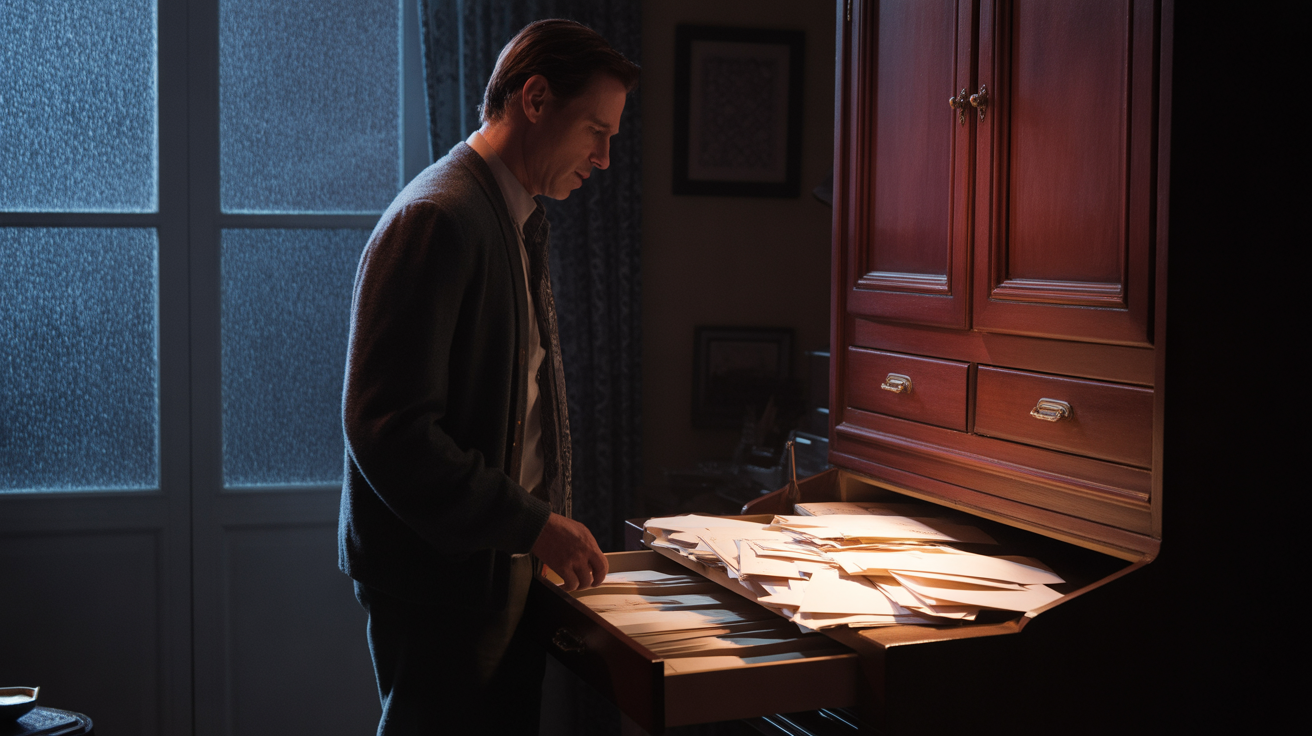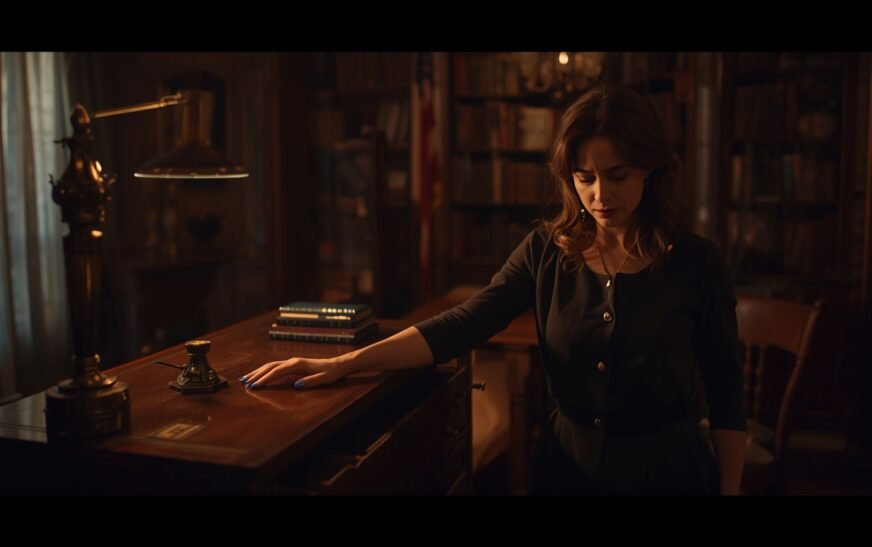
The locked drawer appeared in his study three months after their wedding. Celia noticed it while searching for a pen, her hand brushing against the small brass keyhole set into the dark wood of his desk. Without thinking, she tugged the handle. It did not budge. Marcus looked up from his book across the room, his expression unreadable. “That’s just old papers,” he said. “Tax documents. Nothing interesting.” Nodding, she found a pen elsewhere. Yet the locked drawer lingered in her mind like a splinter. Marriage secrets rarely announce themselves with drama. More often, they wait behind a small brass lock that no one ever opens.
She did not think about it again for weeks. After all, Marcus was a private man. He had his routines, his study, his quiet evenings with a book. His space, she respected. Consequently, the locked drawer remained untouched. But she began to notice other small things. For instance, he never opened it in her presence. Furthermore, he never mentioned what lay inside. And once, when she entered the study unexpectedly, she found him standing by the desk, his hand resting on the drawer. He had moved away quickly, a faint flush on his cheeks. “Just looking for a letter,” he said. Smiling, she said nothing. However, the image of his hand on that brass lock stayed with her. Quiet dread did not require accusations. It required only a drawer that never opened.
The Discovery of the Locked Drawer
Over the following months, the locked drawer became a quiet presence in their marriage. Celia found herself glancing toward the study door whenever she passed. Moreover, she wondered what old papers could possibly require a lock. Tax documents were kept in a filing cabinet in the hall. His passport and birth certificate lived in a safe in the closet. Whatever rested inside that drawer, it was not mundane. Instead, it was something he wanted to keep from her. And that knowledge, once planted, grew roots. Emotional suspense had a way of turning ordinary objects into monuments of doubt.
The Search for a Key
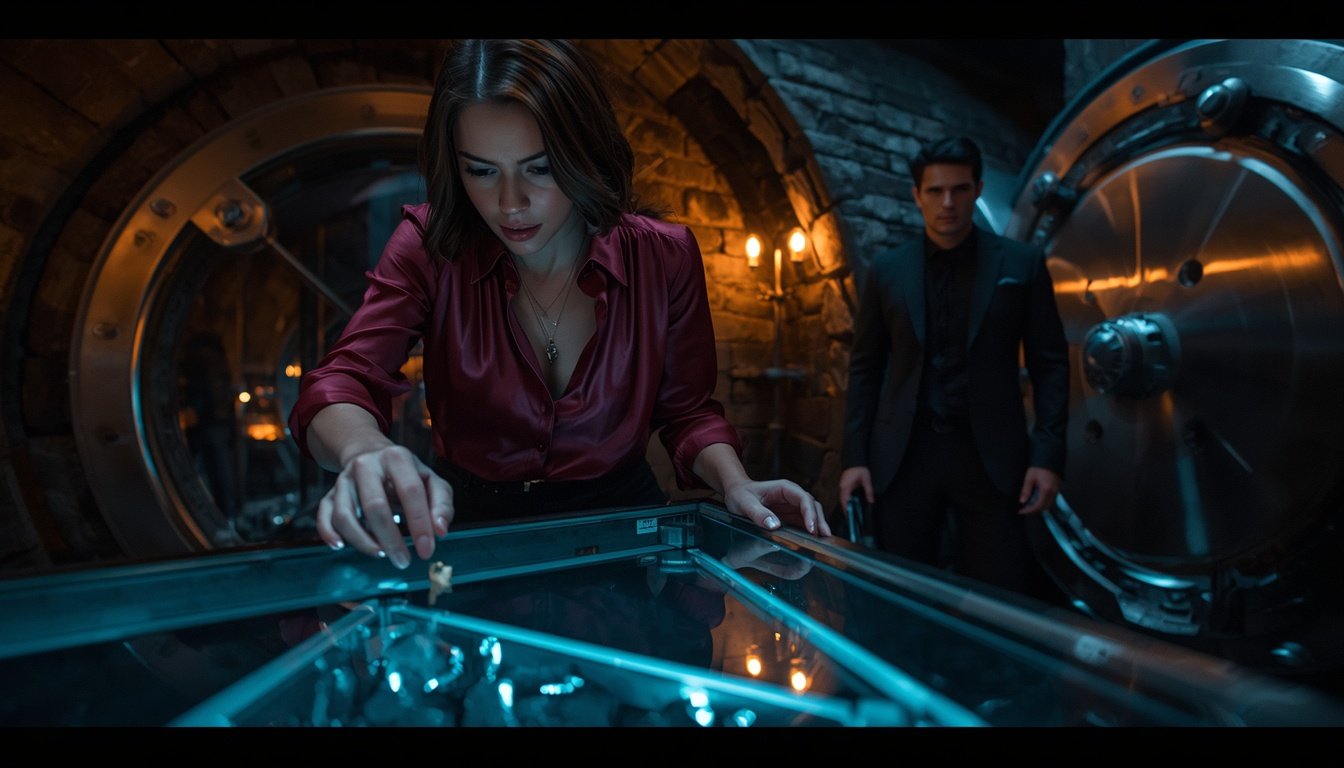
She never planned to search. The decision arrived gradually, accumulating like dust on a forgotten shelf. One Tuesday afternoon, while Marcus was at work, Celia found herself standing in the study. Tidying, she told herself. Yet her eyes kept returning to the locked drawer. Again, she tugged the handle. It held firm. The keyhole was small, old-fashioned. Perhaps the key was hidden nearby. Consequently, she began to look. Not frantically. Not with the desperation of a betrayed wife. Just carefully, methodically, as if she were solving a puzzle rather than invading her husband’s privacy.
First, she checked the desk drawers. All of them opened easily. Pens, notepads, old receipts, a worn leather bookmark. Nothing resembling a small brass key. Next, she examined the bookshelf. Fingers ran along the tops of books, behind the rows, in the hollow spaces where secrets might hide. Meanwhile, the afternoon light shifted across the floor. The house was silent except for the ticking of the grandfather clock in the hall. And still, the key eluded her. Behavioral shift had already occurred. She was no longer a wife respecting her husband’s privacy. Instead, she was a woman searching for a truth she was not sure she wanted to find.
At last, she found it. Not in the study at all, but in the bedroom. Tucked inside a small wooden box on his nightstand, beneath a folded handkerchief. A tiny brass key, cool against her palm. For a long time, she held it. Her heart hammered. She could return it to the box. She could pretend she had never found it. Or she could walk back to the study and open the locked drawer. The choice pressed against her chest. And she already knew which one she would make.
The Contents of the Drawer
The key turned with a soft click. Celia pulled the drawer open. Inside, she found not tax documents, not old letters, not evidence of an affair. Instead, she discovered a single photograph and a folded piece of paper. The photograph showed a young woman with dark hair and a gentle smile. She looked familiar. After a moment, Celia realized why. The woman was her. Not literally, but unmistakably. That same curve of the jaw. Those identical eyes. Even the faded colors of the old photograph seemed to mirror something she recognized. On the back, written in faded ink, was a name: Eleanor Vance. And a date: 1987.
Unfolding the paper, she found a letter written in careful script. My dearest Marcus, If you are reading this, I am gone. I hope you have found happiness. I hope you have found love. But I need you to know the truth. Eleanor Vance was not just a family friend. She was your mother. I raised you as my own because she asked me to. She was young and afraid. She loved you, Marcus. She loved you enough to let you go. I promised her I would tell you when you were old enough to understand. I am sorry I waited so long. Please forgive me. Your aunt, Margaret.
Celia read the letter three times. The locked drawer had held no betrayal. Instead, it had held a secret that was not even Marcus’s to keep. He had been carrying the weight of his own origin story—a mother he never knew, an aunt who had raised him in silence. And he had locked it away because he did not know how to share it. Hidden truth did not always wound the discoverer. Sometimes it wounded the keeper.
The Confession That Followed
When Marcus came home that evening, Celia was sitting in the living room. The photograph and the letter rested on the coffee table before her. He saw them immediately. His face went pale, and his steps faltered. “You opened it,” he said. Not an accusation. Just a quiet acknowledgment. She nodded. “I’m sorry. I shouldn’t have. But I found the key, and I couldn’t stop myself.”
He sat down heavily in the chair across from her. For a long moment, he said nothing. Then he spoke. “I was going to tell you. I’ve been trying to find the right time for months. But how do you tell someone that everything you know about yourself is wrong? That the woman you called Aunt Margaret was actually your mother’s sister, and the mother you never met was a stranger in a photograph?” His voice broke. “I locked it away because I didn’t know how to be the person that letter made me.”
Moving to sit beside him, she found his hand. “You’re still the person I married. The drawer doesn’t change that. The letter doesn’t change that.” He looked at her. His eyes were wet. “I was so afraid you would see me differently.” She shook her head. “I see you more clearly now. And I love you anyway.” The locked drawer had been a barrier between them. But now, open and empty, it became a bridge. Unspoken distance did not require malice. It required only a secret too heavy to share alone.
The Aftermath of Opening
In the weeks that followed, the locked drawer remained unlocked. Marcus did not fill it with new secrets. Instead, he left it open, a small act of defiance against his own habit of hiding. He told her more about Eleanor Vance. He showed her other photographs. Moreover, he shared the few stories his aunt had told him before she passed. And Celia listened. She did not try to fix anything. She simply received what he offered.
The locked drawer had taught her something important. Privacy is not the same as secrecy. Furthermore, the things we hide are not always betrayals. They are wounds we have not yet learned to dress. She had invaded his privacy. She could not undo that. However, she could use what she had found to draw closer rather than push away. And that, she realized, was the difference between suspicion and love. Trust erosion had been halted not by the discovery, but by the conversation that followed.
Drama in a marriage does not always follow the script we expect. Sometimes it is a locked drawer. Sometimes it is a photograph of a woman who looks like you. And sometimes, the bravest thing you can do is open what has been closed and sit with whatever you find. Psychological intimacy is not built on the absence of secrets. It is built on the courage to reveal them.