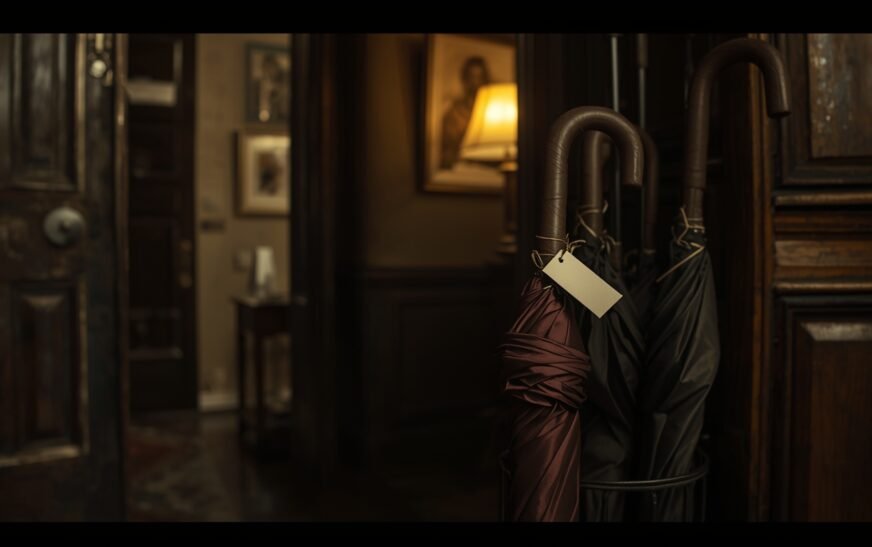
The umbrella stand by the door had been there since Ellis moved in. A simple wooden rack he had found at a vintage shop, its dark stain worn smooth by years of use. It held three umbrellas. Two were his. One belonged to a woman he had met only twice. Her name was Mira, and she had left the burgundy umbrella behind six weeks ago after a rainy evening that ended too soon. He had not returned it. Instead, he had placed it carefully in the stand by the door, where he could see it every time he left and every time he came home. Dating sometimes requires grand gestures. But sometimes it requires only a borrowed object and the patience to wait.
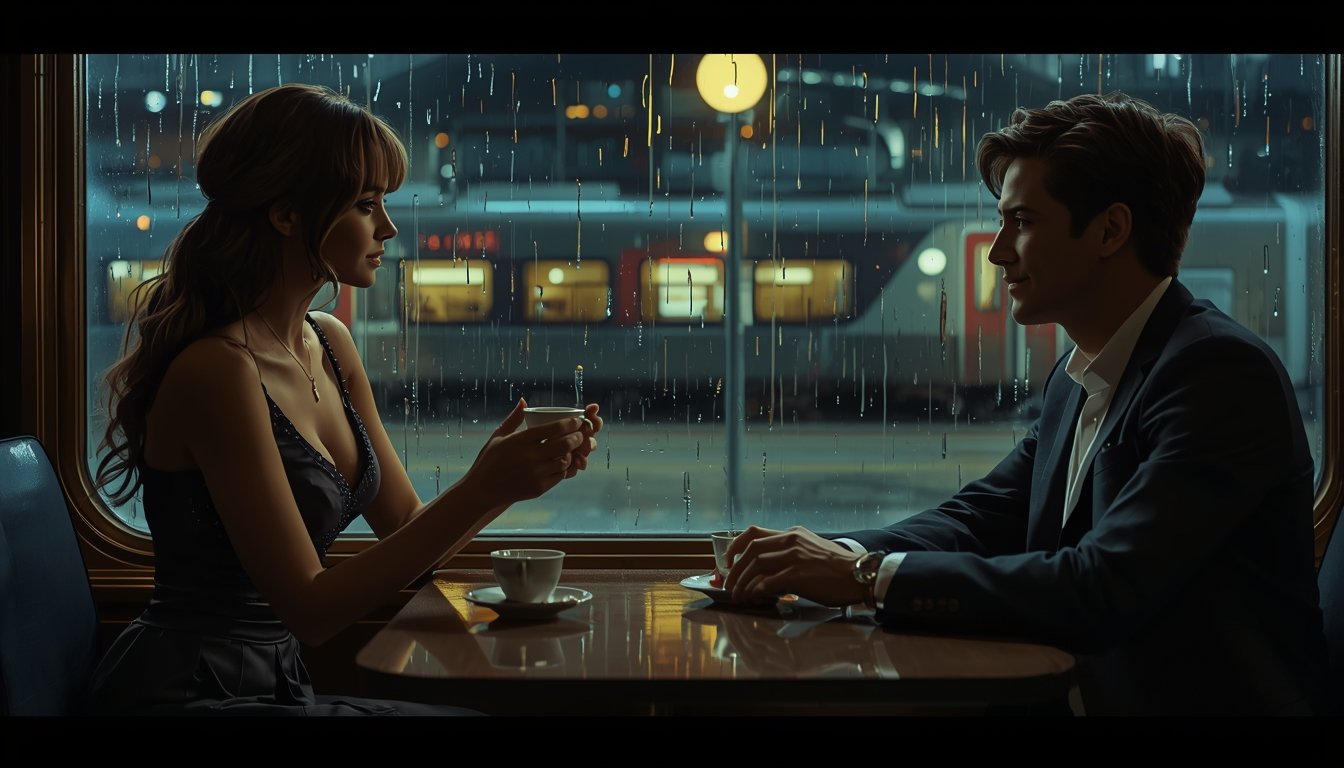
He thought about her more than he expected. They had met through a dating app, exchanging careful messages before agreeing to coffee. The rain had started unexpectedly, and she had arrived damp and laughing, her hair curling in the humidity. Consequently, they talked for three hours—about her work as a landscape architect, about his obsession with old buildings, about the strange, vulnerable act of meeting a stranger and hoping to be seen. When the café closed, he had walked her to her car. And she had left the umbrella behind. A burgundy one with a carved wooden handle. He noticed it immediately, but she was already driving away. Therefore, the umbrella stand by the door gained a new resident.
The Object He Could Not Return
He could have texted her. Her number was still in his phone, buried beneath the last exchange: I had a really nice time. Let’s do this again. His reply had been a simple Me too. And then nothing. Six weeks of silence. He was not ignoring her. Instead, he was waiting for the right words. But the longer he waited, the heavier the silence became. The umbrella stand by the door became a daily reminder of his own hesitation. Every morning, he saw the burgundy umbrella and thought of her. Every evening, he came home and thought of texting her. And every night, he did nothing. Emotional restraint had become a cage. And he had locked himself inside.
Meanwhile, he began to notice other small things about his apartment. The empty mug on the counter that should have held coffee for two. The single towel hanging in the bathroom. The way the silence in the evenings felt heavier than it used to. The umbrella stand by the door was not just a piece of furniture. Instead, it was a monument to his fear. He had a connection with someone. A real, promising connection. And instead of pursuing it, he had preserved the evidence of it like a museum piece. Quiet attraction was not supposed to feel like this. It was supposed to lead somewhere.
The Note He Finally Wrote
On a Thursday evening, Ellis sat at his small kitchen table and wrote a note. He used a piece of thick paper he had saved for something important. The words came slowly. Crossing out lines, starting over, he struggled to find the right phrasing. Finally, he settled on something simple. Mira—This umbrella has been waiting for you. So have I. If you’d like to try again, I’ll be at the same café on Saturday at 3 PM. No pressure. Just coffee. And maybe an umbrella. He folded the note carefully and tucked it into the handle of the burgundy umbrella. Consequently, the umbrella stand by the door now held a message.
He did not send a text. He did not call. Instead, he made a decision. If she came back for the umbrella, she would find the note. If she never came back, she would never know he had waited. It was a coward’s courage. But it was the only kind he had. As a result, he spent Friday in a state of suspended hope. Going to work, coming home, he checked the umbrella stand by the door repeatedly. The note was still there, waiting. And so was he. Timing-based tension had kept him frozen. But he had finally done something. Even if that something was just a note.
The Saturday He Hoped
Saturday arrived with thin winter sunlight. Ellis dressed carefully. A dark sweater. The coat she had complimented. Arriving at the café at 2:45, he chose the same table by the window where they had sat six weeks ago. He ordered a black coffee and waited. The door opened and closed. Strangers came and went. He watched the street through the glass, searching for her face. By 3:15, she had not arrived. His coffee went cold by 3:30. At 3:45, he began to accept that she would not come. The note in the umbrella stand by the door had been a foolish hope. And he had been a fool to think she would return for an umbrella she had probably forgotten.
Paying his bill, he walked home. The city felt emptier than usual. When he reached his apartment, he opened the door and looked at the umbrella stand. The burgundy umbrella was still there. However, the note was gone. His heart stopped. In its place was a new note, written on a torn piece of paper in handwriting he did not recognize. Ellis—I came back for the umbrella while you were out. I read your note. I’ll be at the café tomorrow. Same time. Don’t be late. —Mira
The Umbrella Stand That Brought Her Back
He read the note three times. Then he laughed. A surprised, relieved sound that filled his empty apartment. The umbrella stand by the door had done what he could not. It had held a message. Moreover, it had bridged the silence. And now, because of a borrowed object and a note left behind, he had a second chance.
The next day, he arrived at the café at 2:30. She was already there. The burgundy umbrella leaned against her chair. She smiled when she saw him. “You kept it,” she said. “I did,” he replied. “And you came back.” She nodded. “I had to. You had my umbrella.” They laughed together, the sound easy and warm. The umbrella stand by the door was no longer a monument to his fear. Instead, it was the place where a connection had been preserved. And now, finally, it was the place where something new could begin. Slow burn connection did not require grand gestures. Sometimes it required only an umbrella, a note, and the courage to wait.
Romance sometimes begins with an object left behind. And sometimes the bravest thing you can do is leave a note where only the right person will find it. Psychological walls do not fall all at once. They fall one small gesture at a time.